Sunday, December 03, 2006

Agudah Convention Sins, "Scoffing" at Gedolei Yisroel who murder our children is "PROHIBITED"


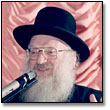
At Left is Matisyou Solomon. Matt believes in sweeping child abuse under the rug as he told the agudah convention faithful. He also believes your child should always love his rebbe, even if you were or are an abuse victim of his. Matt explains that a rebbe always gets the benefit of the doubt, while his accuser the talmid does not get the benefit of the doubt. Proof: If a child accuses a rebbe of molesting and abusing him, then according to matt, it does NOT even merit an investigation to determine the facts. What a nice man, what a"Gadol Hador" isn't he? Matt REALLY cares about your children. doesn't he?

Other clueless rabonim who spoke at the convention.
Rabbi Wachsman - comparing Korach and doson veavirum to those who speak against child abuse (is wachsman living in the same world as us?) Wachsman continues his stupidity rantings.
"But to blame gedolim, who work so tirelessly and with such great personal sacrifice on behalf of Klal Yisroel and individual Jews, for even real and present communal problems, is something cruel and evil".

I have a message for you Wachsman. Cruel and Evil are you and the rest of the thug rabbis who sit on your behinds all day and care more about an Eruv for shabbos, then you do for the safety of our children who you recklessly abandoned. You care more about your Kovod than anything else. You and the rest of the angels of death dressed in black, would rather a little boy be raped by his rebbe, and that the rebbe's deeds go unnoticed and unpunished for the sake of avoiding a big chilul hashem. You say to yourself that we cannot admit to the horrible truth, it will make us, pious and righeous rabbi's that we are, look very guilty, and we Jews just do not sin ever.

I know how thug rabbi's think. They think for themselves only. If reputations must be saved, than it is permissible to coverup the crimes. It is permissible to admonish the victims for the sake of trying to save face by ignoring reports of abuse of students by their Rebbe. It is permissible to allow a Rabbi child molester to keep his job for the sake of saving the Yeshiva's reputationand also the "rabbi's" reputation.

It is more important for these Rabbi's to "tone" down a Simcha, than to investigate cases of child abuse. Somebody really has their priorities in the wrong places and because of that reason, we have dumbfounded and unfit Rabonim who live in the past but not in the present. They live for today, but not for tomorrow!

Look at the lunacy below for all the proof you need on how SO OUT OF TOUCH from reality these "Rabonim" are.

Pointing to the example of the "simcha guidelines" issued by gedolei Yisroel four years ago, designed to tone down chasunos and related celebrations, the Rosh Hayeshiva asked: "Do we just talk about daas Torah, or live it?"

Rabbi Chaim Dovid Zwiebel -
How "diametrically opposed," observed Rabbi Zwiebel, is the halachic attitude toward the slander of Torah leaders, which is considered an especially grievous sin. Indeed, he noted, halochoh requires that talmidei chachomim be judged favorably even in situations where other people may not be entitled to the benefit of the doubt.

Yes, according to Zwiebel it is prohibited from slandering a child molester who is a rebbe, because it is Lashon Harah. Can you believe this garbage? I mean under what circumstances can we ever accuse a Rebbe of wrongdoing? According to the likes of Zweiebel, NEVER (scratching my head).

Perhaps the most telling statement of the night that Rabonim could care not one iota about our children, came from no other the big horse's mouth, Rabbi Matt Solomon.

"Even, sadly, when wrong things are done, we cannot stand by when a "broad brush" is used to smear those to whom we look for guidance and daas Torah". I can assure Matt that real Jews seek no guidance from fake and murderous rabonim such as you and others.

I may as well seek das torah advice from the likes of Ted Bundy and Michael Jackson. The end result will be the same.

Read about the disgusting Agudah Convention Circus which the despicable Yated Ne'eman Staff writes about. NOT ONCE, do any of the "Rabonim" see it fitting to address, discuss and speak out against the child abuse epidemic in our yeshiva's. The only thing they do is continuing to sweep the problems under the rug in the hopes we "Forget" about it. I have news for you the "Fake Rabonim". WE WILL NEVER FOEGET. WE WILL NEVER GIVE UP OUR FIGHT. WE WILL EXPOSE EVERY SINGLE ONE OF YOU DUSHBAGS WHO HIDE BEHIND THE TORAH. RABBI'S DO SIN. RABBI'S DID SIN. RABBIS' ARE SINNING. According to the speakers at this convention, we must always be dan lekaf zechus the rabbi's. If a Rabbi molested or was involved in its coverup, it must be because of a good reason. Afterall he is a Rabbi and we must give him the benefit of the doubt. We must'n investigate the charges of the victims, because the victims in this case are accusing RABBI's, and Rabbi's are not to be accused or subjected to an investigation to validate or un-validate the charges of their victims. How ludicrous. How ridiculous that these phony Rabbi's have the nerve to continue IGNORING the problems of child abuse. HOW inexcusable that these Rabbi's continue to excuse the perps. How shameful that they continue to blame the victims and everyone else, when they so eagerly jump to the rabbi's defense. HOW UNFORGIVABLE OF A CRIME THAT "GEDOILAI YISROEL" CONTINUE TO TWIST THE TORAH FOR THEIR BENEFIT. I NEED TO VOMIT, I CANNOT TAKE THE HYPOCRISY ANYMORE. The assembly of "gedoilai yisroel" just rambled and avoided real issues all night long. It was as if the only reason they were assembled there was to defend their good buddies, the killers of children. Ironically they claim to be the biggest defenders of children, while in actuality they are the biggest reason that we have BROKEN SOULS, ABUSED SOULS, KILLED SOULS, HURT SOULS, AND SOULS THAT ARE DESTROYED BEYOND OUR WILDEST IMAGINATION. These fake rabbi's are responsible for the murder of our children. They are responsible for the thousands of Jews they caused to go off the derech. Shame on you "Rabbi's". May hashem avenge the blood of his children amen.

(the information below by the phony yated ne'eman staff, should preferably be read in the bathroom where as you can flush it down the toilet when done).

==========
by Yated Ne'eman staff
Agudath Israel of America's 84th national convention

Thursday night's plenary session began with a moving audio- visual presentation dedicated to the devastating fire that Camp Agudah suffered this past summer, and the impressive efforts that, with Hashem's help, helped the camp recover in time to provide campers a truly memorable summer. Rabbi Meir Frischman, the camp director, provided a moving and inspiring chronicle of the events.

The session then turned to an issue both timely and timeless: the imperative to show honor and deference to Torah authority. Against a background of relentless assault on talmidei chachomim and even gedolim, in the street and in the media — and, as noted by the evening's chairman and convention co-chairman Rabbi Dovid Schnell, president of Agudath Israel of Illinois, through the new phenomenon of internet-based weblogs, or "blogs" — the evening symposia's three speakers presented much food for thought.

The session's title was "Torah Wisdom/Torah Authority: Are We Losing the Connection?" and its first speaker was Rabbi Ephraim Wachsman, rosh hayeshiva of Yeshiva Maor Yitzchok and rav of Congregation Ahavas Torah (Monsey).

Generations and Their Leaders

Rabbi Wachsman began by noting that attacks on daas Torah have been with us since the time of Moshe Rabbenu, and that present-day scoffers are but actors in the tradition of Korach, the Tziddukim and the Maskilim. He then offered a perceptive insight into the gemora's account of the experience of Choni Hame'agel, whom Chazal described as having slept for 70 years. Returning to a society that revered his memory and teachings but refused to believe he was who he was, he prayed for death, a request that was granted.

Could Choni, Rabbi Wachsman asked, not simply have proven himself with his Torah wisdom, or begun anew as a teacher of Torah? Here, Rabbi Wachsman contended, we have a most important lesson: Each generation needs to receive its mesorah from its own gedolim. Choni had much to teach to his own generation, and what he taught was passed on to future ones as well, to be sure. But it had to be passed on only through the leaders of each subsequent generation. Dor dor vedorshov.

Thus, Rabbi Wachsman explained, we cannot establish a mode of behavior based on the words of an early authority alone. We cannot look, for example, to the Rambam's words to guide us in how our society should ensure Torah-study, but at the words of Rav Aharon and other gedolim of recent generations and our own generation. That is how mesorah works, he said, and the gedolim of our time must be recognized as those most qualified to interpret, distill and apply Torah truths to the challenges we face today.

Whether the issue was the Bais Yaakov movement in the time of the Chofetz Chaim or Israel's drafting of women in the Chazon Ish's, "proofs" from the gemora and Rishonim proffered by lesser people were not germane; what mattered were the deep understandings, honed by tzidkus and years of intense Torah-study, of the true manhigei hador of each generation.

Those who seek to undermine the deference to Daas Torah demanded of us, said Rabbi Wachsman, are oblivious to the import of that ideal, and can only seek to attribute what they don't understand to "parallels" in larger society — inaccurately comparing, for example, the principle of daas Torah to the Catholic conception of papal infallibility (lehavdil), or chareidi rabbinic leaders to Islamic fundamentalists (lehavdil again).

These misguided individuals do not realize how unique the Jew's relationship to the manhigei hador truly is. To the scoffers, what is latest is by definition what is best; to a Godol, what is new must be scrutinized carefully.

Bringing It All Home

To be sure, Rabbi Wachsman continued, there are certainly issues and situations that need to be addressed by our gedolim. But to blame gedolim, who work so tirelessly and with such great personal sacrifice on behalf of Klal Yisroel and individual Jews, for even real and present communal problems, is something cruel and evil.

In the end, though, the Rosh Hayeshiva exhorted, what is important is not to speak about "them" but about "us." The world without, he explained, is a mirror of who we are. Do we ourselves listen to what the gedolim of our time say only when it is comfortable for us? Pointing to the example of the "simcha guidelines" issued by gedolei Yisroel four years ago, designed to tone down chasunos and related celebrations, the Rosh Hayeshiva asked: "Do we just talk about daas Torah, or live it?"

Rabbi Wachsman's message was clear: When our own deference to gedolim is real and strong, we will be spared the scoffing and worse of those who hate Torah and its exemplars.

Balderdash, Blogs and Bashing

The evening's second speaker was Rabbi Chaim Dovid Zwiebel, executive vice-president for government and public affairs for Agudath Israel of America. He began by calling attention to the crassly negative tone of political advertisements evident during the period leading up to the recent elections, and presented it as a reflection of larger society's tolerance for what, to a Torah-hashkofoh-tuned mind, is nothing short of forbidden speech.

In American libel law, he explained, "truth is an absolute defense," whereas the prohibition against loshon hora concerns accurate information. And when it comes to public figures, even outright untruths are protected by American law, as long as "actual malice" cannot be proven. How "diametrically opposed," observed Rabbi Zwiebel, is the halachic attitude toward the slander of Torah leaders, which is considered an especially grievous sin. Indeed, he noted, halochoh requires that talmidei chachomim be judged favorably even in situations where other people may not be entitled to the benefit of the doubt.

The Agudath Israel leader went on to note how the societal acceptance of mockery and slander has infiltrated the Jewish world and how Torah scholars and leaders have become the targets of some whose anger and frustrations blind them from both seeing reality and recognizing what is acceptable and what is not.

Rabbi Zwiebel focused on two contemporary manifestations of the problem. One was an ostensibly Orthodox newspaper that demonstrates contempt for rabbonim and gedolim who dare to take a different approach to some political issues from the paper's own, and publishes letters to the editor that openly mock talmidei chachomim. The second was "blogs," and the Agudath Israel leader quoted from one comment left on one such virtual soapbox, which contended that "the best thing about blogging is the anonymity. You could be shaking a rosh yeshiva, rav or rebbe's hand by day and then bash him in the evening."

That, Rabbi Zwiebel contended, well captured the mindset and the evil to which the medium can be, and too often is, put to use.

Our Messages to Our Young

Like Rabbi Wachsman before him though, Rabbi Zwiebel exhorted his listeners to turn inward, and to think about how destructive a thoughtlessly denigrating comment to a child about his rebbe can be. "What message," he asked, "does that send to a child?"

Not only is such denigration indefensible, it is particularly outrageous regarding the dedicated mechanchim of our children, he continued, illustrating his characterization of rabbeim by reading a note his son received from his sixth grade rebbe in which the rebbe took great pains to correct a small error in something he had taught, and apologized to his talmidim for the mistake. "We are so fortunate," the Agudath Israel leader said, "that such people are being mechanech our children."

He went on to show how central the concept of daas Torah has always been to Agudath Israel, and recounted how happy Rabbi Moshe Sherer was when a Moetzes Gedolei HaTorah decision went against the expert advice of a lay panel of experts. "This," he quoted the late president of Agudath Israel of America as having explained at the time, "is why I came to Agudas Yisroel."

"Who would you rather have making such decisions?" Rabbi Sherer had explained. "You and I, or the gedolei Yisroel?"

Subservience to Authority

Citing Chazal's dictum, "Asei lecho rav — Establish a rabbinic authority for yourself," Rabbi Zwiebel declared that even those who do not look specifically to the Moetzes Gedolei HaTorah as the ultimate arbiter of daas Torah must nonetheless defer to their own rabbonim. Whatever latitude may be inherent in the "asei lecho" part of the equation, he averred, in no way undermines the ultimate subservience to rabbinic authority inherent in the "rav" part of the equation.

Such subservience requires one to accept the judgment of the rabbinic authority even if it is at variance with his own judgment, Rabbi Zwiebel said. As the Sifsei Chachomim explains on the Rashi in Parshas Shofetim quoting Chazal that one may not deviate from the ruling of the rabbinic judge, "even if he tells you that right is left and left is right," in such situations a Jew is obliged to assume that the mistake in judgment is his own.

Furthermore, even if the rabbinic authority should be mistaken, the Agudath Israel leader stated, it is incumbent upon the community to defer to his judgment — "and not that each person should do as he personally understands, because that will lead to `churban hadas', communal division and total national loss," in the words of the Sefer Hachinuch.

Two Very Different Visions

And so, the speaker concluded, we have two visions before us, "a vision of the people, by the people, for the people, a vision of free speech, freedom of the press, a vision of skepticism and cynicism, a vision designed to find flaws": and a second vision, that of recognizing that there is a hierarchy in Klal Yisroel, that we need the misnas'im al kehal Hashem, and that any attempt to knock them down is ma'aseh Korach."

Today, "more starkly and clearly than ever before," declared Rabbi Zwiebel, "which path we ultimately take will decide whether we will continue to thrive as a Torah community or, chas vesholom, face churban hadas. May it be Hashem's will," he concluded, in the words of the weekday post-krias haTorah tefilloh, "that He preserve among us the sages of Israel, they and their wives, their sons and their daughters, their disciples and the disciples of their disciples, in all their dwelling places, and let us say omein."

Demonstrating Deference

The evening's feature address was then delivered by the Mashgiach of Beth Medrash Govoha, Lakewood, Rabbi Matisyahu Salomon, who began by noting how the Haggodoh introduces the "four sons" with a reference to Hakodosh Boruch Hu's giving of the Torah to Klal Yisroel. The implicit lesson, the Mashgiach explained, is that only the Torah can provide the tools for knowing how precisely we are to interact with individuals, each of whom must be dealt with according to his own personality.

Rabbi Salomon then proceeded to note that the response the Haggodoh provides for the rosho's challenge is not the one the posuk assigns to the words of the rosho's question in the Torah. What is more, the Mashgiach pointed out, the Haggodoh's response to that son is not couched as an answer, or "amira," at all.

Many answer, Rabbi Salomon said, that the Baal Haggodoh is teaching us not what to answer the rosho, but rather how to react to the derision he voices, not to be impressed with his challenge, to respond by stating a fact that will set his teeth on edge. Thus, the Mashgiach explained, the scoffer, seeing our firmness and determination, may just be shaken, and perhaps brought to do teshuvoh. For we must remember that Klal Yisroel bowed in gratitude at the "besuras habonim" heralded by the rosho's question; bringing reshoim back into the fold, which we can do if we choose our responses correctly, is our ultimate hope.

That our answer to the tam is the same as to the rosho, Rabbi Salomon continued, may imply that we must provide him the answer to use should the rosho scoff to him. For we must strengthen all of our children, and give them the ammunition with which to fight back when their beliefs are attacked.

But, the Mashgiach stressed, echoing the other speakers of the evening, "we did not come here to criticize or attack others, but to strengthen ourselves," to ensure that the "insidious poison" not seep into our homes, to "immunize ourselves" against the plague of anger toward and mockery of talmidei chachomim and gedolei Yisroel.

One suggestion he offered for accomplishing that immunization was to be extremely careful that our Shabbos tables be filled with simcha shel mitzvah and words that bespeak ahavas talmidei chachomim, not, cholila, anything that might be construed as the opposite. "Let our children see whom we respect. Let us be more demonstrative of our deference to authority." Our children, he averred, have to feel that respect and deference, and they can only feel it if we do ourselves.

Rabbi Salomon took pains to declare that we have no complaint against anyone asking questions about our convictions, or even disagreeing — agreeably — with stances we have seen fit to take. But, he explained, when it is done with cynicism and derision, when vulgar language and sentiments are used to denigrate rabbonim, manhigim and talmidei chachomim, "we must rise to their defense."

Even, sadly, when wrong things are done, we cannot stand by when a "broad brush" is used to smear those to whom we look for guidance and daas Torah.

Contemporary scoffers, the Mashgiach pointed out, like to accuse the chareidi community of "sweeping things under the carpet." They are right, he explained, but not in the way they mean. "Do they know how many perpetrators" of sins against others "have been dealt with?" No, he explained, because when actions are taken against individuals who have proven themselves untrustworthy, we do not trumpet our actions. Even as we take what steps are necessary to help protect others, we also seek to protect human dignity. And when crimes are asserted but not proven, we are guided not by a mob mentality but by the Torah. That, the Mashgiach declared, is not cowardice but courage.

As the night's topic is so painful, Rabbi Salomon concluded, and as we cannot even know how many people are influenced by the unwarranted criticism and mockery of Torah-scholars so prevalent today, "it would be fitting to show our response" to the words spoken over the course of the evening "not by clapping" but rather "by standing up, and being mechabeid the gedolei Torah" of our times. That, he declared, is how we have to be mesakein the bizoyon. "We are soldiers. We are mekadshei Sheim Shomayim."

And with that, all in the large assemblage rose from their seats and joined the Lakewood Mashgiach in declaring their allegiance to Torah and its transmitters, loudly and clearly, "Atoh hor'eiso loda'as, ki Hashem Hu ho'Elokim, ein od milevado!"

End of the Report of the Thursday Session

==================================================


Once again, we meet and greet the frauds. The annual get-together of Jew meets Rabbi at the Agudah Convention, has left bitter tastes in our mouths for many of us. Not only did (Rabbi) Matt-Solomon rub salt into open wounds, but he also committed the ultimate sin of thou shall not LIE. Of course, "gedoilay Yisroel" LYING to us is nothing new, but it stings us over and over again nonetheless. Matt Solomon is well aware that the Kolko/Margulis crimes were exposed through anonymous and non-anonymous blogging over the internet. He is also well aware that were it not for the power of the internet, The Shlomo Mandel/Yehuda Nussbaum combo, may well still be intact today, in a position where they can continue to decieve the public. He is well aware that Yudi Kolko would still be playing touchy-feely with the boys it was his duty to protect. Matt is well aware that if it wern't for the power of blogging, Lippy Margulis would be free to save his buddy Kolko so he can continue to molest more boys.

Thanks to Hashem, Yehuda (shatnez Maven) Nussbaum is no longer working and molesting boys at Yeshiva Of Brooklyn. Shlomo (crockidile tears) Mandel is still "Rosh Hayeshiva" but his end is very near. He is a disgrace to every jew. Shlomo Mandel is one of those fake people who will smile to your face and stab you in the back the next minute.
How do we explain the fact that Shlomo Mandel knew about sexual and physical abuse to boys who were there for years without coming to their aid and defense?
The answer is, there is no viable explanation or excuse for this. Mandel just doesn't give a cow's or goats left ankle, weather students at his Yeshiva were abused, he just cares about how to COVER it UP, and SWEEP it UNDER the RUG.

At the Agudah Convention, Mat Solomon would have us believe that sweeping issues such as child abuse under the rug is the ONLY solution they know. It is prohibited to SAVE JEWISH NESHSAMAS. That is what Mat is telling us. That is what Shlomele is telling us. That is what the black hats are telling us. Should we believe these goons? How about we believe them for the sake of the TORAH they conveniently misinterpret? Let us believe Matt and Shlomele for the sake of not causing a chilul Hashem. The black Hats and frauds are constantly trying to pull the wool over our eyes as if we are IQ challenged. The would like us to believe that there is NO SUCH THING as Jews who act like non-jews, jews who behave like Michael Jackson, jews who molest little boys and girls, jews who murder, jews who lie, jews who NEVER sin, those are the type of nonsense remarks and ill advised sayings of our so called rabbininical leadership coming out of the runts such as Matt-Solomon and Shlomele Mandel.

I interviewd somone at the "esteemed" Lakewood BMG. What is the title of Matt-Solomon? Mashgiach Ruchni. Is Matt there everyday? No, he is hardly there. Don't you think a mashgiach should be readily available to his students? Yes, but he is too busy. He does not even have a minute to himself. What is he busy with? Helping and guiding people. Giving speeches etc. What is the point of matt being the mashgiach if he isn't even available to his students? We have other Rabonim who fill in for him. And Matt's house is only a few houses down from the yeshiva, so we can just walk there if we have a problem. If matt is in such a "helping" mood, why then does he not address the terrible crimes which occured and are still occuring in our yeshiva's today such as child molesting rabonim and the way leadership figures try to coverup their crimes? Well, I don't know why. I wish something was done about it. Are you aware that I am not a supporter of Matt-Solomon because he has contributed to the excuse making and rationilization of those who sexually, mentally, and physically abuse children?
No, but I am now. I can tell you that Matt Solomon really does care and he is very sincere. What if I told you that I have a tape recording of Matt chastising those who blog anonymosly as people who are uncredible and untruthful? Are you aware that KOLKO is not employed by YTT anymore because of anonymous blogging? Are you aware that Yehuda Nussbaum is no longer employed by YOB because of Anonymous and Un-Anonymous blogging? Yes, I am aware of that. Good. Do you have any siblings? Yes. What would you do if you found out your brother was being molested by his rebbe? I would be very upset. What if it wasn't your brother being molested, say it was a neighbor of yours? I would still be very upset but I don't think I can do anything about it if it wasn't my brother. Why not? I can only control what happens to my family, but other people is out of my hands. I don't understand, why? I'm not allowed to believe what I am not sure about. If it was my brother I can do something about it.
So what you are telling me is that your siblings you CARE about, but everyone else doesn't matter? No, i'm not saying that. I'm saying that I can only worry about those who are my flesh and blood, I cannot go worrying about everyone else.
Wow, that is a narrow outlook. Back to Matt Solomon. You said he doesn't have a minute to himself because he is too busy. Shouldn't a large majority of his day be spent trying to rectify the sexual abuse epidemic in the jewish communities? I think yes, it should be. He is a rabbi and that should be his thing to deal with.
Thank you for your time. Your welcome.
=====================================================

'Dishonour' of sex abuse teacher

A judge branded a Bradford teacher as a "sexual predator" as he jailed him for molesting a young boy on a school trip.

Timothy Peter Leigh, 58, preyed on an eight-year-old boy in the middle of the night, Bradford Crown Court was told.

Leigh, a former deputy head teacher of Gilstead Middle School, went into the boy's dormitory with a torch and began to abuse him.

Other children on the trip to Clapham in the Yorkshire Dales described how he was watching them as they showered. He would also help them with their towels even when they did not need it.

Judge Roger Scott, spent almost 30 minutes reading glowing references from Leigh's friends one of whom described him as an "honourable gentleman".

But jailing him for 15 months yesterday, the judge told Leigh that he was a "dishonourable sexual offender".

The court was told that Leigh had been commended by the Chief Constable and Margaret Thatcher on behalf of the Queen for his bravery in the Bradford City fire of 1985.

He was also described by one friend as "an inspiration to generations".

Leigh, who was heavily involved in junior sports and was Bradford district secretary of the English Schools Football Association, will now have to sign on the sex offenders register for the next ten years and he was banned from ever working with children again.

Judge Scott told Leigh, despite his denials, that he had molested the child for his own sexual gratification.

Passing sentence he said: "You committed the most appalling breach of trust. Parents in the United Kingdom put teachers in the position of themselves to look after their children on events and visits and weekends away.

"They are entitled to expect that their child will come home from these exciting times unaffected by sexual predators and you are in my view a sexual predator who knew exactly what he was doing."

Prosecutor Simon Hickey told the court that the young victim, who cannot be identified for legal reasons, seemed down and sad after he returned from the trip.

Mr Hickey said that the youngster was not the same boy and had grown moody and now had to sleep in the same bedroom as his older brother.

Judge Scott told Leigh: "We have an eight-year-old boy who goes to sleep with the light on for some time, is frightened of sleeping on his own and is educated into the word paedophile'."

He also had to deal with being called a liar as Leigh continued to claim that the boy was making up the allegations.

When he was interviewed by police Leigh admitted that he had the torch and would check on the boys, but continued to deny doing anything wrong.

But at an earlier court hearing Leigh, of Moorland Avenue, Eldwick, pleaded guilty to two counts of sexual assault. A third count against another boy was asked by Mr Hickey to lie on the file.

Leigh's barrister, Michael Collins, said Leigh was at a loss to explain why he had groped the boy and stressed that there had never been any similar allegations in the past. He told the court packed with Leigh's supporters that he was a man of extraordinary good character whose life was ruined by what he had done.

Mr Collins said: "He feels totally the humiliation occasioned by his own actions and looks to the future which is, given the full life he has enjoyed thus far, depressing and empty.

"He has lost all that he has worked for over his professional life and it's some little comfort that at least he has the very strong and wide supportive group of friends and family who maintain their high regard for him in spite of his guilty pleas."

The judge was told that Leigh was on the England Schools Football Association (ESFA) council and was involved with Bingley Juniors Football Club.

Mr Collins said that he had worked tirelessly and selflessly to help children all of his adult life and urged the judge not to send him to jail.

After the case a spokesman for the ESFA confirmed that Leigh had been suspended from his role as its Bradford district secretary since the police investigation started.

His conviction will now go before the Football Association's next equity commission meeting on December 13 when he is likely to be permanently barred, said the spokesman.

Bingley Junior Football Club has also terminated all its associations with Leigh, who had been involved with there for three decades and had served as its president and chairman.

=================================================

12/03/2006
Editorial: Abuse by those in positions of trust sickening


Two stories that made headlines Friday make many people wonder if America is going to a certain place in a handbag. Maryland Rabbi David A. Kaye, 56, was sentenced Friday to 6½ years in prison for attempting to have sex with someone posing as a 13-year-old boy. The rabbi was convicted in September on federal charges of enticement and traveling across state lines to engage in illegal sexual conduct.
Kaye’s case took on national prominence after he was seen on TV’s "Dateline NBC" in a sting that was conducted in conjunction with an Internet watchdog group called Perverted Justice.
A member of Perverted Justice posing as a 13-year-old boy met Kaye in an online chat room in 2005 and Kaye solicited sex acts. When Kaye drove to what he thought was the boy’s home in Virginia, Kaye was confronted by a TV reporter and camera crew and admitted he was there for "not something good."

During the rabbi’s sentencing, prosecutors provided documentation that proved it wasn’t the first time Kaye had engaged in improper conduct with youths.

Kaye was a rabbi at a congregation in Potomac, Md., for 16 years and at the time of the sting was vice president of a Jewish youth organization called PANIM: The Institute for Jewish Leaders and Values.

While any sex act with an underage person is legally and morally wrong, Kaye’s crime seems much worse because of his status in the religious community. After all, if a youngster can’t trust a person of the cloth, who can they trust?

On the same day Kaye was being put away, the Los Angeles Roman Catholic Archdiocese, the nation’s largest, was settling 45 sex-abuse cases for a total of $60 million, according to the Associated Press.

It was the largest payout yet by the Archdiocese of Los Angeles and among the biggest resulting from the molestation crisis that’s plagued the church.

The claims settled Friday involve 22 priests and include allegations from two periods when the archdiocese had limited or no insurance against sexual abuse claims -- prior to the mid-1950s and after 1987.

Friday’s settlement was the largest in California since 2004, when the Diocese of Orange agreed to spend $100 million to settle 90 abuse claims. It was also the fourth-largest in the nation since the clergy abuse crisis erupted in the Archdiocese of Boston in 2002, according to an Associated Press review of settlements.

According to AP, four dioceses -- Tucson, Ariz.; Spokane, Wash.; Portland, Ore., and Davenport, Iowa -- sought bankruptcy protection from a flood of lawsuits.

Delaware County has had its share of turmoil involving abusive clergy.

A grand jury convened by Philadelphia District Attorney Lynne Abraham in 2002 to investigate clerical sexual abuse released its report in September 2005, naming 63 priests who allegedly abused children as far back as the 1940s -- 43 of whom had connections with Delaware County.

A new law signed Wednesday by Gov. Ed Rendell will hopefully toughen penalties for pedophiles.

No matter how stiff the punishment, though, it can never equal the anguish the abuse victims must endure for the remainder of their lives.

And the fact the abuse came from people in positions of trust makes the crimes worse.
==================================================
12/02/2006
DA: Infant was subject to sex abuse
JIM KINNEY , The Saratogian

WILTON -- A 2½-year-old Saratoga Springs girl was subject to sexual abuse at the hands of her mother's boyfriend starting at one week of age, Saratoga County District Attorney James A. Murphy III said.
'I was upset, hurt and mad,' the little girl's biological father said Friday afternoon. 'I just can't see how anybody can do this to a little child.'

In his 18 years in the district attorney's office, Murphy said, this is the first case he's handled of an infant being abused in this way.

'This victim is completely helpless,' Murphy said. 'The birth father did the right thing in this instance.'

Brian K. Staunches, 37, of 107 A. Old Gick Road in Wilton abused the girl in April 2004 while both were nude in a bed at Staunches' home, Murphy. Police are investigating the possibility that abuse continued until state police arrested Staunches was arrested Nov. 23.

The victim's stepmother and biological father, who live in Moreau, are left asking why the girl's biological mother still has custody of the child. The biological father had temporary custody for five weeks this fall, but Saratoga County Family court ordered him to return his children to their mother before Staunches arrest.

Staunches is now in Saratoga County jail on bail. Murphy said if Staunches gets out on bail, there is a court order keeping him away from the victim.

'What kind of person leaves someone with their child when they are a week old,' the stepmother said. 'What kind of person lets this happen?'

The Father: 'You tell me she doesn't know anything?'

The biological father said he's been fighting over custody of the victim and her brother, now 4 years old, with their mother who lives in Saratoga Springs.

He said he was accused of sexual abuse this June, after taking the kids to a Moreau Lake State Park for Father's day. He said he's been cleared.

'I answered the investigator's questions before he was done asking them, no, no, no,' he said.

He won temporary custody back in October.

The stepmother said the little girl was visiting her biological father's home in October and appeared quiet.

'I just thought it was because it had been three months since she'd been here,' the stepmother said.

After three days in the home, the little girl stopped playing with another child, turned to her father and said a man was touching her in her 'area.'

'She pointed to her private area,' the stepmother said.

They took her to Glens Falls hospital where doctors found injuries consistent with sexual abuse, Murphy said.

He said Saratoga County Child Protective Services investigated the case with the help of state troopers and Saratoga Springs police. They were able to proceed only because the little girl is now able to speak with investigators.

'We are going ahead with a totally evidence based case,' Murphy said. 'Obviously we can't put a 2½-year-old on the stand to testify at trial. That can't happen.'

Staunches is charged with first-degree sexual abuse, a felony punishable by up to seven years in state prison.

Reach Jim Kinney at jkinney@saratogian.com or 518-583-8729 ext.216
========================================================

'Samurai slay' teen defendant: I was sex abuse victim
THE ASSOCIATED PRESS
Thursday, November 30th, 2006

RIVERHEAD — A teenager accused of killing his stepfather with a samurai sword testified Thursday that he came home the morning of the slaying to find his mother covered in blood and his stepfather still alive — sitting up with a huge gash in his neck and the sword nearby.

Zachary Gibian, 19, who took the stand in his own defense, also testified that his stepfather, Scott Nager, had repeatedly forced him to perform a sex act on him — sometimes with a pistol held to his head, beginning when he was about 15.

“He’d laugh at me and tell me I had no rule over him,” Gibian said. “If I ever told on him he would kill me and my mother. He told me no one would believe me.” The teenager also said Nager forced him to read pornographic magazines, some portraying men having sex with children.

Defense lawyer William Keahon has said Gibian was abused for years by the 51-year-old stepfather, a retired New York City police officer, but that he did not commit the homicide, despite written and videotaped confessions.

On Thursday, Gibian did not overtly blame his mother for the death of his stepfather, but portrayed a scenario in which she was the sole person in the Hauppauge home on the morning of Feb. 27, 2005, when Nager was slain.

Laura Nager, through her attorney, has insisted she was not the killer. She has not been charged with any crime relating to the killing.

Gibian said after spending the night at a friend’s house, he came home about 11 a.m. to find the gruesome scene in his living room.

“I seen my stepfather sitting up with a big cut to his neck and side of his face,” Gibian testified in a cool, sober demeanor. He said he saw his mother sitting on a second couch in the living room, covered in blood and crying.

“I was shocked. I didn’t know what to do,” he said.

A defense question about what his mother said had happened was struck by state Supreme Court Justice Robert Doyle after prosecutors objected to possible hearsay testimony.

Gibian, who was repeatedly admonished to speak clearly by Doyle, said he told his mother to go upstairs and clean herself up, while he changed his clothes, putting the soiled laundry in a black garbage bag, along with the sword and other items. He then called a friend, Troy “T.J” Harrelson — the son of ex-New York Mets star Bud Harrelson — and asked him for a ride.

“I asked him to be a good friend and come to my house and pick me up,” Gibian said.

Earlier in the trial, Harrelson testified that Gibian appeared to be distraught and breathing hard when he arrived. Gibian was carrying the bag with the sword, his clothes, a knife and a cigarette lighter.

After Gibian asked if there was any blood on him, the pair drove to a nearby lake, hoping to throw the incriminating evidence into the water, but the lake was frozen, Harrelson said. They instead went to a strip mall and dumped the bag near trash bins.

Assistant District Attorney John Scott Prudenti has said Gibian gave an oral, written and videotaped confession in the hours after Nager was killed and told Laura Nager about what he planned to do.

“I couldn’t handle all the stuff piling up with him,” Gibian said in his written confession. “I told my mother that I was going to kill him. She asked me if I thought this was the right thing to do. I said that in my heart this is the right thing. This way there would be no more abuse and we could still live comfortably.”

“My mother went upstairs. I went into the garage and got a sword.”

===================================================

Thu 30 Nov 2006

Pupils to get sex abuse warnings

GARETH ROSE

CHILDREN as young as nine are to be taught how to protect themselves against sexual abuse and domestic violence.

Hard-hitting cartoons are to be used in Lothian classrooms as part of a new strategy which will also include lessons on how to avoid predatory paedophiles lurking in internet chatrooms.


West Lothian Council commissioned Edinburgh-based software firm Learning Curve to design computer software for the lessons, and Edinburgh and Midlothian councils are to use it as well.

It is backed by Lothian and Borders Police which, with Lothian local authorities, is reviewing child protection policies.

One cartoon shows a stranger indecently touching an 11-year-old girl on a bus. Another features a boy of the same age who has to fend off the advances of his swimming instructor.

The cartoons also deal with alcohol abuse, bullying, peer pressure and violence - one child is beaten up at home by his stepfather - but sexual abuse is the most frequent theme.

One girl has to advise a friend who confides in her when her brother starts coming into her bedroom at night.

A city council education spokeswoman said: "These are sensitive issues and we will be approaching them using fictional scenarios.

"The children will be asked to identify strategies for being assertive, and find ways of removing themselves from situations where their personal safety is being compromised. It's about letting someone know what is going on and knowing who to trust.

"Take the girl on the bus scenario, for example. The teacher and pupils will watch the animated story together and after watching the clip, the children will be asked to discuss what is appropriate and what is inappropriate touching in that scenario; what would be wanted and what would be unwanted."

Keeping Yourself Safe will replace the Feeling Yes, Feeling No child safety educational programme currently used in primary schools.

Designed 20 years ago, Feeling Yes, Feeling No is considered out of date when the internet and mobile phones play such a large part in children's lives.

Alan Wait, Learning Curve's managing director, said: "This deals with hard-hitting issues and offers strategies the children can use when their personal safety is at risk."

He denied that education chiefs had prioritised sexual abuse as the main threat to children, though it occurs most frequently in the ten animated cautionary tales.

"There are four stories which deal with sexual abuse because we had to cover two elements - one involving someone the child knows and trusts, and the other involving a stranger, such as someone on the bus or in an internet chatroom," Mr Wait said. "Others deal with peer pressure, keeping safe on the streets, and the risks involved in not telling your parents.

"Half way through developing the programme it was decided that domestic violence should also be included.

"This really breaks a lot of new ground in personal safety information given to young children.

"Hopefully it will teach them how to say no to someone and who they can trust if they have a problem. We will also give them Childline numbers, details of where to get support and even how to make a disclosure of sexual abuse."

===============================================

Man pleads guilty to sex abuse with girl, 12
By Brett Lovelace, Intelligencer Journal Staff
Intelligencer Journal

Published: Nov 30, 2006 9:29 AM EST

LANCASTER COUNTY, PA - A 65-year-old Ephrata man pleaded guilty Wednesday to sexually abusing a young girl numerous times over the past four years.
William Edward Schurr is expected to be sentenced to 5 to 10 years in state prison after prosecutors complete a sexually violent predator assessment.

Schurr is the husband of Ephrata Borough Council President Mary Schurr.

In May, a petition seeking Mary Schurr's resignation as council president was signed by 290 borough residents and presented to council.

She refused to resign and defended her husband, saying at the time "just because allegations have been made and charges made doesn't mean they are true."

State police arrested William Schurr in March.

Investigators determined he repeatedly sexually abused a 12-year-old girl from September 2002 until she reported it to a school faculty member in February.

The girl told police Schurr would force her to have sex with him inside his home at 847 N. Maple St. , Ephrata.

On Wednesday, Schurr pleaded guilty to rape of child, involuntary deviate sexual intercourse, aggravated indecent assault, indecent assault and corruption of minors.

Assistant District Attorney Jeffrey A. Conrad and defense attorney Douglas Cody negotiated the guilty plea and sentence.

Conrad said the abuse has left the victim traumatized.

"The defendant used (the girl) for his own sexual gratification," Conrad told Madenspacher. "It would be very difficult for the child to testify.

"It's been a very trying experience for the child, and all parties are in agreement on the resolution," he said.

Schurr will be required to register with state police as a Megan's Law offender after being released from prison. He also must pay $2,900 for the victim's counseling.

Lancaster County Judge Joseph C. Madenspacher Wednesday revoked Schurr's $100,000 bail and ordered him to county prison to await sentencing, which has not been scheduled.

About 25 people attended to hearing. Several people are expected to speak at Schurr's sentencing.
====================================================

Ex-plumber jailed for child abuse
A former plumber at a leading public school has been jailed for 16 years for abusing boys for nearly two decades.

Philip Bignell, 66, of Stanmore, north west London, subjected his victims to a "catalogue of cruel sexual abuse".

Bignell, who worked at Harrow School for 46 years, lured victims by displaying his gun collection.

He was convicted of serious sexual assault and indecent assault on four victims between 1971 and 1990. None of the victims were from the school.

The boys, then aged seven, 10, 12 and 19, were so traumatised by their experiences that they kept quiet into adulthood.

Dangerous predator

Harrow Crown Court heard that two of Bignell's victims were so intimidated by his weapons and convinced he would kill them if they resisted that they were scared to fend off his advances.

When one became a father he decided to inform the police, and this led to other victims coming forward.

Judge Susan Tapping branded Bignell a bully and a dangerous sexual predator, and said: "You turned your victims' childhood into a time of fear and pain. It changed their lives forever."


We feel a tremendous sense of relief at today's sentence and hope it will mean the healing of our suffering can now start.
Abuse victim

She added: "Even now as grown men, either side of 40 years of age, their suffering at your hands was clear as they struggled to give evidence.

"Each of them has a failed marriage behind them as their ability to form natural, open and loving relationships has been damaged."

One of his victims said the sentencing meant they could now try to get on with their lives.

He said: "Although it is difficult to put into words the torment this man put us through, the agony of being robbed of our childhood and innocence, we feel a tremendous sense of relief at today's sentence and hope it will mean the healing of our suffering can now start."

In a statement, Harrow School said: "During his time at the school he was a good employee and there were no reported incidents of inappropriate behaviour involving pupils."

=================================

Child abuse case still pending trial four years after initial complaint
By Ruth Sinai

Almost four years have passed since the sister of a 10-year-old boy filed an abuse complaint on her brother's behalf against the uncle who regularly beat and emotionally abused him. Legal proceedings in the case have been continually delayed, and the uncle has not yet been tried. The alleged victim's sister also claimed she suffered abuse at the hands of the uncle.

The uncle was charged three years ago, but a series of delays, some initiated by the defendant and some due to court foot-dragging, have put the now 14-year-old boy through a long and rigorous ordeal.

The uncle was charged with assault in November 2003, some 10 months after the complaint was originally filed. The Jerusalem Magistrate's Court scheduled a hearing for March 27, 2005, one year and four months after the indictment.

In February 2005, the defendant asked to postpone the hearing until after the Jewish holiday of Purim, so that he could properly celebrate the holiday. The court rescheduled the hearing for April 10. The hearing took place as scheduled, but the defendant did not have proper representation, so the proceedings were again postponed.

The following hearing was scheduled for November 20, 2005, exactly two years after the indictment. On the day of the hearing, the prosecution and the defense requested another delay in an attempt to reach a settlement. The hearing was again postponed, this time for December 6, 2005.

This hearing was then postponed, because it was scheduled for the same day that the Jerusalem District Prosecutor's office was slated to participate in an education program. The next hearing was scheduled for April 24, 2006. Shortly after the date was set, the defense attorney recused himself and the hearing was postponed until May 22.

At this hearing, the defendant denied the allegations against him and a hearing for the presentation of the evidence was scheduled for October 24, 2006. After the victim underwent preparation for his testimony, he was barred from testifying at the hearing due to another postponement, this time because the defense attorney had fallen ill and lost her voice. The next hearing is set to take place on December 25.

Dr. Yitzhak Kadman of the National Council for the Child in Israel wrote the director of the Courts Administration, Justice Moshe Gal, a letter in which he condemned the repeated delays.

"One can only imagine what this boy must be going through," Kadman wrote. "He is a victim of a crime and his interests have been postponed and pushed aside regularly by the judicial system, and his childhood is passing him by in tense anticipation of the trial."

Kadman also mentioned that children are naturally hesitant to report abuse, and the "inconceivable torture" suffered by the victim is detrimental to efforts to encourage other children to come forward and report abuse.

He asked Gal to find a way to expedite proceedings where minors are involved, especially in cases of sexual and physical abuse within the family.

========================================


Thursday, November 09, 2006

Child Molester Monster and Sodomizer Avrohom Mondrowitz MUST BE BROUGHT TO JUSTICE NOW!


Child Molester and Sodomizer Avrohom Mondrowitz MUST BE BROUGHT TO JUSTICE NOW!

Case of Rabbi Avrohom Mondrowitz, M.Sc., Ph.D., L.N.H.A

(AKA: Abraham Mondrowitz, Avremel Mondrowitz)


Chicago, IL, Brooklyn, NY, Jerusalem, Israel

"Brooklyn District Attorney Elizabeth Holtzman's office said Mondrowitz was named in a December 3, 1984, arrest warrant charging him with two counts of sex abuse". Rabbi Avrohom Mondrowitz worked in special education school for boys in Brooklyn, that had connections with Ohel Children and Family Services in Brooklyn, New York. He was responsible for about 20-25 young children who already had either emotional problems and/or learning disabilities.

Avrohom Mondrowitz is originally from Chicago, the son of a highly respected rabbi. He is about 55 years old, and resides in Jerusalem, Israel. The Awareness Center is currently asking for help locating articles and photographs. If you have any, please contact www.the

Former New Yorker Avrohom Mondrowitz has built a quiet, comfortable life as a college professor in Jerusalem. The syllabus for his business administration course at Jerusalem College of Engineering is posted on the Web, along with his phone number.

A reliable source says: "Rabbi Ben Zion Sobel is not the all-time worst rabbi-predator. It's Rabbi Avrohom Mondrowitz.

"He called himself a rabbi and a psychologist. He'd speak at highschools. He was a cool hip outgoing rabbi before kiruv (outreach) became a household name. This guy was going out there in the trenches and working with kids no one else was working with. Apparently he was working them to his own satisfaction.

"He told this yeshiva high school that Judaism said masturbation was absolutely fine, which is weird as almost no Orthodox rabbi will say that and the Torah has traditionally been interpreted as condemning masturbation.

"When Rabbi Mondrowitz worked a room, he knew right away which kids he should go after -- the kids who were lonely, he befriended them.

"Rabbi Mondrowitz worked with the orphanage Ohel in Brooklyn. He was counseling for them. Eventually there were charges brought against him and about 20 years he ran away from America to Israel. When he got to Israel, signs went up all over the place warning people against him. There were counter-protests that the charges were not true. That you should not spread gossip. And Rabbi Mondrowitz settled down to a nice life in Israel. He can't go back to America without facing arrest."

From http://www.theawarenesscenter.org/

Rabbi Ordered Out Of Israel To Face Abuse Charges In US

The Associated Press (Boston Globe) - March 19, 1987

TEL AVIV -- The government has ordered the expulsion of a self-styled rabbi who has been charged in New York with sexually abusing a 10-year-old boy under his care, the interior minister said yesterday.

Israeli-born Abraham Mondrowitz, 40, has denied wrongdoing. His Israeli attorney, David Ofek, said the child molesting charge was an "ugly libel."

Mondrowitz is not in custody in Israel, and his whereabouts was not immediately known.

==========================================================

Tripping Up The Prosecution

By Stephanie Saul - Staff Writer

Newsday - May 28, 2003

Last in a series.

http://www.nynewsday.com/templates/misc/printstory.jsp?slug=nyc%2Dpros0529&section=%2Fnews%2Flocal%2Fqueens

Former New Yorker Avrohom Mondrowitz has built a quiet, comfortable life as a college professor in Jerusalem.

The syllabus for his business administration course at Jerusalem College of Engineering is posted on the Web, along with his phone number.

Mondrowitz is living so openly, it's hard to believe the psychologist and self-styled rabbi is wanted for allegedly sexually abusing four Brooklyn boys, ages 10 to 16. The charges against him include sodomy.

"I don't want this hydra to lift its head again," said Mondrowitz, declining to discuss his 1985 indictment on 13 counts. Once the host of a radio program in Brooklyn, Mondrowitz will be arrested should he ever re-enter the United States, according to the office of Brooklyn District Attorney Charles J. Hynes.

But according to U.S. Justice and State department documents, Hynes' office approved a decision in 1993 to drop efforts to extradite Mondrowitz, a U.S. citizen who has been sheltered by the Israeli government since he fled the United States in 1985.

Michael, a New Jersey attorney who obtained the federal documents after years of research on the Mondrowitz case, said the decision to drop efforts to return Mondrowitz to the United States is an embarrassing one, considering the severity of the charges.

A spokesman for Hynes, Jerry Schmetterer, was at a loss to explain the decision.

"We don't know anything about the State Department closing its file," said Schmetterer, calling the federal records a "mystery."

"We have nothing in our files to indicate we ever made that decision," said Schemetterer, emphasizing that the Mondrowitz file is still kept in a prosecutor's desk in the event Mondrowitz ever returns from Jerusalem.

Escape to Israel is merely one of the factors that can hamper prosecution of alleged sex abuse in the Orthodox community.

Police and prosecutors find that victims of alleged sexual abuse in those communities are discouraged from coming forward.

Intense pressure is often brought to bear on complainants who bypass rabbinical courts -- the community's preferred method of settling disputes -- and instead go to secular authorities. Witnesses, who are often young, become fearful and wavering. And prosecutors face pressure from a community that votes as a cohesive block.

One woman, whose son was called to testify about an alleged instance of abuse, said that extraordinary pressure was placed both on her family and on the family of the alleged victim.

"I had rabbis coming by. They threatened we'll have curses in our family. It might sound silly to you, but it was very frightening," said the woman.

She said that rabbis supplied her with a statement from a psychologist who had never examined her son, saying he was not fit to testify.

In Brooklyn, with its large Hasidic community, police have been confounded by the outcomes of some cases they investigated involving the Hasidim.

At a loss to explain the cases, some cops in the 66th Precinct, which includes Borough Park, have shrugged their shoulders and paraphrased a line from the Jack Nicholson film "Chinatown" -- "Forget it, Jake, it's Brooklyn."

One of those who recalls making the remark was retired police Capt. William Plackenmeyer, who worked for many years in Brooklyn. "In Brooklyn, it almost seemed like there were two penal codes, one for the Hasidic community and one for everyone else," Plackenmeyer said.

But Hynes' office says decisions on prosecutions are made without regard to political considerations or community pressure.

"We prosecute sex crimes. We prosecute allegations of child abuse, sex abuse," said Schmetterer. "Trained investigators conduct these investigations and come to a conclusion. They make the decision."

The arrest of a popular rabbi in the Bobox Hasidic sect in January 2000 provides another example of the pressure that can be placed on those who complain to outside officials. In that case, a 9-year-old boy accused the Brooklyn rabbi, his tutor, of physically and sexually abusing him.

In the end, Hynes' office threw out all charges against Rabbi Solomon Hafner. Schmetterer said they were found to be baseless.

But before the case was resolved, the police assigned 24-hour protection to the complainant's family, according to a law enforcement source. The family had been threatened by members of the Bobov community, the source said.

"They excoriate the victim, they run them out of the community, they make sure the victim will never marry," said sociologist (Name Removed), who, with Michael, researched the Hafner case and frequently writes about domestic abuse in the Orthodox community and provided documents for this article.

The boy's family later moved from Brooklyn to the quieter Bobov community in Monsey. The family would not talk to Newsday, but a friend said the move was an effort to escape community pressure.

While Hynes' office was examining the boy's allegations, the Bobov community convened a rabbinical court, a bet din, to conduct its own investigation.

The child's uncle later complained that rabbis on the bet din had asked the family to sign a document saying the boy was crazy so that they could get the criminal case thrown out. Several members of the bet din either did not return calls from Newsday or declined to discuss the religious court's proceedings.

Meantime, according to the law enforcement source, Bobov rabbis appeared in Hynes office' to plead in Hafner's defense.

Hynes' spokesman Schmetterer would not confirm or deny that such meetings took place, but he said it is not unusual for Hynes' office to meet with community leaders on cases.

After the bet din decision, the five-member panel posted notices throughout Borough Park clearing Hafner. "Rabbi Hafner's comportment with [the child] has been in complete accordance with both Torah law and the law of the land, and a parent should not hesitate to engage Rabbi Hafner as a tutor for his/her child."

With intense pressure from the community common in such cases, families also come under indirect pressure not to go public with their cases.

The social stigma attached to being the victim of sexual abuse in the general public is magnified within the Hasidic community, sources said, so much so that Hasidic victims can find it difficult to marry within the community.

And, as with sex-abuse allegations generally, parents fear causing further psychological damage to their children by placing them on the stand.

In 1995, for instance, Hynes' office charged Rabbi Lewis Brenner with repeatedly sexually abusing a boy starting in 1992 and ending in 1995, when the boy, then 15, told police. Among other places, the alleged encounters occurred in the bathroom of the rabbi's Brooklyn temple.

In a statement to the court, the boys' devastated parents said he could not even attend school, he was so troubled by "a raging cyclone of hate."

"Our son is with us physically today, but his self-respect, dignity and sense of worth were stolen from him at the tender age of 12," the boys' parents said. "Do you realize that you destroyed a world and our family, Mr. Brenner? You have stolen from our son the very essence of his life, his hopes, dreams and aspirations for the future."

The charges against Brenner initially included 14 counts, including sodomy, sexual abuse, and endangering the welfare of a minor. But a plea agreement whittled the charges down to one felony, stunning a Brooklyn judge.

"Given the nature, gravity and frequency of the sexual contact alleged in the felony complaint, this court was surprised by the People's plea offer and requested of the prosecutor a statement why it was forthcoming," said acting Supreme Court Justice Charles J. Heffernan in a court ruling.

The district attorney's office told the judge that the boy's family agreed to the plea bargain ... Recently, an official of the district attorney's office said the family did not want to go through with a trial.

The plea arrangement left Brenner a free man -- he got 5 years probation.

Brenner is the father-in-law of Ephraim Bryks, a Queens rabbi who was the subject of a story in Newsday on Tuesday.

Two teenagers told Canadian police years ago that Bryks abused them when they were youngsters. Bryks has never been charged with a crime and has denied the allegations.

After Brenner's plea deal, he asked the court to exempt him from the sexual abuse registry on grounds that his behavior occurred before the law was passed.

Heffernan refused.

======================================

Silence of the Lam
Accused of sexually abusing young boys, a Brooklyn rabbi lit for Israel 22 years ago. Now one alleged victim wants him brought back for trial.
by Kristen Lombardi


Abe vividly remembers that wall. The "bragging wall," as he's come to call it, was crammed with certificates and diplomas. He remembers fixating on that wall as the Hasidic psychologist advised him on how to be a good boy. He fixated on it, too, when the psychologist sat beside him, the man's hand shoved down his pants, stroking Abe's genitals.

Abe was eight years old, the defiant son of a devout Orthodox Jewish family who was sent to the child psychologist in Borough Park, Brooklyn. Every Sunday for four months in 1984, he'd go for counseling in the modest house on 60th Street. Sessions started with talk of his behavior—his mischief at home, his disobedience at yeshiva. Goals were set, rewards promised. Then, Abe alleges, the psycho- logist's hand would be in his underwear.

"He would fondle and play with my genitals," says Abe, now a thirtyish businessman not willing to publish his last name. For this former Borough Park resident, whose Orthodox faith taught him to revere elders, the encounters were devastating. "I felt very odd, ashamed. I didn't know what to think."

Abe hid the abuse for two decades, not telling a soul, yearning to get on with life. Until, in May, he discovered what had happened to the man he claims molested him: He got away.

That child psychologist was Avrohom Mondrowitz, Abe says, the same one charged with sexually abusing four Brooklyn boys in February 1985. Once a popular radio host whose Orthodox audience had known him as "Rabbi," Mondrowitz skipped town before police could arrest him. He surfaced later in Israel, where he's lived for two decades. (Mondrowitz, now 58 and reportedly in Jerusalem, could not be reached for comment.)

Abe isn't one of those four boys. He stopped his sessions in the summer of 1984, never to see Mondrowitz again. All these years, he's had no idea his alleged abuser was indicted for molesting kids, on charges that included sodomy. Abe learned of the outstanding case from a mention in a May 22 New York article about an ultra-Orthodox rabbi accused of sexual abuse.

Seeing the name in print left Abe stunned. He went online, discovering postings about the self-styled rabbi on sites for Jewish survivors of sexual abuse. Reeling, he contacted an attorney. And last month, he identified himself as a victim to the office of Brooklyn District Attorney Charles Hynes.

Explains Abe, "I could tell this guy was guilty as heck and I had to do something. He needs to be brought to justice."

The D.A.'s office confirms that Abe appeared at its Jay Street headquarters in June. Prosecutors interviewed him and recorded his complaints. Hynes can do little about the allegations because they fall outside the five-year statute of limitations for sex offenses, according to Rhonnie Jaus, chief of the sex crimes bureau. All Hynes can do is try to use Abe's testimony as supporting evidence against Mondrowitz at trial.

Jaus maintains that Hynes is still pursuing the 1985 case. The indictment against Mondrowitz is pending; her bureau remains in touch with the original victims, now in their thirties.

"We stand ready, willing, and able to prosecute him for his heinous crimes," Jaus states. "If he returns to this country, we would arrest him. We would prosecute him. We would do everything we could to achieve justice in this case."

But there's a lot more Hynes could be doing to achieve justice, it seems. The one person who can reopen the push for extradition is the Brooklyn D.A.; he calls the Justice Department, Justice calls State, State calls Israel. That's how it works. Michael Lesher, the New Jersey attorney who represents Abe, believes Hynes could force Mondrowitz to stand trial, if only Hynes would take a more aggressive stance. Past efforts to extradite Mondrowitz failed only because of a technicality. Under a 1962 treaty, the United States and Israel have agreed "reciprocally to deliver up persons found in its territory who have been charged with . . . offenses mentioned [and] committed within the territorial jurisdiction of the other." This U.S.-Israel extradition treaty lists 31 crimes, including rape. You might think the sodomy charges against Mondrowitz would fit that category. In 1985, though, Israeli law defined rape narrowly as "having sexual intercourse with a woman without her free consent." Oral and anal raping of boys—among the acts of which Mondrowitz is accused—weren't crimes by Israeli standards.

Today, that loophole has been all but closed. Israel has amended its rape law to recognize males as potential victims, making the act of forcible sodomy a crime punishable by 20 years in prison. Lesher argues the change opens the door to revisit the case. "In theory," he says, "there's no reason for Hynes not to request extradition."

Extradition lawyers second his opinion. Richard Bierschbach, who teaches criminal law at Cardozo Law School and who has worked on such cases, tells the Voice, "I think he would be extraditable now." Changing the law, he says, effectively changed the treaty. Courts have ruled that modifications to treaties can be applied retroactively, without violating a fugitive's due-process rights. "You can say with a fair degree of confidence that sodomy is now an extraditable offense."

Even Mondrowitz's attorney suggests that extradition isn't out of the question. Reached in his Tel Aviv office, David Ofek says he didn't believe the charges against his client when defending him in the 1980s, and he doesn't now, calling them "all lies." Mondrowitz has not been charged with a crime in Israel. Nor has anyone accused him of child molestation there. In a heavy accent, Ofek adds, "I found him to be a marvelous and gentle person, and I don't think he's touched a child."

Still, Ofek acknowledges that sodomy is a crime equal to rape in Israel—one that, in general, is extraditable. "It's a very serious crime," he says, "and we don't like people like that."

So does that mean his client could be extradited? "After 20 years," he tells the Voice, "try to do it."


Mondrowitz was a celebrity to start, a Hasidic Frasier of sorts, hosting the call-in program Life Is for Living at the now defunct WNYN radio station, doling out advice over the airwaves. But in a five-page criminal indictment, prosecutors painted Mondro-witz as an insatiable abuser who allegedly preyed on four boys, ages nine to 15, over four years. The 13 counts against him include eight of sexual abuse in the first degree, five of sodomy in the first degree.

The indictment may tell only a fraction of the story, says Sal Catalfumo. Now retired, he was the main sex crimes detective who investigated Mondrowitz for four months beginning in November 1984, when the Brooklyn South precinct got an anonymous tip about a rabbi. "There were a lot of kids and a lot of allegations," he says.

Catalfumo identified about a dozen victims to then Brooklyn D.A. Elizabeth Holtzman, whose office pressed charges on the four strongest cases. He had interviewed dozens more, he says. Initially, investigators had suspected Mondrowitz singled out Orthodox Jewish children who attended his special-education class at a Foster Avenue yeshiva or his child-counseling practice on 60th Street. Catalfumo says he ended up discovering victims from Italian Catholic families living on the same street as Mondrowitz did. Some served as altar boys at a nearby church. Others played with his seven kids. Two were prepubescent sons of Catalfumo's former high school classmate.

"Children told me and my partner that he would be molesting them in one room while their parents would be waiting in the next," Catalfumo recalls. When police searched the office, he says, they uncovered child pornography in the desk drawers.

By the time police had drawn up an arrest warrant, in December 1984, Catalfumo says, "The guy was gone. He escaped, and he's never had to face the music." All these years later, the former investigator cannot quite put this unresolved case behind him. He cannot quite forget about those, like Abe, who claim to be victims.

Confides Catalfumo, "Personally, I'd like to catch this guy. He shouldn't be able to evade prosecution for the rest of his life."


The Mondrowitz case has also haunted Abe's attorney. Lesher's made a lonely campaign out of researching it, filing freedom-of-information requests to obtain classified records. Beginning in 1999, he spent two years collecting documents from the U.S. State and Justice departments chronicling the feds' battle to extradite the fugitive—a battle that stops in 1993, courtesy of Hynes. Lesher shared his files with the Voice for this article. (The Justice Department declined to comment on the case, referring questions to State; its spokesperson refused even to speak generally about the U.S.-Israel extradition treaty.)

The paper trail starts just as the indictment was about to come down. In January 1985, according to the records, D.A. Holtzman's office began pushing the feds to bring Mondrowitz back to Brooklyn for trial, calling the Justice Department. Two months later, her office made a formal request for "the provisional arrest in Israel of Avrohom Mondrowitz." Prosecutors sent along materials for extradition in September, and kept in contact with their federal counterparts for the next two years. Internal records suggest that Washington officials felt substantial pressure from Holtzman.

"Natives of Brooklyn are becoming restless," reads one February 1986 memorandum, "and we are receiving calls from Kings County District Attorney's Office."

Another cable, dated November 1986, reports that the Israeli official on the case "has from time to time been in telephonic communication directly with the prosecutor's office in New York City to discuss the matter."

Yet another, from March 1987: "Relay the gist of this development to prosecuting attorney handling this case [who] had phoned on February 17."

Now a Manhattan attorney specializing in government relations, Holtzman declined to discuss her office's efforts to seek extradition. "I can tell you that we didn't sit on cases like that in my office," she says.

Still, these early requests were stymied. As early as 1985, Israeli officials had informed the U.S. that rape, under Israeli law, didn't cover sodomy. "The Mondrowitz case as presented cannot be acted upon under the terms of the existing U.S.-Israel extradition agreement," states an April 1985 cable.

Federal officials got creative and asked Israel to consider expelling Mondrowitz, then an American citizen on a tourist visa. For years, the case sat in a kind of legal limbo.

And then, in February 1987, after a change in leadership, the Israeli Interior Ministry ordered Mondrowitz deported to Brooklyn. Ofek appealed to the Israeli Supreme Court, asking for a stay and seeking access to the U.S. extradition package. It included four affidavits from John Doe victims. It also included a letter, purportedly written by a Borough Park social worker, charging that Mondrowitz had infected 28 boys with HIV/AIDS. The claim would be stunning now; back then, it was made more so by the fact that so many people didn't understand the virus.

"When you say, 20 years ago, that the man had infected children with AIDS, it means that the man would kill children," Ofek says. There were no drug cocktails in 1987. Not many hospitals in Israel could administer an HIV test. Eventually, Ofek says, his client found one. The results came back negative. The court threw out the deportation order. "The United States wanted extradition and the Israeli government wanted to deport him—and I stopped it."


To hear Hynes's office tell it now, extradition represents the one barrier to prosecuting this case. Just last May, Jaus says, her bureau reviewed its files and consulted with Israeli legal authorities, as well as federal officials. The verdict? "Under the current treaty," she reports, "he is charged with a non-extraditable offense."

Or not. In 1988, Israel amended its rape law to cover the act of homosexual rape. Internal federal letters make note of the change, urging a second look at extradition.

"An amendment to the Israeli penal code . . . presents us, we believe, with an opportunity to reopen the extradition case of Avrohom Mondrowitz," reads one March 1988 telegram from the American embassy in Tel Aviv to the State Department in Washington, D.C.

Interestingly, no records show that federal officials called Holtzman to relay the news. And there is nothing to suggest that her office was keeping abreast of the developments, or even knew about the change. Just when the U.S. may have gained proper grounds to extradite Mondrowitz, the paper trail fades.

But if Holtzman missed a key opportunity, Hynes has apparently plain sat on the case. He became the D.A. in 1990. In the federal file, there is no record of any activity from Hynes on the matter until 1993, when Justice officials called his office. That's when he all but dropped the case—approving a decision to end extradition attempts for good.

As one September 1993 Justice Department letter details, prosecutors "contacted our office and advised that they would not be pursuing the case any further at this time."

"Hynes has never been hot to extradite Mondrowitz," charges Lesher. Why would Hynes allow a fugitive to evade prosecution through an old loophole, especially when a new victim has come forward to testify? "It's a compelling argument," observes Mary- ellen Fullerton, who teaches international criminal law at Brooklyn Law School. "If I were the Brooklyn D.A., I'd consider it."

Bruce Zagaris, an extradition lawyer in Washington, D.C., notes that the U.S.-Israel treaty is being updated, and that the new protocol would make it even easier to deliver up someone, like Mondrowitz, whose alleged acts haven't fallen neatly into the list of specified offenses. The protocol would replace the list with a provision defining any offense extraditable "as long as the crime is punishable by one year or more and as long as it's a crime in both countries."

So, Zagaris offers, "Yes, I'd say this guy is extraditable. And under this new protocol, there is even more of a chance that he could be."

At the very least, argues Bierschbach, the Cardozo professor, "you cannot flat-out say that he's not extraditable. You can make the argument, but it's weak."

Even so, Hynes spokesperson Jerry Schmetterer maintains, flatly: "After reviewing the files and consulting with authorities, our position remains that under the current treaty, Mondrowitz cannot be extradited. . . . He was charged with sodomy and the treaty has changed. It's our position this change is not retroactive."

Told that experts say otherwise, he snaps, "That's fine. You write your story. This is the position of the district attorney."


Maybe Hynes has his own reasons for not pushing extradition. In Brooklyn politics, the Orthodox community can wield considerable influence. Political consultant Hank Sheinkopf explains, "They vote, and they vote in large numbers often." He estimates that the Orthodox population accounts for some 30 percent of the borough's electorate, from Williamsburg to Crown Heights, Borough Park, Flatbush, and Midwood. Especially in ultra-Orthodox areas, rabbis tend to pick candidates and congregants cast votes accordingly.

"The rabbis are very important because they tell their followers who to get behind," says Sheinkopf. For a politician, he says, that means "you have to play to them."

Hynes has worked hard to court the community over the years. In 1990, he became the first D.A. in the city to convene a Jewish advisory council, which kept leaders abreast of cases involving Jewish defen-dants or complainants. The council is now defunct, says Schmetterer, replaced by the office's full-time liaison to the Hasidic community, Henna White, herself a Lubavitcher. (He refused to let the Voice interview White for this article, saying, "It wouldn't be her place to talk about this case.") Hynes has been commended for launching such initiatives as Project Eden, a Hasidic-sanctioned program that reaches out to ultra-Orthodox victims of domestic violence.

Aaron Twerski, the dean of Hofstra Law School and a former council member, describes Hynes's relationship to the Orthodox community as "quite positive." He explains, "Hynes is a presence in the community. He's been responsive."

But Hynes has bumped up against the community before. The most dramatic example came in 1999, when the D.A.'s office charged a prominent Hasidic rabbi named Bernard Freilich with witness tampering and intimidation for allegedly making death threats against an Orthodox woman who was to testify in a sex-abuse case. The community reacted with fury, organizing demonstrations, accusing Hynes of anti-Semitism. Freilich wound up acquitted at a 2000 trial.

Lesher says the D.A. has a habit of backing down from prosecutions that Orthodox rabbinical leaders would rather handle themselves. He has researched two instances where the D.A. initiated criminal proceedings against accused Hasidic abusers, only to let them fizzle. In each, he notes, "it was community opposition that spelled the difference."

With Mondrowitz, the Orthodox community hasn't exactly clamored for justice. No one dared talk publicly about the scandal when it broke. Catalfumo says rabbis refused to answer questions, parents refused to file complaints. Even those who wanted to see Mondrowitz punished—or dead—wouldn't cooperate with authorities, the detective says, for fear their kids would become tainted by a trial.

Catalfumo doubts the D.A. would do anything to upset the Orthodox community today, and he doubts the community would want to revisit the case. "Let's face it, I don't think they're interested in seeing this surface again," he says. Indeed, Orthodox rabbis and politicians who remember the Mondrowitz case declined to talk about it with the Voice. One Borough Park resident with ties to the same Hasidic sect as Mondrowitz offered this opinion: "Once a case has been put to sleep, it's best to leave it alone."

Twerski, of Hofstra, advocates "zero tolerance" in the community for sexual abuse. But when told about the newly vocal Mondrowitz victim and his desire to reopen the case, Twerski replies, "I don't know what to say about that. That's an old, old case and I'm not going to comment on it."

Jaus, for her part, bristles at the suggestion of special treatment. In 2000, her bureau got word from State officials that Mondrowitz was returning to the States. It contacted the original four victims. It had D.C. police ready to arrest him. He never showed up.

"If we heard this information again, we'd do the same thing," she states.

Those words offer little consolation to Abe. Sitting in the dining room at his attorney's suburban home, Abe hunches over the table, his arms across his chest, his eyes on his Blackberry, as he relays what he told prosecutors on June 7. How Mondrowitz had begun molesting him during a counseling session one day, and wound up making it routine. How the psychologist had even invited him upstairs, and fondled him there.

Abe had hoped his testimony would inspire Hynes to push for extradition, he says. "I came away with the realization that my experience is a footnote in a case the D.A. won't do anything about."

At least, Abe believes, not without incentive. So on June 24, he contacted an anonymous blogger known as Un-Orthodox Jew, who has posted controversial diatribes about sexual abuse and cover-up in the Hasidic world. Abe posted his own entry, writing:

"MONDROWITZ ALERT! ALERT! ALERT! ALERT! ALERT! Has anyone contacted you as being a victim of Avrohom Mondrowitz? . . . There is renewed interest in this case & . . . I am trying to find out if other victims have also recently come forward so that we can pool our resources & pressure the DA's office."

So far, he's received little response, though two Orthodox Jewish men who claim to be victims of Mondrowitz have contacted the Voice, expressing a desire to bring him back.

To Abe, it all seems so upside down—the way Hynes didn't push for extradition in 1993, the way he won't now. That his alleged abuser can live in Israel, his whereabouts known, yet run around scot-free, seems almost as bad as the abuse.

As Abe confides, "That makes it seem like a big slap in the face by the D.A."

Call, fax, mail, or email Charles Hynes. Demand that he EXTRADITE Avrohom Mondrowitz to stand trial for his crimes. If this were Charles Hynes son who was molested, then Avrohom Mondrowitz would have been extradited TWENTY YEARS AGO.

STOP PLAYING POLITICS MR HYNES. YOU ARE A SWORN OFFICER OF JUSTICE NOT INJUSTICE. IT IS YOUR DUTY TO BRING THIS MAN TO THE UNITED STATES TO FACE A TRIAL FOR HIS CRIMES. WE DON'T NEED YOU TO MAKE NICE WITH THE JEWISH ORTHODOX NEIGHBORHOOD YOU GOVERN JUST SO YOU CAN GAIN THEIR VOTE. THAT'S NOT MORAL OR JUST, AND IT SERVES AS A HUGE INSENSETIVITY FOR THE VICTIMS WHO HAVE TO LIVE WITH THIS SHAME AND HURT THEIR WHOLE ENTIRE LIVES.

PLEASE MR, HYNES, DON'T TAINT YOUR HONORABLE POSITION AND STATURE BY CHOOSING NOT TO EXTRADITE THIS CHILD MOLESTER.

START THE EXTRADITING PROCESS NOW. THIS MONSTER IS RUNNING FROM THE LAW AND IS WITHOUT A DOUBT MOLESTING MORE INNOCCENT CHILDREN IN ISRAEL.

Kings County
The Honorable Charles J. Hynes
Kings County District Attorney
Renaissance Plaza
350 Jay Street
Brooklyn, NY 11201-2908
Telephone: (718) 250-2001 or 2200
Fax: (718) 250-2210
E-mail: HYNESC@BrooklynDA.org
=====================================================

Thanks UOJ for your incredible bravery!

We will NEVER rest until justice serves its purpose - and that is to lock up thugs and molesters alike in one big cesspool with venomous snakes and crockidiles ready to feast on some Jewish "Kosher" but NON- GLATT and NON- ERLICHE meat. When we speak of thugs, the names that pop-up immediatley are: Shlomo Mandel (Yeshiva Of Brooklyn thugmaster - Dean, Principal, Rosh Yeshiva, Murderer, thug, snake genes, manipulator, denier, twister, weasel mentality, faker, and a disgrace to society. Shlomo Mandel deserves to hang for being an accessory and contributer to a crime against children and their parents. His mere prescence pollutes the environment. Maybe Shlomo should book the noose already, He can order the same noose Saddam Hussein will hang from.

Another very worthy candidate to join Shlomo Mandel is Lipa Margulis (Yeshiva Torah Temima's proud owner and Rosh Hayeshiva). What can Lipela Margulis do to help sanitize the enviornment we live in? Answer:
Get a Shovel and start digging his own grave, because HELL IS NOT TOO FAR IN THE DISTANCE.
Yudi Kolko is free and about without a care to the victims he left behind after being forced to quit YTT, and after UOJ megabusted and conveyed to the world and jewish people in particular - the fraud of a man and "rabbi" that Margulis is.
=======================================================

Do the Orthodox Jews have a Catholic-priest problem?

by Robert Kolker

New York Magazine - May 15, 2006

http://www.newyorkmetro.com/news/features/17010/index.htm

For the full impact of the story and for photos that are not available on-line, it is suggest that you buy the magazine at your local news stand.

'Does it hurt?"

The boy and his teacher were in the front seat of the teacher's blue Plymouth sedan. The boy was 12 years old, pale and shy, and new to Brooklyn—plucked out of another life in Toronto after his mother remarried. He'd lost his father when he was 7, and the promise of a fresh start had appealed to him—a new family, a new world to explore. But a few months had passed, and the boy was lonely. His new stepsisters ignored him; he had trouble making friends at his new school. So when a popular teacher who lived nearby took an interest in him, it seemed like welcome news.

The teacher was in his early twenties—closer in age to many of his students than to his colleagues—tall and athletic, with a shock of red hair, and the kids liked him: He wasn't the type who'd shake his fist at the heavens if he'd heard someone had gone to see a movie. The teacher taught first grade, and the boy was too old to be in his class, but they were neighbors. On the way to the bus stop, the boy would spot the teacher walking from his modest ground-floor newlywed apartment, coffee mug in hand, to his car. And on many days, the teacher was happy to offer the boy and a few other neighborhood kids a lift.

The teacher would usually park on the access road alongside Ocean Parkway, and they'd all walk into school together. But on this cold autumn morning, a few months into the school year, the boy would later remember, the teacher didn't leave the car right away. As the boy and his friends began emptying out of the backseat, the boy remembers the teacher turning to him.

"Stay a few minutes. I want to talk to you."

The other kids left.

"Come to the front," the boy remembers the teacher saying. "Come sit beside me."

Was he in trouble? Had he done something wrong? He couldn't think of anything, but he did as he was told.

The Plymouth had a wide bench seat up front, with no split down the middle.

"Come sit on my lap," said the teacher.

Then the teacher picked him up, the boy remembers, and put him on his lap. The teacher's penis was erect.

The boy's mind flooded. Should I scream? Run? He looked toward Ocean Parkway—Isn't somebody watching?

The teacher unfastened the boy's belt, reached around, and slipped his hand into the boy's pants, the boy says.

He couldn't see the teacher's face. But he could hear him.

"Does it hurt?" the boy recalls the teacher saying, over and over. His voice was urgent but also oddly indifferent, as if he were asking about the weather. "Does it hurt?"

The boy was panicked now, desperate to open the car door and run into the school for help. But he was 12 years old, and the teacher was older and stronger, and, after all, he was a teacher.

All the boy wanted was to fit into his new world. The sooner this ended, he thought, the sooner he could forget it ever happened.

The ordeal lasted just minutes, the boy remembers. Then the teacher told him to go. "I don't remember the exact words, but he said something like `Don't tell anyone,' " the boy says.

So into the school the boy went, wondering if he was the only Orthodox Jewish boy who had ever been molested by a rabbi.

For decades, David Framowitz, 48 years old now and living in Israel, tried to forget about Rabbi Yehuda Kolko. But he couldn't put the memories behind him. A few years ago, prompted by a visit to his old neighborhood, Framowitz found himself impulsively Googling the rabbi's name. He had to know what had become of him. What he found was at once comforting and devastating: a link to a blog with the rabbi's name and the words known pedophile. For the first time in 35 years, Framowitz had reason to believe that Kolko was not just his private tormentor.

On May 4, Framowitz filed a $20 million federal lawsuit against Kolko and Yeshiva Torah Temimah of Flatbush, Brooklyn, for what Framowitz says happened on at least fifteen occasions over two years, from 1969 to 1971—in the front seat of the Plymouth, and at the yeshiva at the end of recess, and at Camp Agudah in the Catskills, where Kolko worked for several summers. Framowitz was listed as a John Doe plaintiff in the legal filing, but he now has decided that putting a name and a face on the case will strengthen its credibility.

Framowitz is far from the rabbi's only accuser. A second plaintiff, who wishes to maintain his anonymity, claims to have been fondled and rubbed up against by Kolko in the eighties, most often in the basement book room of the yeshiva. And on Friday, Framowitz's attorney, Jeffrey Herman, was expected to file a separate, $10 million suit on behalf of an unnamed plaintiff who says he was abused by Kolko in the late eighties. All told, Herman says he knows of as many as twenty victims between the ages of 19 and 50 who say they were abused by Kolko. There's the seventh-grader whom Kolko allegedly pulled into a closet in the seventies and held against his erection until that boy broke free. The dozen campers who came forward in the eighties, only to be rebuffed. And one boy who, twenty years later, is said to have punched Kolko at a Bris they were both attending, because of what he said Kolko had done to him years earlier. "It particularly haunted them," Herman says, "that Kolko was still at the school and children were still being exposed to him."

One rabbi molesting twenty students over several decades would be disturbing enough, but Framowitz's lawsuit alleges that there was also a conspiracy among powerful members of the ultra-Orthodox community to cover up Kolko's actions. The suit names not just Kolko but his yeshiva—accusing Kolko's boss, Rabbi Lipa Margulies, of orchestrating "a campaign of intimidation, concealment and misrepresentations designed to prevent victims from filing lawsuits." According to the complaint, Margulies, a pillar of the Borough Park community, took extraordinary measures to derail a rabbinical court action, or beit din, against Kolko in the eighties—telling family members of a dozen alleged victims that if they came forward, they'd be shunned by the ultra-Orthodox world and their other children would be expelled from his respected yeshiva and kept from enrolling elsewhere (Margulies is named in the suit but not as a defendant). The suit also alleges that Margulies had a revered ultra-Orthodox rabbi, Pinchus Scheinberg (also not a defendant), tell the victims that as a matter of Jewish law, Kolko would have had to have more than just fondled them for the acts to qualify as sexual abuse.

The yeshiva—then called Torah Vodaath, now called Torah Temimah—is known today as the Harvard of the Jewish world, educating 1,000 boys at a time in a complex of modern buildings on Ocean Parkway. Kolko is no longer just a first-grade Hebrew teacher but also a school administrator and active in the school's summer camp, Camp Silver Lake. In the past six months, as Framowitz's attorney and other community members attempted to bring Kolko to a beit din, Margulies permitted Kolko to keep teaching. He even stayed on for two days after the lawsuit was announced—until last week, when, as New York was preparing this story, the yeshiva placed him on administrative leave and issued a statement denying "that anyone acting on its behalf took any steps to prevent alleged victims of sexual abuse from seeking redress in rabbinical or civil courts." (Kolko and Margulies would not respond to requests for comment. Scheinberg, 93 and living in Israel, could not be reached.)

What is perhaps most troubling about Framowitz's case is the idea that Kolko, if culpable, could just be the tip of the iceberg. Rabbi-on-child molestation is a widespread problem in the ultra-Orthodox Jewish community, and one that has long been covered up, according to rabbis, former students, parents, social-service workers, sociologists, psychologists, victims' rights advocates, and survivors of abuse interviewed for this story. They argue that sexual repression, the resistance to modernity, and the barriers to outsiders foster an atmosphere conducive to abuse and silence. The most outspoken advocates believe that the secular authorities—the police and the Brooklyn district attorney's office—are intimidated by rabbinic authorities who don't want their community's issues aired publicly and who wield considerable political influence. They are hoping Framowitz's lawsuit—one of just a few of its kind ever filed and the first to allege a high-level cover-up—could be a signal event, encouraging scores of molestation victims to come forward. Already, the Kolko case is said to have influenced plans for an unrelated case against a prominent Jewish summer camp.

The echoes of another insular religious community—one with its own particular set of sexual restrictions and a proven capacity for institutional denial—are, of course, impossible to miss. "This reminds me of where the Catholic Church was fifteen or twenty years ago," says Herman, who just before taking on the Kolko case won a $5 million judgment for abuse victims of a Catholic priest. "What I see are some members of the community turning a blind eye to what's going on in their backyards."

Even before David Framowitz first found himself alone with Rabbi Kolko, the outlines of his young life had seemed like something out of Dickens. His father, Alfred Szmuk, a public-school teacher, had died when David was 7, leaving his mother, Naomi, not yet 30, to care for him and his younger brother, Jeffrey. For a few years, the family stayed in Toronto; Naomi supported them by teaching Hebrew school. Then Naomi was introduced to Saul Framowitz, a highly Orthodox Borough Park man who had recently lost his wife and only son in a traffic accident and was left with three teenage daughters to raise alone. Within months, there was a courtship and a small wedding, and the widow and her two boys moved in with the widower and his three girls, sharing a three-bedroom, third-floor walk-up in Borough Park.

It was the autumn of 1969, and as the rest of the world seemed to be hurtling headlong into the future, 12-year-old David felt as if he'd been flung back in time. He was taken aback by the bobbing sea of black hats, the women with wigs and long, dark dresses, the way the whole place screeched to a halt on Friday night. It was here that thousands of Hasidic refugees from Europe had chosen to repopulate the people, steadfastly preserving the shtetl life that had almost been destroyed. Any sense of the modern world was ferociously held at bay—no movies or TV or pop music, even newspapers were suspect. The community's views on sex were perhaps most jarring. Boys were trained never to lock eyes with a woman who wasn't related; some were taught not to touch their genitals when they washed.

David and his brother were sent to school at a strict Hasidic yeshiva where everyone spoke Yiddish. David stayed through the end of the year, but hated it. "I told my parents that I was not going back there." He'd tried fitting into the ultra-Orthodox mold but hadn't made many friends. The next year, he was enrolled at a new school—Torah Vodaath. The founder, Rabbi Lipa Margulies, had made a name for the school by cherry-picking top talent, paying his teachers more, and working them harder. "He's single-minded," says Rabbi Nosson Scherman, a former teacher there. "He's obsessed with his school."

Torah Vodaath seemed for a time to be a good fit for David. "It was more what I grew up with in Toronto," he says, "a more normal school, where they had Hebrew lessons or Torah, but they also had English, math, and social studies." A few of David's classmates lived on his street. Soon after the start of the school year, Framowitz says, "I met some kids from the school, and they said, `We have a lift,' and I said, `With whom?' and they said, `One of the teachers lives here, and he's gonna give us a ride.' " After the first attack in the Plymouth, Framowitz says, he tried to avoid Kolko. He tried not walking down his block. "But how many blocks can you skip to go around to get to school," he asks, "before other kids started to wonder?" Some days, he'd be late and miss the bus, or it would be freezing, and he couldn't come up with a reason not to get into Kolko's car when the rest of his friends were piling aboard. Sometimes, it would be a Sunday, when the school day ended early, and he was playing with his friends.

"Here, I'm going home," Framowitz says Kolko would say. "I'll give you a ride."

"No, no, no, I'm here. I'm gonna catch the bus with my friends."

"No, come, we'll go for a ride home."

"You're a young boy, and you get scared," Framowitz says. "What happens if you don't go with him? He's a rabbinic authority in the school. He's the teacher. Will something happen that will cause you to get into trouble because of him—because you didn't show up to go with him on the ride?"

The abuse, Framowitz says, became ritualistic: Kolko would coax him into his car, place him on his lap, and fondle him. Kolko would keep his own pants up, ensuring that his genitals would never touch the boy—a line, perhaps, the rabbi was afraid to cross. Facing forward, David had no view of Kolko during the act. "Did he ejaculate? I have no idea. Was he getting there? I have no idea. I was 12 years old." Even avoiding Kolko's car wasn't a solution: Framowitz says Kolko would corner him after recess at school and rub against him.

Framowitz thought the end of the school year would bring an end to the abuse. But that summer, his parents sent him to Camp Agudah—run by Agudath Israel of America, a powerful ultra-Orthodox organization—and Kolko was a counselor. When Framowitz saw him, his heart sank. After one baseball game, "he pulled me into the woods, just past the center field, and pushed me up against a tree and started rubbing against me," Framowitz says. Other times, he says, the incidents were more fleeting—Kolko would wait until he and Framowitz were alone and rub his knee against Framowitz's groin.

Early on, Framowitz says, he tried telling his mother about Kolko, but she didn't know how to respond. The new marriage wasn't going well; his mother had miscarried—a potential replacement son for his stepfather, to help make up for what the accident had taken away. "It was just terrible pressure," Framowitz says. "One time, she picked herself up, with me and my brother, and she took us down to Manhattan and we stayed in a hotel for a couple of nights. With all the problems in the house, I couldn't force myself to make this into a big issue. And my stepfather just couldn't understand it. He couldn't see how a rabbi, a respectable rabbi, would be doing such things, so I must be making up these stories to get attention."

After a while, Framowitz just stopped talking about it. "I wasn't getting anywhere. They weren't defending me. So I said, Okay, I have to suffer. For family harmony. I'd tell myself, I just want to be a normal kid, but I can't. I can't do anything, because I'll get into trouble. I can't get into trouble because I can't cause more upheavals in the house. So just be quiet, and it'll go away."

Yehuda Kolko first caught the attention of religious authorities as early as the mid-eighties, after a major sexual-abuse scandal rocked the ultra-Orthodox world in Brooklyn. A Hasidic psychologist named Avrohom Mondrowitz had been accused of not just molesting but having intercourse with four boys in his care, ages 10 to 16, some of whom he allegedly took away on long weekends. He was indicted in 1985 but decamped for Israel. In the wake of the case, several prominent rabbis in Brooklyn decided to field complaints about rabbis and others accused of molesting kids. The rabbi chosen to look into Borough Park, who spoke to New York on the condition of anonymity, says Kolko's name came up repeatedly.

This rabbi wasted little time empaneling six rabbis to informally hear Kolko's accusers. Kolko's alleged problems, according to this rabbi, stemmed from his summers at a camp not far from Camp Agudah that Kolko apparently had an ownership stake in during the eighties. According to a former counselor at the camp, who also wishes to remain anonymous, it was an open secret among counselors that Kolko was misbehaving with several campers. A dozen kids had individually come to different counselors, the former counselor says, to complain that Kolko woke them at night, offered them rides in a golf cart, and then let them steer if they sat in his lap. Others said he'd visit them at night and touch them in inappropriate places. But these counselors were 18 or 19 years old, unsure of how to handle the claims, the former counselor says. Only after the Mondrowitz case broke a few years later did some of the former campers and counselors come forward. The panel of six rabbis heard the campers' stories and sympathized, according to the rabbi who convened the panel. But, he says, "there was no mechanism in the community to stop Kolko from teaching, except to go to the cops."

As the six-rabbi panel knew, rabbinical-court proceedings have no real power to substantiate abuse claims or punish abusers. Going to the police is largely frowned on in the ultra-Orthodox world; the notion of mesira, dating to the days of the shtetl, equates going to outsiders with treason. So instead, the teenagers and their families decided first to try to persuade Margulies, Kolko's boss at Torah Temimah, to force Kolko to sell his stake in the camp and resign from the school. At a preliminary meeting with some of Kolko's accusers, Margulies asked whom they had as witnesses. "Each name he dismissed: `This one is in a fantasyland, this one is a thief, you can't trust any of them,' " the source recalls Margulies saying. "And he was not going to do anything about it."

The group, along with parents and former campers from Camp Agudah, then tried summoning a beit din to rule on Kolko. They demanded Kolko not be there so the victims would feel comfortable telling their stories. But when the proceeding began, he was there, so they left. Then Margulies is said to have started a second beit din. According to Framowitz's lawsuit, Pinchus Scheinberg, the powerful rabbi who was close to Margulies, contacted several of Kolko's alleged victims, listened to their complaints, and told them that what happened to them was not abuse—that there needed to be penetration and that because there was none, their claims were not actionable. Then, the lawsuit says, threats followed. One father allegedly was told by Margulies over the phone that if his boy continued to complain, the safety of the rest of his children could not be assured. Both beit dins were halted, the victims never went to the police, and for years, Margulies told others who inquired about Kolko that the rabbi and the school had been exonerated.

Is molestation more common in the Orthodox Jewish community than it is elsewhere? There are no reliable statistics on the subject—molestation often goes unreported, even in relatively liberal communities—but there's reason to believe the answer to that question might be yes. "I wasn't even looking for it, and the amazing thing was how often it would just come up," says Hella Winston, whose recent book, Unchosen: The Hidden Lives of Hasidic Rebels, examines ultra-Orthodox Brooklyn through the eyes of some dissident members who struggle with the dictates of the community. "I heard more from men than from women. What was really shocking was how many boys—so many boys—have had this experience. People I've interviewed have told me every Hasidic kid has heard about this happening to someone."

There are some who believe the repression in the ultra-Orthodox community can foster abuse. Sex before marriage in Hasidic life is strictly forbidden (unmarried men and women are barely allowed to look at one another), and even within marriage, sex is tightly regulated (couples aren't allowed to have sex, for instance, during menstruation and the week after). As Winston notes, fathers can't attend their daughters' school plays, "as the sound of women singing can lead to uncontrollable male sexual arousal." In a world of Paris Hilton videos and Victoria's Secret billboards, there are few outlets for an Orthodox man with compulsions the community refuses to acknowledge even exist. The repression, some say, creates a fertile environment for deviance.

Taboos against reporting sexual abuse don't just promote silence—they may also encourage molesters. Besides the general prohibition against talking about sex, there is also the shondah factor—the overwhelming concern with shame (a child who makes an abuse claim can be thought to bring shame on his whole family). Then there's the prohibition against lashon hara, or "evil speech"; the thinking is that virtually any public complaint about another person amounts to slander. There is shalom bayit, or the mandate to maintain peaceful domestic relations; many women and children have been made to feel that it's their responsibility to maintain harmony by not turning in their abusers. There's the notion of Chillul Hashem—desecrating God's name. This can be invoked if you say anything bad about the community at all. Finally, there is mesira, or the suspicion of secular authorities.

The beit dins are hardly an effective mechanism for dealing with abuse. Given the choice between going after sexual abusers and protecting the community from scrutiny by outsiders, victims' advocates say, religious authorities protect the community almost every time. "They don't have investigative bodies," says Rabbi Yosef Blau, a Yeshiva University adviser who has spoken out about other abuse cases. "They don't do DNA evidence." There's one ancient Jewish legal theory that the testimony of a mentally ill man is more highly regarded than the testimony of a woman. And if beit dins fail a victim, there is no appeal. "We're not accountable to anyone," says Mark Dratch, a modern-Orthodox rabbi who chaired a task force on rabbinical improprieties for the Rabbinical Council of America. "Even the Catholic Church supposedly has more of a structure for accountability than us. If we don't have the training to deal with a victim who comes to us for help, we have the potential to make them a victim again."

The Brooklyn district attorney's office insists it aggressively pursues sex-abuse cases in the Orthodox community, and D.A. Charles Hynes has been commended for launching Project Eden, a Hasidic-sanctioned program that reaches out to ultra-Orthodox victims of domestic violence. "There is nothing different about the way we handle cases in any community, whether they be sex abuse, homicide, or any other crime," says Hynes spokesman Jerry Schmetterer. It bears noting, however, that for months, Hynes's office resisted New York's requests for information on Project Eden, and still won't speak in detail about how they handle sex-abuse cases in the Orthodox community. Victims' advocates have long argued that Hynes's office simply doesn't actively go after abusers in the community, and that when complaints do come their way, they're often too quick to defer to the ruling of a beit din. "I've never seen any district attorney do this with the Catholics," says (Name Removed), perhaps this issue's best-known cause célèbre, who in 1986 claimed that her 6-year-old daughter was being sexually abused by her husband, only to have the child taken out of her custody forever. "The beit dins are hijacking the whole justice system."

Newsday recently uncovered a document, purported to be from the State Department, suggesting that Hynes has all but dropped the Mondrowitz case—ceasing to prod the State Department in its extradition battle. Hynes denies this. "Our position has always been that were Mondrowitz to return to the United States, we would prosecute him for his heinous crimes," says Rhonnie Jaus, chief of Hynes's sex-crimes bureau. Now that there's a civil case against Kolko, are they pursuing a criminal investigation? "We look into cases all the time that are beyond the statute of limitations to see if there are any cases that fall within the statute," Jaus says. "That's what happened with the priest investigations." No Kolko investigation has yet been launched.

What's certain is that much of the ultra-Orthodox Jewish leadership still refuses to acknowledge that sexual abuse is even a problem. Efforts to persuade Orthodox organizations like Agudath Israel and Torah Umesorah (the National Society for Hebrew Day Schools) to develop a sex-offender registry have so far been all but ignored. Even Henna White, the Lubavitcher community liaison to Hynes's Project Eden, has complained that she can't get into the yeshivas to be heard on the subject of abuse. "In New York, we're going into the girls' schools," White said at a conference in January. "Unfortunately, we're not going into the boys' schools, and not for lack of trying. Our right-wing yeshivas do not want us there, and there are many people who have tried. The feeling is that this is not a conversation they want to open up."

"The bottom line is that abuse is a universal issue that closed communities hide because it threatens them," says one former Lubavitcher in his thirties who says he was molested by an ultra-Orthodox neighbor, and who wishes to remain anonymous. "Whether it's Jewish or Amish or Mennonite or Catholic or Muslim, it doesn't make a difference. I feel like this is kind of like a fungus. It grows in the dark."

When Framowitz was 14, he began hanging out at the Jewish Defense League in Borough Park. "I needed to get away," he says. "It was more of a showing-off, `Oh, I'm JDL,' like putting up a façade. I was looking for somebody to defend me because I wasn't getting protection at school or at home."

Recognizing how unhappy David was, his parents sent him to yet another yeshiva, in Cleveland, for ninth grade. He lasted a year there, six months at a yeshiva in Toronto, and half a year each in Long Beach and Far Rockaway. In Baltimore, he says, he was molested again, by a rabbi who is now deceased. In retrospect, Framowitz wonders if something about him made him seem vulnerable to pedophiles. "I grew up not wanting to make more trouble than there was already in the house," he says. "Maybe I took everything as it came."

He was 16 when he dropped out of the yeshiva system, moved home to Borough Park, and started working at a computer-services company on Park Avenue while he pursued his GED. He met his future wife, Joyce, in a youth group; he told her about Kolko almost immediately, he says, and she understood. By 1983, he'd become a CPA, and he and his wife had had their first child and decided to make aliyah before their son was old enough to start school in Brooklyn. The whole family, including his parents, eventually moved to Israel.

Three years ago, on a visit to New York, Framowitz was walking down Ocean Parkway when he ran into his seventh- and eighth-grade rebbe. He called out.

"Rabbi Kaufman, Rabbi Kaufman—I don't know if you remember me, but you were my teacher 30 years ago."

The rabbi squinted. "I remember the face, but I don't remember the name."

"David Framowitz."

"Oh," said the rabbi. "David Framowitz. How are you? It's been so long."

"And I told myself, David, say something, tell him that you were molested by Rabbi Kolko. And I said to myself, I can't. It's a different world, you're not there. Forget it—you've made a life for yourself."

Back in Israel, he found himself typing Kolko's name into Google.

Framowitz found what he was looking for on a blog called Un-Orthodox Jew. The site—one anonymous insider's blistering, some say heretical, accusations of hypocrisy and corruption in the community—started about a year ago and took just months to report a half-million hits. Its anonymous Webmaster, who calls himself UOJ, has made the Kolko case his main cause. UOJ has never met with me, but he calls when I e-mail him. When he does, my caller I.D. is blocked. "Being from the family I'm from, I know everybody," he tells me. "They've all been to my home. My family's involved in all aspects of the Jewish community."

UOJ says that he first became disenchanted with the established Jewish leadership when as a young man he attended a beit din with his father and saw the rabbis there behaving in less than honest ways. "They were businessmen, mostly," he says. His earliest postings, in March of last year, reflect what would become his signature cynicism. "By the time I was Bar-Mitzvah, I got the whole picture," he wrote. "The guys with the money got the respect, the final say in the schools and shuls, and were the guests of honor at Jewish functions, period! . . . Give me one truly religious and honorable Jew, and I will give you one hundred thousand who do not have a clue." UOJ's first reference to Kolko came on June 26 of last year, in a broadside against Margulies. In no uncertain terms, he accused Margulies of harboring a pedophile and threatening the parents of victims into silence.

The initial responses were hostile. "You're a bit too bitter, even for my taste," one reader commented. "Maybe you are just a typical extreme left-wing Jew who hates Rabbonim and the Torah."

"You are entitled to your opinion," UOJ replied. "ALL MY POSTS ARE FACTS, AS UGLY AS THEY ARE!!!!"

"FACTS," his critic replied. "Like what, the New York Times?"

But, a day later, on June 27, came another anonymous comment claiming to confirm what UOJ had said. And then another, from someone saying he was molested by Kolko. And another, from someone claiming to be the parent of another victim, and mentioning a failed beit din.

This is the string of posts that Framowitz noticed on Google. On September 23, he told his story in detail as a comment, using only his first name.

"I too was molested by Rabbi Kolko," he wrote, "both while a student in 7th and 8th grades and during those same summers whilst a camper in Camp Agudah. . . . He would insert his hands down the front of my pants and would begin to `search around,' to say the least. At the same time he would pull me closer to himself, or would push himself forward against myself, sometimes even pushing me into the steering wheel, to the point that it hurt. Unfortunately I didn't react or complain. I of course told my parents and tried on several times to explain to them what I was going through, but they didn't want to believe me and my `stories,' etc. So I just shut up and let the molestation and perversion continue. . . . I feel that it is about time that the wall of silence be torn down."

A few months later, after getting dozens of similar comments and e-mails, UOJ listed Jeffrey Herman's name and phone number. He says he hadn't spoken with Herman—he'd just noticed him as a guest on The O'Reilly Factor, talking about a clergy sex-abuse case, and thought that anyone reading his site who wanted confidentiality might consider calling him. "The key for me," UOJ says, "was that on his Website, Herman said that he had strategies for getting around the statute of limitations."

UOJ posted Herman's name and number. When Herman, in turn, sent an e-mail saying he'd be happy to speak with alleged victims confidentially, Framowitz saw the posting and called him. Herman, an observant Jew from Miami, has handled millions of dollars in sex-abuse claims against clergy and school systems, mainly against the Catholic Church. He says he was interested in working on Jewish cases for the same reasons he works on Catholic ones. "People say, `Oh, are you gonna go after a rabbi?' " he says. "That's kind of a funny question to me. I see the kind of work I'm doing as protecting kids. Jewish kids are certainly as worth protecting as Catholic kids."

On February 2, UOJ paid for a bulk mailing to Orthodox homes in Borough Park, Flatbush, Williamsburg, and Crown Heights that might be too observant to have access to the Internet. The mailing accused Kolko of molestation and Margulies of a cover-up and even included their phone numbers. That's when UOJ says he started receiving threats—"We're gonna get your family" and "We know who you are." (Many of these e-mails have been forwarded to Herman.) People accused him of betraying his community and having an ax to grind against Kolko and Margulies. The Jewish Press ran an editorial blasting the mailing. A rival blog called End UOJ was created. But the most shocking responses came from those who believed that accusing Kolko of abuse—true or not—was worse than the abuse itself. "Certainly speaking evil of somebody, truth or otherwise, establishes the most severe of all wrongdoings," one pseudonymous comment on UOJ reads—"far, far worse then [sic] `child sexual abuse,' and the punishment far more severe." The post goes on to claim that having sex with a child is punishable by 39 lashings "at the most," whereas lashon hara is punishable by leprosy—"a far worse penalty."

Now that there's a lawsuit, UOJ feels vindicated. "Molestation is rampant," he says. "It's not a one-in-a-million case. There's at least one in every school. And I'm going to go after them one at a time."

David Framowitz has four adult children of his own now, with careers and graduate degrees. His kids have served in the Israeli Army and lost friends to terror bombings. He lives in a sunny, concrete split-level house near the West Bank, and considers himself a modern-Orthodox Jew now, wrapping the leather straps of tefillin around his arms every morning, praying three times a day, spending Sabbath at shul. He does not wear the black hat or suit or the curls of payes. He has told his children all about Kolko.

For years, he says, he's been happy—but he knows he's been affected by the abuse. "I'd tell myself, It wasn't my fault, I'm not going to let this ruin my life," he says. "You keep yourself busy and go to work and have a normal family life. But it's always there. It's like a nightmare that never goes away. No matter how hard I try to push it away, his face is always there."

Framowitz knows it won't be easy to win the lawsuit. The three-year statute of limitations is the greatest obstacle. Others have tried circumventing it and failed. Most recently, an upstate man named John Zumpano sued a priest for allegedly repeatedly abusing him throughout much of the sixties, arguing that he was too mentally damaged to bring a case until now. The state's highest court refused this argument. But the decision showed others one possible way around the statute: If after the abuse, a defendant keeps his accusers from suing by intimidation, the statute could perhaps be voided. Margulies's alleged threats of reprisals against young victims, Herman argues, meet that standard.

The $20 million price tag ($10 million per plaintiff), Herman says, is an appropriate figure given Framowitz's pain and suffering. (Herman's latest settlement, in a priest case, was $5 million.) But money isn't all Framowitz and Herman are after, they say. They'd like Kolko dismissed from the yeshiva and kept from working with children again. They want the yeshiva to establish a fund for victims who resurface in the future. And they want the yeshiva to publicly accept responsibility for its negligence, which in all likelihood would mean disciplining or dismissing Margulies. While Kolko's chances of returning to the yeshiva are clearly in jeopardy in light of his suspension, people who know Margulies say it's doubtful he'd ever loosen his hold on the institution he created. "Margulies is angry and bitter about this," says one longtime supporter. Like the powers-that-be in the Catholic Church, this source says, Margulies "doesn't get how this crime is viewed by this society with such abhorrence. He still believes the issue can be managed, when the proper response would be to meet it head-on."

The day his lawsuit was announced, David Framowitz visited the street in Borough Park where he and Kolko first met. He hadn't been there in years. In the car, he saw men with black hats and payes, women with forties fashions. He noticed a familiar toy store on a corner and shook his head. "Nothing's changed here," he said. "They're in their own little ghetto. It's hard for them to believe that such things happen."

He was silent for a time, then he turned toward me.

"So, you have pictures?"

At a red light, I handed him three snapshots of the rabbi, taken a few mornings earlier outside his house in Midwood. Framowitz stared at them.

"Huh. Huh. That's him. The face."

The only difference, he said, was the hair—once so red, now all white.

We arrived on the street where Framowitz had lived—57th between Fifteenth and Sixteenth Avenues. He pointed up to the third-floor balcony of a small redbrick building. "Same house, same everything," he said.

But when we got to Kolko's old block, there was new construction where Kolko's house once was. "It's not there anymore," he mumbled, crossing the street. "It's not there."

Framowitz, silent for 35 years, now couldn't stop talking.

"If they've known about this for 20 years or 25 years, why the cover-up? If there's even an iota of people thinking or knowing about Kolko, why is the guy still teaching children? Why hasn't anybody filed a complaint with the police? And why isn't anybody filing a complaint with the D.A.'s office? If they want to take care of it the Jewish way, fine. But why haven't they done that? Why aren't people standing outside the yeshiva demonstrating? For one person getting a ticket in Borough Park, look what they did! They rioted in the streets! Jewish kids are getting harmed, and no one's outside this school demanding an investigation? I don't understand it. I should have done this years ago. But if I can still save some kid . . . "

He trailed off.

"He who saves one life is like saving the world. That's what the Torah says."

New law expands sex-abuse sanctions

Gov. Rendell is expected to sign the measure, a response to the grand jury report on abuse of children by clergy.

By David O'Reilly and Julie Shaw
Inquirer Staff Writers

Heeding the call of the Philadelphia grand jury that investigated clergy sex crimes, the Pennsylvania Senate yesterday approved broad expansions of laws protecting victims of childhood sex abuse.

The bill passed unanimously, and a spokesman for Gov. Rendell said he expects to sign it into law.

Senate Bill 1054 closes loopholes for reporting abuse, and criminalizes the concealing of abuse by an abuser's supervisors. The House version passed last week, 191-1.

The bill also extends, from 30 to 50, the age by which future victims can bring criminal charges against an abuser; expands the state's "Megan's Law" reporting requirement; and requires criminal-background checks of workers at residential foster, adoptive, and family day-care facilities.

Many provisions in the bill were recommended more than a year ago in the grand-jury report on past sexual abuse of children by clergy in the Roman Catholic Archdiocese of Philadelphia. The 418-page report offered heartbreaking detail of abuses of children by priests, and cover-ups by church higher-ups. But its authors said state laws prevented them from bringing charges against all but one of 63 priests, living and dead, who were named in the report.

The legislation had a rocky ride, however, and seemed doomed three weeks ago when the General Assembly broke for elections without a House vote.

Rendell's spokesman, Chuck Ardot, said yesterday that the governor "supports the legislation in concept" and will sign it "assuming it contains no surprises."

District Attorney Lynne M. Abraham said the legislature "has given every child a huge Thanksgiving gift." She called it "a sea change" in how sex-abuse cases will be handled.

Abraham, who held a joint news conference with John Salveson, a leading advocate of tougher state laws to protect children from sex abuse, said the new legislation was extremely important because of the loopholes it closes. "No longer does the child need to be the one to report the crime," Abraham said. "Also, no longer does the crime need to occur in a child's home for it to be punished. It can happen anywhere."

The legislation also casts a "wider net of responsibility," she said. "It affects people of other religious faiths, not just the Roman Catholic Church, as well as teacher aides, janitors, and prospective foster parents, among other people who come in contact with children."

Salveson, who has started a group called the Foundation to Abolish Child Sex Abuse, called the bill's passage "a major victory for Pennsylvania's children" and thanked all the victims of childhood sex abuse who - like Salveson himself - came forward and told their stories.

But he said "there's more work to do," in the area of civil law, to expand the number of years in which the state allows a sex-abuse victim to bring a lawsuit for long-ago abuse.

"It's a nice way to begin a holiday that's all about thanks," said Cathleen Palm, executive director of the Protect Our Children Committee, an advocacy group for child-welfare laws.

The bills have had a stormy history. Lawmakers, legislative aides and other advocates for the bill had expressed frustration that the Pennsylvania Catholic Conference, which represents the states's 10 Catholic dioceses, refused to endorse changes in the law.

In August, two former prosecutors who led Abraham's grand-jury investigation wrote an open letter to Cardinal Justin Rigali saying it appeared the Catholic leadership was subverting legislation it claimed to endorse. Rigali's spokesperson disputed this.

Then, on Oct. 24 - two days before the legislature's election break - an unsigned memo circulated among lawmakers complaining that parts of Senate Bill 1054 were too "expansive" and that they targeted the Catholic Church. It warned against a "rush" to adopt the bill.

Paper-clipped to the memo were the business cards of Robert J. O'Hara Jr., executive director of the Catholic Conference, and of Frank "Chick" Tulli Jr., a conference lobbyist. The House leadership pulled the bill from an expected vote the next day, provoking protests from advocates who predicted that it was dead this session.

Tulli later said he had "no knowledge" of the memo. O'Hara deflected questions about it, saying that anyone could have clipped his and Tulli's cards to the memo.

Yesterday, however, Donna Farrell, spokeswoman for the Philadelphia Archdiocese, said the archdiocese "applauds" the legislature's action.

Passage of S.B. 1054 "will increase the responsibilities of individuals and institutions in the reporting of child-sexual abuse and the protection of all of God's children," Farrell said in a prepared statement.

State Rep. Dennis M. O'Brien (R., Phila.), chairman of the House Judiciary Committee, yesterday compared the bill to the "Megan's Laws" and similar measures enacted in many states, calling it "the Victims' Law."

"This is the public's way of way of saying to [abuse] victims that it's OK to come forward, that we'll understand," said O'Brien, who pushed hard to get the bill enacted.

In recent weeks the General Assembly has also adopted bills that made Pennsylvania compliant with the federal Child Abuse Prevention and Treatment Act, approved a standardized rape kit for use in sexual-assault investigations, and doubled the minimum sentences for serious sexual offenses against minors.

If Rendell signs S.B. 1054, it will bring Pennsylvania's reporting laws closer to New Jersey's, which require that any person who has "reasonable cause" to believe a child has been abused must report it to state child-welfare officials or face up to 180 days in jail and a $1,000 fine. New Jersey has no statute of limitations for filing criminal charges in sex crimes.

If Senate Bill 1054 Is Signed Into Law...

If signed into law by Gov. Rendell, the bill will:

Close a loophole in the mandatory-reporting law. Until now, anyone designated a "mandatory reporter" of child sex abuse was obliged to report abuse to civil authorities only if a victim reported abuse directly to him or her.

Make it a criminal offense for a person to knowingly conceal or facilitate sex abuse by a person whom they employ or supervise.

Extend to age 50 the time by which a sex-abuse victim may bring criminal charges against his or her abuser. The existing limit is age 30. The extension applies only to abuse after the bill becomes law, and does not extend the time a victim can sue an abuser.

Require criminal-background checks for workers in foster, adoptive and family day-care homes.

Require much more detail about sex offenders to be listed in the "Megan's Law" database, including a physical description of the offender and the make and license-plate number of his car. - David O'Reilly


Contact staff writer David O'Reilly at doreilly@phillynews.com or 215-854-5723. Inquirer staff writer Nancy Phillips contributed to this article.

About Me

My photo
It is unfortunate that it has come to this. It is a big darn shame it has come to this. It is very hurtful that it has come to this. But yet, IT HAS COME TO THIS. It has come at the price of a GREAT CHILUL HASHEM. It has come to Hashem having to allow his holy name to be DESECRATED so that his CHILDREN remain SAFE. Shame on all those responsible for enabling and permitting Hashem's name to be desecrated! When you save children you save the future. You save the future you save generations. You save generations you save lives. You save lives you have saved the world!!!!!!!