About Me

My Photo
exposemolesters
It is unfortunate that it has come to this. It is a big darn shame it has come to this. It is very hurtful that it has come to this. But yet, IT HAS COME TO THIS. It has come at the price of a GREAT CHILUL HASHEM. It has come to Hashem having to allow his holy name to be DESECRATED so that his CHILDREN remain SAFE. Shame on all those responsible for enabling and permitting Hashem's name to be desecrated! When you save children you save the future. You save the future you save generations. You save generations you save lives. You save lives you have saved the world!!!!!!!
View my complete profile

Links to other related topics that may be of interest to you. Link will open in new window.

Loading...

Friday, July 03, 2009

Summer Safety Tips - - - Keep Your Children Unmolested, Unscathed And Free From Danger!


http://sev.prnewswire.com/publishing-information-services/20090702/DC4151302072009-1.html

Ten Safety Tips to Help Parents Keep Children Safe This Summer

Ten Safety Tips to Help Parents Keep Children Safe This Summer

The National Center for Missing & Exploited Children Says Teaching Children About Safety Works

ALEXANDRIA, Va., July 2 /PRNewswire-USNewswire/ -- Summer is an exciting time for kids - what are your child's plans? Will he or she be spending time home alone or going to local parks and swimming pools with friends? The National Center for Missing & Exploited Children offers parents ten safety tips to help keep their children safe this summer.

  1. MAKE SURE children know their full names, address, telephone numbers and how to use the telephone.
  2. BE SURE children know what to do in case of an emergency and how to reach you using a cell phone or pager number. Children should have a neighbor or trusted adult they may call if they're scared or there's an emergency.
  3. REVIEW the rules with your children about whose homes they may visit and discuss the boundaries of where they may and may not go in the neighborhood.
  4. MAKE SURE children know to stay away from pools, creeks, or any body of water without adult supervision.
  5. CAUTION children to keep the door locked and not to open the door or talk to anyone who comes to the door when they are home alone.
  6. DON'T drop your children off at malls, movies, video arcades or parks. These are not safe places for children to be alone. Make certain a responsible adult supervises your younger children at all times when they are outside and away from home.
  7. TEACH your children in whose vehicle they may ride. Children should be cautioned to never approach any vehicle, occupied or not, unless accompanied by a parent or other trusted adult.
  8. BE SURE your children know their curfew and check in with you if they are going to be late. If children are playing outside after dark, make sure they wear reflective clothing and stay close to home.
  9. CHOOSE babysitters with care. Obtain references from family, friends, and neighbors. Many states now have registries for public access to check criminal history or sex-offender status. Observe the babysitter's interaction with your children, and ask your children how they feel about the babysitter.
  10. CHECK out camp and other summer programs before enrolling your children. See if a background screening check is completed on the individuals working with the children. Make sure there will be adult supervision of your children at all times, and make sure you are made aware of all activities and field trips offered by the camp or program.

"Child safety is important all year, but summer is an especially important time for parents and children to include safety in their activities," according to Ernie Allen, President & CEO of NCMEC. "Always listen to your children and keep the lines of communication open. Your children are your best source for determining if everything is okay. Teach your children to get out of dangerous or uncomfortable situations right away and practice basic safety skills with them. Make sure they know they are able to tell you about anything that makes them feel scared, uncomfortable, or confused."

NCMEC also recommends that parents be sure all custody documents are in order and certified copies are available in case your children are not returned from a scheduled summer visit.

For additional safety tips and information visit www.missingkids.com or www.netsmartz.org.

This year the National Center for Missing & Exploited Children celebrates its 25th anniversary. NCMEC has played a role in the recovery of more than 138,500 children. Today more children come home safely than ever before. In 2008, NCMEC helped recover more children than any other year in the organization's 25-year history raising the recovery rate from 62% in 1990 to 97% today. And more of those who prey on children are being identified and prosecuted. Yet too many children are still missing and too many children are still the victims of sexual exploitation. There is much more that needs to be done.

About the National Center for Missing & Exploited Children

The National Center for Missing & Exploited Children is a 501(c) (3) nonprofit organization. Since it was established by Congress in 1984, the organization has operated the toll-free 24-hour national missing children's hotline which has handled more than 2.5 million calls. It has assisted law enforcement in the recovery of more than 138,500 children. The organization's CyberTipline has handled more than 700,000 reports of child sexual exploitation and its Child Victim Identification Program has reviewed and analyzed more than 23 million child pornography images and videos. The organization works in cooperation with the U.S. Department of Justice's Office of Juvenile Justice and Delinquency Prevention.

To learn more about NCMEC, call its toll-free, 24-hour hotline at 1-800-THE-LOST or visit www.missingkids.com

Website: http://www.netsmartz.org
Website: http://www.missingkids.com

===================================================================

orlandosentinel.com/orl-bk-safety-tips-070109,0,2315379.story

OrlandoSentinel.com

Safety tips for parents at theme parks

Walter Pacheco

Sentinel Staff Writer

Safety tips:
  • Pay careful attention to where children are and who they are with at all times. They should not be alone in the park or become isolated.
  • Children should tell parents or guardians if anyone approaches them or makes them feel scared, uncomfortable, or confused. If separated from adults, they should go to the closest guest services center.
  • Families should discuss where to meet if lost or separated. Get a map of the park prior to the visit or after arriving.
  • Accompany young children on all rides. Older children should stay in groups and take a friend with them.
  • Always accompany younger children to restrooms in the park. Older children should not go to the restroom alone.
  • Report any suspicious or inappropriate behavior to park authorities.
  • If you have a cell phone, keep it on and make certain your children know those numbers.
  • Children should not wear clothing displaying their names.
  • Children should not talk to strangers.
  • If parents are not participating on a field trip, they should find the chaperone's contact information.
SOURCE: Office of Juvenile Justice and Delinquency Prevention.

===================================================================

http://www.pressbanner.com/pages/full_story/push?article-Your+health-+Tips+for+a+safe-+fun+summer%20&id=2882838-Your+health-+Tips+for+a+safe-+fun+summer&instance=home_community

Your health: Tips for a safe, fun summer
by Terry Hollenbeck, MD
07.03.09 - 11:21 am
Over the years of my emergency/urgent care career, I’ve dealt with many different injuries and illnesses commonly seen during the summer months. With that in mind, I’d like to share my thoughts on making this a safe summer for everyone.

n Sunscreen: Almost everyone who spends time out in the sun must wear sunscreen to block the harmful, damaging effects of the sun’s ultraviolet rays. Use a sunscreen that offers protection against both UVA and UVB rays and has an SPF rating of at least 30. Apply it liberally and often (at least every two hours). Parents, protect your kids’ precious skin.

  • Insects: Beware of the many summer bugs lurking out there. For mosquito protection, use a repellent that contains DEET, which, when used as directed, is safe for adults and children older than 2 months. Regarding the stinging insects such as yellowjackets, wasps and honeybees, avoid them if they are in your vicinity. If you do get stung by a honeybee, which is the only one of the stinging insects that leaves a stinger behind in your skin, remove it as quickly as possible by any means possible. It is OK to just pull it out with your fingers and not waste time finding something with which to scrape it off. Immediately apply ice to the sting. Also, when out in a wooded or grassy area, always check your entire body for ticks when you get home. If you find one, remove it as soon as possible by getting a pair of tweezers, grabbing the tick close to the skin and pulling it straight out.


  • Poison oak: The best protection is to recognize it and avoid it. If you come into contact with poison oak with your skin, clothing (including shoes and shoe laces), or garden tools, wash the affected area immediately with soap and water. Poison oak oil must be washed off your skin within a few minutes to avoid the dreaded rash. Remember, all parts of the poison oak plant contain the nasty oil, including the leaves, branches and roots.


  • Heat: Heat exhaustion is marked by extreme sweating; fatigue; and cramps. Heat stroke (a life-threatening condition) is marked by lack of sweating; red, hot skin; and a very high body temperature. Both conditions can usually be prevented by drinking plenty of liquid and avoiding direct sun as much as possible, especially between the hours of 11 a.m. and 4 p.m.


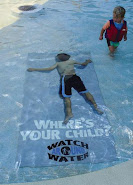
  • Water safety: Four thousand Americans drown every year, with most victims being men by a factor of four times more than women. Alcohol is frequently involved. So make sure the kids are supervised in the water every single minute. Watch out for rapid currents, rip tides and rocks, depending on where you are, and always be aware of your surroundings. Boat injuries claim another 700 American lives a year. Drive your boat sensibly, have enough life preservers on board for all passengers and do not drink alcohol and drive.


  • Bicycling: Wear a helmet! No matter how obvious this bit of advice is, I still see people riding without a helmet — and I really cringe when I see children without this life-saving protection. Head injuries are often very serious, if not deadly, and are inexcusable when they involve the lack of a helmet. Be aware of your surroundings and be in control of your bike at all times. Don’t take foolish chances.


  • Eating: Summer picnics can be a common source of food poisoning, manifested by vomiting and diarrhea. Food left out too long is the usual culprit. Handling uncooked chicken or eating undercooked chicken is also a common source of this illness.


  • Driving: We all drive more during the summer. The cheapest form of life insurance while you are in a car is the good old seal belt. Wear it! Make sure your children are in proper age-appropriate car seats. And hand-held cell phone use while driving your car is now illegal — don’t break the law.


Follow these tips, and have a very enjoyable, safe summer.

Terry Hollenbeck, M.D., is an urgent-care physician at Santa Cruz Medical Foundation in Scotts Valley. A doctor with 34 years’ experience, he invites health-related questions at valleydoctor@sbcglobal.net. Information in this column is not intended to replace professional advice. For any medical concern, consult a qualified practitioner.

==================================================================

Keep Summer Safe For Your Kids

With summer underway, outdoor activities are in full swing. However, without the proper precautions, summertime fun can result in serious injury or even death -- especially for kids. Sue Smith, at Children's Hospital of Michigan, says that an adult should always keep an eye on kids while swimming because drowning can happen in a matter of seconds. She adds that no child should be in a boat without a proper Type Two life jacket:

Listen:


And make sure the kids have their bike helmets strapped on right:

Listen:


Smith also reminds everyone to keep an eye on the kids when there fireworks are going on.

==================================================================

Letter: Never Leave Child Alone in a Car

Thursday, July 02, 2009

To the Editor:

On Saturday June 20, yet another child died of hyperthermia when left alone in a parked car. April Knight, 2, lived in Kentucky, and at the beginning of summer is already the 13th child in the U.S. to die in a hot vehicle this year.

How can we be sure this does not happen to the children and families in our own community?

The truth is summer may be a fun time of year, but it can present difficult, sometimes dangerous challenges for parents. From inconveniences like bug bites to tragedies like drowning and death, children themselves are often unaware of these issues or too young to understand. Fortunately, many of these accidents are preventable. As parents, babysitters and caregivers, it’s our job to ensure that every child remains safe and healthy in the coming months. Taking a few moments to be aware of these situations is a small sacrifice to make for our children’s wellbeing.

Parents might leave their children alone in a vehicle if they want to avoid waking a sleeping baby or getting the child out of and back into a car seat. But a child can get overheated quickly — it only takes 10 minutes for a car’s temperature to increase 19 degrees Fahrenheit. Long lines or a broken register can make a quick trip in the store unexpectedly longer; meanwhile, the vehicle is growing warmer. This and countless other safety issues for children in parked or running vehicles are very real and very dangerous. A child should never be left alone in a car.

Parenting can be tough at times, and summer safety issues pose a special challenge. Luckily, resources are available dedicated to helping parents make the season both fun and safe. Visit the Parent Resource Center on Stop Child Abuse Now (SCAN) of Northern Virginia’s Web site at www.scanva.org and look for the feature on summer safety. Reading through tips on children in cars, preventing sunburns, water safety, finding supervision and other topics in our summer safety section is an easy way to increase your knowledge and prepare for this season. Take time to learn more now, and keep summer the fun-filled time it should be for you and your children.


Diane Charles

Executive Director

SCAN of Northern Virginia

===================================================================

http://www.foxnews.com/story/0,2933,184842,00.html


FOXNews.com

Keeping Children Safe From Predators

Tuesday , February 14, 2006

FC1

This is a partial transcript from "Hannity & Colmes," February 10, 2005, that has been edited for clarity.

SEAN HANNITY, CO-HOST: Keeping children safe from predators is every parent’s top priority and now parents have a tool to help them do just that. "The Safe Side" is an innovative series of child safety videos that aid in teaching parents and children the important messages of safety in a variety of different situations.

Joining us now are two of the collaborators behind "The Safe Side." Of course, we have the host of "America’s Most Wanted." John Walsh is with us. And the creator of "Baby Einstein," Julie Clark is with us.

Welcome, both of you back to the program.

First of all, my kids, I didn’t have to make them watch this video. Because once I put it in, it was like every other video that you put in, they just loved it. They stood there. They watched it. We talked about it. It’s mind-boggling to me how many of these predators are out there, isn’t it?

JULIE CLARK, "THE SAFE SIDE": It’s stunning. It’s absolutely stunning. And parents have to have these conversations with their children. And what we hear at "The Safe Side" all the time is "I don’t know how to talk to my kids about it."

HANNITY: Yes.

CLARK: I don’t want the kids to be afraid of everybody that they see. And of course, you don’t. But you want your kids to have the right information and know what to do. So that’s what this is all about.

HANNITY: John, it frustrated me somewhat. I had you both on the radio and right here on this program. You, rightly so, were trying to get this Child Safety Act of 2005 passed. A lot of these guys didn’t have the moral courage to stand up here.

But we’ve got a problem in every small town and every city in this country. These guys are lurking in every neighborhood — there are no exceptions — that they are predators of little children.

JOHN WALSH, HOST, "AMERICA’S MOST WANTED": Absolutely. And there’s no way to track the ones who don’t comply with their parole or probation. You know, I thought parole or probation was a privilege, but we have 550,000 convicted sex offenders in this country. These are the guys that have been convicted and are felony convictions.

And 150,000 of them are missing. So there is no way to track them. No way to know if they’re going state-to-state. We had a case last week on "America’s Most Wanted" where a guy had two warrants out for him for violating his parole as a sexual predator, came into Florida and molested three little girls.

How do you tell those girls and those parents that the United States Senate didn’t have time to pass the Child Safety Act of 2005, and we have to reintroduce it for 2006, get it passed in the House and the Senate? I have to ask, what was the Senate judiciary doing this time around?

HANNITY: Obviously, they were too upset with, you know, giving lectures to Judge Alito, which they probably could have done in about a day.

What is the status? When you reintroduce this bill you have to now go back to the beginning. This — this was why we had some urgency the last time you were on the program. It didn’t get passed. How can people get behind it and how short did you fall here?

WALSH: Well, first of all, they can visit TheSafeSide.com, the Web site where they can find this video. And Julie did a great job. She’s the genius who created "Baby Einstein" and put all her heart and soul into this video.

So they generated almost 20,000 letters to U.S. senators, TheSafeSide.com did. And you can find that. You can find a sample letter, who your senators are, and write them.

But you’re right. We have to reintroduce it before the House of Representatives, go through all those nightmare hearings. And Mark Foley and James Sensenbrenner kept their word in the House of Representatives. But I was told by Arlen Specter, who’s been friend of mine for years, and everybody on that Senate judiciary, Democratic and Republican, that they’d get this bill done. And it’s about time that they do it, sooner the better, because these guys are roaming around the country.

HANNITY: Have you been up to Washington? Have you spoken to these guys, too?

CLARK: I have not, but boy, John has been up there constantly.

HANNITY: Yes, I know he has.

CLARK: It’s been fantastic.

HANNITY: What is the whole premise behind this? You obviously know that there are predators out there, but the idea is to teach children how to react. Are they capable?

CLARK: I think kids are really capable of knowing the right thing to do. Avoiding the situation, and that’s what we try to tell kids. You know, you get in the car, you put on your seatbelt every day.

HANNITY: Yes.

CLARK: You don’t get into an accident every day. You do it because you want to be prepared, and you want to be ready and know what to do if the situation arises. And that’s what "The Safe Side" is all about.

HANNITY: Yes. I want to go — John, I want to ask this question. The recidivism rate is so high for these predators. Why do we even let them out at all and have these — for example, I went to the New York Web site and literally you cannot follow, because you’re supposed to be able to find predators in your neighborhood. Why do we even let them out, knowing how high the recidivism rate is for these predators? Why let them out?

WALSH: Well, you and I have talked about this a million times. I mean, little Jessica Lunsford was kidnapped and murdered and buried alive by a guy that had 22 convictions, who was in noncompliance as a sexual offender. He was living 150 yards from her house and stalked her and broke into her house in the middle of the night.

I don’t know why we let them out. I don’t know why we as a society don’t accept the fact that they are not curable. I don’t know anybody in the psychiatric community that says we can cure these guys. So if we can’t cure them and we don’t keep them in jail as long as they should be there, I say they should be on a penile colony on Mars. We’ve got to — we’ve got to at least track them.

COLMES: "The Safe" — you do this in a very interesting way, a very creative way, that you don’t scare the kid. You actually make it fun for them. And it would be very easy to do it another way. How did you manage to do it in a way that gives them entertainment value as opposed to, "Oh, my God?" A frightening way.

CLARK: Right. Well, we had to make it fun. You’re exactly right. Because kids, the way that they learn is by repeat viewing. So we wanted them to watch it again and again and again.

We use a great host, a very, very funny person. There’s a gorilla. There’s a dog. There’s lots of goofy stuff that happens in the video. It was written by Carol Cordova, who’s a wonderful writer. She’s been teaching child safety for 20 years.

COLMES: Right.

CLARK: Great, great stuff. And that was, you’re exactly right, the key.

COLMES: They actually — the kids want to watch it?

CLARK: They want to watch it. You know? And parents are talking to them about it, and it’s opening up these conversations with parents and kids. And it’s great.

COLMES: In terms of the safety act we talked about, John. We talked about the trouble you had getting it passed. Specifically what would it do? What are the provisions of that piece of legislation?

WALSH: It would create a national sex offender registry. Some states sort of adhere to Megan’s Law. Some sheriffs don’t do it. Some chiefs of police don’t.

It would create a national sex offender registry so we would know. If these guys don’t register when they go state-to-state, it would be a federal crime. And guess who would look for them? Not that one little man police department or one- woman police department, the U.S. marshals would track them down.

If they committed a second offense, they would do 25 to life. It would certainly give us the chance to know that when they went from state-to-state or didn’t comply, that there would be somebody that would go get them.

COLMES: I don’t understand the resistance to this. And you, Julie, have — you must hear from parents all the time.

CLARK: I do.

COLMES: Who just are worried, concerned. We hear so many stories like the Lunsford case and the things that John covers and we’ve talked about on this show. Parents see this and they realize how vulnerable they are.

CLARK: Absolutely. All of us as parents vulnerable. And what I never hear people talking about are the rights of these children, the rights of the children who are victimized. What happens to them? I think that we always hear about the rights of the criminals but never the kids. And these kids’ lives are being destroyed. We have to work on it.

HANNITY: All right, guys.

Watch "Hannity & Colmes" weeknights at 9 p.m. ET!

Thursday, June 25, 2009

Mask Of Piety Unveiled - Yona Weinberg Convicted Of Sexual Abuse


http://www.empirestatenews.net/News/20090625-7.html

Bar mitzvah tutor convicted of sexual abuse

BROOKLYN - Yona Weinberg, 31, was convicted of seven counts of sexual abuse in the second degree and two counts of endangering the welfare of a child, for sexually abusing two boys.

Weinberg, a Flatbush Bar Mitzvah tutor and licensed social worker, will be sentenced September 9. He faces up to a two years in jail.

The victims were ages 12 and 13 at the time. One was one of Weinberg’s students, from the Khal Beth Abraham synagogue, where Weinberg gave Bar Mitzvah lessons. The other was a client from Weinberg’s work as a licensed social worker for the Jewish Board of Family and Children’s Services.

===============================================================

http://www.ny1.com/content/top_stories/101317/hebrew-school-teacher-found-guilty-of-sexual-abuse/Default.aspx

06/24/2009 10:28 PM

Hebrew School Teacher Found Guilty Of Sexual Abuse

By: NY1 News

A Hebrew school teacher in Brooklyn has been found guilty of sexually abusing two students.

The Brooklyn District Attorney says Yona Weinberg, 31, was convicted of sexual abuse in the second degree and endangering the welfare of a child.

The DA says Weinberg, a Flatbush Bar Mitzvah tutor and licensed social worker, sexually abused a 12-year-old boy and a 13-year-old boy back in May 2008.

Weinberg is due back in court on September 9th for sentencing, where he faces up to two years in jail.

==============================================================

http://www.nydailynews.com/news/ny_crime/2009/06/24/2009-06-24_molest_defendant_kid_came_on_to_me.html

Molest defendant: Kid came on to me

Wednesday, June 24th 2009, 4:00 AM

A Bar Mitzvah tutor and social worker charged with molesting four teens took the stand Tuesday to deny it - and even said one of the youngsters came on to him.

Yona Weinberg, 31, of Flatbush, said one teen asked him about Viagra and sex toys while he was praying and teaching Talmud, and another tried to grab his crotch.

He denied abusing the teens.

"It never happened," the married father of four said of one boy's account of a sexual proposition.

He said another boy put his hand on his right leg in a van.

Later, the boy said, "He had feelings for me. I explained to him that they were not mutual. I told him he would eventually outgrow them."

Weinberg, a licensed social worker who is now in real estate, lost his composure only when defense lawyer Marvin Schecter asked if he had called any of the families since his May 2008 arrest.

"I called at least two other patients to inform them I was no longer allowed to work with children," he said, lowering his voice, taking off his glasses and wiping his eyes.

Cross-examination is slated for Wednesday.

==============================================================

Daily News Comments:

1) What a bunch of BS

2) Pedophiles often blame the children they abuse as being the instigators of the abusive act. It's another facet of a pedophile's twisted mentality.

Wednesday, June 10, 2009

Rabbi Dovid Cohen; Ohel Children’s Home and Family Services - On The Hot Seat


Al Capone

Capone leaving court during his 1931
trial for tax evasion. (CHS DN-96927)


http://www.thejewishweek.com/viewArticle/c36_a16028/News/New_York.html

06/10/2009

by Staff Report

The halachic adviser to Ohel Children’s Home and Family Services, which receives millions of dollars in state and federal money, told a Bergenfield, N.J., synagogue audience in 2007 that tax evasion is permissible under Jewish law as long as one doesn’t get caught, according to people in attendance.

The adviser, Rabbi Dovid Cohen, a Brooklyn-based, highly respected halachic expert who also serves as one of three rabbinic guides to Nefesh International, a network of Orthodox mental health professionals, is said to have made the comments about tax evasion during a Shabbat talk at Congregation Beth Abraham in Bergenfield in February 2007.

Now, more than two years later, the repercussions may be taking a toll on Rabbi Cohen and his reputation.

Several in attendance at the talk said that Rabbi Cohen gave an extended response to a question from the audience, asserting that tax evasion is permissible under Jewish law, as long as there is no realistic possibility of being caught, thus causing a chillul hashem, or desecration of God’s name.

The justification was based on the rabbi’s apparent belief that the reason the rabbis of the Talmud forbade stealing from a non-Jew was only out of fear of anti-Semitism.

Virtually every halachic source agrees that tax evasion, as well as theft from non-Jews, is categorically forbidden.

Rabbi Cohen allegedly told his audience that he was making his controversial remarks on Shabbat — he is also said to have asserted that, like the biblical Esau, non-Jews still hate Jews — knowing he was not being recorded, and that if subsequently questioned about his statement, he would deny it.

The rabbi told The Jewish Week on Monday that the statements attributed to him were "totally misunderstood" and that he "repudiated" them.

Based on letters obtained by The Jewish Week, it appears that at least seven people in attendance at the lecture wrote to or called the Rabbinical Council of America, the largest group of Orthodox rabbis, where Rabbi Cohen, though not a member of the RCA, served on its prestigious Va’ad HaPoskim, a group of halachic authorities. Some of the letter writers sought to have Rabbi Cohen removed from the panel; others simply attested to their having heard the rabbi make the remarks, which he denied to the RCA.

The RCA appointed a committee to look into the matter, and concluded that, based on Rabbi Cohen’s assurance that he opposes tax evasion and affirms treating non-Jews with full respect, the matter was closed.

But last week, without fanfare or notice, the RCA disbanded the Va’ad HaPoskim.

Some speculate that it may have come about in light of recent reports in the Jewish press regarding Ohel, with which Rabbi Cohen is affiliated. Others note that the RCA passed a resolution at its annual convention last month calling on congregations not to give honors to those who engage in unethical conduct.

"So how would it look if one of their halachic authorities is alleged to have approved of cheating on your taxes?" one source noted.

In response to a query from The Jewish Week, RCA Executive Director Rabbi Basil Herring explained that the Va’ad HaPoskim move was taken "to avoid confusion." He said that while individual members of that group will be consulted on halachic matters, as in the past, the RCA’s halachic decisions will continue to be made by its Va’ad Halacha, made up of RCA member rabbis.

But according to an RCA official, "the catalyst for the move was the Rabbi Cohen issue."

The official, like most others contacted for this report, asked not to be named out of concern about repercussions.

Asked in an e-mail whether it was appropriate for Rabbi Cohen to continue to serve as halachic adviser for the group, an Ohel spokesman did not respond.

Rabbi Cohen, an American-born graduate of Yeshiva Chaim Berlin, with a pulpit on Coney Island Avenue in Brooklyn, has a longstanding reputation as one of the most respected and practical-minded authorities in the charedi community.

"He has taken courageous positions" on matters of domestic and sexual abuse, according to Rabbi Tzvi Hersh Weinreb, the outgoing executive director of the Orthodox Union. Though some halachic experts are reticent, as is Ohel itself, Rabbi Cohen has encouraged victims in some cases to go to civil authorities, including the police.

Rabbi Abraham Twerski, a psychiatrist and fellow halachic adviser to Nefesh International, said Rabbi Cohen is one of the most "highly respected" rabbis and "one of the most flexible halachic experts" who is unafraid to take lenient positions.

Both rabbis expressed surprise at the controversial statements about tax evasion and non-Jews attributed to Rabbi Cohen.

But another leading rabbi, who described himself as a longtime friend and admirer in many ways of Rabbi Cohen, said that though he had not heard of the tax evasion statement before, he found it "consistent" with the rabbi’s views on non-Jews.

"The irony is he’s a big liberal in the haredi world," the rabbi said.

Others recalled that Rabbi Cohen is no stranger to controversy, and that at a Nefesh International conference in 2000, he suggested that women in abusive marriages stay in the marriage for the sake of their children. After much heated discussion, he apologized the next morning.

===========================================================================

http://jewishsurvivors.blogspot.com/2006/08/how-many-survivors-did-harav-dovid.html

Lo ta'amod al dam re'echa. We are forbidden to stand by and do nothing!

I keep hearing about cases in which survivors of childhood sexual abuse went to Rabbi Dovid Cohen for help. Each of these cases Rabbi Dovid Cohen stated that he didn't believe the survivors or that the cases were unsubstantiated.

Rabbi Dovid Cohen is the halachic advisor
(advisor on Jewish law) at Ohel (a mental health center in Boro Park). I think it's also vitally important to note that there have been many complaints about Ohel over the years regarding the training and education of those who work in their programs for survivors and offenders. I've also been told that if a therapist at their agency suspects a child is being abused, they need to get the ok from Rabbi Cohen prior to making hot-line reports.

Many Victim Advocates like myself have been saying over and over again that our rabbis DO NOT have the education or training to collect forensic evidence nor know how to conduct victim sensitive interviews. Our rabbis NEED to be working as if they are all mandated reporters. Meaning if they SUSPECT a child is being abused and or neglected -- they pick up the phone and make a hot-line report.

We all NEED to start demanding that when a rabbi hear disclosures they IMMEDIATELY help those who have been "allegedly" victimized contact child abuse hot-lines and or make police reports. Let those who are trained conduct the investigations. The way cases have been handled in the past NEEDS TO STOP TODAY!

The goal is to protect our children from ANY POTENTIAL HARM!!!

Here's a list of some of the cases in which Rabbi Dovid Cohen said were unsubstantiated. If you know of more please post them:

  1. Simcha Adler
  2. Yohannan Berkowitz, PhD
  3. Rabbi Lewis Brenner
  4. Rabbi Ephraim Bryks
  5. Rabbi Moshe Eisemann
  6. Rabbi Eliezer Eisgrau
  7. Shmuel Juravel
  8. Rabbi Solomon Hafner
  9. Rabbi Yaakov Menken
  10. Rabbi Avrohom Mondrowitz
  11. Rabbi Ben Zion Sobel
  12. Rabbi Mordecai Tendler
  13. Rabbi Matis Weinberg

READ THIS TOO!
Was HaRav Dovid Cohen Threatened?

Wednesday, June 03, 2009

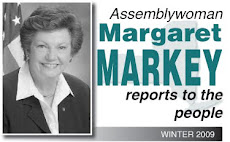
Assemblywoman Markey Urges Support for “Child Victims Act of New York”


http://tampabay.injuryboard.com/miscellaneous/ny-child-victim-act-amended-to-include-public-institutions.aspx?googleid=264200

NY Child Victim Act Amended to Include Public Institutions

Posted by Joe Saunders
Thursday, June 04, 2009 9:53 AM EST

In a surprising move, NY state Rep. Margaret Markey has announced that she'll offer an amendment to her Child Victim Act bill to include public institutions as well.

The Child Victim Act is designed to give a voice to those who've suffered childhood sexual abuse but had no legal recourse due to the statute of limitations. The amendment will remove the sole objection the Catholic Church and other private institutions have had regarding the bill.

Now that the amendment has been offered, there should be no excuse whatsoever to oppose the legislation. Even NY Catholic Church officials were taken off guard by the announcement. A spokesperson for the NY State Catholic Conference told the NY Times, "This is not what we expected; this is something new.”

===================================================================

http://www.nytimes.com/2009/06/04/nyregion/04abuse.html

June 4, 2009

Sex Abuse Bill to Include Public Institutions, Too

Addressing complaints from Roman Catholic officials and others, the state assemblywoman sponsoring a bill to temporarily lift the statute of limitations on lawsuits alleging the sexual abuse of children said on Wednesday that she would amend her proposal to apply to public as well as private entities.

The change would give people who say they were abused in public schools, for example, the same opportunities to sue as those claiming abuse in religious or private schools.

The assemblywoman, Margaret M. Markey, a Queens Democrat, said fellow lawmakers supporting the bill, known as the Child Victim Act, had told her that their constituents’ most persistent reservations about it were based “on the idea that this was somehow unfair.”

“I think the vigorous debate we’ve had this year has made this a better bill,” she said in a statement.

The move seemed to surprise both advocates and opponents of the legislation, which has been the focus of a lobbying battle for months pitting advocates for protection against sex abuse of children, and their lawyers, against a coalition of religious organizations facing huge potential civil liabilities and some civil rights lawyers chary of compromising statutes of limitations.

Spokesmen for the Archdiocese of New York and the Diocese of Brooklyn, which have sent priests, youth groups and official delegates to Albany repeatedly in recent months to argue against Ms. Markey’s bill, said they had not seen the proposed amendment nor had an inkling it was coming.

Dennis Poust, a spokesman for the New York State Catholic Conference, the lobbying arm for the state’s Catholic prelates, echoed reaction from many on both sides, saying, “This is not what we expected; this is something new.”

Ms. Markey has championed the legislation for the past three sessions, but this is the first time it has stood a chance of passing.

While the bill itself did not create the inequity, it gave opponents a strong argument because it did not address a built-in protection that public agencies enjoy. The protection, which many states provide under the British common law tradition of “crown immunity,” limits the liability of public agencies by requiring anyone alleging harm to file notice of claim within 90 days.

Thus, a child abused by a teacher in a public school would have 90 days after turning 18 to file a claim. By contrast, under current law, a victim of abuse at a private or religious school can file a civil claim within five years after turning 18.

The Child Victim Act would extend that time limit to 10 years. More importantly, it would suspend the statute of limitations altogether for one year. A man of 50 who claimed he was sexually abused at age 10, for instance, would be able to file a civil suit during the one-year window.

But until Ms. Markey recast her bill on Wednesday, it did not apply to public institutions.

A competing bill, sponsored by Assemblyman Vito J. Lopez of Brooklyn and supported by Catholic officials, includes both the longer time limit for filing suit (to age 28) and a provision giving the same rights to victims in public settings, abolishing the 90-day rule where sex abuse is alleged. But it omits the one-year window for both classes of victims.

Advocates for sex abuse victims applauded the change in Ms. Markey’s bill. Although he had not seen the new language, Bob Kristan, spokesman for the New York Coalition to Protect Children, said the revision “sounds like it will help finding more predators, provide justice for more victims, and protect more children — and so we support it.”

Ron Davis, a spokesman for the United Federation of Teachers, which represents teachers in New York City schools, said the union “supports any reasonable measures that seek to protect children, so we are not opposed to this modification.”

Fresh opposition to the bill, however, may yet emerge. On Wednesday, few municipal officials had heard of the new version. But Robert N. Lowry, deputy director of the New York State Council of School Superintendents, which represents about 700 superintendents, said that his group would now oppose the bill. The superintendents had previously taken no position on it.

“Statutes of limitations exist for a reason,” Mr. Lowry said. “We would have a concern about litigation arising that would be hard to respond to because witnesses could have disappeared or even died in years past.”

Religious institutions opposing the Child Victim Act, which is sponsored in the Senate by Thomas K. Duane of Manhattan, have argued that they would be bankrupted by a deluge of new lawsuits, and that the bill is inherently discriminatory.

When he introduced his competing measure, Assemblyman Lopez said he was motivated partly by a sense of its arbitrary unfairness — “where you can only get justice if you are abused in this building, but if you got hurt across the street, too bad.”

Mr. Lopez said on Wednesday that although he had not seen the revised version of the Markey bill, he was pleased it now included equity for sex abuse victims in public institutions.

But he will not drop his own bill, he said. “I’m still opposed to any legislation that lets you sue somebody for something that happened 40 years ago,” he said. “That’s crazy.”

David W. Chen and Javier C. Hernandez contributed reporting.

===================================================================

http://www.newsday.com/news/local/state/ny-stabus0312834537jun02,0,1055524.story

Sex abuse victims lobby in Albany for limitations bill

ALBANY - Beth McCabe is a smiling 12-year-old with wavy dark hair in the photograph on display in the Legislative Office Building.

The former Lindenhurst resident is one of 18 adults who contributed childhood snaps to an exhibit aimed at winning support for temporarily lifting the statute of limitations on child sexual abuse cases. Eight of the photos are of people who grew up on Long Island.

McCabe, now 60, said a visiting Catholic priest abused her between 1960 and 1963. "I'm here as proof that these things happen," she said. "And I support this bill because it provides a window where victims can come forward to expose predators who continue to abuse."

She and other participants in the photo exhibit spent much of Tuesday lobbying on behalf of the bill from Assemb. Margaret M. Markey (D-Maspeth).

The measure seeks to give abuse victims a one-year window to file suit in civil court regardless of how long ago the assault occurred. It also adds several years onto the current statute of limitations, which is five years after an accuser turns 18.

The bill previously was passed by the Assembly, only to die in the then-Republican-controlled State Senate.

A rival bill from Assemb. Vito Lopez (D-Brooklyn) also extends the statute of limitations but doesn't provide for the one-year window on old cases.

The Diocese of Rockville Centre and others oppose the Markey bill, saying it unfairly targets the Catholic Church by exempting public schools and other local governments. Church officials have raised the specter of bankruptcy if the bill becomes law. They back the Lopez measure.
==================================================================

http://assembly.state.ny.us/mem/?ad=030&sh=story&story=26400

News from
Assemblywoman
Margaret M. Markey
30th Assembly District Assemblywoman Markey Urges Support for “Child Victims Act of New York”
March 20, 2008

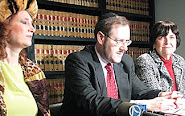
Assemblywoman Margaret Markey was featured speaker at the 2008 Legislative Breakfast of the New York State Coalition against Sexual Assault in Albany on March 19, 2008.

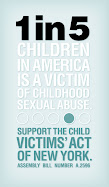
Speaking on a program with the coalition’s executive director, Jane McEwen, and board member Varrone Munger, Assemblywoman Markey told the audience that research shows that one in five children in America are sexually abused.

She described how her Assembly bill (A.4560-B) will provide greater justice for victims of childhood sexual abuse and help identify and stop sexual predators from continuing their abuse. With passage of her Assembly bill assured in 2008, she told Coalition members that to ensure that this legislation becomes law they need to reach out to their State Senators to urge that they support the companion bill in the Senate (S.4614-A).

Following are remarks by Assemblywoman Markey at the event:

Thank you for this opportunity to speak about my legislation. As all of you here this morning know sex crimes are among the most heinous and deeply disturbing in our society. This is particularly true when they are committed against children. At present, New York State law enables sexual predators to avoid the consequences of their crimes by unreasonably shielding them from criminal prosecution and civil action.

Our present law also enables abusers to continue their predatory actions and assault new victims. We in the Legislature recognized how important it is for victims of sexual assault to get justice for the heinous crimes committed against them.

My bill – A.4560B, the Child Victims Act of New York – will provide the opportunity for victims who were shut off from justice to receive their day in court. And – equally important – it will help identify and expose predators who will otherwise roam freely to repeat their abuse again and again.

The U.S. Department of Justice estimates that about one in five American children are sexually abused before age 18. But only about 10 percent of these secretive crimes are ever reported. Because of the young age of those who are abused, and the position of authority most abusers have over their victims, the window of time to bring charges, under present law, is far too restrictive.

My bill extends the statute of limitations for bringing charges in child sex abuse cases – in cases where the victim does not report it to law enforcement – from age 18 to age 23. It also calls for a similar extension in the civil statute of limitations. These changes would give a child victim until at least the age of 28 to seek prosecution or civil redress.

One other important provision of my bill – just like the ones that became law in California and Delaware – is creation of a one-year “window” in the civil statute of limitations provisions. This provides one-year from the effective date of the law where victims of any age would be able to seek damages for past instances of child sexual abuse. This important provision will enable many victims who are now adults to get the justice they have previously been denied under the current restrictive law.

My legislation has been adopted by the Assembly three times and will be voted on again shortly.

Senator Stephen M. Saland is sponsor of the companion bill in the State Senate, 4614-A. Last year, his bill did not even come out of the Senate Codes Committee. To help ensure it is enacted in this session, we need the help of everybody in this room. We need you to reach out to your local Senator and urge him or her to support Senator Saland’s bill.

==================================================================

Assemblywoman
Margaret M. Markey
30th Assembly District

Contact Information

DISTRICT OFFICE

55-19 69th Street
Maspeth, NY 11378
718-651-3185

ALBANY OFFICE

LOB 654
Albany, NY 12248
518-455-4755

============================================================

http://www.forward.com/articles/107113/

Orthodox Video Silent on Reporting Sexual Abuse to Police

By Rebecca Dube

Published June 03, 2009, issue of June 12, 2009.

A government-funded video made by one of New York’s largest Orthodox social service agencies — touted as its guide for dealing with child sexual abuse — makes no mention of abuse as a crime to be reported to police.

Critics say the video raises questions about Ohel Children’s Home and Family Services, which is heavily supported by taxpayers and deeply involved in the Brooklyn district attorney’s efforts surrounding child sexual abuse in ultra-traditional Orthodox Jewish communities. Some Orthodox leaders, those critics say, including those at Ohel, have tried wrongly to handle sexual abuse within the community, excluding secular law enforcement authorities — leading to abuse being covered up and cases of pedophiles remaining free to molest more children.

“The only way to begin dealing with this issue is to begin reporting any incidents of sexual abuse directly to the authorities,” said Lonnie Soury, spokesman for Survivors for Justice, a group of Orthodox sexual abuse survivors. “Any organization that advocates anything but that is doing so at the expense of children’s health.”

The Ohel DVD calls the phenomenon of child sexual abuse in the Jewish community a shande, meaning a scandal or shame, and urges victims and their families to seek counseling. It warns schools that they are responsible “to do everything, by all means,” about the abuse. And it instructs parents to “do whatever you can to make sure that your child is never put into that position again.”

“What we want to do is evoke action,” declares Ohel CEO David Mandel at the video’s conclusion.

But the word “police” is not spoken once during the 10-minute video, titled “Ignorance Is Not Bliss.” Nor is sexual abuse ever described as a criminal act. None of the speakers suggests calling 911, city or state child welfare services, or any other secular authority. The DVD, produced in 2004 and updated in 2007, according to its copyright notice, is freely distributed as a resource for survivors, parents, educators and community leaders.

The Brooklyn-based Ohel, a leading social services agency serving the Jewish community, defends the video.

“This specific video, ‘Ignorance Is Not Bliss,’ which was produced some eight years ago, is not about the logistics of how to report, or who to report to,” said Ohel spokesman Derek Saker, who responded to questions from the Forward in an e-mail. “Rather it was developed as an educational and informational tool for the community, to raise awareness of such shocking abuse, communicate an understanding of what such abuse is, how it affects so many, and its consequences on victims and families.”

Mandel refers regularly to the DVD as a resource for people who want to know what to do about child sexual abuse; most recently, in a full-page advertisement published May 13 in The Jewish Week, the organization listed watching the video as a “practical suggestion” for community members who want to take action against abuse.

The video begins with testimony from survivors of child sexual abuse and the mothers of two victims, describing the devastating impact of the abuse. The presentation then segues into various community leaders explaining why it is important not to shame sexual abuse survivors but to bring their stories out into the light and stop sexual predators.

Rabbi Shmuel Kamenetsky, a highly respected rosh yeshiva at the Talmudical Yeshiva of Philadelphia, says in the video, “For victims, I would say that it is their duty… and a mitzvah, to go and reveal their stories.”

But the video never specifies to whom the victims should reveal their stories, or what responsibility adults have to report suspected abuse to law enforcement authorities.

The mother of a 15-year-old boy who was molested, whose story is held up as an example, says that she told community members about the molestation because “I was not going to let this man get away with it.”

“I didn’t treat it like it’s a secret, because the molesters, this is what they thrive on,” she says. “They think everyone should just keep it a secret.”

The woman is not identified, and she’s filmed behind a screen to hide her face. She makes no mention of calling police, or sending the molester to prison — the only surefire way to stop a pedophile from victimizing more children.

Aaron Twerski, a professor at Brooklyn Law School and a national expert on tort law, says in the video, “Every case that exists is a tragedy, and the fact that one molester can affect so many people makes this a problem that we just can’t look away from.”

Twerski does not suggest any legal remedies to the problem.

Contacted by the Forward, Twerski said that reporting abuse to police is a complex issue that could not be fully raised in the 10-minute video.

“The focus of that video was to alert the community to the problem,” Twerski said. “It’s a complex question of who has to report, and who is a mandated reporter. I’m not sure we could do it in that video.”

While the legal intricacies around mandated reporting may indeed be complex, the moral obligation of ordinary citizens is clear, Soury said: Report suspected child sexual abuse to authorities.

“It’s like someone breaking into your house and hurting you — should that be handled in the community?” Soury said. “No, you call 911 when there’s a crime.”

Soury said that efforts to deal with pedophiles within the religious community have failed because rabbis, principals and other community leaders are not equipped to investigate, prosecute and punish serious crimes. “The community cannot handle it. The community is not law enforcement,” Soury said. “These are terrible crimes against children.”

This is not the first time a video has raised questions about Ohel’s commitment to reporting abuse. Mandel was videotaped speaking at a February 2008 workshop in Baltimore about sexual abuse, during which he seemed to suggest ways to avoid reporting incidents of sexual abuse.

In a response to a question about a father molesting his child, Mandel said, “One of the ways we advise the family to handle this is — for the protection of the family and so that the case does not have to become reportable to authorities, which is a whole separate conversation — we strongly advise and sometimes make a statement that the father needs to leave the house, period.”

A video of his remarks was posted on YouTube by The Awareness Center, a Baltimore-based Jewish group fighting against child sexual abuse. At the end of Mandel’s remarks, an unidentified person in the audience shouts out, “What about calling Child Protection [a state agency]?” Mandel ignores the question.

Ohel’s response to child sexual abuse is not just an issue for the Orthodox community; it’s also a matter of taxpayer concern. Ohel runs a large and successful foster care program (ranked No. 1 in New York in 2006), and subsists mainly on government funding. In 2006, the most recent year for which tax documents are publicly available, Ohel received $38 million in taxpayer money, 89% of its total revenue.

The “Ignorance Is Not Bliss” video was produced with a grant from the New York State Office of Mental Health. Spokeswoman Jill Daniels said the amount of monitoring by her agency varies when it funds projects such as Ohel’s, and that she didn’t know how involved the agency had been in the video’s production. Daniels did say her agency’s policy is that anyone who suspects child abuse of any kind should report it to authorities.

Earlier this year, Ohel was selected by the Brooklyn district attorney’s office as a partner in its Kol Tzedek hot line, which is aimed at encouraging Orthodox Jewish victims to report abuse to authorities. Jerry Schmetterer, a spokesman for the district attorney’s office, said he hadn’t seen the “Ignorance Is Not Bliss” video but said that District Attorney Charles Hynes has a good working relationship with Ohel.

“We encourage anyone with knowledge of a crime to call the police. That’s all I’ll say about that,” Schmetterer said.

One unusual aspect of Ohel’s video is that it features an interview with a confessed child molester who speaks behind a screen to shield his identity. The pedophile says that his tactic for molesting children was to ask them how much they weighed, then pick them up to “test” their weight as an excuse to fondle them.

“I’m only one person, but look at all the people I messed up,” the molester says.

The Forward asked Ohel’s Saker what happened to this pedophile and whether his abuse of numerous children in the Orthodox community was ever reported to police. Saker did not respond to the question.

Contact Rebecca Dube at dube@forward.com

Tuesday, May 19, 2009

The Agudah Motto: Sanctuary For Pedophiles...


Protest At Agudah

Rally outside Agudah dinner protested group’s opposition to pedophile legislation. Hella Winston

Click Here For Jewish Week article

by Hella Winston

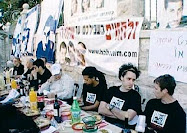
The battle over legislation that would remove the statute of limitations on child sexual abuse for one year took to the streets Sunday night, complete with a dose of sophisticated street theater.
The scene was the New York Hilton Hotel, where the haredi umbrella group Agudath Israel was holding its annual dinner. The organization — along with Torah Umesorah, the Orthodox educational network, and the Catholic Church — opposes a bill authored by Assemblywoman Marge Markey that, if passed, could potentially end up costing Orthodox institutions tens of millions of dollars. The bill provides a one-year window during which alleged victims can file civil suits regardless of when the abuse took place.
A small group of supporters of the Markey bill, in standard protest style, picketed the Agudah dinner, displaying signs that read “Agudah Stop Protecting Pedophiles.” But the group went a step further. It handed out forged fliers designed to look exactly like those e-mailed to Agudah members. On one side was a copy of the Agudah’s joint press release with Torah Umesorah opposing the Markey Bill. On the other was a fake statement from Rabbi David Zwiebel, Agudah’s executive vice president for government and public affairs.
The fake message — in which “Rabbi Zwiebel” claims to have been ordered to work with the Catholic Conference of New York State in this “holy mission” and calls upon Agudah members to decide how the organization should respond to the “epidemic of sexual abuse” —— appeared real enough to at least one Jewish leader who saw it. He called The Jewish Week to tip the paper off about the “statement.”
Among the protesters were Mark Appel, a community activist from the Upper West Side; Rabbi Nuchem Rosenberg, an activist and advocate from Williamsburg who claims he was shot in the head for speaking out about child sexual abuse in his community; Levi Goldenberg, also from Williamsburg and the founder of an organization called The Committee for Safeguarding Orthodox Jewish Children; and Joe DiAngello, a member of the group Survivors for Justice who alleges he was raped in a mikveh when he was 7.
According to Rabbi Rosenberg, the protesters were there “[to let] Jewish people who are supposed to be Torah-observant people know that we are not allowed to have any kind of pedophilia in our community. And [unfortunately] the Agudah and these rabbis with them are backing these pedophiles on a very, very bad level.”
He referred specifically to the case of Rabbi Yehuda Kolko, who is alleged to have abused what some believe could be dozens of children with impunity for over four decades, both in schools and at the Agudah-owned Camp Agudah, Inc.
At one point, the protesters got into a confrontation with Israel Lefkowitz, who identified himself as an Agudah trustee “proud to be an Agudist since 1940.” Through the open window of his car as he entered the Hilton, he told protesters that he “was against sexual harassment for all the children.”
When asked by The Jewish Week whether he thought people should report allegations of abuse directly to the police, Lefkowitz did not respond, but chided the protesters for demonstrating in public.
“We are on the same side,” he told them. “The problem [with the Markey bill] is that somebody can wake up after 40 years and say that he was molested.”
Rabbi Zwiebel said in an e-mail, “Obviously I don’t like it when people use my name and image falsely.
“But,” Rabbi Zwiebel added, “Lefkowitz is essentially right: the protesters are our brothers and sisters, and they have a special claim on our attention and conscience. We may have disagreements over specific strategies and approaches, which at least from our end we are determined to keep civil, but we need to remember who/what the real ‘enemy’ is: apathy about the underlying problem. I hope the day will come when we can all look back and say that we took steps that made a real difference.”

Jewish Week article here

=================================================================
"What Agudath Israel and Torah Umesorah must object to, however, is legislation that could literally destroy schools, houses of worship that sponsor youth programs, summer camps and other institutions that are the very lifeblood of our community."

Visit VIN for complete statement!

Wednesday, May 06, 2009

2B or not 2B a Frummie Fraud - The Beards Are a Crying Shame!!!


The compromise supported by the 5 Towns Jewish Times and others is nothing more than a sham to discourage and prevent victims from ever seeking civil justice

The Zalkin Law Firm Explains Why a Compromise with Institutions that Harbored Pedophiles is Bad Policy

Sexual Abuse Attorney Irwin Zalkin explains why a compromise with the institutions that harbored pedophiles is bad policy.

New York, New York (PRWEB) May 6, 2009 -- Recently, the New York Assembly has begun to consider whether it should limit the amount of money that a jury can award to remedy the damage endured by a survivor of childhood sexual abuse. That proposal was supported in a recent article in 5 Towns Jewish Times, entitled "Sexual Abuse Legislation: A Proposed Strategy For Reform," by David Mandel. Under the proposed scheme, regardless of the facts in a case and the financial cost to the survivor of taking on well funded and insured religious corporations at trial, the most that can be recovered is $500,000. The attorney representing the victim would be limited to a 10% fee. "Such a compromise, to please pedophiles and their masters, is bad policy," states Irwin Zalkin, an attorney helping survivors of childhood sexual abuse (http://www.zalkin.com) across the country. "The compromise supported by the 5 Towns Jewish Times and others is nothing more than a sham to discourage and prevent victims from ever seeking civil justice," said Zalkin.

As Zalkin explains, "The institutions protected by the compromise supported by Mandel and 5 Towns Jewish Times are those who have purposely engaged in acts which deceived whole communities regarding the safety of children left in their care."

"The offending institutions have insurance and their own substantial resources to hire the biggest most expensive law firms to put on million dollar defenses. The survivor, of course, has none of these resources," states Zalkin. He further explains that: "For survivors their only hope of equaling the playing field is to hire a lawyer on a contingency basis who gets nothing if there is no recovery. That lawyer has to spend thousands of hours of work and advance the thousands of dollars to hire a team of professionals including, investigators; forensic experts in psychiatry or psychology; and various disciplines of rehabilitation; experts regarding what were the best practices to follow when caring for children; and economists." "The compromise scheme would ensure that, at the most, a long suffering David must once again take the field against a well conditioned and equipped Goliath. At the end of the day the wounded child remains forever maimed," said Zalkin.
With offices in New York and San Diego, The Zalkin Law Firm is one of the premier sexual abuse and personal injury law firms in the country. The firm's lawyers have achieved groundbreaking results in numerous high-profile clergy abuse (http://www.nyclergyabuse.com) cases across the United States. Mr. Zalkin has negotiated over $200 million in settlements in Catholic clergy sex abuse (http://news.zalkin.com) cases.

Mr. Zalkin is available to speak to the media about clergy sexual abuse and the Child Victim's Act of New York (A2596). Please call Lisa Maynes (212-889-1300) to arrange interviews. To speak to Mr. Zalkin about legal representation, please call The Zalkin Law Firm (212-889-1300).

Contact Information
Irwin Zalkin
The Zalkin Law Firm, P.C.
http://www.Zalkin.com
800-724-3235

http://www.prweb.com/releases/2009/05/prweb2390414.htm

Tuesday, April 21, 2009

Off The Derech by Faranak Margolese: A MUST READ !

http://www.devorapublishing.com/Wpages/BookSpecific/Derech7408.htm

Off the Derech is the phrase used within the Orthodox Jewish community to describe those who have left Jewish observance.

Using questionnaires, extensive interviews with psychologists and rabbis, and her Off The Derech website, the author reveals the multi-layered reasons for the defection of so many observant Jews from Judaism. At the same time, she presents solutions to this growing problem, thereby creating an invaluable handbook for parents, teachers and rabbis.

Each chapter of this well-researched book deals with a different element of the "Off the Derech" syndrome as it explains, in detail, how parents can reach children who have become alienated and disaffected from their culture and their people.

Sample chapters include:

  • How Big is the Problem?

  • Dispelling the Myths: Assimilation, Then and Now
  • Rejection
  • Imposing Religion: Free Choice and Conditional Love
  • Who are the Parents?
  • Understanding and Dealing with Rebellion
  • Implementing Observance: The Role of Community
  • Narrow Definitions of Observance
  • Those Who Return Again

“Sobering and required reading for anyone involved in any aspect of Jewish education — whether parent, teacher, rabbi, or citizen-representative of the Torah community. We are indebted to Faranak Margolese for studying so thoroughly a crisis too disturbing and painful for most of us even to consider.”
Lawrence Kelemen, Author of To Kindle a Soul: Ancient Wisdom for Modern Parents and Teachers

“This is a courageous and necessary book. If Orthodox life takes it seriously, it will change all of Jewish life for the better.”
Dennis Prager, Best selling author and nationally syndicated radio talk show host.

“Off the Derech is essential reading for every Jewish parent and educator concerned with the alienation of our young people. It is an invaluable source for understanding why observant Jewish youth leave the fold and a priceless tool for preventing them from doing so.”
Natan Lopez Cardozo, Dean of The David Cardozo Academy

A probing book about a sensitive and rarely discussed topic, why people leave religion. Faranak Margolese seems to have considered this problem from every angle, interviewed everyone, and offers answers that can affect the future of Jewish life.”
Joseph Telushkin, Author of Jewish Literacy, and The Book of Jewish Values.

=========================================================================

http://www.devorapublishing.com/Wpages/Reviews/RevDerech.htm


Off the Derech

Where Did It Go Wrong?

One of the many stories quoted by Faranak Margolese in her book Off the Derech is about a man named David who grew up in an Orthodox home, but eventually abandoned observance. When pressed to describe his education, he recounts a day in second grade when his teacher played an alleged tape recording of gehennom, or hell.

"Basically, they shut off the lights and there was music in the background and people were screaming things like 'oy vey, I am hanging from my tongue. If only I wouldn't have spoken loshon hara!'"

For Margolese, this story - and others like it - illustrates one of the primary reasons Orthodox Jews go "off the derech" (literally, off the path): religion is experienced as fearful and oppressive instead of meaningful and joyous.

Off the Derech cannot be easily classified in terms of traditional genres. Certainly, it has academic ambitions. It is a description of why observant Jews leave Judaism and a study of the reasons for these defections. Margolese conducted interviews and an on-line survey to collect data. But it's no surprise that Off the Derech is published by a Jewish publisher and not an academic one.

On the book's cover, under an upturned kippa, is a second subheading: "How to Respond to the Challenge." For Margolese, the phenomenon of Jews leaving observance is fundamentally problematic. She calls it an "epidemic" and opines that "there is no greater challenge facing the Jewish world today."
Ideological turns like this put Margolese's academic credentials - and conclusions - into question, as does the fact that she quotes rabbis and social workers for information better left to historians and sociologists. Yet no matter how unfortunate Margolese's academic standards are, Off the Derech is not only an insightful book, it is a courageous one.

One of Margolese's most productive and revolutionary ideas is one that is not even stated explicitly. Off the Derech is, primarily, an examination of the failures of the Orthodox community. In trying to locate the communal sources of apostasy, Margolese implicitly acknowledges that a wayward son's departure from tradition is not necessarily exclusively his fault. Rather, in many instances, the Orthodox community does not facilitate conditions that make Orthodoxy attractive. In a discourse that is generally limited to the theological, Margolese stresses the sociological and the psychological.

"When asked to identify one thing that caused them to move away from observance," writes Margolese, "44 percent pointed to observant people." A distant second was "Life Circumstances" at 27%. Only 2% said "God." While the truth or falsehood of theological claims play a role in people's religious decisions, Margolese suggests that those who leave Orthodoxy are much more likely to do so for emotional reasons. "When young people feel unhappy in life they are likely to feel unhappy in their observance."

This is a profoundly modern idea. It posits happiness as an ideal and it recognizes that ideology is often socially constructed. One's experiences are more likely to positively or negatively affect observance than one's beliefs.

In a similarly contemporary vein, Margolese stresses the need to emphasize meaning. The Orthodox community cannot take it for granted that their children know why they are Jewish.

"Today we tend to focus on the microelements of Torah, the mitzvot and how to practice them. But we almost entirely neglect to transmit the purpose, the vision and context for the mitzvot we teach. We focus on how and what to observe, but not why."

While Margolese believes that commandedness is and should be an important reason for being observant, she suggests that it is not enough. Jews should be educated about how an observant life is good for them as individuals, good for their communities and good for the world as a whole. The last point speaks to Margolese's critique of Orthodoxy's xenophobia. Sixty-five percent of those interviewed thought many or most people in their communities were racist. For Margolese, a meaningful Judaism must be one that accounts for the other 99.8% of the world.

Margolese also argues for diversity within the Orthodox community. Difference is not only acceptable, it should be valued. Though this is in tune with contemporary multiculturalism, Margolese makes a religious argument for it. "Think of the world God created, so different and varied... Our communities are best served by being a microcosm of God's own world, by respecting diverse personalities and addressing their various needs."

Yet Margolese's argument for the value of difference and a meaningful Judaism that doesn't solely rely on commandedness begs the question: Why is Orthodox observance the only derech?

Indeed, Margolese herself demonstrates the difficulty of reconciling Orthodoxy and diversity.

In charting the narrow definitions of observance, Margolese cites the case of author Chaim Potok, whose father disapproved of his artistic ambitions. "Whatever the case," Margolese writes, "today, Mr. Potok is a Conservative rabbi."

In fact, Chaim Potok passed away a few years ago. Additionally, for the several decades prior, he was no "Mr." He held degrees that earned him the titles "Rabbi" and "Doctor."

Off the Derech is a strange, but ultimately important book, which is already finding readers and followers. Yet the book forces us to ask: Will the logic of Orthodoxy always yield narrow choices and difficulty with the "other?" In other words, if in a book which touts compassion and the value of difference Rabbi Potok is still Mr. Potok, how far have we really come? For those off the derech, very possibly not far enough.

Daniel Septimus
The Jerusalem Post
January 12, 2006


Baffled by her own experience as well as those of friends, Margolese explores the phenomenon of yeshiva-educated children from observant homes abandoning their tradition, or "going off the derech [path]". Interviews with formerly observant Jews, as well as rabbis, educators, therapists and program directors uncover the emotional and intellectual complexity behind the phenomenon. "Most observant Jews seem to have left, not because the outside world pulled them in, but rather because the observant one pushed them out," she concludes. "They experienced Judaism as a source of pain rather than joy." Margolese, who returned to a religious lifestyle, views her findings as a wake-up call to reshape the observant world so it remains inspiring and inviting. Though some of her observations hardly break psychological ground—healthy parent- and teacher-child relationships ground self-esteem, for instance—they can have startling results when placed in the context of the religious world. She advocates focusing on meaning instead of on rules, and placing a child's emotional needs above his Torah observance. Though Jewish readers may be most interested in Margolese's subject, her conclusion will resonate with those of all faiths: "God cannot be confined to the narrow path we walk...neither can his people."

Religion in Review: Judaism
Publishers Weekly
October 10, 2005


Finding Your Own Way On The Religious Path

A new book seeks to help Orthodox parents and educators to return wayward children to the path of strict religious observance. Faranak Margolese, the author of Off the Derech: Why Observant Jews Leave Judaism, How to Respond to the Challenge, says that after six years of research she has figured out how to respond to the growing phenomenon in religious communities worldwide.

Margolese says it is the religious communities themselves that are to blame.

"The number of people leaving Orthodoxy continues to increase," she says, "and there's a misconception that people are running to the outside world. But really, they're running away from their world and their communities."

Off the Derech is targeted at an observant audience, with Yiddish phrases and terms such as frum (observant) or Yiddishkeit (Jewishness), though a glossary is provided.
"I wanted to give parents, educators and community leaders something to help explain this trend," said Margolese, 33, who immigrated to Israel two years ago. "Orthodox parents feel that it is a great failure if their kids don't follow in their path."

Margolese says it was as a single woman in Manhattan that she realized that most of her friends "used to be" observant and knew others who had left strict Orthodoxy. She expanded her research to rabbis, psychologists and community leaders and commissioned a survey of about 600 people who left their Orthodox way of life.

Margolese grew up in Los Angeles to Persian immigrants in a traditional Sephardi home that celebrated Shabbat but also watched television on Friday night. She fully entered the Orthodox world, she says, when she met her husband.

"People who leave Orthodoxy do so more because of negative experience in the Orthodox world than because of their beliefs," Margolese has concluded.

"The problem is that there are rigid visions of what the next generation should look like," she says. "Modern Orthodox parents want their children to be modern Orthodox and Hasidic parents want their children to be Hasidic. There isn't really much flexibility."

Margolese quotes many formerly observant people as calling the religious way of life "hypocritical," "closed-minded" and "intolerant".

"If Orthodox Judaism was lived the way it was supposed to be lived, we wouldn't see these high numbers in our community," she says. "The best way to prevent people from leaving is to really live Jewish ideals the way they are supposed to be lived."

"Instead of looking outside and saying it's TV, internet or the secular world, we need to look inside, at our own communities, schools, and families to make sure that we've created a positive feeling that keeps our children inspired," she says.

While the book's title suggests that there is a single right path, Margolese insists it is not judgmental. "There's nothing wrong with leaving Orthodoxy," she insists. "People obviously need to make judgments about how to lead their life. It is natural to withdraw from something that is painful or uncomfortable in your life. But I think that it's unfortunate for the Jewish people."

Off the Derech has received positive reviews from several high-profile rabbis, including Hershel Schachter of New York's Yeshiva University and Zev Leff, a leading ultra-Orthodox figure in Israel's English-speaking community.

Margolese says the religious community has begun to face the phenomenon, despite what she calls the "shame" felt by many families whose children have "strayed."

"Communities are responding, there are far more materials available than before and more organizations are dealing with the problem."

She admits, however, to "resistance" from certain rabbis who asked not to be associated with the book after they were interviewed for it. Margolese declines to provide names.

"There were religious figures who objected to [my suggestion] of giving children religious leeway," she said. "I argued that parents and educators need to address emotional needs before religious needs."

In searching for publishers, in fact, she had to look past traditional houses such as Artscroll or Feldheim. Without the support of rabbinic leaders, she said, the subject matter was deemed too controversial. She settled on Devora Publishing, a small house with offices in New York and Jerusalem.

"The religious community is thirsty for this kind of information," Margolese added. "This is one of the major issues in the Orthodox world and people want answers."

Daphna Berman
Haaretz
December 23, 2005


Author Explores Reasons For Lapses In Jewish Observance

Faranak Margolese has always considered herself fairly tolerant and open-minded, but the importance of those qualities was driven home to her unexpectedly when she was researching her new book, Off the Derech: Why Observant Jews Leave Judaism.

The 33-year-old author – who lives in Jerusalem with her husband David, a native of Vancouver, and their four-month-old daughter – initially thought that people made religious choices based on their beliefs.

“That is not the case,” she said in a phone interview from her home last week.

The most prevalent cause of lapses in Jewish observance – which she measured by commitment to keeping Shabbat and kashrut – were negative feelings about Yiddishkeit, she wrote. “Negative relationships with the practitioners of Judaism tend to create negative feelings toward Judaism that compromise observance.”

After surveying more than 500 people and accumulating more than 1,000 pages of interviews, she had acquired many stories about negative experiences involving judgmentalism or disappointing behaviour on the part of family members, teachers and rabbis to back her conclusions.

Her information-dense yet very readable book – whose title uses the Hebrew word “derech” to refer to the “path” of observance – is already in its second printing following its release in November by Devora Publishing. The author is scheduled to speak at Toronto’s Shaarei Shomayim Congregation in June.

Her idea for the project grew out of the realization when she was dating her husband that most of her friends were formerly observant Jews. She wrote that although there have been no formal studies on the phenomenon, many people feel it has reached “epidemic proportions.”

Margolese, a graduate of Stern College and Columbia University – where she received a master of fine arts degree in non-fiction creative writing – was also intrigued by Orthodox Jews who are outwardly observant but feeling disconnected.

Recently, she was at a local caf'e and noticed an American seminary student – modestly dressed with sleeves covering her elbows – who was checking messages on her cellphone as she recited by rote the five-minute prayer that follows meals.

“I think that was one of the most striking things I’ve ever seen,” said Margolese. “When you see somebody who outwardly looks the way she looks, you expect the inner experience of their Judaism to reflect that reality. She’s saying the words, but there’s no concentration on it.”

When the inner connection goes, Margolese said, “it’s not that long until the ritual follows – maybe not for her, but [possibly] for her children.”

One of her interview subjects said that she tells her children that they have to pray, but nobody likes it, Margolese recalled. “There were many statements like that. They are very troubling.”

Although Off the Derech addresses issues within the Orthodox world, with which she is the most familiar, Margolese believes her findings are applicable to the greater Jewish community.

“No matter who you are,” she said, “it’s important to let your kids ask questions, and it’s important to answer those questions.

“All the principles are relevant, [although] the way those principles are expressed might be different. For the Conservative or Reform Jew who rejects their child over religious issues, I think there would be the same sort of repercussions.”

The subject is one that Margolese is passionate about, and she is donating her book royalties to charity.

The product of a traditional Sephardi home in Los Angeles, Margolese is the great-granddaughter of the former chief rabbi of Tehran. Interestingly, neither her father nor any of his five siblings remained strictly halachically observant.

However, Margolese and two of her three siblings as well as a number of their more than 30 cousins have become observant. “I think my father did have some of the [negative] experiences, and I suspect his siblings did as well,” she said.

Margolese grew up with warm, positive feelings about Judaism absorbed from her parents and the Orthodox day school she attended. She became halachically observant at a women’s yeshiva she attended in Israel after high school, but was disillusioned after she was faced with severe judgmentalism by teachers over incidents she describes in the book.

“If we [all] lived Judaism the way it’s supposed to be lived, we would be living a very inspiring Judaism and we wouldn’t see as many people leaving the path as we do now,” she said.

Frances Kraft
The Canadian Jewish News
March 2, 2006

===================================================================

http://www.israelnationalnews.com/News/News.aspx/130931

Dangerous Jewish Youth in Bnei Brak

Nisan 26, 5769, 20 April 09 04:58
by IsraelNN Staff
(IsraelNN.com)
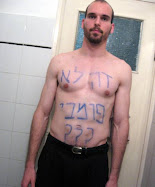
Bnei Brak vandals slashed tires on nearly 30 cars, torched a synagogue and burned a woodwork shop between Friday and Saturday night. The Bnei Brak residents agreed to talk with Israel National News TV on condition that their identities be concealed.

Email readers: Click here to view this shocking video.

“Some of the local kids who were probably kicked out of their homes gathered here and decided to spend the night in the synagogue," one person said. "They tore down the Torah ark covering to sleep under it, and they took all the prayer shawls in the synagogue to use as sheets. A fire broke out when they burnt prayer books, and the whole wall was set aflame. This is pure vandalism.”

One yeshiva student spoke of his personal experience about how dangerous Bnei Brak can be late at night. “Two punks came over, and they were holding a glass bottle. They shattered it on my neck. With what was left after the bottle was broken, they tried to stab me. I was rushed bleeding to the hospital where pieces of glass were extracted and I was told that it almost reached my main artery. Two weeks later my uncle who is a great rabbi here walked through the streets, and two punks came over and started pulling his beard and hitting him."

Jews sometimes suffer assaults and harassment by Arabs or groups of immigrants defining themselves as neo-Nazis in other Israeli cities, but Bnei Brak is dealing with a homegrown menace. "They come from good families who live here in the area, they leave the way of their families and they allow themselves anything," one person said.

"They have no day or night, they have no boundaries and we don’t see the police doing anything. When we call the police and complain about the harassment, we notice they don’t come at all or they come with the siren and blazing lights and that’s enough for them to run away and come back the next time.”

'What Has Created Such Acts of Terror?'
Forensic psychosocial investigator Dr. Simone Gordon told Israel National News that the recent outbreak of violence in Bnei Brak raises some especially disturbing questions.

"To the extent that shuls have been vandalized and rabbis victimized, to what extent is this an re-enactment of trauma and a need to feel empowered?," she said. "To what extent is this due to drugs? To what extent is this a message to the community that 'we feel rejected by you, and are now going to reject and terrorize you?'"

Gordon, who leads workshops on the issue and commutes between New York and Jerusalem to consult on legal cases, commented that the choice of the youths to defile their "spiritual home" was a symbolic acting out of their anger and agression towards their parents and their cultural heritage.

"One can only ask 'what has created such acts of terror,' -- what is the traumatic re-enactment here and how is it being addressed?" she said.