Showing posts with label Survivors For Justice. Show all posts

Tuesday, June 12, 2012

Tales of Chelm - The Word Of An Elder Is Respected Over The Word Of A Child

http://www.cbsnews.com/8301-501363_162-57450886/orthodox-nyc-counselor-on-trial-in-sex-abuse-case/

Orthodox NYC counselor on trial in sex abuse case

NEW YORK — The abuse went on for nearly three years before the schoolgirl told anyone that her spiritual adviser was molesting her while he was supposed to be mentoring her about her religion, authorities said.

“They imagine they're the wave of the future, but it's only sewage flowing downhill”


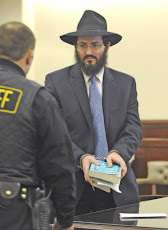
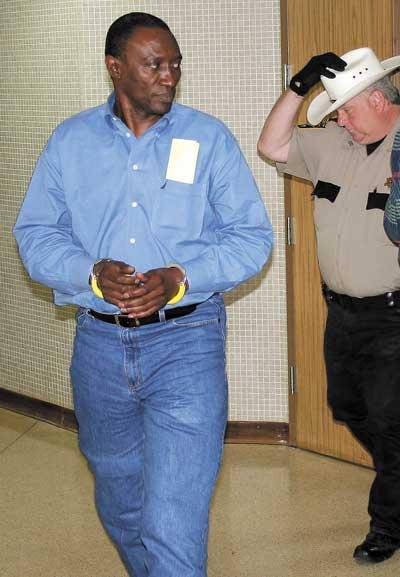
Weberman attends fundraiser event for himself in May


But in Brooklyn's ultra-orthodox Jewish community, 53-year-old Nechemya Weberman has been embraced and defended as wrongly accused. The girl has been called a slut and a troublemaker, her family threatened and spat at on the street.

The rallying around Weberman, who goes on trial this month, and ostracizing of his accuser and her family reflects long-held beliefs in this insular community that problems should be dealt with from within and that elders have far more authority than the young. It also brought to light allegations that the district attorney was too cozy with powerful rabbis, a charge he vehemently denies.

"There are other people that claim misconduct and they can't come out because they're going to be re-victimized and ostracized by the community," said Judy Genut, a friend of the accuser's family who counsels troubled girls.
Brooklyn is home to about 250,000 ultra-orthodox Jews, the largest community outside of Israel. Step onto a Williamsburg street and tall guys in skinny jeans and tattoos are mingling with a flush of men in dark coats and hats carrying prayer books and speaking Yiddish. The Hasidic Jews appear to outsiders as though they come from another time; embracing centuries-old traditions, they wear black clothes, tall hats, long beards and earlocks. Women wear long skirts and cover their heads after they marry.

They have their own ambulances and schools, called yeshivas, their own civilian police and rabbinical courts. Members are encouraged to first speak to a rabbi before going to secular authorities — and as a result, cases rarely make it to outside law enforcement.

The topic has been studied and reported in the Jewish media for years and has recently made headlines in New York papers.

"They think that anyone who turns over anyone to the outside authorities is committing a transgression to the community at large," said Samuel Heilman, a professor of Jewish studies at Queens College.
The girl, now 17, was sent to Weberman at age 12 because she'd been asking theological questions and he had a reputation for helping people back on the spiritual path. He often counseled people, though he had no formal training. But during sessions, authorities say, he forced the girl to perform sex acts.

The girl started dressing immodestly, was deemed a troublemaker and removed from her school — one Weberman was affiliated with — and sent to another, family friends said. The allegations surfaced in 2011 when she told a guidance counselor there she'd been molested.

The Associated Press typically doesn't identify people who say they are the victims of sexual assault.

Weberman has pleaded not guilty, and articles in Hasidic newspapers have proclaimed his innocence and begged the community for support. More than 1,000 men showed up for a fundraiser aiming to raise $500,000 for his legal fees and, if he's convicted and jailed, money for his family.

"It's very hard for the town to believe the things that he's being accused of because he has a reputation of doing good and being good," Genut said.


George Farkas, Weberman's lawyer, said his client isn't guilty but is damned regardless because the allegations will taint his reputation.

The family has said they would've preferred to handle the allegations within the community. But when accusations are managed from the inside, victims are rarely believed and abusers aren't punished — in part because the word of an elder is respected over the word of a child, victims and advocates say.

Joel Engelman said he tried to work with yeshiva officials, finally confronting them at age 22 about a rabbi who abused him as a child. Engelman was given a lie detector test and encouraged to keep quiet about the allegations, and the rabbi was temporarily removed — long enough for Engelman to turn 23, making him too old under state law to file a complaint.

"It's that they don't want to believe that the rabbis that they've been raised to respect could be so cruel and could be so criminal," said Engelman, now 26.

His mother, Pearl, herself an activist, said the community is overwhelmingly good and believes people must be educated about the crime to start standing up for the victims.

"I'm not an anarchist, I'm not a rebel," said the 64-year-old mother of seven. "I love this community, and I want to change it for the better and make it safer for children."


Outside law enforcement has also had a difficult time. Before 2009, only a handful of sex abuse cases were reported within the ultra-orthodox community. Then, District Attorney Charles Hynes created a program called Kol Tzedek (Voice of Justice) aimed at helping more victims come forward about abuse, an underreported crime everywhere.

Part of the deal, along with a designated hotline and counseling, is that prosecutors don't actively publicize the names of accused abusers. The cases are still tried in open court, where the names are public.

Before Kol Tzedek, Hynes said, he struggled to mount a successful prosecution. "As soon as we would give the name of a defendant ... (rabbis and others) would engage this community in a relentless search for the victims," he said. "And they're very, very good at identifying the victims. And then the victims would be intimidated and threatened, and the case would fall apart."

Since then, 100 of the total 5,389 cases in the borough have come from the ultra-orthodox community, the district attorney's office said. Hynes also started a taskforce to combat intimidation attempts — and has said rabbis have a duty to come forward if they have been told of abuse.

But victims' rights advocates say Hynes has purposefully ignored some cases and hasn't pushed as strongly for full prosecutions of others — bowing to powerful rabbis in exchange for political support, a charge he strongly denies.

"He doesn't take care of victims," said Nuchem Rosenberg, a rabbi who says he was ostracized for speaking out about abuse. "He takes care of those in power, so they can all keep power."


Genut said the accuser is ready to testify. Her family, though, is looking for a higher judgment than criminal court.
"They believe that God's going to take revenge on him," she said. "They're suffering a lot and they say one nice day God's going to show us that he did stick up for us."

Thursday, June 07, 2012

Rampant Witness Intimidation In The Ultra-Orthodox Community Forces Establishment Of New Task Force Headed by Chief Of The Brooklyn District Attorney’s Rackets Bureau

http://m.thejewishweek.com/news/new_york/rackets_bureau_chief_vows_openness_witness_intimidation


Rackets Bureau Chief Vows Openness On Witness Intimidation

Vecchione, part of new DA task force, says ‘we should be limited by nothing’ in fight against community pressure in abuse cases.
Wednesday, June 6, 2012
Special To The Jewish Week
The chief of the Brooklyn district attorney’s rackets bureau and a member of the DA’s new task force to combat witness intimidation in the ultra-Orthodox community indicated a willingness to explore all available avenues to tamp down on the problem — including “[picking] up the phone and [calling] the U.S. attorney.”
Michael Vecchione’s comments came Tuesday in an interview with The Jewish Week, and they suggest an openness to receiving information from community members in sex abuse cases that his own boss, DA Charles Hynes — at least based on his recent statements to the press — appears to lack.
In public statements over the course of the past few weeks, Hynes has described the problem of intimidation of Orthodox abuse victims as worse than anything he has seen in organized crime or police corruption cases.
“We should not be limited by what [people in the community] believe intimidation is,” Vecchione said in response to a comment by The Jewish Week that many in the community fear that threats of social ostracism themselves may not be actionable as a form of intimidation.

“[Ostracism] could be [intimidation],” he asserted, noting that  “the statute is specific yet broad enough, and there is a catch-all phrase that would get us into that.
“We should be limited by nothing,” Vecchione continued, adding that “[community members] should just bring to us what they have and then we will go from there.”
(Vecchione is apparently no stranger to prosecutions involving the Orthodox community. Indeed, a piece in Monday’s New York Times about a 1994 kidnapping case seems to lend weight to longstanding claims that Hynes has historically treated Orthodox defendants with kid gloves. In that case, according to the Times, Hynes’ office initially sought to drop the case and then entered into a plea deal that was later overturned by a State Supreme Court justice. The prosecutor on that case was Vecchione.)
According to the law, Vecchione explained, if someone “interferes with a prosecution by attempting to have a witness absent themselves or change their testimony” then that person is “guilty of one of the crimes that fits into the category of intimidating a witness.”
Asked whether rabbis, like David Zwiebel, the executive vice president of the haredi umbrella group Agudath Israel, who contend that reporting to the authorities before first consulting a rabbi is mesirah (the act of informing) — an action punishable by death — could themselves be committing a crime, Vecchione said that “[they] could, depending upon what the person who is making the statements is talking about and to [whom].”
According to Vecchione, this hinges on whether the person is speaking generally or whether the “intimidating statement” can be connected to “a particular case … in which a person decides not to come forward or change their testimony or something of that nature.”
“There has to be a connection between what the potential defendant and/or intimidator says and the witness in a particular case,” he continued, noting that this could be “very difficult” to establish.
Hynes himself has said that he would not take action regarding such statements, but for a different reason. Responding to a question posed by radio host Zev Brenner Monday night about whether a rabbi who says reporting is mesirah can be prosecuted, Hynes said that “no legal authority ... allows me to object to [such statements] … because they are a religious interpretation.”
Some experts disagree with both Hynes and Vecchione. According to James A. Cohen, a professor at Fordham Law School and an expert in the area of witness tampering, “A [general], public statement is obstruction. In this country we respect religion … but that doesn’t give [religious leaders] license to stand at the pulpit and say ‘you must consult with a religious figure … before you go to the authorities.’ This is obstruction of justice, plain and simple.”
Marci Hamilton, the Paul R. Verkuil chair in public law at Cardozo School of Law, concurs.
“Where Hynes gets it wrong is that he cannot prosecute someone for the content or viewpoint of their speech, but he can prosecute them for inciting imminent lawless action.
“Where the rabbis are inciting their congregations to obstruct justice or endanger children,” Hamilton explained, “they are crossing the line from protected speech to illegal conduct.”
Vecchione also allowed that such statements might be viewed as an interference with community members’ civil rights — a theory that has been advanced by Orthodox attorney and author Michael Lesher. But the rackets bureau chief added that “you have to ask the federal authorities about that because … I don’t want to speak to that because I’m not familiar with the law.”
Lesher has noted “under federal law, it is a crime to use the threat of force to interfere with someone’s right to the benefits of state law, including the criminal justice system, if you make that threat because of the victim’s religion.”
“By invoking the language of mesirah — a religious offense that authorizes the use of deadly force against any Jew who ‘informs’ to the authorities — Agudah’s stated policy amounts to a deliberate call for the use of force to stop a Jew, because he or she is a Jew, from going to police against a rabbi’s instructions,” Lesher told The Jewish Week. This could make the Agudah and anyone else making such statements “complicit in a civil rights crime any time an Orthodox Jew gets a threat for talking to the police when a rabbi told him not to,” Lesher believes.
Vecchione also said that the DA’s task force might consider convening an investigative grand jury to gather information without a particular target, something that he — and Cohen, among others — have acknowledged is “a very powerful tool in terms of investigating organized crime.”
“The techniques that we use to investigate organized crime can very well be used in this situation as well,” he added.
Vecchione’s statements stand in contrast to those made recently by Hynes about those who have attempted to bring to his office information about intimidation.
Late last month, The Jewish Week reported that a father whose son was allegedly molested by Rabbi Yehuda Kolko provided information both to the police and, in an affidavit, the DA about a harassing phone call he received originating — according to the caller ID on his phone — from the school, Yeshiva Torah Temimah, where the alleged abuse occurred and which the father is now suing. (The same family pressed criminal charges against Rabbi Kolko, who was allowed to plead to misdemeanor charges of endangering the welfare of a child. Rabbi Kolko is now awaiting trial on charges he violated an order of protection that was part of the plea deal.)
In response to a question from WCBS at a recent, unrelated press conference, Hynes seemed to minimize the father’s claims, saying that he “was the victim of a telephone hang up” from “something called Torah Termina [sic] on Ocean Parkway” and that the affidavit he submitted charged “no criminality.” However, Cohen told The Jewish Week several weeks ago that “threatening phone calls” — even outside the context of a criminal or civil action — “is criminal conduct.”
The DA also appeared to cast doubt on the father’s report that the call came from the school, saying that he wished “we had that technology [that the father had] because we have one hell of a time tracing phone calls” and went on to ask, “How do we find the person that made that phone call?”
While the father acknowledges that identifying the exact person who made the call from the school’s number could be difficult or even impossible, he also noted in an interview with The Jewish Week that his phone company informed him that it would release his phone records if ordered to do so by the police or the courts. He also contends that he was given no indication that the DA or the police even investigated the claims made in his police report (which he also shared with The Jewish Week) and could not in fact get anyone from the office to return his calls for months, until after a reporter from the New York Post started making inquiries.
The district attorney also declined to meet with victims’ advocate and psychologist Dr. Asher Lipner, who requested through former Mayor Ed Koch a meeting “to share ideas and information” with the DA’s task force through (Lipner has been treating survivors of child sexual abuse in Brooklyn’s Orthodox community for over a decade).
The Jewish Week has obtained a copy of an e-mail sent by Dr. Lipner to members of the DA’s Kol Tzedek staff about the information discussed in those meetings (one of which included advocate Ben Hirsch of Survivors for Justice, and was referenced in a separate e-mail). This information included allegations of witness tampering and obstruction by named rabbis and community-based organizations. Lipner was apparently told that these staff members would be putting an assistant district attorney from the rackets bureau in touch with him, but this never materialized, according to Lipner.
However, if Vecchione’s statements are any indication, Lipner may well get another chance.
“Tell people that they have someone they can come to,” Vecchione instructed The Jewish Week.  “And that our rackets division is open for business.”

Sunday, March 27, 2011

Survivors and Friends

Survivors and Friends is a non-profit organization that was founded by annie, a Survivor of sexual abuse herself. Survivors and Friends exists to provide hope, encouragement, and support for survivors of sexual abuse, incest, and rape, and their friends and family.
Here you will find articles on sexual abuse, incest, rape, and on abuse recovery, which are written by other Survivors or the loved ones of Survivors. You will also find the Survivor's Community--a place where you can safely (and anonymously) talk with other Survivors who may have faced some of the same trials that you may be facing--or have faced in the past. We have forums for partners and parents of survivors as well. We hope that you will find this site helpful in the recovery process.
In the future, we hope to also provide some chat rooms for you to communicate with each other.
Remember, you are not alone.
==========================================================================

Dancing in the Shadows by Laura Bryannan


Chapter 1

SURVIVOR "CHECKLIST"

Did you know that many incest and sexual abuse survivors are not aware they were abused? The psyche effectively blocks the trauma from the conscious mind so the person can continue to move forward and function in life. However, the trauma is never completely erased from a survivor's experience. Some survivors who have no conscious memories of abuse have always had a feeling something happened to them but, because they can't remember anything specific, they tell themselves the feeling must be wrong. If you are one of these people, there is a good chance that you are right-- something did happen to you, even if you can't remember exactly what. So, don't let the fact that you have no solid memories or "movies" keep you from exploring this issue.
Incest and abuse survivors often develop telling pathologies as they grow up. These pathologies are actually the various ways a survivor learned to cope with the abuse as a child, and were extremely healthy (perhaps even lifesaving) at the time, but are now in the way of their becoming a fully-functioning adult. So, if you've been working on a specific problem in yourself for some time and haven't been able to get anywhere with it, it's possible that you haven't been asking the right questions about it.
The book Secret Survivors, by E. Sue Blume (John Wiley & Sons, 1990), has a checklist of some of the many symptoms that can develop from sexual abuse. Of course these kinds of symptoms can develop from other causes as well, but if you see yourself in the discussion below, it's worth asking yourself the question, "Is it possible that I am this way because I experienced incest or sexual abuse as a child?" I'd like to summarize some of the most relevant points below.
Do you have issues with your body? Problems such as swallowing and gagging sensitivities, eating disorders, addictions to drugs or alcohol, skin carving or other self-abuse, the need to wear baggy clothes, or a fear of removing clothing even when appropriate (swimming or bathing, for example) often have their roots in childhood sexual abuse.
Survivors often have trouble expressing their anger, or live in constant fear of the anger of others. Some survivors, on the other hand, find anger and violence extremely erotic. Others are rage-alcoholics, and have trouble seeing the damage their outbursts have on the people around them. Another path survivors take is to become obsessed with suicide and death, or they spend their life in and out of depression. Many survivors remember being terminally shy and afraid as a child and, as adults, get very nervous when being watched; extreme cases border on paranoia.
Constant hand washing, lock checking, and other obsessive-compulsive behaviors are often unconscious attempts to clean what feels defiled, fix what feels broken, or secure what feels unsafe. Unexplainable fears about particular rooms or people are another clue. Abuse often leaves one feeling different from the rest of humanity, or even crazy.
One of the biggest red flags is loss of memory. If you can't remember anything before the age of six, for example, it's possible you've blocked out something painful to know about. Some survivors get more specific in their block-outs: they can remember being little but not their childhood bedroom or the kitchen, etc. Sometimes a survivor will only block out a specific person. If grandma lived with your family as a child but you can't remember any interaction with her, this is an important clue.
The pattern I've noticed to be most prevalent in otherwise healthy persons who do not remember being abused is a sexualizing of the identity. Survivors are taught that the way to get love is to put out sexually. So, when survivors become teens and young adults they often do just that! Are you someone who has had a long and somewhat promiscuous history of relationships with people who just aren't right for you--people who are unstable, substance abusers, violent, emotionally-withholding or unfaithful? It's possible you've simply been acting out what you were taught as a child.
Another clue can be found when the above-described person finally breaks that pattern and finds a healthy, loving partner to be in relationship with. A woman who has been a "hot mama" in unhealthy relationships often finds that, in a loving relationship, she loses her interest in sex entirely! Or, she wants to be sexual but finds that, instead of arousing her, her usual turn-ons now bring uncomfortable, icky or scary feelings.
The converse of this issue also occurs. I have seen many survivors let go of otherwise loving relationships because their partner's sex drive was not as active as theirs (the sex drive of an abuse survivor can be like a bottomless pit of need, by the way). Since people who were sexually abused often have their entire self-worth wrapped up in their sexual performing, a survivor has a hard time believing that their partner can really love them if they're not having sex as often as the survivor needs to feel safe.
A tangent to this problem is the woman who experiences her loving, kind and supportive partners as boring. A woman coming out of an abusive background will generally feel attracted to people who mirror the energies of her abuser. If her abuser was angry and violent, only these kinds of partners turn her on. If her abuser was distant, keeping her always at arm's length, she can only fall in love with distant, emotionally-withholding partners. If you are someone who thrives on emotional turbulence and high drama in your relationships, and are bored to tears with the loving folks you've met, you may be stuck in a self-abusive pattern that began in your childhood.
Another path abuse survivors take is to become totally asexual. These people often gravitate toward the myriad religious and philosophical systems which teach that sexual expression is a hindrance to one's spiritual development. This, of course, is the ultimate safe place for many abused people. Survivors in this environment are encouraged to spend their entire lives cut off from their bodies; freedom from sexual impulses is seen as a high spiritual goal. Thus, the survivor will never have to confront the awful memories that lie beneath the surface of their consciousness.
These are only some of the more obvious ways sexual abuse survivors act out. If you don't see yourself in any of the above descriptions, but still feel that something happened to you, please continue to explore this possibility. Incest and sexual abuse experiences are as varied as there are humans on this planet, and not all damaging experiences ever involve actual sexual activity. Sometimes all it takes is one inappropriate touch or glance--baby sitter fondling little girl's crotch, or uncle watching niece in the bathroom--and a child can be permanently shamed. Parents who tease their daughter about the size of her breasts (or who allow other family members to do so), a divorced father who tells his daughter all women are whores, are often setting up patterns in their little girls that may never be healed. These things are also abuse, even though intercourse never occurred.
The fundamental rule you should remember when reviewing your history to look for clues of abuse is this: there is a usually a good reason for every strange thing you notice about yourself. If you have phobias, sexual kinks, behavior glitches, etc., there is a very good chance someone taught them to you! These kinds of things did not come from the Original Manufacturer, they developed from misuse-of-product. No matter how bizarre the behavior or phobia, I have yet to discover a woman who did not ultimately find that it was produced by some corresponding form of abuse.
So, if you have fantasies of being tied up and sexually tortured, there's a good chance someone did that to you and you've blocked it out. If going into the bathroom after dark gives you anxiety attacks, there's a good chance that something horrible happened to you in a bathroom at night earlier in your life. Give yourself permission to believe that these kinds of behaviors have a reasonable and rational cause and you'll find that your life is full of clues about what may have happened to you.
Go to Table of Contents

Last Updated: 7jun10
Laura Bryannan
LauraBryannan@hotmail.com

Friday, October 29, 2010

90% of all children sexually assaulted by someone they know and trust


By Samuel Newhouse
Brooklyn Daily Eagle JAY STREET — An Orthodox Jewish child molester who was sentenced to a maximum of 30 years earlier this year appeared in Brooklyn Supreme Court Wednesday for a pretrial hearing in yet another case of alleged sexual abuse of a minor.
Baruch Lebovits, 59, of Borough Park, who was convicted of sexually molesting a teenager in his community, appeared before Kings County Supreme Court Justice Patricia Di Mango, the same Brooklyn judge who sentenced him in April to 10 2/3 to 32 years in prison.
Justice Di Mango gave Lebovits the maximum sentence for each of eight counts of abusing a 16-year-old Borough Park resident, whom Lebovits lured on several occasions in 2004 and 2005 to his silver Toyota for “driving lessons” before performing oral sex on the victim, who was a friend of Lebovits’ son.
Now Lebovits has at least one more active sexual abuse case and could face even more indictments, as several alleged victims came forward after Lebovits was sentenced. Sources in law enforcement have called the crimes Lebovits has been charged with “the tip of the iceberg.”
One alleged victim said Lebovits fondled him in a mikvah or ritual bath while the victim was a teen, but made the claim after being arrested himself for allegedly fondling a 12-year-old in a mikvah, according to the Daily News.
Despite these allegations, Lebovits, a cantor (traditional Jewish singer) and a local teacher, still has some supporters in the community. But the father of the victim whose testimony led to Lebovits’ April sentence has called Lebovits a “grand-molester.”

Read more: http://www.brooklyneagle.com/categories/category.php?category_id=4&id=38583

======================================================================

http://www.csasurvivor.net/?page_id=222

JAMAICA:PUBLIC OUTRAGE, EXPOSE MOLESTERS NOW!

Mary Clarke.jpg
MARY CLARKE, Children’s Advocate, on Wednesday appealed to members of the public not to shield child abusers. She made the appeal while addressing the launch of the child abuse prevention campaign at the Bustamante Children’s Hospital. She said her office was concerned that children who are to appear before the courts as victims of rape and carnal abuse often miss court dates.
“When the summons are to be served for them to come to court, they cannot be found. Mother’s don’t know, guardians don’t know, community members don’t know, and after the date of the case, the child reappears,” she said.
“I am calling on you today to be responsible citizens - that is being very irresponsible. You are protecting abusers, you are helping no one.”
SIMILAR APPEAL
Howard Hamilton.jpg
Public Defender, Howard Hamilton, also made a similar appeal. He said men who have sex with one-month-old babies and young children because they believe that they can be cured from a sexually transferred disease should cease this atrocity. “This can no longer continue, men cannot be allowed to go to a four-month-old infant, so let this be a turning point in Jamaica,” he said.
Mrs. Clarke said since the beginning of the year, there were 80 cases of sexual and physical abuse cases reported at the Bustamante Children’s Hospital. Of this number, 14 could not be traced because wrong addresses were given.
“Parents, guardians, caregivers, you have a responsibility for your children. You must give the correct addresses and phone numbers. Why are you concealing the children who need the psycho-social support to help them get over the hurt that they have felt, why? Why are you hiding the abusers?” she asked.
She said of the 14, five were assaulted and nine were physically injured. She said during last year, there were 8,275 victims of major crimes. Of this number, 24 per cent were children under 14 years old.
Rose Robinson-Hall, chairman and coordinator of the Child Abuse Mitigation Project at the Bustamante Children’s Hospital, told The Gleaner that the child abuse campaign would involve in-house training of staff to recognise behaviours that are abusive and to be able to respond appropriately to these cases. 

AWARENESS IS YOUR BEST DEFENSE

  • dog_head.jpg
BECOME A WATCHDOG 
“AWARENESS IF YOUR BEST DEFENSE” 
OVER HALF A MILLION SEXUAL PREDATORS LIVING IN COMMUNITIES ACROSS THE UNITED STATES
SEXUAL ABUSE BEFORE 18TH BIRTHDAY IS A REALITY FOR GIRLS AND BOYS
  • 1 in 5 girls will be sexually assaulted before 18
  • 1 in 6 boys will be sexually assaulted before 18
  • 1 in 5 children propositioned on the Internet
  • 90% of all children sexually assaulted by someone they know and trust

According to a National Institute of Justice study done in 1996, child sexual abuse costs America $23 billion.
  • Victims of child sexual abuse generally spend more on psychiatric care services throughout their lives
  • More is spent on special educational services.
  • The loss in potential and productivity, and these expenses would not be necessary if not for sexual abuse and its financial drain to each and everyone of us
A FRIEND OF THE FAMILY MAY BE NO FRIEND AT ALL
  • 1 in 4 girls and 1 in 6 boys will be sexually abused or sexually assaulted by their 18th birthday
  • The perpertrators aren’t “dirty old men hiding in the bushes” but family members
For More Information http://www.familywatchdog.us

=======================================================================

TWENTY-FOUR QUESTIONS ABOUT PROFESSIONAL PRACTICE IN THE AREA OF CHILD ABUSE
  1. What constitutes child abuse and neglect?
  2. Who has to report child abuse and neglect?
  3. If I report, am I breaking confidentiality?
  4. Under what circumstances do I have a duty to report child abuse?
  5. How do I report? and What information am I required to disclose in a child abuse report?
  6. Will I get in trouble if I do not report child abuse as required under laws of my state?
  7. Will I get in trouble if I do report? and Can I be sued by the person I report?
  8. Do I have to report every instance of child abuse?
  9. Do I have to report if the suspected abuser is in treatment or if I believe the reporting would do more harm than good?
  10. What will be the response to my report?
  11. Are there issues I should consider for disclosure?
  12. How shall I handle a child’s disclosure of abuse by a parent?
  13. How shall I handle a child’s disclosure of abuse by a non-family member?
  14. What are some possible effects for the child, the family, and treatment when a disclosure or report are made?
  15. What are possible beneficial effects of reporting for the child and family?
  16. What are some of the possible personal issues I should be aware of in handling disclosure and reporting?
  17. What are the characteristics and symptoms of a child who has been abused?
  18. How do I recognize and verify what abuse had occurred?
  19. Are there psychological measures to assist in evaluations of victims of child abuse?
  20. What special considerations are there in the assessment of victims of child abuse?
  21. What are the emotional demands of providing intervention services to victims of child abuse?
  22. What roles can I play in supporting and providing intervention services to the victims of child abuse?
  23. How do I provide treatment to a child who has been abused?
  24. What are the therapeutic issues, reasonable goals, and special considerations when providing treatment to a child who has been abused?
From The American Psychological Association’s (APA, 1995) Committee on Professional Practice and Standards
========================================================================

EXPOSE THE PERP: THE AFTERMATH

As you heal from child sexual abuse and talk more about the trauma, you will become more comfortable with what you tell others, especially family members.
The details you share of the abuse is up to you, and you can choose to share what you are confident about. Usually a survivor will share with a family member you are most comfortable with, because you will receive various responses from family.
Usually a survivor will tell a family member what took place and immediately the family member will want to know what exactly happened between you and perpertrator. Then after the family member has time to absorb the information they will want to talk more about the perpertrator.
Family members will express different emotions,and ask all sorts of questions. Believe it or not this communication will help make a better relationship between family members, because communication is taking place and that is one of the key steps to healing.
Now as a survivor you have the option to answer and not answer questions, the ones that make you uncomfortable, you need to say that you cannot answer. As a general rule, your privacy and boundaries are important here.
Each time your family asks questions about the abuse, be prepared for different reactions, be thoughtful of your family’s emotions now, because these emotions will affect you too. As these discussions take place, a survivor can reexperience thoughts about the sexual abuse that they resolved. This is normal part of what happens when telling the family what happened.
Please be prepared that not all family members will believe what you have to say about the perpertrator, you may feel angry with family for this, even sad, but it is important that you know the truth, and again ” the truth shall set you free”, and its not about changing anyone else but changing and healing yourself.. As you heal you will become better at setting boundaries, and developing healthy relationships, promoting safety and trust in your life. Family members who respect and trust you are those you keep close to you. To avoid unstable relationship there must be trust, not chaos, crisis and inconsistency, and as a survivor we want to definelty avoid this in our lives.
Here are few ideas:
Establishing Boundaries:
No one touches you without your permission and consent, and you touch no one without their persmission and consent.
Choose who you want to be sexual with, some one who is safe and you feel comfortable and who you have a reciprocity in terms of respect, love and care.
Trust is conditional; people earn trust, as well they earn yours. There are different levels of trust for different people.
Do not tolerate disrespectful behavior and speak up when it happens.
Honor your feelings and those of others
Stand up for your self and believe in you right to do so.
Give yourself permission to be who you are and to try new experiences
Affirm your life today, and acknowledge the good that exist in your life today
Take time for yourself and not allow others to intrude on your time. Say no and do not feel guilty.
Praise yourself often.
Excerpts from Healing from the Trauma of Sexual abuse by Karen Duncan.
=========================================================================
CONFRONTING ABUSE IN THE ORTHODOX COMMUNITY
(This article first appeared in NEFESH)
By Rabbi Yosef Blau
It is no longer possible to ignore the tragic reality that sexual, physical and emotional
abuse exists within the Orthodox community. Recent revelations about rabbis and
teachers abusing adolescents, often continuing to abuse for decades, dramatically remind
us that our existing mechanisms are failing to deal with the problem. I am not aware of
any statistics which clarify whether the numbers of offenders is substantial, but even a
small number can traumatize hundreds of victims.
The full measure of the horrendous nature of abuse is not always apparent from a
technical halakhic perspective. Two teenagers touching each other inappropriately are
guilty of the same sin as a forty-year old rabbi touching a thirteen- year old female
student. We intuitively recognize that the rabbi has used his position as an authority
figure to manipulate a vulnerable child, though she is an adult according to halakha. A
pedophile who abuses minors even if he gets their approval is halakhicly a rapist but not
if he does the same with an adolescent boy or girl.
It is even more difficult to pinpoint the sin when dealing with emotional abuse and
manipulation. While one can make similar technical arguments in other areas of halakha,
its significance in this context is its use as cover for the many who do not want to deal
with the full implications of confronting rabbinical abuse. Not wanting to see themselves
as lacking sympathy for victims, people can claim to be concerned about preserving
halkhic standards. How rare it is to have two witnesses who saw the abuse.
Even when the pattern of abuse is clear the question remains how to effectively deal with
the abuser in a way that at least limits his ability to move elsewhere and continue to abuse
new people. Schools fire abusive teachers who then move to another community and
start teaching (and abusing) in the new yeshiva. Going public is seen as causing a chilul
Hashem and going to secular authorities as mesira.
Virtually all poskim agree that if there is danger to future victims then there is no
halakhic issue of mesira but practically the taboo of mesira remains. Victims are
discouraged from coming forward on other grounds as well. It will hurt potential
shidduchim, not only for the victim but for members of his family as well. Compassion
is expressed for the reputations of members of the abuser’s family as well. The
probability that the family members may have suffered abuse themselves and suffer from
being in ongoing contact with the abuser, is not understood.
Taking the accusation to a Beis Din unfortunately is rarely effective. Few rabbis have
any training in recognizing abuse and the rabbinical courts have no investigative arm.
Some abusers are charismatic leaders and have followers who will say whatever they ask
them to say. Perjury to a Beis Din is not punished and in many cases the witness, in
support of his mentor, has no difficulty with distorting what occurred. The cultic element
in the guru’s leadership is hard for us to acknowledge. A rabbi promoting Judaism is
seen as incapable of being a cult leader.
Newspapers, particularly Jewish newspapers are assumed to be anti-Orthodox. Speaking
to them is almost the act of a traitor. Yet at the present time the media has played a
primary role in the increased awareness of this problem and an abuser whose name that
has appeared in the media is unlikely to be hired by a new school or youth movement.
Two recent cases point to differing approaches now being used. In one story from Israel
a commission including a rabbi, a psychologist and a judge evaluated allegations and the
accused was fired from his teaching position. He hired a lawyer and is fighting for
reinstatement. The Israeli media have picked up the story. A recent article in Maariv
broadened the discussion to quote varying views about rabbis counseling married women.
The other case involved allegations that had been investigated twenty years ago and a
resulting agreement that an individual would leave Jewish education, which was not
effectively enforced. After two decades it became difficult to reconstruct what had
occurred. Supporters of the accused spoke freely to the media while victims used
pseudonyms. New allegations surfaced and a major expose appeared in the papers and a
new Beit Din was formed to decide how to deal with the accusations. While no formal
announcement has been made, their apparent decision was to send the case to a religious
court in Israel that will deal with the charges.
Despite growing awareness and concern no consensus has yet emerged. Rabbis are not
trained to recognize abuse nor given an approach to aid them in responding when they
realize that it is occurring. Principals are not equipped to respond to accusations against
teachers in their schools. Rabbinical organizations do not have rules of appropriate
conduct. Accused abusers retain memberships in these organizations without any process
to remove their names.
Our community has not been educated to recognize abuse nor to appreciate the ongoing
trauma of victims. Headlines in newspapers are not effective educational tools. Often
the response is to express anger at the paper and then ignore the abuse. Until the
mentality of the community changes little progress will be made.
Even if a method will be developed to get rabbinical approval for victims to go to the
police much of the problem will remain. Not every manifestation of abuse involves
criminal behavior. “Rabbis” who seduce women as part of outreach or marital therapy
are not guilty of a punishable offence. Proper utilization of secular authorities is a
necessary step but clearly not a total solution.
In Chicago, after there were a number of serious incidents, a special Beit Din, whose
members are respected across the Orthodox spectrum, was established to deal with
accusations of abuse. Similar rabbinical courts in other major cities, whose judges would
be trained to recognize abuse and would have appropriate mental health professionals as
consultants, should be introduced. Creating special rabbinical courts is a powerful
statement that a serious problem needs to be addressed.
Nefesh professionals have a critical role to play in educating the Orthodox community,
in treating and supporting victims and in serving as consultants for schools and
organizations. Only people who are trained can lead a systematic campaign explaining
the nature of abuse and the need to confront it openly. Stigma has to be removed from
victims. Invariably when the identity of an abuser is revealed the response of far too
many is “We have known that for years.” Enabling abusers to continue, covering their
crimes to protect the image of the community, contribute to innocents being traumatized.
Judith Herman in her book on trauma points out that both the abuser and the victims turn
to others for support. The victim needs action while the abuser only asks for our silence.
It is time to stop the silence. The true chilul Hashem is that we allow victims to continue
to suffer in order to preserve our community’s image. 

Monday, July 26, 2010

One in four children being victimized? That's about seven children in every classroom. That's a significant proportion of the population.


http://www.cliffviewpilot.com/editorials/op-ed/1501-orthodox-challenged-by-child-abuse-reports-against-rabbis

Orthodox face 'double whammy' in reporting child sex abuse
Friday, 23 July 2010 19:17 Asher Lipner
OPINION: An Orthodox couple from Lakewood are very special and heroic people. When they found out that their son was molested by a rabbi, they confronted the rabbi and got him to admit it.


But when the rabbi became defiant and would not go to therapy or agree to leave the synagogue, they went to the police and had him arrested.

The mother has said that more than any act of communal concern or heroism, she did this as a simple Jewish mother for her son. She knew that if the rabbi was allowed to get away with it and nothing to happen to him, her son would forever feel abandoned and unprotected at his time of need.

The family is now suffering the "double trauma" of most victims in our community. One, their son has symptoms of PTSD. He was a very, very religious boy. His father is a Torah scholar and a majority member in the town. A Posek halacha

But the family as a whole is paying a double price. For going to the police to protect their child, something that in other communities is considered normal parenting, they are being attacked as "anti-Torah," by evil people. I would like to call them ignorant people.

In Lakewood, most people have spent years learning Torah. And even if you want to say that they don't understand the "long term ramifications" of sexual abuse (do they think it is GOOD for the kids?), they certainly know it is not something that they would want to happen to theirs. And Hillel said that the whole Torah while standing on one foot can be summarized as "Don't do to others what you don't want them to do to you."

(one who issues rulings within the community). And he was not supposed to be exposed to sexual situations and certainly not the sexual act before marriage. His innocence was robbed. His spirtuality is being challenged. His sense of security shaken.

lakewood
SIDEBAR: The battle over sex abuse reporting in the Orthodox community is exploding worldwide, and one of the hubs is in New Jersey. State law requires anyone with reasonable suspicion to alert authorities. But rabbinical authority has ruled in Orthodox communities for thousands of years, mainly due to splits with secular law over civil issues (unlike the Catholic Church scandals). Victims have been threatened, ostracized and driven out. Yet, in the wake of the latest incident, rabbinical and secular authorities in Lakewood say they are trying to "bridge the gap."
It would be such a big Mitzvah (good deed) for each and every one of us to write a letter to the family thanking them for the heroic service they have done for all of us, and for the example they set of good Jewish parenting that we should all strive for.

I will not tell you what to write, because I know each of you can say the right thing if you look into your hearts. Thank you, and we should all be eager to see this plague stamped out from our community once and for all.

Emails can be sent either to CLIFFVIEWPILOT.COM@gmail.com This e-mail address is being protected from spambots. You need JavaScript enabled to view it or to lipnera@gmail.com This e-mail address is being protected from spambots. You need JavaScript enabled to view it .


lipner
Rabbi Dr. Asher Lipner, Ph.D., an ordained Orthodox Rabbi, is Vice-President of the Jewish Board of Advocates for Children. The opinions expressed in this article are his and do not necessarily reflect the position of any organization.


EDITOR'S NOTE: Some Jewish expressions in the rabbi's piece have been changed to more common vernacular. The parents' names have been removed to protect the child's identity.

ALSO SEE:

Sex abuse demands greater defense of children

Orthodox hope guilty plea in sex case changes approach to offenders


Passaic predator case marks change in Orthodox reaction
----------------------------------------------------------------------------------------------------------


~ Abuse changes your life...Fight Back and change the life of your abusers by Breaking Your Silence on Abuse! ~


~ Child abuse casts a shadow the length of a lifetime. ~


~ Everyone is an abused child, if you think about what governments do. ~


~ Child abuse does not go away, but 90 percent of child abuse is preventable ~


~ Child abuse and neglect offend the basic values of our state. We have a responsibility to provide safe settings for at-risk children and facilitate permanent placement for children who cannot return home. ~


~ The consequences of your denial will be with you for a lifetime and will be passed down to the next generations. Break your Silence on Abuse! ~


~ The only reason why child abuse is alive today, is because we as adults fail our children when we fail to listen to them. Listen to a child today! ~


~ I believe the best service to the child is the service closest to the child, and children who are victims of neglect, abuse, or abandonment must not also be victims of bureaucracy. They deserve our devoted attention, not our divided attention. ~


~ One in four children being victimized? That's about seven children in every classroom. That's a significant proportion of the population. ~
------------------------------------------------------------------------------------------------------

A Partial Biography of Rabbi Yehuda Kolko & Rabbi Lipa Margulies

[This summary was written by an anonymous ultra-Orthodox insider and published as part of an open letter during the first week of December, 2006. The events dated after July, 2006 have been added by this website's adminstrator.]
· 1967 – While working as Dormitory Counselor at Yeshivas Mir, Rabbi Yehuda Kolko calls a student (name withheld) out of his dormitory room and begins discussing matters of a sexual nature with him while rubbing up against him in an aroused state. This abuse continues for the remainder of the school year and into the summer season at Camp Agudah [then owned by Agudath Israel of America]. This student is now a distinguished Manhattan attorney living happily with his partner in New York City and insists that his lifestyle choice has absolutely nothing to do with his abuse by Kolko.
· 1969 thru 1971 - Rabbi Yehuda Kolko begins abusing Dovid Framowitz in Yeshiva Torah Vodaas of Flatbush (now known as Yeshiva Torah Temimah) and Camp Agudah, the details of which abuse are now public knowledge. Mr. Framowitz, a grandfather living in Eretz Yisroel, has not gone a day since being abused without reliving the unspeakable agony he suffered at Kolko’s hands.
· 1972 - Rabbi Yehuda Kolko sexually abuses two young campers (names withheld at the request of the victims) in Camp Agudah who complain to their counselor. Their counselor reports the complaint to Rabbi Simcha Kaufman. The abuse of these two boys cease for the remainder of that summer. Rabbi Simcha Kaufman is a co-worker of Kolko in Yeshiva Torah Temimah (more on Kaufman below) and was a co-worker of Kolko in Camp Agudah until 1976 when Kolko voluntarily left Camp Agudah after he co-founded Camp Ma-Na-Vu with Rabbi Lipa Geldwirth, another co-worker of his at Yeshiva Torah Temimah.
· 1977 – Rabbi Yehuda Kolko, employed as a Rebbe in Yeshiva Torah Temimah in the morning, is employed in the afternoons by Yeshiva Karlin Stolin as Secular Studies Principal. During the course of his short tenure in Yeshiva Karlin Stolin numerous complaints are lodged by both students and parents (names withheld at the request of the victims) accusing Kolko of sexually abusing boys in the Yeshiva. Rabbi Shmuel Dishon asks Kolko to leave the employ of the Yeshiva.
· 1977 on – Eyewitness testimony and accusations of sexual abuse by Rabbi Yehuda Kolko of students at Yeshiva Torah Temimah and Camp Ma-Na-Vu reach a crescendo which culminates in several businessmen approaching Rabbi Lipa Margulies in 1984 and offering to fund a retirement package for Rabbi Yehuda Kolko provided he seeks employment away from children. Rabbi Lipa Margulies steadfastly refuses to accept the offer and suggests that those parents who disagree with his decision remove their children from his Yeshiva Torah Temimah.
· 1981 – Rabbi Yehuda Kolko sexually abuses a twelve year old student of Yeshiva Torah Temimah (name withheld at the request of the victim.) This victim publicizes the abuse and acts out, vandalizing Kolko’s home and car. Rabbi Lipa Margulies calls this victims father and warns him that if this activity does not stop his other children would be expelled from Yeshiva and the safety of his family could not be guaranteed. This victim is subsequently referred to Avrohom Mondrowitz for counseling.
· 1984 – As instructed by Rabbi Avigdor Miller, an Askan calls for a meeting which takes place at the home of Rabbi Yakov Perlow (the Novominsker) and is attended by Rabbi Avrohom Pam, Rabbi Elya Svei, Rabbi Chaim Dov Keller, Rabbi Aharon Schechter, Rabbi Moshe Scheinerman, Rabbi Shia Fishman and Rabbi Yankel Bender. At this meeting, chaired by Rabbi Perlow, the Askan discusses what is transpiring to innocent boys at the hands of Rabbi pedophiles and requests that Torah Umesorah and the Rabbonim issue a statement calling for their removal from Chinuch. Rabbi Svei informs this Askan that Torah Umesorah has consulted their attorneys who advised that for Torah Umesorah to admit knowledge of such abuse would subject Torah Umesorah, its staff, all its member schools and their staff to liability for not having reported their knowledge to the authorities earlier. Accordingly, Rabbi Elya Svei informs the Askan, neither he nor Torah Umesorah will do anything about this problem.
· 1984 thru 1985 – At directed by Rabbi Avrohom Pam an Askan approaches Rabbi Moshe Scheinerman and the two meet with Rabbi Shia (Joshua) Fishman in the office of Torah Umesorah. Both Scheinerman and Fishman neglect to inform this Askan that Fishman had been instructed by Torah Umesorah’s lawyer to do nothing about this issue. Rabbi Fishman requests the names of Kolko’s victims and promises absolute confidentiality. Names are provided to Rabbi Fishman who begins his own investigation of the allegations. He meets with and speaks with several victims who pour their hearts out to him after he guarantees them confidentiality. Rabbi Shia Fishman promptly discloses all he has learned to Rabbi Lipa Margulies who in turn publicly disparages and discredits each and every one of those boys who were brave enough to step forward.
· 1985 – A follow up meeting takes place at the home of Rabbi Simcha Kaufman and includes Rabbi Kaufman, Rabbi Lipa Margulies, Rabbi Shia Fishman, an Askan and an eyewitness. The eyewitness recounts his personal knowledge of Rabbi Kolko’s sexual abuse of boys and discusses the information he had gleaned from others. Rabbi Lipa Margulies insists that the charges are all fabrications and attacks the reputations of everyone involved in seeking the removal of Kolko from his Yeshiva Torah Temimah. Rabbi Shia Fishman subsequently informs anyone who asks that he can not deal with this issue as he is old (50 at the time) and will lose his job if he pursues this matter.
· 1985 – Rabbi Moshe Scheinerman is offered a lucrative and prestigious position as Rav of a Shul (a position he holds to this day) and is told that he must cease and desist from his actions against Yeshiva Torah Temimah Rabbeim (his own words) which he promptly does. Scheinerman abandons ship explaining that it is not appropriate for a rabbi of his stature to deal with these matters. Rabbi Yehoshua Leiman takes over.
· 1985 - Rabbi Yehoshua Leiman and others continue their quest for a solution and convene a Bais Din for this purpose. This Bais Din, consisting of Rabbi Menashe Klein, Rabbi Yechezkel Roth, Rabbi Aharon Stein, Rabbi Moshe Stern and Rabbi Chaim Yankel Tauber, is scheduled to hear testimony for two days after which they will rule on how to proceed. This panel meets and hears testimony for one day. Shortly thereafter, Rabbi Moshe Stern states that he is unable to participate in any more sessions and this Bais Din is disbanded without further explanation. In a private conversation with one of the Askanim, Rabbi Stern disclosed that he had been approached by Rabbi Lipa Margulies which resulted in the discontinuance of the Din Torah.
· 1985 – Upon the dissolution of the above Bais Din, Rabbi Lipa Margulies retains Rabbi Pinchus Scheinberg to convene a second Bais Din for the purpose of clearing Rabbi Yehuda Kolko’s name. Rabbi Lipa Margulies then drafts Rabbi Friedman (the Tenka Rav) and Rabbi Shlomo Zalman Brown to serve on Rabbi Scheinberg’s Bais Din. Prior to convening the Bais Din, Rabbi Pinchus Scheinberg speaks with several of Kolko’s victims and asks them to describe what Kolko has done to them. Upon hearing the allegations Rabbi Scheinberg informs the boys that in the eyes of Halacha they had not been molested. Rabbi Scheinberg also calls the Askanim and tells them to cease and desist in their attempts to remove Kolko from Chinuch. Rabbi Avigdor Miller disagrees and instructs the Askanim in no uncertain terms to do whatever must be done to protect children from Kolko. Rabbi Pinchus Scheinberg convenes the Bais Din and takes the position that Rabbi Kolko has a Chezkas Kashrus absent any testimony by two adult witnesses to any single event. Rabbi Friedman takes the position that in light of the persistent rumors Rabbi Kolko must be kept away from children. Rabbi Brown ultimately concedes that there is no Halachic evidence against Kolko and the Din Torah is concluded. Rabbi Lipa Margulies insists that he has a Psak from this Bais Din but to this day has refused to produce it. Regardless, it is of note that no victims testified before this Bais Din.
· 1987 – Rabbi Yehuda Kolko, having groomed a former first grade student of his for years, begins systematically sexually abusing this boy (name withheld at the request of the victim) both in and out of the Yeshiva Torah Temimah building. When this boy complains to Rabbi Lipa Margulies that his grades are slipping because Kolko is removing him from class almost daily, Margulies responds by slapping the boy across the face and throwing him out of his office. This young man is now living down south where he is on leave of absence from the U.S. Army.
· 2001 – Rabbi Yehuda Kolko, takes a young Yeshiva Torah Temimah student under his wing (name withheld at the request of the victim) and begins removing him from class for “special projects.” These special projects include the boy being sexually molested by Kolko in the basement of the Yeshiva, in Rabbi Kolko’s car and in Rabbi Kolko’s private office, which Rabbi Lipa Margulies has conveniently equipped with its own private bathroom. This young man is currently in therapy and hopes to be able to recover enough to be able to get married and start a family.
· 2005 – Dovid Framowitz, after years of searching on the internet, chances upon a post written by a blogger calling himself “Un-Orthodox Jew” which makes reference to Rabbi Lipa Margulies harboring Rabbi Yehuda Kolko, a known pedophile, in his Yeshiva Torah Temimah. Dovid begins communicating with this blogger via e-mail who in turn posts Dovid’s story on his blog. Over the course of several months other victims of Kolko begin to step forward with their stories.
· January 2006 – Several Askonim decide that this four decade long Chillul Hashem must stop and approach both Rabbi Yehuda Kolko and Rabbi Lipa Margulies with a demand that Kolko be removed from Yeshiva Torah Temimah and Camp Silver Lake and further commit to spending the rest of his life in treatment and away from children. Both Kolko and Margulies refuse.
· February 2006 – A letter is drafted informing the public that Rabbi Yehuda Kolko is a dangerous pedophile and that Rabbi Lipa Margulies continues to employ him despite his knowledge of this fact. Copies of this draft letter are delivered to Kolko and Margulies. Both Kolko and Margulies are offered the opportunity to deal quietly with the issue and are informed that if they continue to refuse, the letter would be mass mailed to the entire community. Kolko responds by stating that “the matter has been taken care of” and Margulies responds by asking if anyone “thinks Kolko is still a threat” and declares “if anyone does not like the way I run my yeshiva let them not send their children to my yeshiva.” They refuse to comply and the letter is sent out in a mass mailing.
· February 2006 – Eli Greenwald, a graduate of Yeshiva and Mesivta Torah Temimah, son of one of the founders of the Yeshiva and a parent in the Yeshiva receives the letter and spends a few days investigating the matter. He calls Rabbi Yaakov Applegrad, the Yeshiva’s Administrator, and requests a meeting of the Vaad HaHorim in order to address this serious issue. Rabbi Applegrad informs him that there will be no meeting as the allegations are false and that he and Rabbi Margulies have the matter under control. Mr. Greenwald called Rabbi Lipa Margulies and makes the same request of him. Rabbi Margulies responds by shouting at him.
· February 17, 2006 – Eli Greenwald is served with a Hazmana issued by Rabbi Yisroel Belsky calling him to a Din Torah to answer the charge of Hotzoas Shem Rah allegedly committed against Rabbi Yehuda Kolko. Mr. Greenwald responds on February 21, 2006, that he will appear for a Din Torah before the Bais Din of America. To this day there has been no reply to Mr. Greenwald’s response by either Kolko or Rabbi Yisroel Belsky.
· February 2006 – An Askan meets with Rabbi Yaakov Perlow and pleads with him to get involved in this matter. Rabbi Perlow refuses on the basis of his being a Yuchid and this being a Tzibur matter. After being pressed further Rabbi Perlow takes his final stand that this is a Flatbush matter and as he is a Boro Park Rabbi it would be unseemly for him to get involved in this matter.
· March 2006 – Rabbi Lipa Margulies reaches a standstill agreement with the Askonim by committing to appear before a panel consisting of two Rabbonim and one Frum lawyer, all three of whom had been chosen by him. Rabbi Lipa Margulies reneges on his promise to appear before this panel.
· March 23, 2006 – A Hazmana to a Din Torah is sent to Rabbi Yehuda Kolko, Rabbi Lipa Margulies and Yeshiva Torah Temimah summoning them to a Din Torah before the Bais Din of Mechon L’Hoyroa or a Bais Din of ZBLA. The Hazmana is ignored by all the defendants.
· March 30, 2006 – A second Hazmana to a Din Torah is sent to Rabbi Yehuda Kolko, Rabbi Lipa Margulies and Yeshiva Torah Temimah summoning them to a Din Torah before the Bais Din of Mechon L’Hoyroa or a Bais Din of ZBLA. By fax sent on April 5, 2006, Rabbi Lipa Margulies responds to this Hazmana stating he will not appear for a Din Torah “without a prior determination of the charges against Rabbi Kolko.” Rabbi Kolko continues to ignore the Hazmanas.
· April 6, 2006 – A third Hazmana to a Din Torah is sent to Rabbi Yehuda Kolko, Rabbi Lipa Margulies and Yeshiva Torah Temimah summoning them to a Din Torah before the Bais Din of Mechon L’Hoyroa or a Bais Din of ZBLA. By fax sent on April 10, 2006, Rabbi Lipa Margulies responds to this Hazmana by stating “the Hazmonah that you sent to us was not a valid Hazmonah.” Rabbi Kolko does not respond at all. It is of note that Rabbi Yehuda Kolko is still teaching in Yeshiva Torah Temimah while these exchange are taking place.
· May 4, 2006 – A lawsuit is filed in United States District Court: Eastern District of New York, naming Rabbi Yehuda Kolko; Yeshiva & Mesivta Torah Temimah, Inc. and Camp Agudah as defendants. Rabbi Yehuda Kolko remains in the classrooms of Yeshiva Torah Temimah.
· May 5, 2006 – Rabbi Simcha Kaufman approaches Dovid Framowitz and with tears in his eyes tells him that if only he had known what Rabbi Kolko was doing to him he would have put a stop to it. Of interest was Rabbi Simcha Kaufman’s complete denial of any prior knowledge of any accusation before Dovid Framowitz brought his lawsuit. Rabbi Simcha Kaufman pleads with Dovid to withdraw his lawsuit lest he hurt Rabbi Lipa Margulies and the Yeshiva.
· May 10, 2006 – After being approached for comment on several occasions by Robert Kolker, a reporter for New York Magazine, and with a 5:00 printing deadline looming, Rabbi Lipa Margulies issues a statement through his attorney at 4:30 PM. Beginning with a proclamation that Yeshiva Torah Temimah is the preeminent Yeshiva in the world followed by an absolute denial of all the allegations, the statement concludes with an announcement that Rabbi Kolko has agreed to a “leave of absence” pending the resolution of this matter. Despite this claim, Rabbi Yehuda Kolko remains in the classrooms of Yeshiva Torah Temimah.
· May 12, 2006 – A second lawsuit is filed in United States District Court: Eastern District of New York naming Rabbi Yehuda Kolko; Yeshiva & Mesivta Torah Temimah, Inc. as defendants. Still, Rabbi Yehuda Kolko remains in the classrooms of Yeshiva Torah Temimah.
· May 15, 2006 – “On the Rabbi’s Knees – Do the Orthodox Jews Have a Catholic Priest Problem” a feature article in New York Magazine, a publication with a circulation of three million, is published. Within days of the publication of the article and after thirty-eight years of committing unspeakable acts of perversion in Yeshiva Torah Temimah, Kolko leaves the classrooms of Yeshiva Torah Temimah. It was only after the magazine hit the newsstands that Margulies succumbed to pressure and removed Kolko from the classrooms of Yeshiva Torah Temimah.
· July 2006 – Over the vocal protest of many residents and with the help of his friend Rabbi Yaakov Applegrad, Rabbi Yehuda Kolko takes up summer residence at a home in Regency Estates in the Catskills. Despite the claim that Kolko was on a leave of absence from Yeshiva Torah Temimah, he continues working for Camp Silver Lake, Yeshiva Torah Temimah’s summer home. In addition, Kolko initiates and organizes a multi-camp excursion to Lake Compounce, a water park located in Connecticut, where he is seen frolicking with young boys in bathing suits. A media outcry ensues resulting in Kolko being banned from the park by its non-Jewish management. Astonishingly, in August Kolko organizes a second trip to Lake Compounce, which is attended by the same Frum boy’s camps who participated in the July trip.
- December 6, 2006 – A civil suit is filed against Mesivta Torah Temimah in Kings County (Brooklyn) NY by the parents of a boy, now 9, who claims Rabbi Kolko abused him in 2003 and 2004.
- December 7, 2006 – Rabbi Yehuda Kolko is arrested in Brooklyn on criminal abuse charges.
----------------------------------------------------------------------------------------------------------
http://www.ynetnews.com/articles/0,7340,L-3667308,00.html

Parents ignore child abuse at rabbi's advice

Police investigators stunned to find ultra-Orthodox parents ignored sexual abuse of their two children after their rabbi warned filing charges may invoke halachic rule equal to 'din moser'
Efrat Weiss

The Jerusalem Police recently revealed a stunning conspiracy of silence involving the sexual abuse of two children, ages four and nine, by a male relative. The investigation also revealed that the children's parents, their rabbi and their neighbors were all aware of the abuse, but chose to keep quiet.

Senior police NCO Aliza Aroch, who is the lead investigator in the case, told Ynet that police were contacted by a social worker, who reported getting a call from a woman who claimed to have witnessed the man molest the nine-year-old while they were at a doctor's waiting room.

Ordinance

Rabbi Aviner: Child abuse must be reported / Kobi Nahshoni

Prominent religious-Zionist leader lashes out at failure to inform authorities of such acts 'in order to have mercy on the abuser,' says 'first of all we must have pity on the helpless child'
Full story

The woman informed the doctor of what she saw and the two immediately contacted the social worker and the police. Both were deposed and the police promptly arrested the suspect.
The man, said Aroch, admitted the incident and assured the court it was a one-time digression. The Jerusalem District Court, however, ordered his arrest remanded for three days.
With the suspect in custody, the police began questioning the boy's parents and discovered that their nine-year-old son was suffering from autism and that they had two other children – a four-year-old boy and a two-year-old toddler.
After ascertaining that the suspect was a relative, investigators were amazed to learn that not only did the mother know the man was abusing both her sons, she had witnessed the acts on several occasions and did nothing.
She also told the police that her nine-year-old son had been subjected to the suspect's abuse since the age of two. The police suspect all three children also suffered physical abuse.
When asked why she did nothing, the mother reportedly told the investigators that she was "powerless."
During the course of the investigation, the police also found that several neighbors witnessed the suspect molesting the children in public, but failed to report him.


The children's father claimed that he consulted his rabbi, who told him that unless he witnesses the acts himself, reporting it would be like rendering a "Din Moser."
"Din Moser" is an ancient halachic law pertaining to informants, which according to the austere interpretation of Jewish tradition, equals a death sentence.
Once the gravity of the situation became apparent, the court ordered all three children be removed from home. The Jerusalem District Court also remanded both parents for five days. 


Sunday, May 09, 2010

We Have Enough Gun Control. What We Need Is Idiot Control.

http://www.guardian.co.uk/commentisfree/belief/2010/may/05/ultra-orthodox-child-abuse

The ultra-Orthodox face up to abuse
Catholicism doesn't have a monopoly on child abuse scandals, as the ultra-Orthodox Jewish community has discovered

The uncovering of sexual abuse perpetrated by religious leaders in the Catholic church is mirrored within the ultra-Orthodox Jewish community. As with the Catholic church, where the abuse was uncovered early on in the US, institutional child sexual abuse is starting to be prosecuted in New York. And as with the Catholic church, which has begun to change its stance on prosecuting priests, ultra-Orthodox Jewish leaders are beginning to permit the reporting to police of these crimes. As with the Catholic church, Jewish victim support groups and advocates have brought these crimes to the public's attention. The question is whether, as with the Catholic church, this is far too little far too late.
A little known Jewish law called mesira, found in the Talmud with some scriptural support, forbids a Jew from reporting another Jew to the gentile authorities. The law was in response to non-Jewish governments whose courts were staffed by antisemites. According to Jewish leaders, those courts looked for any excuse to find against a Jew. Many rabbis took a rather dim view of gentile legal processes, advocating that their courts were flawed, antisemitic and less capable than Jewish courts. Mesira essentially allowed Jewish courts to retain control over all disputes, ensuring that religious law prevailed.
In today's society, where there are proper, transparent and just courts of law, the law of mesira has largely been abandoned. Most Jewish communities recognise the legal system of the countries where they live; saving relatively few disputes, mostly centring on religious issues such as divorce, for the Jewish courts. However, the ultra-Orthodox communities still use mesira to prohibit any Jew being reported to the non-Jewish authorities.
As can be imagined, this is a pretty dangerous stance to take, particularly in terms of violent criminals. Perpetrators of, for example, domestic violence, child abuse, or sexual crimes, are often protected by the ultra-Orthodox communities and dealt with "in-house". They are sometimes beaten up by the self-appointed Jewish "police", and often moved to areas where there is no knowledge of their crimes.
Perpetrators of child sexual abuse within ultra-Orthodox Jewish communities have been afforded similar protection to Catholic priests. Rabbis have continued to teach, in their own or in new institutions. Yehuda Kolko allegedly had his crimes covered up by the Yeshiva Torah Temima school where he taught for over 25 years. Communities have shielded fugitives, such as Nachman Stal, who fled charges in Israel and was protected for almost a decade by the North London ultra-Orthodox community.
As with the Catholic church, silencing the victims has kept secret, at least from the wider public, ongoing abuse within ultra-Orthodox Jewish institutions. Various Jewish laws have been twisted and misused to threaten victims with divine retribution for reporting crimes. Families are told that their other children will not be given suitable matches for marriage, or won't be accepted by good schools, if the boat is rocked. Similar threats of communal ostracism were used by the Catholic church in Ireland to silence the many people who knew of abuse in Christian Brothers' institutions.
Within many closed, religious communities there is fear of communal repercussions, religious leaders, and ultimately of God. Fears are exploited to allow grave crimes to be covered up, and to continue within religious institutions. Motives of religious leaders may be hard to prove, but there are clear financial incentives as well as issues of power and control that have influenced the positions taken towards perpetrators of child sexual abuse.
There are huge financial implications for admitting abuse and permitting court cases. In the US alone, the Catholic church has paid over $2.5bn to victims. Little wonder then that ultra-Orthodox rabbis opposed New York's Markey bill which sought to extend the statute of limitations for criminal and civil cases about child sexual abuse. Now that abuse is coming to light, the financial implications could be devastating for institutions that covered up allegations and continued to employ abusers.
Similarly, leaders, seeking retain a tight grip of control over their communities, covered up scandals to avoid schisms, splits or defections. Yet these tactics have backfired. In silencing victims and protecting perpetrators, these religious communities face a crisis beyond anything they could have imagined.
As in the Catholic church, things are starting to change in the ultra-Orthodox Jewish world. Top rabbis, such as Rav Elyashiv, have come out in support of reporting abuse to the police. Indeed, they have emphasised that prosecution is necessary to keep communities safe and to protect children. Self-appointed Jewish "police" in Flatbush have now told their community to report all abuse directly to the gentile police. Clearly, the ultra-Orthodox Jewish world is learning from the recent spate of cases, the Catholic church's experience, and listening to the victims. But can it be enough to say that the institutions will change only once the scandals have broken, or is a Catholic-style crisis of faith about to hit the ultra-Orthodox Jewish community?
==========================================================================

http://blog.nj.com/njv_publicblog/2010/04/sexual_abuse_rampant_across_de.html

Sexual Abuse Rampant Across Denominations.

By Golumba

April 12, 2010, 4:54PM
FailedMessiah.com has done yeoman's work unfurling the hidden sex abuse in the Jewish community that's NOW going on, to the detriment of the children. This isn't about egregious abuse from 15 to 50 years ago, like the horrific Catholic history, but forums addressing crimes against New jersey children occuring NOW in Passaic, Lakewood and Teaneck. It's a familiar, but ghastly, routine: The victim reports the molestation to a rabbi, rather than face SHUNNING...not only for himself, but also for his entire family... by the whole community for bringing the crime to the attention of the police. When the rabbi takes the complaint of sexual abuse, the matter is covered up, handled "in house". Thanks to a new honesty, pedophile arrests are up 800% in Brooklyn, alone, amongst the Orthodox Jewish community.
In Lakewood, N.J., the "Rome" of Orthodox Judaism, the arrest of a Yeshiva teacher for molesting a young boy was a beginning, just last July. Nonetheless, pressure remains to let the child victims suffer and to clear all criminal abuse through a rabbi, and a closed rabbinical court. As one blogger noted, these religious leaders deny that "pedophilia is not a right of those in authority". In New Jersey, all matters that have been brought before a rabbinical court involving sexual abuse need to be brought to the attention of the police and the district attorney. This is an ongoing criminal conspiracy if rabbinical authorities are covering up crimes against children. Where's the Grand Jury?
Next: Brooklyn Orthodox sexual abuse and the good works of DA Charles "Joe" Hynes, a Catholic prosecutor with close ties to the new Orthodox reformers. A year ago he brought 26 sexual abuse cases against Yeshiva teachers, rabbis, camp counselors, merchants, and relatives of children. Yet, one Brooklyn rabbi cited Jewish law that calls for the killing of a Jew who informs on another Jew...even a pedophile. It gets worse.
=========================================================================

http://www.counterpunch.org/rosen04162010.html

A Case of Selective Journalism?

The New York Times vs. the Pope

By DAVID ROSEN
Since mid-February, the New York Times has led a systematic campaign exposing sex abuse scandals within the Catholic Church. The Times has run approximately four dozen front-page articles, follow-up stories and news reports as well as op-ed pieces and letters-to-the-editor on the sexual abuse of young people by Catholic prelates in the U.S., Europe and other parts of the globe. As America’s news-source of record, its attentions to this issue has been picked up by other media and also led to additional local follow-up reports. The Times’ reporting has also led to denunciations by the Vatican and others.
However, reading the Times’ coverage, it is striking that comparable issues of sexual abuse have not received the same sustained, in-depth, often front-page and editorial attention. Why has the sexual abuse of female soldiers in the military, of youthful inmates in the nation’s prison system, of boy scouts, of teen prostitutes, of Mormon girls and of youths within the Brooklyn Hassidic community not received the same scale of reporting? Indeed, these issues have been covered in occasional daily news reports. But why have they not received a comparable degree of attention?
As evident by what it chooses to focus its investigative resources on, the Times, like other information organizations, articulates an often-unstated political perspective. Its reprehensible policy of backing the Bush administration’s illegal invasion of Iraq, particularly through its publication of Judith Miller’s false reports, is illustrative of such unstated political decision-making masquerading as journalism. A more recent case is its cheerleading coverage of the rightwing campaign against Acorn and the disingenuous mea culpa by its Public Editor, Clark Hoyt.
A reader of the Times can appreciate the in-depth reporting about sexual abuse within the Church: it is a shameful practice that needs to be fully exposed. However, one must question the underlying agenda or intentionality of this campaign, especially in light of the fact that similar attention has not been given to other pressing sexual abuse issues that take place on a daily bases.
* * *
Word about America’s gravest religious sex scandal involving Catholic priests began to emerge in the mid-1980s, but did not fully grip the nation’s attention until the late-‘90s. And the New York Times did not break the story.
Sexual abuse of women and youthful male and female parishioners by individual Catholic clergy has taken place since time immemorial. However, with the rise of post-‘60s political environment, abuse finally came under intense public scrutiny. According to journalist Carl Cannon, Louisiana writer Jason Berry was the first to begin to raise the issue of sexual abuse by priests and the Church’s cover-up. The issue began to generate national attention when “The Phil Donahue Show” covered it on St. Patrick’s Day, 1988.
By the early-‘90s, momentum was building against the Church’s cover-up when indictments were handed down against John Porter for molesting twenty-eight boys in Fall River, MA, and John Geoghan, who molested young boys from at least 1972 but was not defrocked until 1998. In 2001, Kristen Lombardi, writing in the “Boston Phoenix,” directly tied Geoghan to the local Catholic hierarchy, naming Boston Cardinal Bernard Law as complicit in the cover-up. Geoghan was eventually convicted of child molestation and, in 2003, was murdered in prison; Law resigned in disgrace in 2005 and moved to the Vatican where he was rewarded with a high post in the Church bureaucracy.
Pope Benedict XVI visited the U.S. in the spring of ’08, the first visit by a pope since the Church pedophile scandal broke. He came, in part, to reassure the millions of American Catholics who were deeply disturbed by the Church hierarchy’s role in the cover-up. At a well-publicized but private get-together, he met with victims of the abuse who came from two groups, Survivors Network of those Abused by Priests (SNAP) and Voice of the Faithful. According to SNAP’s Edward Lozzi, “the meeting was forced upon the Pope by the victims.” He adds:
Pope Benedict was very uncomfortable meeting with the fiverepresentative victims who had been raped by priests and had their lives and families changed forever. This was a private meeting of course. The Pope was visibly embarrassed and in agony throughout the whole encounter.
Lozzi concludes, quite pessimistically, “… Ultimately that April meeting was just a publicity stunt by Benedict.”
Pope Benedict, born Joseph Ratzinger, has lived nearly his entire adult life behind the walls of the Church. At age 12, he enrolled in a seminary near where he grew up in Traunstein, Germany. In 1945, after demobilizing from the German military and a brief internment as a POW, he entered Catholic seminary in Freising and was ordained in 1951. He became Archbishop of Munich and Freising in 1977 and, moving up the Church hierarchy, became Prefect of the Congregation of the Doctrine of the Faithful in 1981. In 1998, Cardinal Ratzinger became Vice-Dean of the College of Cardinals and was elected Pope in 2005.
The Church’s Congregation of the Doctrine of the Faithful was traditionally known as the Supreme Sacred Congregation of the Roman and Universal Inquisition. It was formally established in 1542 and, for the last four-and-a-half centuries, has enforced official Church doctrine. In the Church’s heyday, it undertook trials for heresy against both Protestants and Catholic reformers, including Galileo. As Cardinal and subsequently as pope, Ratzinger has steadfastly moved to maintain orthodox control of the Church’s bureaucracy and increasingly diverse followers.
In particular, the pope has systemically moved to reverse the changes instituted in Vatican II. These actions included: a return to the Latin mass; lifting of the excommunications of four reactionary bishops of the Priestly Fraternity of St. Pius X; moving to canonizing Pius 12 (who abandoned the Jews during WWII); and campaigning against Latin America priests sympathetic to liberation theology as exemplified by the recent appointment of the conservative (and Opus Dei member) archbishop of San Antonio, Mexiccan-born Jose Gomez, as archbishop of Los Angeles. Some within the Church wonder if he will overturn Vatican II’s most important action and reinstate the charge that Jews were responsible for the killing of Jesus.
The pope continues to appear uncomfortable and embarrassed by the pedophile scandal, unable to grasp the scandal’s full moral and legal consequences. While Benedict has, up until recently, appeared to take seriously sexual-abuse charges against the clergy, he is ultimately a faithful follower of the traditions of the Inquisition. His primary duty seems to be to protect those who adhere to Church dogma even if they break secular laws. As such, the indiscreet actions of loyal servants of the bureaucracy are hushed up, offenders shifted to another parish and abusers permitted to continue to serve the Church. Sadly, it appears the neither the pope nor his loyal minions really comprehend (or care about) the institutional failure at the heart of the scandal: where Vatican II sought to open the Church to its faithful, Benedict seeks to limit accountability to only those who accept faithful obedience.
* * *
A review of Google listings of New York Times articles about the Catholic Church sexual abuse as well as sex scandals and related topics provides an invaluable insight into the newspaper’s apparent coverage policies. Like most media outlets, the Times gave extensive coverage to the misadventures of Tiger Woods, John Edwards and Eliot Spitzer, among many other sex scandals involving celebrities and politicians.
The Times also reports on a wide array of other sex-related issues and a few are given significant coverage. Like other media outlets, the Times extensively covered the Texas polygamy scandal involving the Fundamentalist Church of Jesus Christ of Latter Day Saints (FLDS). From February thru June 2008, it ran about two-dozen articles, many informative accounts, about this religious cult and the ham-fisted efforts by Texas law enforcement to break it. Sadly, since the original controversy, the Times has given no real attention to this subject. [see “The New Texas Two-Step: Polygamy & State Regulation of Sexual Life,” CounterPunch, April 19-20, 2008]
Unfortunately, its coverage of most sex-related issues tends to be more episodic, with an occasional news report. Examples of such coverage include the use of rape as a military weapon in the Congo; the sexual abuse of boy scouts by scoutmasters; the sexual abuse of imprisoned young people; and the failed policies relating to sex offenders. These stories are often tied to a horrendous event, the issuance of an important study or an on-going court proceeding.
An illuminating example of this type of reporting involves the increasing incidence of rape and sexual abuse of U.S. female military personnel. The Times recently reported on the Defense Department’s release of its annual report “Defense Task Force on Sexual Assault in the Military Services.” [see “The Third Front: Sexual Assault in the U. S. Military,” CounterPunch, March 19-21, 2010] While the Times has addressed this issue repeatedly over the last decade, it has, like its coverage of Mormon polygamists, never undertaking a rigorous or in-depth investigation of the institutional sexism at their heart of the military.
The Times’ coverage of sexual abuse and a religious group is revealing. In March 2010, “Rabbi” Baruch Lebovits, a Brooklyn Hasidic Jew, was found guilty on eight of 10 counts of sexually molesting Jewish teens in 2004 and 2005. Lebovits, was the owner of a Borough Park travel agency and faces up to seven years in prison. This story was not reported by the New York Times but by the New York Daily News.
Sadly, the Times has offered little coverage of the mushrooming sexual abuse scandal involving Hasidic Jews in Brooklyn. Hasidics are ultra-orthodox Jewish sects such as the Satmars, Vizhnitzs and Bobovs. In October 2009, like other New York print and media outlets, it covered Brooklyn District Attorney Charles Hynes’ press conference in October 2009. As it restated from a press release, over the preceding year, 26 Orthodox Jewish “yeshiva teachers, rabbis, camp counselors, merchants and relatives of children” were arrested and eight were convicted; 18 still awaited trial. [NY Times, October 13, 2009] Unfortunately, the cases involving Rabbis Avrohom Reichman and Yehuda Kolko, yet the 26 originally arrested by DA Hynes, have not been reported.
The Times can take an adversarial position with regard sex-related issues. During the summer and fall of 2008, it ran a series of articles regarding the horrendous treatment of teen prostitutes by the New York police and Court system and the need to pass the Safe Harbor Act for Exploited Children then pending before the State legislature. It also ran an editorial supporting Gov. David Paterson’s signing of the law. [see “Teen Prostitution in America: Looking for Safe Harbor,” CounterPunch, August 2-3, 2008.]
The New York Times has devoted extensive investigative resources and page space to exposing the sins of the Catholic Church and its sclerotic leadership to cover-up the long-endemic pedophilia scandal. This reporting has been valuable and one can hope for more of it. But one must ask why such extensive selective journalism has been devoted to this one sinful subject? Why has not similar attention been paid to the other equally troubling examples of sexual abuse of the young, of women and other powerless people, many living in the Times’ very backyard?
David Rosen is the author of “Sex Scandals America: Politics & the Ritual of Public Shaming” (Key, 2009); he can be reached at drosen@ix.netcom.com.

About Me

My photo
It is unfortunate that it has come to this. It is a big darn shame it has come to this. It is very hurtful that it has come to this. But yet, IT HAS COME TO THIS. It has come at the price of a GREAT CHILUL HASHEM. It has come to Hashem having to allow his holy name to be DESECRATED so that his CHILDREN remain SAFE. Shame on all those responsible for enabling and permitting Hashem's name to be desecrated! When you save children you save the future. You save the future you save generations. You save generations you save lives. You save lives you have saved the world!!!!!!!