http://www.cleananpress.com/abuse/stories.htm Readings from Dr. Lynn Daugherty's classic bestseller. . . Why Me? Help for Victims of Child Sexual Abuse (Even if they are adults now), 4th Edition |
| When something bad happens to you, it often helps to know you are not alone. You feel better if you know that other people have had the same kinds of problems. Here are some experiences other victims of child sexual abuse (molestation, rape or incest) have had (described in "PG" terms for this website). Some boys or girls were victims of brief incidents of sexual abuse. Other boys or girls were victims of sexual abuse as part of a continuing relationship. Still others were victims of incest. All of these stories are true. The names and some of the details have been changed to protect the privacy of the victims. All these people were victims of sexual abuse when they were children. Was your experience like any of these? Was what happened to you like any of the things that happened to them? Did you feel any of the same emotions? Did you think or do any of the same things they did? Brief incidents Brief incidents of child sexual abuse (molestation, rape or incest) can take many forms. Some have great impact on the victim and others have little effect. Many children, both boys and girls, are victimized in these ways. Here are some of their stories. Connie, age 33 I have always been terrified of hospitals, but I never knew why. Then one day it came back to me. When I was 12, I had my tonsils out. I remember a nurse came into my room one night after my parents had gone home. I was half asleep because of medication. She started rubbing my head, then my body under the sheet. She massaged my breasts, then my thighs and pubic area . . . . I was scared and felt so helpless. I just "froze" until she quit and went away. I have had this really emotional reaction to hospitals ever since but had blocked out that whole incident. Carlos, age 16 I was at the beach one day when I was about 12. I was all alone in the changing room when this old man came in. He came over to me while I was starting to put on my swimming trunks. He grabbed for me but I got away and ran home. I don’t go back there alone anymore. Tina, age 13 I was walking along the road and this guy stopped in a van. He offered me a ride and I said, "No, I am almost home." Then he opened the door and grabbed me by the arm and pulled me in. I was too scared to run. He told me to shut up and sit there. We drove out into the hills and he raped me . . . . He did it twice. He kept saying he knew I liked it. Then he drove me back to town and let me out in the park. I walked home crying. My mom kept asking me what was wrong until I told her. She told my dad and he went wild. I was afraid he was going to hit me, but he kept saying he was just mad at the guy. They took me to the hospital for an examination. I don’t remember much. Then we went to the police station. They were really nice, but they just kept asking me the same questions over and over like they didn’t believe me. The worst part was going back to school. Everybody asked me dumb questions and I felt like a freak. They all knew what had happened. They looked at me weird. I just felt dirty. I’d be sitting there in class and like a dream it would be happening again. I’d see the man and the van. I’d just sit there shaking. I got real upset when we had to go to the preliminary hearing. I couldn’t sleep and then I threw up just before court. I’m so scared that they will let the guy out. Glenda, age 16 It was really weird. I had just gotten my driver’s license and we went over to this older guy’s house. There were three of us girls. They knew him, but I didn’t. He gave us some beer and some pot. We were having a good time. Then he started joking around and trying to undress us. He said I could take his Mustang out for a drive once he "got to know me." We were being silly and were mainly in our underwear then. He was being real friendly, acting silly and tickling us. He showed us his bedroom and he had a video camera by the bed. He wanted us to get on the bed and do things with each other while he filmed it. I wouldn’t do it though and I felt real weird and left. They stayed, but the next day they said they hadn’t done anything. I felt so dirty after that. Wow! If anybody knew what I had been doing there I would have died. He said lots of girls had done that stuff for him, but I don’t know. I’ve been so afraid the other girls would tell somebody what we were doing. Greg, age 20 I was twelve years old when they put me in the juvenile detention center the first time. I had just been hanging around and the cops picked me up for curfew violation. I spent the night there and most of the next day. That night, after the guard had left, the other guy in my room started hassling me. He was bigger but not a lot older, just tough. He wanted me to masturbate him but I wouldn’t. Finally he backed me us against the wall and said, "You’ve got three seconds, sucker! Go down or die!" . . . . After I did what he wanted, then he left me alone. I lay awake all night though, scared to death of him. Read other stories of boys and girls who were victims of brief incidents of child sexual abuse (molestation, rape, and incest) in Why Me? Help for Victims of Child Sexual Abuse (Even if they are adults now) by Dr. Lynn Daugherty. Continuing Relationships Sexual abuse (molestation or rape) often takes place in the context of a continuing relationship. It may go on for a long time before anyone finds out. The boy or girl victim often knows, likes and trusts the abuser. Parents are usually very surprised when they find out what has been happening. Parents usually think of a child molester or a child rapist as a dangerous stranger, not as someone who might be a relative, neighbor or family friend. Read stories of boys and girls victimized in continuing relationships in Why Me? Help for Victims of Child Sexual Abuse (Even if they are adults now) by Dr. Lynn Daugherty. Incest Many boys or girls are sexually abused through incest. Some statistics suggest that as many as one child in every 100 is the victim of incest. Most don’t tell anyone about the abuse until they get older. Some never tell. Jackie’s story is typical of many girls who are sexually abused by their fathers or stepfathers. She was abused by her stepfather for many years before she told anyone. The abuse started gradually but became more frequent and open as time went on. Her mother did little to stop the abuse. Jackie finally reported it as a teenager. Then she was removed from the home. Her stepfather was convicted of child sexual abuse and placed on probation on the condition that he obtain psychological treatment. Jackie, age 18 My stepfather was the one who did it. He started when I was about six, I guess. He would come in to tuck me in at night and sometimes just run his hand over my body. It felt good and I didn’t think that was anything wrong. Later on Daddy started doing other things with his hands . . . . That didn’t seem right but I was supposed to obey him. Then he started kissing me and kissing me under the covers. I must have been ten by then. I was frightened. I knew my mother would punish me if she found out and I knew Daddy would be mad at me, too. I felt like it was my fault, but I didn’t understand how. I didn’t want anyone to find out how bad I was. I remember lying awake in the dark hoping he wouldn’t come. I told myself I would jump up and run if he came, but I never did. I just lay there and hoped he would go away soon. Then I would cry and finally go to sleep. But then I would have nightmares about monsters. One night my mother came in and saw him. She got real mad. He cried and promised never to do it again. She never said anything to me, but I always felt like she was mad at me too. We started to go to church then. He went every night they had a service. Nothing happened again until I was 12. The he started being real nice to me again. By then I was doing a lot of the work around the house. My mother was always tired. She just never seemed very happy. My stepfather and I always had a good time together though. We would go to the grocery store to pick up whatever we needed for dinner. It would be just me and him. My brothers and sisters would stay at home. Sometimes he’d buy me something special on those trips. He always took my part with my younger brother and sisters. They knew they couldn’t mess with me when he was around. It was pretty nice sometimes, the special way he treated me. Then he started coming into my room again at night. I don’t think my mother ever knew about it. He would cry sometimes and say he loved me. He said they’d split up the family if anybody knew what was happening. He said my mom would probably get real sick if she ever found out. He didn’t come in very often. Just a couple of times a month maybe. I started lying awake again waiting for him, hating it. I was so ashamed. What if other people found out? My brothers and sisters said I was the favorite. What if they knew what I had done? I felt so rotten, like I was all alone and always would be. How could I ever tell anybody about anything so awful? I thought about running away or killing myself, but I was afraid to do either one. I wished someone would stop him, but I knew I had to keep doing what he wanted or terrible things would happen. My mom even asked me once if he ever did "those things" to me again. I couldn’t let her know, so I said no. If she had cared more, it seems like she would have checked more though. I guess she just didn’t care as long as I didn’t cause her any problems. Then the trouble started when I wanted to go out with boys. He started getting real mean about letting me leave the house alone. He would make me turn down dates and, when I turned 15, he wouldn’t let me get a driver’s license. He said it gave me too much freedom. He was always asking who I was with, what I was doing and would get mad if boys called me on the phone. Sometimes I saw him in the car following us when I did go out. He would do all sorts of nice things for me though. He gave me money any time I wanted it and would buy me clothes if I wanted. I would get sick about myself though. It was like I was selling myself to him for the things I wanted to do. I couldn’t tell anybody then because I hadn’t said anything before. They would just say I was a whore. Maybe I was. I felt so rotten. My mother was mad at me a lot because she said he would do anything I asked. I knew she’d be mad if she found out why. Then he put me on restriction just because I came home late from the movies. I wasn’t even with a boy, but he still got mad. He said I couldn’t go anywhere for a month and then he slapped me and called me a tramp. I was real scared and mad at him and mad at my mom. The next day in school I kept crying and they took me to the counselor. First I told her it was because my stepdad had slapped me, but then I told her the truth. Then everything got to be a big mess. She called the cops and they arrested him. He didn’t stay in jail long though. Everybody is mad at me now. I’m living with my aunt and I’m not supposed to see him anymore. I know what he did was wrong, but sometimes I still feel like I am to blame. It is hard to shake the feeling that I caused all these problems. I wonder if I will ever feel different. ========================================================================= Facts About Sexual AbuseFacts About Sexual Abuse
http://www.tellinitlikeitis.net/about When I first announced that I was launching a series of articles about child safety and child sexual abuse issues, I wasn’t quite prepared for the number of emails I received from people wanting to not only express their appreciation that I’m doing this series, but several of them wanted to tell me their personal story of being a victim of sexual abuse, but didn’t feel comfortable leaving a public comment on the post. You may be wondering why I’m even doing this series, since the subject of sexually abused children tends to send chills down the spine of most parents, including mine. I’ll tell you why I’m doing these posts. I was a victim of sexual abuse when I was a young child, and when I became an adult I did a tremendous amount of research on the subject in order to learn the facts about children being sexually abused, so I could do everything possible to protect my own children from ever becoming a victim. But, it didn’t work. Despite knowing the statistics and all the known signs and symptoms of child sexual abuse; understanding the “grooming” methods child molesters often use on intended victims; teaching and reminding my children about “good touch, bad touch” on a regular basis; having excellent communication with my children; one of my sons was sexually abused at a young age by a highly respected church minister and close family friend, inside the church we attended at that time. If you think it is only necessary to watch out for “strangers” who might want to hurt your child, you would be mistaken. You know, “stranger danger” and all that jazz. That is a myth, so forget that idea. Having been abused myself, and being the mother of a child who was sexually abused, I have a lot to say to people who are either uninformed, misinformed, or completely and utterly clueless. 4 Common Myths about Child Sexual Abuse: Myth #1: You believe that since you live in a nice, safe neighborhood, where you know all your neighbors on a first name basis, and your children play with their children, hanging out at each other’s houses etc, that all is well on the home front. Fact: Child sexual abuse can happen anywhere, in any neighborhood, in every religion or church group, covering all racial boundaries or ethnic groups, and it certainly doesn’t matter how rich or poor you are. You can live in a beautiful, gated-community of homes worth millions of dollars, and your child is still not protected from being molested or abused. According to the U.S. Department of Justice national statistics, 1 out of 3 girls and 1 out of 5 boys will become victims of sexual abuse by the time they reach their 18th birthday. Not only that, but statistics show that children in elementary school are the most vulnerable and likely targets, and children with disabilities have even higher risk factors. That’s not good news for parents with little children, making it vitally important for parents to become educated about the prevalence of child sexual abuse in society today, without becoming completely paranoid about it. Myth #2: You have already talked with your children about not allowing anyone to touch their private parts, perhaps even calling those body parts by their proper name, and you believe that’s pretty much all there is to do. You may even have said to your children something like, “No matter what, you can always tell me anything that is on your mind, and I will believe you”. Fact: Sexual abuse occurs by forcing or manipulating a child in a way that allows the sexual offender to touch the child’s private parts (which may or may not include penetration), or takes photo’s of children without any clothes on, or when an offender exposes themselves to a child, etc. Children need to be taught about sexual abuse, and they need to learn and know the words “sexual abuse”. Listen, you can tell your children over and over about “good touch vs. bad touch” and proper names of body parts, but if your child doesn’t know the correct terminology, how are they going to know how to tell you they were “sexually abused”?! Myth #3: Most sexual abuse cases are committed by people who are complete strangers to you or your child. Fact: Closely monitoring the online database for sex offenders who may have moved into your neighborhood simply isn’t enough. 85-90% of child sexual abuse cases are committed by trusted family members and close friends. That includes fathers and mothers, brothers, sisters, aunts and uncles, grandparents, cousins, babysitters, daycare workers, boyfriends of single mom’s, fellow church members and clergy, and so on. If I have to write a thousand more posts about sexually abused children, to make it crystal clear who the most likely offenders are, I will write them gladly if it will help just one more parent develop greater awareness to this issue. Myth #4: You believe that your child would automatically tell you that he or she had been sexually abused. You may say to yourself, “My child and I have such great communication, that I KNOW my child would come and tell me immediately”. Fact: Most sexually abused children do not tell anyone they were abused, even when directly asked by parents or other authority figures. Victims of sexual abuse are often too afraid that the news will hurt their parents, or they are afraid of not being believed, or they were threatened in some way by the offender. While some schools offer programs that provide useful information and resources, for children and parents alike, the responsibility of educating children about sexual abuse belongs to the parents. And by the way, sexual abuse does occur in schools too! Were you a victim of child sexual abuse at some point in your life? Are you a parent of a child who was sexually abused, perhaps now dealing with the agony of not knowing it was happening? Even if you personally have never been abused in this way, I can promise you that someone you know has been victimized sexually, but they just haven’t told you their personal story. Further Reading- Signs and Symptoms of Child Sexual Abuse The Profile of A Pedophile: Identifying Characteristics and Behaviors of Child Molesters Launching the Child Safety and Child Sexual Abuse Series Why Kids Don’t Tell? Talking to Your Children about Sexual Abuse Sexual Abuse Books-Adult Survivors of Child Sexual Abuse-Healing Sexual Abuse ========================================================================= Iowa State University http://www.savp.iastate.edu/abuse/statistics.html Sexual Abuse StatisticsSexual Abuse Statistics:
Statistics in Iowa:
Story County SART (Sexual Assault Response Team) statistics:
|


 Grooming is a process of desensitization that predators use on children to prepare and trick them into accepting sexual abuse. Once the predator has gained the child's trust and confidence, they use everyday behaviours, like telling an inappropriate joke, a touch on the upper arm that lingers a little too long or a kiss on the lips to test whether your child is likely to tell on them. If the perpetrator is satisfied that your child won't tell, the predator moves onto other forms of bad touching. If the child still doesn't tell, then the abuse continues along the continuum of abuse from non contact, to contact and often ending with penetration and sometimes even homicide.


EXPOSE THE PERP: THE AFTERMATH
As you heal from child sexual abuse and talk more about the trauma, you will become more comfortable with what you tell others, especially family members.
The details you share of the abuse is up to you, and you can choose to share what you are confident about. Usually a survivor will share with a family member you are most comfortable with, because you will receive various responses from family.
Usually a survivor will tell a family member what took place and immediately the family member will want to know what exactly happened between you and perpertrator. Then after the family member has time to absorb the information they will want to talk more about the perpertrator.
Family members will express different emotions,and ask all sorts of questions. Believe it or not this communication will help make a better relationship between family members, because communication is taking place and that is one of the key steps to healing.
Now as a survivor you have the option to answer and not answer questions, the ones that make you uncomfortable, you need to say that you cannot answer. As a general rule, your privacy and boundaries are important here.
Each time your family asks questions about the abuse, be prepared for different reactions, be thoughtful of your family’s emotions now, because these emotions will affect you too. As these discussions take place, a survivor can reexperience thoughts about the sexual abuse that they resolved. This is normal part of what happens when telling the family what happened.
Please be prepared that not all family members will believe what you have to say about the perpertrator, you may feel angry with family for this, even sad, but it is important that you know the truth, and again ” the truth shall set you free”, and its not about changing anyone else but changing and healing yourself.. As you heal you will become better at setting boundaries, and developing healthy relationships, promoting safety and trust in your life. Family members who respect and trust you are those you keep close to you. To avoid unstable relationship there must be trust, not chaos, crisis and inconsistency, and as a survivor we want to definelty avoid this in our lives.
Here are few ideas:
Establishing Boundaries:
No one touches you without your permission and consent, and you touch no one without their persmission and consent.
Choose who you want to be sexual with, some one who is safe and you feel comfortable and who you have a reciprocity in terms of respect, love and care.
Trust is conditional; people earn trust, as well they earn yours. There are different levels of trust for different people.
Do not tolerate disrespectful behavior and speak up when it happens.
Honor your feelings and those of others
Stand up for your self and believe in you right to do so.
Give yourself permission to be who you are and to try new experiences
Affirm your life today, and acknowledge the good that exist in your life today
Take time for yourself and not allow others to intrude on your time. Say no and do not feel guilty.
Praise yourself often.
Excerpts from Healing from the Trauma of Sexual abuse by Karen Duncan.
=========================================================================
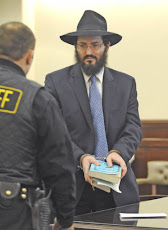
CONFRONTING ABUSE IN THE ORTHODOX COMMUNITY
(This article first appeared in NEFESH)
By Rabbi Yosef Blau
It is no longer possible to ignore the tragic reality that sexual, physical and emotional
abuse exists within the Orthodox community. Recent revelations about rabbis and
teachers abusing adolescents, often continuing to abuse for decades, dramatically remind
us that our existing mechanisms are failing to deal with the problem. I am not aware of
any statistics which clarify whether the numbers of offenders is substantial, but even a
small number can traumatize hundreds of victims.
The full measure of the horrendous nature of abuse is not always apparent from a
technical halakhic perspective. Two teenagers touching each other inappropriately are
guilty of the same sin as a forty-year old rabbi touching a thirteen- year old female
student. We intuitively recognize that the rabbi has used his position as an authority
figure to manipulate a vulnerable child, though she is an adult according to halakha. A
pedophile who abuses minors even if he gets their approval is halakhicly a rapist but not
if he does the same with an adolescent boy or girl.
It is even more difficult to pinpoint the sin when dealing with emotional abuse and
manipulation. While one can make similar technical arguments in other areas of halakha,
its significance in this context is its use as cover for the many who do not want to deal
with the full implications of confronting rabbinical abuse. Not wanting to see themselves
as lacking sympathy for victims, people can claim to be concerned about preserving
halkhic standards. How rare it is to have two witnesses who saw the abuse.
Even when the pattern of abuse is clear the question remains how to effectively deal with
the abuser in a way that at least limits his ability to move elsewhere and continue to abuse
new people. Schools fire abusive teachers who then move to another community and
start teaching (and abusing) in the new yeshiva. Going public is seen as causing a chilul
Hashem and going to secular authorities as mesira.
Virtually all poskim agree that if there is danger to future victims then there is no
halakhic issue of mesira but practically the taboo of mesira remains. Victims are
discouraged from coming forward on other grounds as well. It will hurt potential
shidduchim, not only for the victim but for members of his family as well. Compassion
is expressed for the reputations of members of the abuser’s family as well. The
probability that the family members may have suffered abuse themselves and suffer from
being in ongoing contact with the abuser, is not understood.
Taking the accusation to a Beis Din unfortunately is rarely effective. Few rabbis have
any training in recognizing abuse and the rabbinical courts have no investigative arm.
Some abusers are charismatic leaders and have followers who will say whatever they ask
them to say. Perjury to a Beis Din is not punished and in many cases the witness, in
support of his mentor, has no difficulty with distorting what occurred. The cultic element
in the guru’s leadership is hard for us to acknowledge. A rabbi promoting Judaism is
seen as incapable of being a cult leader.
Newspapers, particularly Jewish newspapers are assumed to be anti-Orthodox. Speaking
to them is almost the act of a traitor. Yet at the present time the media has played a
primary role in the increased awareness of this problem and an abuser whose name that
has appeared in the media is unlikely to be hired by a new school or youth movement.
Two recent cases point to differing approaches now being used. In one story from Israel
a commission including a rabbi, a psychologist and a judge evaluated allegations and the
accused was fired from his teaching position. He hired a lawyer and is fighting for
reinstatement. The Israeli media have picked up the story. A recent article in Maariv
broadened the discussion to quote varying views about rabbis counseling married women.
The other case involved allegations that had been investigated twenty years ago and a
resulting agreement that an individual would leave Jewish education, which was not
effectively enforced. After two decades it became difficult to reconstruct what had
occurred. Supporters of the accused spoke freely to the media while victims used
pseudonyms. New allegations surfaced and a major expose appeared in the papers and a
new Beit Din was formed to decide how to deal with the accusations. While no formal
announcement has been made, their apparent decision was to send the case to a religious
court in Israel that will deal with the charges.
Despite growing awareness and concern no consensus has yet emerged. Rabbis are not
trained to recognize abuse nor given an approach to aid them in responding when they
realize that it is occurring. Principals are not equipped to respond to accusations against
teachers in their schools. Rabbinical organizations do not have rules of appropriate
conduct. Accused abusers retain memberships in these organizations without any process
to remove their names.
Our community has not been educated to recognize abuse nor to appreciate the ongoing
trauma of victims. Headlines in newspapers are not effective educational tools. Often
the response is to express anger at the paper and then ignore the abuse. Until the
mentality of the community changes little progress will be made.
Even if a method will be developed to get rabbinical approval for victims to go to the
police much of the problem will remain. Not every manifestation of abuse involves
criminal behavior. “Rabbis” who seduce women as part of outreach or marital therapy
are not guilty of a punishable offence. Proper utilization of secular authorities is a
necessary step but clearly not a total solution.
In Chicago, after there were a number of serious incidents, a special Beit Din, whose
members are respected across the Orthodox spectrum, was established to deal with
accusations of abuse. Similar rabbinical courts in other major cities, whose judges would
be trained to recognize abuse and would have appropriate mental health professionals as
consultants, should be introduced. Creating special rabbinical courts is a powerful
statement that a serious problem needs to be addressed.
Nefesh professionals have a critical role to play in educating the Orthodox community,
in treating and supporting victims and in serving as consultants for schools and
organizations. Only people who are trained can lead a systematic campaign explaining
the nature of abuse and the need to confront it openly. Stigma has to be removed from
victims. Invariably when the identity of an abuser is revealed the response of far too
many is “We have known that for years.” Enabling abusers to continue, covering their
crimes to protect the image of the community, contribute to innocents being traumatized.
Judith Herman in her book on trauma points out that both the abuser and the victims turn
to others for support. The victim needs action while the abuser only asks for our silence.
It is time to stop the silence. The true chilul Hashem is that we allow victims to continue
to suffer in order to preserve our community’s image.