This blog is dedicated to all those who suffered abuse at the hands of shameless Rabbis and religious institutions. May the all merciful G-D, King of all kings, be there to comfort his most prized possessions, HIS CHILDREN!!!!!!!
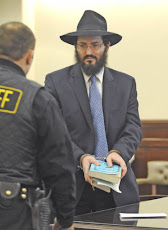
NEW YORK — The abuse went on for nearly three years before the
schoolgirl told anyone that her spiritual adviser was molesting her
while he was supposed to be mentoring her about her religion,
authorities said.
“They imagine they're the wave of the future, but it's only sewage flowing downhill”
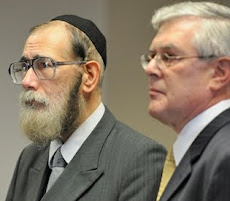
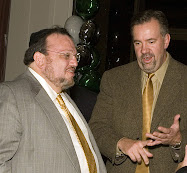
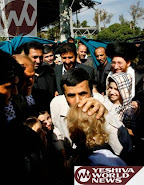
Weberman attends fundraiser event for himself in May
But in Brooklyn's ultra-orthodox Jewish
community, 53-year-old Nechemya Weberman has been embraced and defended
as wrongly accused. The girl has been called a slut and a troublemaker,
her family threatened and spat at on the street.
The rallying
around Weberman, who goes on trial this month, and ostracizing of his
accuser and her family reflects long-held beliefs in this insular
community that problems should be dealt with from within and that elders
have far more authority than the young. It also brought to light
allegations that the district attorney was too cozy with powerful
rabbis, a charge he vehemently denies.
"There are other people
that claim misconduct and they can't come out because they're going to
be re-victimized and ostracized by the community," said Judy Genut, a
friend of the accuser's family who counsels troubled girls.
Brooklyn
is home to about 250,000 ultra-orthodox Jews, the largest community
outside of Israel. Step onto a Williamsburg street and tall guys in
skinny jeans and tattoos are mingling with a flush of men in dark coats
and hats carrying prayer books and speaking Yiddish. The Hasidic Jews
appear to outsiders as though they come from another time; embracing
centuries-old traditions, they wear black clothes, tall hats, long
beards and earlocks. Women wear long skirts and cover their heads after
they marry.
They have their own ambulances and schools, called
yeshivas, their own civilian police and rabbinical courts. Members are
encouraged to first speak to a rabbi before going to secular authorities
— and as a result, cases rarely make it to outside law enforcement.
The topic has been studied and reported in the Jewish media for years and has recently made headlines in New York papers.
"They
think that anyone who turns over anyone to the outside authorities is
committing a transgression to the community at large," said Samuel
Heilman, a professor of Jewish studies at Queens College. The
girl, now 17, was sent to Weberman at age 12 because she'd been asking
theological questions and he had a reputation for helping people back on
the spiritual path. He often counseled people, though he had no formal
training. But during sessions, authorities say, he forced the girl to
perform sex acts.
The girl started dressing immodestly, was
deemed a troublemaker and removed from her school — one Weberman was
affiliated with — and sent to another, family friends said. The
allegations surfaced in 2011 when she told a guidance counselor there
she'd been molested.
The Associated Press typically doesn't identify people who say they are the victims of sexual assault.
Weberman
has pleaded not guilty, and articles in Hasidic newspapers have
proclaimed his innocence and begged the community for support. More than
1,000 men showed up for a fundraiser aiming to raise $500,000 for his
legal fees and, if he's convicted and jailed, money for his family.
"It's
very hard for the town to believe the things that he's being accused of
because he has a reputation of doing good and being good," Genut said.
George
Farkas, Weberman's lawyer, said his client isn't guilty but is damned
regardless because the allegations will taint his reputation.
The
family has said they would've preferred to handle the allegations
within the community. But when accusations are managed from the inside,
victims are rarely believed and abusers aren't punished — in part
because the word of an elder is respected over the word of a child,
victims and advocates say.
Joel Engelman said he tried to work
with yeshiva officials, finally confronting them at age 22 about a rabbi
who abused him as a child. Engelman was given a lie detector test and
encouraged to keep quiet about the allegations, and the rabbi was
temporarily removed — long enough for Engelman to turn 23, making him
too old under state law to file a complaint.
"It's that they
don't want to believe that the rabbis that they've been raised to
respect could be so cruel and could be so criminal," said Engelman, now
26.
His mother, Pearl, herself an activist, said the community is
overwhelmingly good and believes people must be educated about the
crime to start standing up for the victims.
"I'm not an
anarchist, I'm not a rebel," said the 64-year-old mother of seven. "I
love this community, and I want to change it for the better and make it
safer for children."
Outside law enforcement has also had a
difficult time. Before 2009, only a handful of sex abuse cases were
reported within the ultra-orthodox community. Then, District Attorney
Charles Hynes created a program called Kol Tzedek (Voice of Justice)
aimed at helping more victims come forward about abuse, an underreported
crime everywhere.
Part of the deal, along with a designated
hotline and counseling, is that prosecutors don't actively publicize the
names of accused abusers. The cases are still tried in open court,
where the names are public.
Before Kol Tzedek, Hynes said, he
struggled to mount a successful prosecution. "As soon as we would give
the name of a defendant ... (rabbis and others) would engage this
community in a relentless search for the victims," he said. "And they're
very, very good at identifying the victims. And then the victims would
be intimidated and threatened, and the case would fall apart."
Since
then, 100 of the total 5,389 cases in the borough have come from the
ultra-orthodox community, the district attorney's office said. Hynes
also started a taskforce to combat intimidation attempts — and has said
rabbis have a duty to come forward if they have been told of abuse.
But
victims' rights advocates say Hynes has purposefully ignored some cases
and hasn't pushed as strongly for full prosecutions of others — bowing
to powerful rabbis in exchange for political support, a charge he
strongly denies.
"He doesn't take care of victims," said Nuchem
Rosenberg, a rabbi who says he was ostracized for speaking out about
abuse. "He takes care of those in power, so they can all keep power."
Genut said the accuser is ready to testify. Her family, though, is looking for a higher judgment than criminal court. "They
believe that God's going to take revenge on him," she said. "They're
suffering a lot and they say one nice day God's going to show us that he
did stick up for us."
Vecchione, part of new DA task force, says ‘we should be limited by nothing’ in fight against community pressure in abuse cases.
Wednesday, June 6, 2012
Hella Winston
Special To The Jewish Week
The chief of the Brooklyn district attorney’s rackets bureau and a
member of the DA’s new task force to combat witness intimidation in the
ultra-Orthodox community indicated a willingness to explore all
available avenues to tamp down on the problem — including “[picking] up
the phone and [calling] the U.S. attorney.”
Michael Vecchione’s comments came Tuesday in an interview with The
Jewish Week, and they suggest an openness to receiving information from
community members in sex abuse cases that his own boss, DA Charles Hynes
— at least based on his recent statements to the press — appears to
lack.
In public statements over the course of the past few weeks, Hynes
has described the problem of intimidation of Orthodox abuse victims asworse than anything he has seen in organized crime or police corruption
cases. “We should not be limited by what [people in the community] believe
intimidation is,” Vecchione said in response to a comment by The Jewish
Week that many in the community fear that threats of social ostracism
themselves may not be actionable as a form of intimidation.
“[Ostracism] could be [intimidation],” he asserted, noting that
“the statute is specific yet broad enough, and there is a catch-all
phrase that would get us into that. “We should be limited by nothing,” Vecchione continued, adding that
“[community members] should just bring to us what they have and then we
will go from there.”
(Vecchione is apparently no stranger to prosecutions involving the
Orthodox community. Indeed, a piece in Monday’s New York Times about a
1994 kidnapping case seems to lend weight to longstanding claims that
Hynes has historically treated Orthodox defendants with kid gloves. In
that case, according to the Times, Hynes’ office initially sought to
drop the case and then entered into a plea deal that was later
overturned by a State Supreme Court justice. The prosecutor on that case
was Vecchione.) According to the law, Vecchione explained, if someone “interferes
with a prosecution by attempting to have a witness absent themselves or
change their testimony” then that person is “guilty of one of the crimes
that fits into the category of intimidating a witness.”
Asked whether rabbis, like David Zwiebel, the executive vice
president of the haredi umbrella group Agudath Israel, who contend that
reporting to the authorities before first consulting a rabbi is mesirah
(the act of informing) — an action punishable by death — could
themselves be committing a crime, Vecchione said that “[they] could,
depending upon what the person who is making the statements is talking
about and to [whom].”
According to Vecchione, this hinges on whether the person is
speaking generally or whether the “intimidating statement” can be
connected to “a particular case … in which a person decides not to come
forward or change their testimony or something of that nature.”
“There has to be a connection between what the potential defendant
and/or intimidator says and the witness in a particular case,” he
continued, noting that this could be “very difficult” to establish.
Hynes himself has said that he would not take action regarding such
statements, but for a different reason. Responding to a question posed
by radio host Zev Brenner Monday night about whether a rabbi who says
reporting is mesirah can be prosecuted, Hynes said that “no legal
authority ... allows me to object to [such statements] … because they
are a religious interpretation.”
Some experts disagree with both Hynes and Vecchione. According to
James A. Cohen, a professor at Fordham Law School and an expert in the
area of witness tampering, “A [general], public statement is
obstruction. In this country we respect religion … but that doesn’t give
[religious leaders] license to stand at the pulpit and say ‘you must
consult with a religious figure … before you go to the authorities.’
This is obstruction of justice, plain and simple.”
Marci Hamilton, the Paul R. Verkuil chair in public law at Cardozo School of Law, concurs. “Where Hynes gets it wrong is that he cannot prosecute someone for
the content or viewpoint of their speech, but he can prosecute them for
inciting imminent lawless action. “Where the rabbis are inciting their congregations to obstruct
justice or endanger children,” Hamilton explained, “they are crossing
the line from protected speech to illegal conduct.”
Vecchione also allowed that such statements might be viewed as an
interference with community members’ civil rights — a theory that has
been advanced by Orthodox attorney and author Michael Lesher. But the
rackets bureau chief added that “you have to ask the federal authorities
about that because … I don’t want to speak to that because I’m not
familiar with the law.” Lesher has noted “under federal law, it is a crime to use the threat
of force to interfere with someone’s right to the benefits of state
law, including the criminal justice system, if you make that threat
because of the victim’s religion.”
“By invoking the language of mesirah — a religious offense that
authorizes the use of deadly force against any Jew who ‘informs’ to the
authorities — Agudah’s stated policy amounts to a deliberate call for
the use of force to stop a Jew, because he or she is a Jew, from going
to police against a rabbi’s instructions,” Lesher told The Jewish Week.
This could make the Agudah and anyone else making such statements
“complicit in a civil rights crime any time an Orthodox Jew gets a
threat for talking to the police when a rabbi told him not to,” Lesher
believes.
Vecchione also said that the DA’s task force might consider
convening an investigative grand jury to gather information without a
particular target, something that he — and Cohen, among others — have
acknowledged is “a very powerful tool in terms of investigating
organized crime.” “The techniques that we use to investigate organized crime can very well be used in this situation as well,” he added.
Vecchione’s statements stand in contrast to those made recently by
Hynes about those who have attempted to bring to his office information
about intimidation.
Late last month, The Jewish Week reported that a father whose son
was allegedly molested by Rabbi Yehuda Kolko provided information both
to the police and, in an affidavit, the DA about a harassing phone call
he received originating — according to the caller ID on his phone — from
the school, Yeshiva Torah Temimah, where the alleged abuse occurred and
which the father is now suing. (The same family pressed criminal
charges against Rabbi Kolko, who was allowed to plead to misdemeanor
charges of endangering the welfare of a child. Rabbi Kolko is now
awaiting trial on charges he violated an order of protection that was
part of the plea deal.) In response to a question from WCBS at a recent, unrelated press
conference, Hynes seemed to minimize the father’s claims, saying that he
“was the victim of a telephone hang up” from “something called Torah
Termina [sic] on Ocean Parkway” and that the affidavit he submitted
charged “no criminality.” However, Cohen told The Jewish Week several
weeks ago that “threatening phone calls” — even outside the context of a
criminal or civil action — “is criminal conduct.”
The DA also appeared to cast doubt on the father’s report that the
call came from the school, saying that he wished “we had that technology
[that the father had] because we have one hell of a time tracing phone
calls” and went on to ask, “How do we find the person that made that
phone call?”
While the father acknowledges that identifying the exact person who
made the call from the school’s number could be difficult or even
impossible, he also noted in an interview with The Jewish Week that his
phone company informed him that it would release his phone records if
ordered to do so by the police or the courts. He also contends that he
was given no indication that the DA or the police even investigated the
claims made in his police report (which he also shared with The Jewish
Week) and could not in fact get anyone from the office to return his
calls for months, until after a reporter from the New York Post started
making inquiries. The district attorney also declined to meet with victims’ advocate
and psychologist Dr. Asher Lipner, who requested through former Mayor Ed
Koch a meeting “to share ideas and information” with the DA’s task
force through (Lipner has been treating survivors of child sexual abuse
in Brooklyn’s Orthodox community for over a decade).
The Jewish Week has obtained a copy of an e-mail sent by Dr. Lipner
to members of the DA’s Kol Tzedek staff about the information discussed
in those meetings (one of which included advocate Ben Hirsch of
Survivors for Justice, and was referenced in a separate e-mail). This
information included allegations of witness tampering and obstruction by
named rabbis and community-based organizations. Lipner was apparently
told that these staff members would be putting an assistant district
attorney from the rackets bureau in touch with him, but this never
materialized, according to Lipner.
However, if Vecchione’s statements are any indication, Lipner may well get another chance. “Tell people that they have someone they can come to,” Vecchione
instructed The Jewish Week. “And that our rackets division is open for
business.”
The family of a Brooklyn man being treated for drug
addiction in California traces his problems back to sexual abuse by a
yeshiva teacher, when he was just 9 years old.
"I do recall the rabbi being over here, trying to hush up my dad," Yosef
Werner--the abuse survivor's brother--told PIX 11 Friday.
20 years ago, Daniel "Benji" Werner came home from the Yeshiva of Brooklyn one day and started confiding in his mother at their Midwood home.
"He told me the rabbi was touching him," Yehudis Werner told PIX. "And I said, 'What??!!"
Benji Werner told his mother the
teacher would call him up to the front of the class, take the boy
behind the desk, place Benji on his lap, and then put his hands in the
boy's pants and molest him.
Mrs. Werner said she called her husband, Aaron, and he started
contacting other parents from Benji's class. She told PIX several
parents had heard the same thing from their children. Soon after, she
said the family received calls from religious leaders. "They called up
my husband and said 'if you continue to call parents, we'll make your
name mud.'"
Yehudis Werner told PIX that because the family with eight children had
recently emigrated to Brooklyn from Israel, they didn't want to rock the
boat back then by going to police.
The Werner family decided to talk to PIX 11 now, because of recent
publicity surrounding the District Attorney's office and how it's
handled sexual abuse cases in the Orthodox Jewish community.
The Kings Country District Attorney, Charles Hynes, told reporters this
week he's ready to put handcuffs on any religious leader who threatens
witnesses in the ultra-Orthodox neighborhoods.
Back in 1992, Benji Werner's parents took him out of the yeshiva and
transferred him to a school on the lower East Side of Manhattan. But
within a couple of years, Yosef Werner recalls his kid brother was
getting into trouble, at the age of 11. "I know he was popping Ecstasy
pills at a very early stage," Yosef Werner told PIX.
From rehab in California, Benji Werner told PIX 11 by phone Friday, "I
basically isolated myself. I was depressed. After two years in my new
school, one of the kids introduced me to marijuana. I smoked it and it
would deaden my feelings." Werner acknowledged he later took Ecstasy
and acid.
Through tears, Benji Werner's mother told PIX, "My only regret? I wish I
got him counseling at the time." She told PIX her son tells her not to
feel so badly. "He said, 'At least you did better than other parents.
You put me in a new school.'" Yehudis Werner said she recently told
her son, "Benji, thank you for confiding in me."
When PIX 11 contacted Yeshiva of Brooklyn Friday, a man who answered the
phone said he was the principal. When I identified myself and asked if
Benji's rabbi was still working at the yeshiva, the man told me, "No,
he is no longer here." When I asked why, he responded, "None of your
business. This is a private school."
Six years ago, Benji Werner and his brother paid a visit to the Kings
County District Attorney's office. But Benji Werner was already 24
years old, so too much time had passed; under state law, there could be
no prosecution, because of the statute of limitations.
Yosef Werner, a teacher, said he was working with a liason in the
Orthodox Jewish community to get an apology from Benji's old teacher.
But it never happened. "I did get a bottle of Chivas Regal from this
individual who was trying to bribe me to shut my mouth up," Werner said.
Werner's father, Aaron, is dead now, and Yosef Werner said Friday, "I
want people to see this story, because my father wanted this to come out
in the 1990's."
When PIX 11 asked Benji Werner if he will get over his trauma, he
replied, "Yes, I will, because I'm talking about it now. For years, I
didn't talk."
Benji Werner expects to be in rehab for at least another, three months.
The ultra-Orthodox face up to abuse
Catholicism doesn't have a monopoly on child abuse scandals, as the ultra-Orthodox Jewish community has discovered
The uncovering of sexual abuse perpetrated by religious leaders in the Catholic church is mirrored within the ultra-Orthodox Jewish community. As with the Catholic church, where the abuse was uncovered early on in the US, institutional child sexual abuse is starting to be prosecuted in New York. And as with the Catholic church, which has begun to change its stance on prosecuting priests, ultra-Orthodox Jewish leaders are beginning to permit the reporting to police of these crimes. As with the Catholic church, Jewish victim support groups and advocates have brought these crimes to the public's attention. The question is whether, as with the Catholic church, this is far too little far too late.
A little known Jewish law called mesira, found in the Talmud with some scriptural support, forbids a Jew from reporting another Jew to the gentile authorities. The law was in response to non-Jewish governments whose courts were staffed by antisemites. According to Jewish leaders, those courts looked for any excuse to find against a Jew. Many rabbis took a rather dim view of gentile legal processes, advocating that their courts were flawed, antisemitic and less capable than Jewish courts. Mesira essentially allowed Jewish courts to retain control over all disputes, ensuring that religious law prevailed.
In today's society, where there are proper, transparent and just courts of law, the law of mesira has largely been abandoned. Most Jewish communities recognise the legal system of the countries where they live; saving relatively few disputes, mostly centring on religious issues such as divorce, for the Jewish courts. However, the ultra-Orthodox communities still use mesira to prohibit any Jew being reported to the non-Jewish authorities.
As can be imagined, this is a pretty dangerous stance to take, particularly in terms of violent criminals. Perpetrators of, for example, domestic violence, child abuse, or sexual crimes, are often protected by the ultra-Orthodox communities and dealt with "in-house". They are sometimes beaten up by the self-appointed Jewish "police", and often moved to areas where there is no knowledge of their crimes.
Perpetrators of child sexual abuse within ultra-Orthodox Jewish communities have been afforded similar protection to Catholic priests. Rabbis have continued to teach, in their own or in new institutions. Yehuda Kolko allegedly had his crimes covered up by the Yeshiva Torah Temima school where he taught for over 25 years. Communities have shielded fugitives, such as Nachman Stal, who fled charges in Israel and was protected for almost a decade by the North London ultra-Orthodox community.
As with the Catholic church, silencing the victims has kept secret, at least from the wider public, ongoing abuse within ultra-Orthodox Jewish institutions. Various Jewish laws have been twisted and misused to threaten victims with divine retribution for reporting crimes. Families are told that their other children will not be given suitable matches for marriage, or won't be accepted by good schools, if the boat is rocked. Similar threats of communal ostracism were used by the Catholic church in Ireland to silence the many people who knew of abuse in Christian Brothers' institutions.
Within many closed, religious communities there is fear of communal repercussions, religious leaders, and ultimately of God. Fears are exploited to allow grave crimes to be covered up, and to continue within religious institutions. Motives of religious leaders may be hard to prove, but there are clear financial incentives as well as issues of power and control that have influenced the positions taken towards perpetrators of child sexual abuse.
There are huge financial implications for admitting abuse and permitting court cases. In the US alone, the Catholic church has paid over $2.5bn to victims. Little wonder then that ultra-Orthodox rabbis opposed New York's Markey bill which sought to extend the statute of limitations for criminal and civil cases about child sexual abuse. Now that abuse is coming to light, the financial implications could be devastating for institutions that covered up allegations and continued to employ abusers.
Similarly, leaders, seeking retain a tight grip of control over their communities, covered up scandals to avoid schisms, splits or defections. Yet these tactics have backfired. In silencing victims and protecting perpetrators, these religious communities face a crisis beyond anything they could have imagined.
As in the Catholic church, things are starting to change in the ultra-Orthodox Jewish world. Top rabbis, such as Rav Elyashiv, have come out in support of reporting abuse to the police. Indeed, they have emphasised that prosecution is necessary to keep communities safe and to protect children. Self-appointed Jewish "police" in Flatbush have now told their community to report all abuse directly to the gentile police. Clearly, the ultra-Orthodox Jewish world is learning from the recent spate of cases, the Catholic church's experience, and listening to the victims. But can it be enough to say that the institutions will change only once the scandals have broken, or is a Catholic-style crisis of faith about to hit the ultra-Orthodox Jewish community?
==========================================================================
FailedMessiah.com has done yeoman's work unfurling the hidden sex abuse in the Jewish community that's NOW going on, to the detriment of the children. This isn't about egregious abuse from 15 to 50 years ago, like the horrific Catholic history, but forums addressing crimes against New jersey children occuring NOW in Passaic, Lakewood and Teaneck. It's a familiar, but ghastly, routine: The victim reports the molestation to a rabbi, rather than face SHUNNING...not only for himself, but also for his entire family... by the whole community for bringing the crime to the attention of the police. When the rabbi takes the complaint of sexual abuse, the matter is covered up, handled "in house". Thanks to a new honesty, pedophile arrests are up 800% in Brooklyn, alone, amongst the Orthodox Jewish community.
In Lakewood, N.J., the "Rome" of Orthodox Judaism, the arrest of a Yeshiva teacher for molesting a young boy was a beginning, just last July. Nonetheless, pressure remains to let the child victims suffer and to clear all criminal abuse through a rabbi, and a closed rabbinical court. As one blogger noted, these religious leaders deny that "pedophilia is not a right of those in authority". In New Jersey, all matters that have been brought before a rabbinical court involving sexual abuse need to be brought to the attention of the police and the district attorney. This is an ongoing criminal conspiracy if rabbinical authorities are covering up crimes against children. Where's the Grand Jury?
Next: Brooklyn Orthodox sexual abuse and the good works of DA Charles "Joe" Hynes, a Catholic prosecutor with close ties to the new Orthodox reformers. A year ago he brought 26 sexual abuse cases against Yeshiva teachers, rabbis, camp counselors, merchants, and relatives of children. Yet, one Brooklyn rabbi cited Jewish law that calls for the killing of a Jew who informs on another Jew...even a pedophile. It gets worse.
=========================================================================
By DAVID ROSEN Since mid-February, the New York Times has led a systematic campaign exposing sex abuse scandals within the Catholic Church. The Times has run approximately four dozen front-page articles, follow-up stories and news reports as well as op-ed pieces and letters-to-the-editor on the sexual abuse of young people by Catholic prelates in the U.S., Europe and other parts of the globe. As America’s news-source of record, its attentions to this issue has been picked up by other media and also led to additional local follow-up reports. The Times’ reporting has also led to denunciations by the Vatican and others.
However, reading the Times’ coverage, it is striking that comparable issues of sexual abuse have not received the same sustained, in-depth, often front-page and editorial attention. Why has the sexual abuse of female soldiers in the military, of youthful inmates in the nation’s prison system, of boy scouts, of teen prostitutes, of Mormon girls and of youths within the Brooklyn Hassidic community not received the same scale of reporting? Indeed, these issues have been covered in occasional daily news reports. But why have they not received a comparable degree of attention?
As evident by what it chooses to focus its investigative resources on, the Times, like other information organizations, articulates an often-unstated political perspective. Its reprehensible policy of backing the Bush administration’s illegal invasion of Iraq, particularly through its publication of Judith Miller’s false reports, is illustrative of such unstated political decision-making masquerading as journalism. A more recent case is its cheerleading coverage of the rightwing campaign against Acorn and the disingenuous mea culpa by its Public Editor, Clark Hoyt.
A reader of the Times can appreciate the in-depth reporting about sexual abuse within the Church: it is a shameful practice that needs to be fully exposed. However, one must question the underlying agenda or intentionality of this campaign, especially in light of the fact that similar attention has not been given to other pressing sexual abuse issues that take place on a daily bases.
* * *
Word about America’s gravest religious sex scandal involving Catholic priests began to emerge in the mid-1980s, but did not fully grip the nation’s attention until the late-‘90s. And the New York Times did not break the story.
Sexual abuse of women and youthful male and female parishioners by individual Catholic clergy has taken place since time immemorial. However, with the rise of post-‘60s political environment, abuse finally came under intense public scrutiny. According to journalist Carl Cannon, Louisiana writer Jason Berry was the first to begin to raise the issue of sexual abuse by priests and the Church’s cover-up. The issue began to generate national attention when “The Phil Donahue Show” covered it on St. Patrick’s Day, 1988.
By the early-‘90s, momentum was building against the Church’s cover-up when indictments were handed down against John Porter for molesting twenty-eight boys in Fall River, MA, and John Geoghan, who molested young boys from at least 1972 but was not defrocked until 1998. In 2001, Kristen Lombardi, writing in the “Boston Phoenix,” directly tied Geoghan to the local Catholic hierarchy, naming Boston Cardinal Bernard Law as complicit in the cover-up. Geoghan was eventually convicted of child molestation and, in 2003, was murdered in prison; Law resigned in disgrace in 2005 and moved to the Vatican where he was rewarded with a high post in the Church bureaucracy.
Pope Benedict XVI visited the U.S. in the spring of ’08, the first visit by a pope since the Church pedophile scandal broke. He came, in part, to reassure the millions of American Catholics who were deeply disturbed by the Church hierarchy’s role in the cover-up. At a well-publicized but private get-together, he met with victims of the abuse who came from two groups, Survivors Network of those Abused by Priests (SNAP) and Voice of the Faithful. According to SNAP’s Edward Lozzi, “the meeting was forced upon the Pope by the victims.” He adds:
Pope Benedict was very uncomfortable meeting with the fiverepresentative victims who had been raped by priests and had their lives and families changed forever. This was a private meeting of course. The Pope was visibly embarrassed and in agony throughout the whole encounter.
Lozzi concludes, quite pessimistically, “… Ultimately that April meeting was just a publicity stunt by Benedict.”
Pope Benedict, born Joseph Ratzinger, has lived nearly his entire adult life behind the walls of the Church. At age 12, he enrolled in a seminary near where he grew up in Traunstein, Germany. In 1945, after demobilizing from the German military and a brief internment as a POW, he entered Catholic seminary in Freising and was ordained in 1951. He became Archbishop of Munich and Freising in 1977 and, moving up the Church hierarchy, became Prefect of the Congregation of the Doctrine of the Faithful in 1981. In 1998, Cardinal Ratzinger became Vice-Dean of the College of Cardinals and was elected Pope in 2005.
The Church’s Congregation of the Doctrine of the Faithful was traditionally known as the Supreme Sacred Congregation of the Roman and Universal Inquisition. It was formally established in 1542 and, for the last four-and-a-half centuries, has enforced official Church doctrine. In the Church’s heyday, it undertook trials for heresy against both Protestants and Catholic reformers, including Galileo. As Cardinal and subsequently as pope, Ratzinger has steadfastly moved to maintain orthodox control of the Church’s bureaucracy and increasingly diverse followers.
In particular, the pope has systemically moved to reverse the changes instituted in Vatican II. These actions included: a return to the Latin mass; lifting of the excommunications of four reactionary bishops of the Priestly Fraternity of St. Pius X; moving to canonizing Pius 12 (who abandoned the Jews during WWII); and campaigning against Latin America priests sympathetic to liberation theology as exemplified by the recent appointment of the conservative (and Opus Dei member) archbishop of San Antonio, Mexiccan-born Jose Gomez, as archbishop of Los Angeles. Some within the Church wonder if he will overturn Vatican II’s most important action and reinstate the charge that Jews were responsible for the killing of Jesus.
The pope continues to appear uncomfortable and embarrassed by the pedophile scandal, unable to grasp the scandal’s full moral and legal consequences. While Benedict has, up until recently, appeared to take seriously sexual-abuse charges against the clergy, he is ultimately a faithful follower of the traditions of the Inquisition. His primary duty seems to be to protect those who adhere to Church dogma even if they break secular laws. As such, the indiscreet actions of loyal servants of the bureaucracy are hushed up, offenders shifted to another parish and abusers permitted to continue to serve the Church. Sadly, it appears the neither the pope nor his loyal minions really comprehend (or care about) the institutional failure at the heart of the scandal: where Vatican II sought to open the Church to its faithful, Benedict seeks to limit accountability to only those who accept faithful obedience.
* * *
A review of Google listings of New York Times articles about the Catholic Church sexual abuse as well as sex scandals and related topics provides an invaluable insight into the newspaper’s apparent coverage policies. Like most media outlets, the Times gave extensive coverage to the misadventures of Tiger Woods, John Edwards and Eliot Spitzer, among many other sex scandals involving celebrities and politicians.
The Times also reports on a wide array of other sex-related issues and a few are given significant coverage. Like other media outlets, the Times extensively covered the Texas polygamy scandal involving the Fundamentalist Church of Jesus Christ of Latter Day Saints (FLDS). From February thru June 2008, it ran about two-dozen articles, many informative accounts, about this religious cult and the ham-fisted efforts by Texas law enforcement to break it. Sadly, since the original controversy, the Times has given no real attention to this subject. [see “The New Texas Two-Step: Polygamy & State Regulation of Sexual Life,” CounterPunch, April 19-20, 2008]
Unfortunately, its coverage of most sex-related issues tends to be more episodic, with an occasional news report. Examples of such coverage include the use of rape as a military weapon in the Congo; the sexual abuse of boy scouts by scoutmasters; the sexual abuse of imprisoned young people; and the failed policies relating to sex offenders. These stories are often tied to a horrendous event, the issuance of an important study or an on-going court proceeding.
An illuminating example of this type of reporting involves the increasing incidence of rape and sexual abuse of U.S. female military personnel. The Times recently reported on the Defense Department’s release of its annual report “Defense Task Force on Sexual Assault in the Military Services.” [see “The Third Front: Sexual Assault in the U. S. Military,” CounterPunch, March 19-21, 2010] While the Times has addressed this issue repeatedly over the last decade, it has, like its coverage of Mormon polygamists, never undertaking a rigorous or in-depth investigation of the institutional sexism at their heart of the military.
The Times’ coverage of sexual abuse and a religious group is revealing. In March 2010, “Rabbi” Baruch Lebovits, a Brooklyn Hasidic Jew, was found guilty on eight of 10 counts of sexually molesting Jewish teens in 2004 and 2005. Lebovits, was the owner of a Borough Park travel agency and faces up to seven years in prison. This story was not reported by the New York Times but by the New York Daily News.
Sadly, the Times has offered little coverage of the mushrooming sexual abuse scandal involving Hasidic Jews in Brooklyn. Hasidics are ultra-orthodox Jewish sects such as the Satmars, Vizhnitzs and Bobovs. In October 2009, like other New York print and media outlets, it covered Brooklyn District Attorney Charles Hynes’ press conference in October 2009. As it restated from a press release, over the preceding year, 26 Orthodox Jewish “yeshiva teachers, rabbis, camp counselors, merchants and relatives of children” were arrested and eight were convicted; 18 still awaited trial. [NY Times, October 13, 2009] Unfortunately, the cases involving Rabbis Avrohom Reichman and Yehuda Kolko, yet the 26 originally arrested by DA Hynes, have not been reported.
The Times can take an adversarial position with regard sex-related issues. During the summer and fall of 2008, it ran a series of articles regarding the horrendous treatment of teen prostitutes by the New York police and Court system and the need to pass the Safe Harbor Act for Exploited Children then pending before the State legislature. It also ran an editorial supporting Gov. David Paterson’s signing of the law. [see “Teen Prostitution in America: Looking for Safe Harbor,” CounterPunch, August 2-3, 2008.]
The New York Times has devoted extensive investigative resources and page space to exposing the sins of the Catholic Church and its sclerotic leadership to cover-up the long-endemic pedophilia scandal. This reporting has been valuable and one can hope for more of it. But one must ask why such extensive selective journalism has been devoted to this one sinful subject? Why has not similar attention been paid to the other equally troubling examples of sexual abuse of the young, of women and other powerless people, many living in the Times’ very backyard?
In a halting voice, a 22-year-old man on Wednesday accused a Brooklyn rabbi of repeatedly molesting him when he was a teenager.
Supporters of Rabbi Baruch Lebovits packed the courtroom as the accuser took the witness stand to describe a series of assaults in a car between 2004 and 2005.
"Did he say anything?" Assistant District Attorney Miss Gregory asked.
"He said something but I don't remember," murmured the young man, dressed in jeans, white shirt, tie and a yarmulke on shoulder-length black scraggly hair.
He spoke so softly and with such hesitation that Brooklyn Supreme Court Justice Patricia DiMango repeatedly asked him to speak up.
"How did you feel?" Gregory asked of the alleged attacks.
"Very uncomfortable and confused," he said.
He sat less than 20 feet from Lebovits, 59, who was surrounded by supporters.
The rabbi, who owns a Borough Park travel agency, faces up to seven years in prison if convicted of a criminal sexual act in the second-degree.
He's also awaiting trial on charges of molesting two others.
The man accusing him yesterday admitted he was in rehab for heroin and crack addiction that began after the incidents.
"It's a shame to talk about it and I have low self-esteem," he said, explaining to jurors why he didn't lodge charges until he'd left the Hasidic community.
Lebovits' lawyer hammered him in opening statements, calling him a con man with a history of drugs, crime and missed court dates.
"You're going to be sold a bill of goods," lawyer Arthur Aidala said, claiming the accuser intends to sue his client. "This is a con man that's going to take the stand.
"There's no video, there's no eyewitness, no DNA, there's no fingerprints... That evidence doesn't exist because all these acts Miss Gregory described didn't happen."
Attorney Arthur Aidala: Generally MEN (young OR old) do not get on the witness stand and admit they've been molested unless it's true. Your client is going DOWN (as he should). Your client is DISGRACEFUL!!
hjo4
4:53 PM
Mar 3, 2010
A Rabbi Oy vey what is the world coming to.
ezekiel14
5:00 PM
Mar 3, 2010
hj04, let's see if he gets sentenced to any jail time.
monzon3
5:19 PM
Mar 3, 2010
Gee, a rabbi? How naughty. I hope the authorities put him in jail.
theodore bundy
5:30 PM
Mar 3, 2010
>>>>"There's no video, there's no eyewitness, no DNA, there's no fingerprints...<<<< How about his ugy, scary looking mug? That's all the evidence you need. That is pure evil in those eyes. The fact he runs a travel agency and calls himself a rabbi at the same time is enough evidence too! Guilty!
Anacondaman
5:31 PM
Mar 3, 2010
Yes, a rabbi... priests & pastors aren't the only depraved child predators; in fact, some have been GOPers, too. Check out: http://www.dkosopedia.com/wiki/Republican_Sex_Scandals
seth fardy
5:35 PM
Mar 3, 2010
And democrats
Yankees621
5:36 PM
Mar 3, 2010
I understand Aidala has to defend his client but ad hominem attacks on an alleged abuse victims is unseemly. And, it turns jurors off. Male victims rarely, if ever, come forward. Add to that this young man came from the very cloistered Hasidic community where abuse of all sorts, especially at the hands of rabbis, is covered up. Already we hear about how his "supporters" turned out to intimidate the young man. The rabbi may be able to fool a jury and his congregation, but God sees all.
Azazel
5:38 PM
Mar 3, 2010
Cultic ritual and regulations is just a bunch of BS, when are people going to learn that these guy are just people; priest, pastor, rabbi, or iman. No God talks to them anymore than that God would talk to you. Break down the walls of religious organizations and you will be free !
NYCCrocheter
6:18 PM
Mar 3, 2010
Most unfortunately, the bulk of clergy abuse allegations are not from con artists, but from deeply disturbed people with a long history of substance abuse and/or use of psychotropic prescription medications like Prozac. Prozac halluncinations are based on worst fears. The accusers aren't horrible, but they are extremely unreliable and very sad, poor souls.
Today a 22-year-old testified In Brooklyn Supreme Court that he was sexually molested by Borough Park Rabbi Baruch Lebovits. The young man, who's no longer part of the Hasidic community, was dressed in "jeans, white shirt, tie and a yarmulke" and spoke softly, according to the Daily News. "How did you feel?" asked the assistant district attorney. "Very uncomfortable and very confused," he responded. Lebovits will soon stand trial on charges of sodomizing two others, and has been accused of hundreds more counts of child rape and abuse [Pdf ChargeSheets]. Still, his lawyer called the witness a "con man" and warned the jury, "You're going to be sold a bill of goods."
Lebovits's accuser told the court the rabbi had assaulted him multiple times in a car between 2004 and 2005. Since the incident, he said, he's fallen prey to heroin and crack addiction. "It's a shame to talk about it and I have low self-esteem," said the man, who waited to press charges until after leaving the tight-knit religious group. But the defense railed on: "There's no video, there's no eyewitness, no DNA, there's no fingerprints... That evidence doesn't exist because all these acts...didn't happen."
If convicted, Lebovits faces a sentence of up to seven years on charges of criminal sexual acts in the second-degree. Late last year a Hasidic man named Motty Borger committed suicide by jumping from the seventh story of a hotel two days into his honeymoon, having confided to friend that he'd been molested by a prominent rabbi. According to Failed Messiah and the Post, that rabbi was Lebovits.
Haifa, Israel — For several dozen Americans who say they were sexually abused as children, news from Israel on January 14 ripped the scab off a still unhealed wound. Israel’s Supreme Court ruled that Avrohom Mondrowitz, their alleged abuser, will not be extradited to stand trial in America.
But that is not the only recent decision regarding Mondrowitz. The Forward has learned that Israeli prosecutors have decided Mondrowitz will not be charged in connection with child pornography they say they found in his home in 2007.
Justice Ministry spokeswoman, Adi Simchovitz said that the child pornography case against Mondrowitz was closed in March 2009 “for lack of evidence.” She declined to offer any details.
Under Israeli law, possession of child pornography is a criminal offense.
Mondrowitz, an American Orthodox rabbi and psychotherapist, fled the United States in 1985, before an arrest warrant could be executed on an indictment handed down against him for child abuse. He will be released from house arrest in Jerusalem on January 24, unless the Israeli government appeals.
Survivors for Justice, a New York-based support group for Orthodox victims of sexual abuse, termed the court’s extradition decision a “travesty.”
“At the very least, the authorities in Israel should be pursuing criminal charges against Mondrowitz for recent crimes that both they and the U.S. authorities have clear and convincing evidence of,” said SFJ president Ben Hirsch.
The saga of Mondrowitz’s escape from extradition began when he was indicted in Brooklyn on multiple counts of sodomy and sexual abuse of five children.
He fled to Israel, where courts ruled that because Israel’s definition of rape did not include sodomy, Mondrowitz had not broken Israeli law and could not be extradited.
Then, in 2007, the U.S. – Israel extradition agreement was amended to cover homosexual rape and his case was reconsidered. The Israeli government jailed him and sought an extension of his incarceration. At a hearing, prosecutors cited four pornographic films they said had been found during a search of his Jerusalem home. Judge Shimon Feinberg agreed to an extension, noting the government’s claim that Mondrowitz was “a threat to the public as evidenced by the material discovered in his home.” Mondrowitz was ultimately granted house arrest.
The Supreme Court ruled it could not apply the 2007 amendment retroactively.
Michael Lesher, a Passaic, N. J., attorney who represents six American Jews who claim Mondrowitz abused them as children, said, “We know now, which we didn’t before, just what kind of denial we are facing.
“We feel outrage, we feel bitterness and we feel rising anger that bringing Mondrowitz to justice is being resisted.”
One of the first instances in America involving ultra-Orthodox teachers and rabbis preying on their students to come to public attention, the Mondrowitz case is thought to have been prompted by complaints from more than 100 accusers, most of whom encountered Mondrowitz in the 1980s when he was practicing as a psychologist in Brooklyn.
Although Brooklyn District Attorney Charles Hynes instituted the extradition proceedings against Mondrowitz in 2007, he has come under fire from child advocates who say he should have done so earlier.
Even Mondrowitz’s attorney, Eitan Maoz, echoed this view after the extradition ruling. He told the Jewish Star, a Long Island weekly, “In 1988, the law was amended in a way that the route to extradition was open and the district attorney was notified. But they did not do anything until 2007, when they decided to apply.”
Hynes has said that since the crime occurred before the law changed, the extradition request could not be applied retroactively.
Now, child advocates are waiting to hear whether the government will appeal the extradition ruling, issued by a limited bench of three Supreme Court justices who heard the case. The government has 45 days to decide. A single judge will then decide whether to accept the appeal. If accepted, the case would go before an expanded Supreme Court panel.
Maoz, Mondrowitz’s lawyer, called the court’s ruling “a very brave decision… especially at this time when the request for extradition came from the U.S.” He declined to comment on other matters relating to Mondrowitz.
Mondrowitz May Have Been Treating Boys Long After Indictment
by Hella Winston Special To The Jewish Week
With alleged Brooklyn child molester Avrohom Mondrowitz under house arrest until Jan. 24 following last week’s decision by the Israeli Supreme Court to deny his extradition to the U.S., new evidence has emerged that appears to indicate that Mondrowitz was treating adolescent boys in Israel as recently as 2006.
According to a document provided to The Jewish Week by New Jersey attorney Michael Lesher, and apparently obtained from Mondrowitz’s computer, Mondrowitz appears to have conducted an interview with and “assessment” of a 15-year-old boy who had been engaging in “improper behaviours [sic] with his peers.”
While the document contains the boy’s name, The Jewish Week is not publishing it to protect the identity of a minor.
It appears from the report, written as a letter and dated June 19, 2006, that Mondrowitz — who fled Brooklyn to Israel in late 1984 and was indicted on sodomy charges in 1985 — actually saw the teen in person, as opposed, for example, to having been sent a file for his review about the case. The boy is described in the letter as a “pleasant, neatly dressed, and polite 15-year-old.”
The assessment indicates that the boy was being seen by Mondrowitz in part regarding “normal hormonal and physical changes in his body.” It also notes that “Early adolescents may discover pleasurable self-stimulation. They form close friendships with peers and may experiment with them, or sometimes with somewhat younger peers, usually to satisfy curiosity. This quite normal experimentation phase usually fades and disappears.”
The lengthy report concludes with Mondrowitz suggesting that the boy “will appreciate and grow positively in Midos [positive characteristics] and Maasim Tovim” [good deeds] from “close interaction with a knowledgeable Mashgiach or other Torah-true guidance figure.”
The document indicates that the assessment was made at the request of the boy’s father and a Benyamin Rosenstein, whom, the documents make clear, is the father of Jerusalem City Councilman Shlomo Rosenstein, a member of the United Torah Judaism party.
The Jewish Week tried but was unable to reach Shlomo Rosenstein at his City Council office. Mondrowitz’s name appears at the end of the assessment, followed by the credentials “Ph.D., L.N.H.A.” (Licensed Nursing Home Administrator), however there is no evidence he ever received a doctoral degree. Indeed, on a resumé obtained by The Jewish Week, Mondrowitz claimed to have earned a doctorate in clinical psychology in 1977 from “Teachers College, Colombia [sic] University.” A New York Police Department detective, now retired, is quoted in a 2007 article in the Israeli newspaper Haaretz saying that all of his diplomas, including his rabbinic ordination, are “fakes.”
According to Lesher, an attorney in Passaic, N.J., author and advocate who represents several men allegedly sexually abused by Mondrowitz, “The new evidence we have suggests that Mondrowitz was serving as a psychologist in Israel, despite many assurances from rabbis over the years [to the contrary]. “That,” Lesher continued, “is a stunning contradiction of what we have been led to believe all these years.”
Other documents provided by Lesher seem to suggest that Mondrowitz had discussed plans for a project, referred to only as “AOL,” with someone named Mr. Myers. While it is unclear from the documents precisely what “AOL” is, the letter suggests it is an “endeavor” in some way related to “alternative therapeutic interventions that have assisted and greatly improved the situation and success of many children and their families.”
The letter is written on Mondrowitz’s letterhead, containing his current address and phone number in Jerusalem, and his name is preceded by “Dr.”
The Jewish Week also obtained an index of material found on Mondrowitz’s hard drive, information that was also provided to the chief superintendent of Israel’s division of computer crime, Avi Aviv, in early 2007. The index notes that the drive contained two graphic video clips. One of the clips features “two young boys sitting together on a bed and getting undressed”; another depicts two boys engaged in “graphic” sexual activity.
The index also lists dozens of URLs for pornographic Web sites, some involving what appear to be minors, visited by the computer. It also notes the existence of e-mails written from Mondrowitz’s e-mail address to customer support at sites that appear to feature child pornography asking why his access is being denied when he paid for access to the sites.
According to the index, there is also evidence that Mondrowitz used an iMule program, which is a site used to share illegal images. The index also lists items apparently related to the “Thornhill University,” a bogus university from which Mondrowitz allegedly issued degrees and credentials. (Thornhill, sometimes described as a “degree mill,” appears on several lists of universities that have no legal authority to issue degrees.) These included e-mail folders for the aliases of various Thornhill University “employees,” including its president, Theodore Thorton. The drive also contained logos from various universities, presumably used in the creation of fake diplomas.
Reached Monday at their Jerusalem home, Mondrowitz’s wife, Raizel, said that Mondrowitz was “unavailable.” But she emphatically denied that he had been treating boys in Israel, though she did say he “had been a psychologist in Brooklyn.”
“He hasn’t had anything to do with treating anyone in 25 years,” she said.
She also told The Jewish Week that the letters suggesting otherwise were “absolute lies” from “the same people who have been going after him for years.”
Mondrowitz and his family have professed his innocence since he fled to Israel in 1984. After he left the U.S., he was indicted in absentia on four counts of sodomy and eight counts of sexual abuse in the first degree against four non-Jewish children in Brooklyn. (While Jewish children were among Mondrowitz’s alleged victims, they were not part of the grand jury that indicted him and thus not part of this case).
During his time in Brooklyn, Mondrowitz ran a child-counseling program out of his home and worked in a special-education school for boys that had connections to Ohel Children and Family Services. One of his alleged Jewish victims told The Jewish Week he was referred to Mondrowitz for counseling directly by Ohel. Several others made their way to him because he had a reputation within the community for being able to help “troubled” boys.
Prior to Mondrowitz’s arrest pursuant to an extradition request by the United States in late 2007 — and months after the Israeli authorities were alerted to Mondrowitz’s involvement in child pornography and the granting of bogus degrees — Israeli police found evidence of his involvement with films containing child pornography, according to court papers.
Mondrowitz has not been charged with any crimes in connection with these activities. \ An e-mail to Aviv seeking comment on whether an arrest was planned was not returned. An e-mail to the spokesman for the Israeli State Attorney’s office was also not returned.
Recently, it came to light in a story on the San Diego Union-Tribune’s Web site, SignOnSanDiego.com, that a California Air Resources Board scientist from San Diego, Hien Tran, had bought a fake degree in applied statistics from Thornhill University.
According to Ben Hirsch, president of the advocacy group Survivors for Justice, “The Israeli government’s continued failure, thus far, to honor the Unites States’ request for the extradition of Avrohom Mondrowitz to face trial for the heinous crimes he was indicted for in 1984, raises troubling questions. That forced sodomy was legally not an extraditable offense in 1984 was a travesty then, and Israel’s failure to extradite Mondrowitz, now that the law in Israel has been corrected, is a travesty now.
“At the very least, the authorities in Israel should be pursuing criminal charges against Mondrowitz for recent crimes that both they and the U.S. authorities have clear and convincing evidence of. ... An indicted serial child rapist such as Mondrowitz has no place in any civilized society. He deserves to be judged by a Brooklyn jury for the unspeakable crimes he committed in Brooklyn.”
The new evidence about Mondrowitz’s actions since being indicted in 1985 comes after last week’s decision by the Israeli Supreme Court to deny what is the second extradition request made by the U.S. (An article on the ruling appeared last Wednesday on The Jewish Week Web site.)
Israeli state attorneys have until Jan. 24, 10 days after the court ruling, to decide whether to request an additional hearing. \ The Brooklyn District Attorney’s office expressed disappointment last Thursday after the ruling, which overturned a lower-court decision that Mondrowitz should be extradited to the U.S. for trial.
“We are disappointed by the decision,” said Jerry Schmetterer, director of public information for the DA’s office, which had been seeking Mondrowitz’s extradition. “We are working with the U.S. Department of Justice and the Israel Ministry of Justice to see what remedies are available.”
Asked to elaborate, Schmetterer told The Jewish Week the remedies “would possibly be in the area of further appeals.”
At the time Mondrowitz fled to Israel in 1984, the extradition treaty between Israel and the U.S. did not cover charges of sodomy, which was among the crimes for which he was indicted. The first extradition request regarding Mondrowitz came in 1985, but the appeal was denied. A new request was filed after the treaty was amended in 2007. Last Thursday’s decision was on Mondrowitz’s appeal of that request. This article was posted on The Jewish Week Web site, www.thejewishweek.com, on Monday, Jan. 18. ===============================================================
For the more than two years he was in prison, Avrohom Mondrowitz prayed to God for his freedom.
Two weeks ago, a three-judge Supreme Court panel ruled to release him to house arrest, reversing an earlier Jerusalem District Court decision that the 62-year-old member of the Gur Hasidic sect would be extradited to the United States for the alleged molestation of more than 100 children and adolescents.
Born in Poland, Mondrowitz immigrated to Israel with his family after World War II. In the 1950s, he immigrated again, to Chicago.
By the 1980s he was living in Brooklyn, where he presented himself as a rabbi and psychologist, an expert in childhood and adolescent problems, even though he had no accreditation in the field.
In 2007, former patients of Mondrowitz and students at the yeshiva at which he taught described to Haaretz just what happened behind closed doors.
The parents of Mark Weiss, then 14 years old, came from Chicago to Brooklyn for treatment with Mondrowitz. Weiss had nowhere to sleep, and his self-styled therapist invited him into his home.
"My parents knew and trusted Mondrowitz," said Weiss, now 42. "His family was on vacation in the Catskills, and he came to pick me up at the airport. At first it was a lot of fun; he took me all over the place.
"At night he came into my bed and touched me. He did everything, including acts of sodomy. I was naive - I didn't understand exactly what was going on. I thought it was part of him being nice," Weiss recalled.
Today Weiss is active in Survivors for Justice, an organization created in the United States by victims of Mondrowitz.
In 1984, the New York Police Department collected testimony from Mondrowitz's victims and their parents in the ultra-Orthodox communities of Brooklyn.
Officers drafted a 13-part indictment including first-degree sodomy, which carries a maximum sentence of 25 years in prison.
Authorities in New York issued an arrest warrant, but when police came to detain him, Mondrowitz and his family had fled to Israel.
The U.S. Justice Department immediately issued an extradition request, but the extradition agreement between the United States and Israel did not include charges of sodomy, but only rape.
In Israel, Mondrowitz - married and the father of seven children - continued teaching in a yeshiva and counseling children. He is also suspected of having sold forged university degrees to anyone willing to pay.
Israel Police investigators have found significant material testifying to offenses both sexual and otherwise, including pedophile films and forged degrees from universities around the world.
Mondrowitz was first questioned by Israeli authorities in October 2007, then released to limited house arrest.
In January of that year, the Israel-U.S. extradition treaty was amended to include any offense that carries a sentence of one year or more.
The U.S. Justice Department immediately issued a new request for Mondrowitz's incarceration.
According to U.S. law, Mondrowitz's alleged offenses are not affected by a statute of limitations, given that the suspect fled to a foreign country.
Too much time has passed
One night in November 2007, Mondrowitz was seized at his home in Jerusalem's Nahlaot neighborhood and taken into custody, and a week later released to house arrest.
Supreme Court Justice Ayala Procaccia wrote in the ruling that even if the alleged offenses had not exceeded the statute of limitations, Mondrowitz should not be extradited because the length of time passed since they allegedly occurred would make a fair trial impossible.
The court also ruled that Israel and the United States could have changed the extradition treaty long before they did, and even if it was amended in 2007, Mondrowitz was still entitled to the presumption of innocence.
In the coming days the State Prosecutor's Office will likely ask the Supreme Court to hold an additional hearing on Mondrowitz's case.
The New York-based president of Survivors for Justice, Ben Hirsch, said, "We won't rest and we won't be quiet until Mondrowitz is brought to a fair trial in Brooklyn, where he committed his criminal acts. How many children's lives will be ruined by that monster before the Israeli authorities decide to put an end to it? Should we understand from the Supreme Court's ruling that it is recommending that the U.S. government forcibly kidnap Mondrowitz to bring him to trial?" ==============================================================
Assessing blame, further options in notorious case
By Michael Orbach
Issue of January 22, 2010/ 7 Shvat 5770
Avrohom Mondrowitz will not be extradited to New York to be tried on multiple counts of child sexual abuse, Israel’s Supreme Court has decided. His attorney says the Brooklyn District Attorney’s office is to blame but even one of the DA’s harshest critics calls that “preposterous.” Mondrowitz, a charismatic, self-styled rabbi who faked his psychology credentials, was indicted for sexually abusing several Brooklyn boys a month after he fled to Israel in 1984. He is widely suspected of molesting dozens of boys, many of whom, twenty years later, are still unwilling to come forward.
The case is more involved that that of a single individual accused of committing serious crimes. The social service agency Ohel has vigorously denied having referred clients to Mondrowitz for counseling; and leaders of the frum community, specifically the Council of Jewish Organizations of Borough Park, were thought to have warned him of his impending arrest. Elizabeth Holtzman, Brooklyn’s district attorney at the time, sought Mondrowitz’s extradition. However, the charges against him were not extraditable under the treaty between Israel and the United States in force at the time. That changed in 1988, but the next district attorney, Charles Hynes, chose to not pursue the case until 2007 when the treaty changed again. Hynes has been accused of sitting on the case under pressure from the same Borough Park communal leaders. After a renewed interest in the case, extradition proceedings began in earnest in 2007. Mondrowitz appealed and in a decision issued by the Israeli Supreme Court on Jan. 14, his appeal was sustained. “The delay in the appellant’s extradition process — currently measured at 23 years — which could have been prevented by an earlier amendment of the extradition agreement, places a legal and ethical obstacle before the completion of the extradition,” wrote Justice Ayala Procaccia.
Eitan Moaz, Mondrowitz’s lawyer, attributed the defense’s success to inaction by the district attorney. “In 1988 the law was amended in a way that the route to extradition was open and the district attorney was notified,” he explained.” But they did not do anything until 2007, when they decided to apply.”
“I’m not saying it was his fault, it was his decision,” he added. “This case was buried under ground.”
Moaz praised the judge’s decision, calling it “brave,” especially in light of the relationship between the United States and Israel.
Hynes is currently also fighting a Freedom of Information Act request by attorney Michael Lesher, concerning the DA’s conduct in the Mondrowitz case. On Nov. 23, 2009, a judge ordered Hynes to turn over to Lesher all of the documents concerning the district attorney’s handling of Mondrowitz.
“If the District Attorney has been telling the truth about his role in the attempted Mondrowitz extradition, he has nothing to hide; if he has not been telling the truth, he has no right to hide,” Lesher wrote in his affidavit.
Reached by phone on the day of the Israeli Supreme Court decision, Lesher became Hynes’ unlikely defender.
“It’s preposterous to blame the DA for the fact that Israel and America simply did not negotiate a new extradition treaty fast enough. I don’t say that as a defender of Hynes — he did plenty to bury the case -— but it isn’t his fault that the extradition treaty didn’t change sooner.”
“It was the wrong decision and protects a man whose crimes extend … far beyond him,” he said about the decision. “If prosecuted it [the case] would reveal so much about the corrupt underside of the society he comes from. All we ever wanted was simply for him to come to trial like others accused of such crimes. If he did come to trial we would learn a lot of unpleasant things, but invaluable things. I think there were a lot of people who didn’t want that to happen.”
Lesher added that said he believed the court’s decision had been made for “political considerations.”
Jerry Schmetterer, a spokesperson for the DA said that they were “disappointed” by the Israeli decision.
“We’re working with the [U.S.] Department of Justice and the [Israeli] Ministry of Justice to see what remedies are available,” he said.
If there is any further recourse that could see Mondrowitz brought back to New York, it’s a long shot, at best, according to his attorney, Moaz, who believes that Israel’s Supreme Court would need to call a new session with a panel of seven judges.
The decision to set Mondrowitz free “raise[s] troubling questions,” according to Ben Hirsch, president of Survivors for Justice, an advocacy organization for victims of sexual abuse inside the Jewish community.
“We are working with counsel to determine what can be done to help bring Mondrowitz to the U.S. to face trial for the terrible crimes [of which] he stands accused. We are saddened that Mondrowitz’s victims have been deprived of this important step towards closure and we will not rest until every possible legal means to bring this matter to the close it deserves have been exhausted,” he said via email.
The question now becomes what will happen to Mondrowitz. He remains under house arrest after being moved from the prison where he spent the last two years.
He is set to go free on bail in ten days. Documents Michael Lesher provided to the Jewish Star indicate that as recently as 2006 Mondrowitz was actively counseling adolescents under the same false credentials he used in the United States 20 years ago.
In an evaluation of a boy named Eliyahu, who engaged in “improper behaviors with his peers,” Mondrowitz wrote that the boy’s experimentation was “normal.” “They form close relationships with peers and may experiment with them, or sometimes with somewhat younger peers, usually to satisfy curiosity. This quite normal experimentation phase usually fades and disappears,” Mondrowitz wrote.
Eliyahu would “benefit” from close interaction with a knowledgeable mashgiach or other Torah-true guidance figure,” Mondrowitz recommended.
“An adult supporting figure could teach and encourage Eliyahu that, like hunger, thirst, or other basic needs, other desires must be controlled, channeled and satisfied in the proper time, place and manner.”
In another set of documents, a Jerusalem City Council member, Shlomo Rozenshtein, responded to Mondrowitz’s pitch to develop a “Spiritual Centre” near the Kotel, cc’ing then-Jerusalem Mayor Uri Lupolianski on the e-mail.
“The City of Jerusalem and the State of Israel have a deep interest in an idea as beautiful and challenging as your ‘Spiritual Centre,’” he wrote.
At the Mondrowitz residence in Jerusalem a woman who answered the phone wouldn’t put Mondrowitz on the phone to speak with a reporter.
“Sorry,” she said before hanging up.
For at least one of Mondrowitz’s alleged victims, his freedom and the judge’s verdict are frightening.
“It’s not about vengeance. It’s about getting him of the street. I think the world is a less safe place because he’s out and feels empowered,” said Mark Weiss. “It’s pitiful, is what it is. I think humanity has dropped the ball.”
It is unfortunate that it has come to this. It is a big darn shame it has come to this. It is very hurtful that it has come to this. But yet, IT HAS COME TO THIS. It has come at the price of a GREAT CHILUL HASHEM. It has come to Hashem having to allow his holy name to be DESECRATED so that his CHILDREN remain SAFE. Shame on all those responsible for enabling and permitting Hashem's name to be desecrated!
When you save children you save the future. You save the future you save generations. You save generations you save lives. You save lives you have saved the world!!!!!!!
YESHIVA OF BROOKLYN UNDER INVESTIGATION FOR CHILD SEX ABUSE COVERUP
Click on 'yeshiva' to watch the VIDEO
Total Pageviews
BUTCHER OF BROOKLYN BOY DEEMED FIT FOR TRIAL
Aug. 4: Levi Aron, center is joined by his attorney, Jennifer McCann, as he is arraigned in Brooklyn criminal court.
Cain and Abel
SHOMRIM, NYPD, RABBIS - HOW DO THEY ALL TIE IN TOGETHER?
The Jewish Week (Hella Winston) Reports
Rabbi During The Leiby Kletzky Search: Call Rabbis, Not Police, To Report Child Abuse
Speaking Tuesday night in Flatbush in the Bostoner beit midrash at the Irgun Shiurei Torah conference as the search for Leiby Kletzky was in full frantic swing, the vice-president of Agudath Israel of America's Moetzet Gedolei HaTorah, Supreme Council of Rabbinic Sages, Rabbi Shmuel Kamenetzky says child sexual abuse must be reported to rabbis, not police. (Failed Messiah reports)
Shocking new details further prove Levi Aron is a premeditated murderer who knew right from wrong
A medical examiner has determined the cause of death of Leiby Kletzky, announcing Wednesday that the 8-year-old was first drugged and later smothered. According to officials, Kletzky died from a combination of drugs including cyclobenzaprine (muscle relaxant), quetiapine (antipsychotic), hydrocodone (pain medication), and acetaminophen (Tylenol) followed by smothering.
Amateur sleuth Yaakov German helps cops catch Levi Aron and solve murder of Leiby Kletzky
An amateur sleuth armed with determination and intuition helped cops crack the murder of Leiby Kletzky by tracking his path to doom. (click picture)
Leiby Kletzky died fighting for life: Confessed killer Levi Aron has marks indicating a 'struggle'
Police Commissioner Raymond Kelly said Aron had scratches on his arms, wrists and elsewhere -- a sign "there was some kind of struggle." There also were marks on the boy's remains that could have been caused by restraints, the commissioner added.
The boy butcher doing the perp walk
Levi Aron (right), charged with the murder of Leiby Kletzky is taken from the 67th Precinct by authorities on Wednesday night.
Meet Levi Aron - The Monster Who Savagley Murdered Leiby Kletzky A'H
Aron, who is believed to be an orthodox Jew, was originally from Brooklyn but spent some time in Memphis before moving back to the borough two years ago. He was employed at a Brooklyn maintenance supply company and lived in a house with his parents and uncle.
Tragic Ending: Dismembered remains of missing NYC boy Leiby Kletzky found - Suspect now in custody
The body of 8-year-old Leiby Kletzky was found dead June 13, 2011 after going missing earlier in the week
Man in gold colored sedan being sought for questioning
Leibby Kletzky, 8, was last seen at Yeshiva Boyan school in Borough Park, Brooklyn. Anyone with information is asked to call the NYPD's Crime Stoppers Hotline at 800-577-TIPS
Are you a victim? Did Yeshivah College or Adass Yisroel girls’ school hush you up back then?
Victorian Police are appealing to anyone who may have information or indeed may have been victims of sexual abuse during the period between 1989 and 1993. They have also launched an investigation into sexual abuse at the Adass Yisroel girls’ school n Elsternwick whose principal Malka Leifer fled to Israel in 2008. David Kramer went back to the US where he was arrested and is currently serving a prison sentence for sexual assaults on children. Acting Detective Sergeant Scott Dywer has asked anyone with information to contact him at the Moorabin Sexual Offences Unit on 03 9556 6128
Manny Waks as a schoolboy in 1988 (click to watch video)
Based on reliable information I have, it is anticipated that arrest(s) will be conducted very soon. This is certainly a move I have been anticipating for many years and will welcome once it occurs. There are two fundamental reasons why I have decided to share my information publicly. Firstly, this is about justice and closure – both for myself and other victims. I intend to hold both the perpetrators and Yeshivah Centre to account, the latter for persuading victims to remain silent and not taking appropriate action subsequent to the crimes occurring. The most important people in this tragedy are the many victims that have been abused and betrayed by the perpetrators and Yeshivah Centre many times over. The victims need and deserve justice and closure. Further, it is also my hope that as I take a public stand on this matter, it may embolden other victims to lodge a complaint with the police. As I hold central leadership positions within the Jewish community, it is my hope that I may also help change the stigma associated with victims of such crimes and thereby further embolden other victims to seek the justice that they rightly deserve. I have been informed that there are many, many additional victims out there, some of whom I personally know. Some of these victims apparently have not shared their experiences even with their wives/families. While the perpetrators’ responsibilities are obvious, the negligence of Yeshivah Centre must be seriously addressed, both in terms of seeking justice for what did occur, and in terms of preventing such cases from reoccurring. Whether or not there was no mandatory reporting at the time of the crimes in question is irrelevant – despite recent statements by the Yeshivah Centre in trying to defend the indefensible.
Manny Waks is a courageous, heroic human-being!
Manny Waks, a Canberra-based vice-president of the Executive Council of Australian Jewry, was one of the children sexually assaulted at Melbourne’s Yeshiva College between 1989 and 1993. He tells J-Wire of his experience….(click picture)
Yeshivah College did not report complaints to police. David Kramer fled Australia in the 1990s
Rabbi Ze'ev Smason, who alerted police in Missouri after the boy's family told him something inappropriate had occurred, said: ''The Kramer case provides a great opportunity to trace the failure of segments of the Jewish community to their source. ''If only the problem had been addressed in Australia … the victim in St Louis and countless others would have been spared suffering,'' he wrote in 2008. Speaking from the US last night, Rabbi Smason said individuals had a religious, ethical and moral obligation to ensure a person who committed a crime could not do so again. ''If there were other victims, any religious authorities who did not step forward enabled him [Kramer] to commit such crimes,'' he said. ''To a degree, an individual who could prevent evil from happening is responsible when it occurs - that's a pretty heavy spiritual burden to carry.'' Kramer pleaded guilty to one count of sodomy of a child under 14 and one count of sexual misconduct. The Age understands Victoria Police hopes to extradite him when he is released, with the earliest parole date April next year.
Bye Bye Mass Murderer~..~
“Religion is an insult to human dignity. With or without it, you'd have good people doing good things and evil people doing bad things, but for good people to do bad things, it takes religion.”
“Never be haughty to the humble or humble to the haughty.”
Why would Chaim Berlin's Rosh Hayeshiva disobey a Tzadik's command to appear before him in a din Torah?
Ohel apparently acting in violation of mandatory reporting laws (Click for The Jewish Week report)
“They have been the point men for the community [on this issue] and they have accepted the approach of the community, which is never to go to the police. They endlessly [hide] behind technicalities” ~~~ Rabbi Yosef Blau
All's Not Swell
Crooked rabbi gets four years for hedge-fund exortion
Meat Carving station at the Agudah convention
Click for video of pigs
Cheryl Burke reveals child molestation, physical abuse by former boyfriends
The Dancing with the Stars professional dancer was repeatedly molested by a family friend who was sent to jail for nearly 20 years after she testified against him in court, People reported Wednesday. "I'm telling my story," Burke told People. "They're not secrets. There's no shame."
Convicted Child Molester Gets 675 Years in Prison
Michael Benjamin Burch, 66, was convicted on Dec. 21 of three counts each of forcible rape, oral copulation of a person under 14 and lewd act upon a child.
Man Accused of Molesting 3 Girls at Wife's Day Care Center
Ruben Avalos was arrested on Thursday as he was picking up kids after school and taking them to the Carlos Family Child Care Center in the 16500 block of Tarano Lane. Avalos was booked for investigation of sex with a child, forced oral copulation and lewd acts upon a child.
Vatican and Irish church cover-up of worst pedophile priest
The just released chapter in the Murphy Commission report on abuse in the Dublin archdiocese on abuser priest Tony Walsh reveals in horrific detail how the Vatican covered up for the man the Murphy Commission described as the worst abuser of all. It also described how the Archbishop of Dublin, Dermot Ryan, wrote a strong letter of approval for Byrne despite knowing he was a dreadful pedophile.
House of Horrors!
This is house of Rabbi Gershom Kranczer, who has been accused of molesting his daughters aged 20,19,18, and 8. The family's pattern of abuse came to light after one of the women, who is now 20, broke down and told a co-worker at a yeshiva that the rabbi molested her for 15 years.
Blessed are you, Lord our God, King of the universe, who wrought miracles for our fathers in days of old, at this season.
Oprah Winfrey Breaks the Silence on Men Who Are Sexually Abused
The first show, airing November 5th, will introduce an audience of 200 men, each holding a photo of himself at the age when he was first abused. Tyler Perry and a psychologist specializing in male sexual abuse survivors will speak to the crowd. On the second show, airing November 12th, the men in the audience will be joined by their significant others to discuss how the abuse has affected their relationships.
Shana Tova!
“You can't undo anything you've already done, but you can face up to it. You can tell the truth. You can seek forgiveness. And then let God do the rest.”
Child Rapist B.L Gets "Stricter" Kosher meals
Even though Rikers Island has kosher food for its Jewish prisoners, a Satmar rabbi (Putz Drek "Rabbi" David Niederman enables molestation) gets "special food brought straight to his Rikers Island cell." Baruch Leibovits complained that the food "hadn't had proper rabbinical supervision," but the Post notes his "adherence to holy law apparently didn't preclude repeatedly sexually abusing a 16-year-old classmate of his son."
Teacher molested kids for 20 years, while community turned blind eye
For almost 20 years, one man allegedly sexually abused dozens of children on Moshav Kommemiyut, an ultra-Orthodox community in the northern Negev. Yet no one ever complained - either to the police or to the welfare authorities. The police have since opened an investigation into the abuses, but the suspect is in the U.S. and refuses to return. Meanwhile, some say community leaders knew of the crimes but did nothing to stop them. At least one of the victims is suspected of having sexually abused younger children in turn. The main suspect, Shimshon Walzer, began his alleged career as an abuser 19 years ago, while serving as a teacher at a religious elementary school. Two years later, rumors of his abusive conduct led to him being fired as a teacher. Yet for some reason, he was allowed to retain an office at the school. Over the ensuing years, his conduct became ever more abusive, police say, and an entire generation of children became his sex slaves. According to the testimony they have collected, he abused his victims frequently and in broad daylight, in barns and chicken coops, in fields and even at the mikveh (ritual bath ).
Kevin Ricks accused of being a serial sexual predator
They didn’t know about his apparent library of homemade pornographic videos and explicit photographs that officials say capture his tequila-soaked sex acts with teenage boys he had handpicked. They didn’t know about the makeshift shrine boxes that police say contain mementos of the episodes, including sex toys, soiled tissues and hair trimmings. Even some of the possible victims didn’t know they were victims. A four-month Washington Post investigation of Ricks’ career as a teacher, tutor, foreign exchange host and camp counselor has revealed what appears to be a pattern of abuse that dates to at least 1978 and has left a trail of victims spanning the globe. But despite the abuse, Ricks moved from one teaching job to the next over nearly 30 years, navigating the nation’s public and private school systems undetected, evading traps designed to catch him. He spent the 1982-83 school year in Norfolk, teaching at Hampton Roads Academy. In some cases, school officials and foreign exchange companies knew of or suspected Ricks’ inappropriate behavior and simply let him go, leaving the next employer with no idea what was coming.
More victims coming forward with accounts of indecent sexual assault and battery
Two years ago, Michael Brecher came to prosecutors in Boston with a disturbing allegation: In the 1970s, he said, he had been molested by a rabbi who was teaching sixth grade at one of the region’s most prestigious Jewish day schools, the Maimonides School. One of Brecher’s classmates came forward at the same time. And last year, after reading news accounts of indecent sexual assault and battery charges filed against Stanley Z. Levitt, a third person said that he, too, was abused by Levitt. Now, court records show that Levitt might have tried to entice two more students into having intimate contact with him while they took showers in his Brighton home. One of those former students has told Boston police that Levitt took him and other students on a field trip to Montreal where Levitt directed the students in a ritual purification bath, or mikvah, while all of them were naked, an inappropriate practice, according to an official at a prominent Jewish theological seminary. Levitt has also faced allegations in Philadelphia, where he lived after leaving Maimonides.
US district attorney blasts Swiss ruling that set Roman Polanski free
Freedom, for Mr. Polanski, still comes with a specific list of destinations. He is expected to return to France, where he holds citizenship. He fled there more than 30 years ago after pleading guilty to one count of unlawful intercourse after being charged in Los Angeles with drugging and raping a 13-year-old girl.
Witness Tampering & Coverup In Fakewood
Beis Medrash Govoha implicated in preventing police from following up sexual abuser (The Jewish Star reports. Click Photo)
Russian pianist faces Thai paedophile rape charge
Award-winning Russian pianist Mikhail Pletnev has been arrested at a Thai beach resort, accused of raping a boy, police said on Wednesday. Pletnev, 53, an acclaimed pianist and conductor of the Russian National Orchestra, was arrested in Pattaya charged with raping a 14-year-old Thai boy and appearing in compromising photographs with several others.
Founders of Rape Crisis Center remember friend who helped create hot line and justice for victims
Sandy Mitzel was a petite but tough woman who knew how to get things done. "She was fearless," said her friend, Helen Zucker. "She took everything personally. Anything she believed in, she embraced and ran with."
Hayes ordered Streicher, an American whose family lives in Israel, behind bars for at least a year.
Michoel Streicher, whose celebrity in religious circles peaked in the early 1990s, was convicted by a Manhattan jury of grand larceny in April for stealing money from Judy Burstein of Washington Heights in 2005. Burstein gave him the cash to buy a holy scroll for her dying father.
Ex-Mass. rabbi charged again in child abuse
The Suffolk County district attorney says a rabbi who once taught at a Boston-area school faces another child assault charge. Authorities said Sunday that Stanley Z. Levitt was charged with indecent assault and battery on a child. The 64-year-old Levitt is expected to be arraigned Wednesday in Suffolk Superior Court. Levitt was arraigned last year on four counts of indecent assault and battery on a child. Prosecutors say he assaulted two boys about 11 years old who attended the Maimonides School in Brookline where he taught between 1974 and 1977. Prosecutors say the third person approached them after reading media accounts. Authorities say he also was a sixth grader at the school that employed Levitt in the mid-1970s.
Al Gore Accused of Sexual Abuse!
Accuser filed an official complaint on Jan. 8, 2009, stating that Al sexually assaulted her in his hotel room by repeatedly trying to have sex with her. "He pleaded, groped me, grabbed me, engulfed me in embrace, tongue kissed me, massaged me, grabbed my breasts," the woman says in the detailed complaint.
Restaurant Owner Arrested For Sex Abuse Of 16-Year-Old Girl
Memet Arslan, 32, of Bellmore is accused of locking the girl inside his Mediterranean Kebab Restaurant on June 17, grabbing and forcibly touching her, Nassau County Police said.
Shmuley and the Pope make nice
Victim of sexual assault: I’m sorry I gave you all those years. I’m sorry you gave me all those tears I’m sorry that i believed all your lies. I’m sorry but I must say goodbye.
If you are a victim of Michael Sabo or know someone who is call 911
The ongoing investigation by the NYPD and the Brooklyn district attorney found scores of child pornography photographs - including S&M shots with tied-up kids - on Sabo's home computer, said one law enforcement source. Many of the pictures found with the December 2009 search warrant showed adults engaged in sex with the kids - including Sabo, the source said.
Helen Thomas told rabbilive.com that Israel should "get the hell out of Palestine."
“In the End, we will remember not the words of our enemies, but the silence of our friends.” ~~~ Martin Luther King, Jr. quotes ~~~
Sex abusers at Disney: Men sent to prison for lewd acts on boys
Jerry Lester Wiley, left, of Lady Lake and Miles Esterson of London pleaded no contest to lewd and lascivious conduct. They were sentenced to prison after they were found guilty of molesting three young brothers whom they had taken to Walt Disney World. (Lake County Sheriff's Office / June 3, 2010)
For 5th Year, Child Sex Abuse Bill Dies in Legislature
Assemblywoman Margaret Markey, a Queens Democrat who wrote the legislation and has been its chief advocate, said that in one sense the vote on Wednesday represented progress. “Our bill has never even come to a vote before in the Senate,” she said. “So we feel this was an important step.” Since it was first introduced in the 2006-7 session, the Child Victims Act has been fervently opposed by the Catholic Church and several Orthodox Jewish groups, which saw potentially devastating financial implications in opening an opportunity for victims, regardless of age, to bring lawsuits for sexual abuse suffered in childhood. Last year, in an attempt to blunt complaints from the religious groups that they were being singled out, the bill was amended to make public institutions like schools equally liable.
Former B'nai Brith leader pleads guilty to child porn charges
The former regional director of B’nai Brith in Quebec, Bill Surkis, has pleaded guilty on two counts relating to the possession of child pornography. Surkis (R) is seen here leaving Montreal's Palais du Justice on Friday, May 29, 2009 with lawyer Steven Slimovitch. (Photo Credit: Dave Sidaway, Gazette file)
Covering up a shocking crime
While US and Israeli Charedi communities have been rocked by sex abuse, are we treating the issue seriously enough?
Justice for Child Abuse Victims
We urge the New York State Legislature to rise above intense lobbying by the New York State Catholic Conference and Orthodox Jewish officials and pass the overdue Child Victims Act. Like a similar measure enacted in 2003 by California, it would create a one-time, one-year suspension of the statute of limitations for bringing civil lawsuits over the sexual abuse of children. Once that window closes, people alleging abuse would have until age 28 to bring a claim. Current law sets the limit at 23 in most circumstances.
Child abuse casts a shadow the length of a lifetime
An orthodox Jewish man charged with molesting a boy at a Brooklyn synagogue dropped a bombshell on cops: He claimed he was abused years ago by a rabbi just sent to prison for preying on youngsters. Click on perv to read more
Elior Chen accomplices convicted
The defendants in the trial were David Kugman, Avraham Maksalchi, Ro’i Tzoref and Shimon Gabai.
Shlomo Mandel's newest 4th grade Rebbe at YOB
Emphasizing a hands-on approach
Supporters of Lebovits wait for the verdict outside the Kings County criminal court
the trial took a shocking turn when Gregory asked Ashkenazi if he knew a particular Brooklyn boy. Ashkenazi, who speaks fractured English, sat uncomfortably on the witness stand and acknowledged that he did know the boy. “Isn’t it true,” the prosecutor continued, that Ashkenazi had once touched his knee to the boy’s private parts? Ashkenazi, flustered, denied that that was true. Then, Gregory named another boy and asked the witness if, “back in 1998, on multiple occasions, [he] sexually molested him when he was 13 years old?” Ashkenazi protested to the assistant district attorney, “I am a holy person!”
"Rabbi" Shloime Mandel practicing bedikas chometz
after intensly digging through the volume of dirt he was thankful he did not get buried alive!
Rabbinic Leaders Silent On Child Sexual Abuse
Every attempt I made to enlist the aid of rabbinic leadership was met with reactions ranging from an unwillingness to deal with the problem, to indifference, to total denial of the existence of a problem — which I have since learned was in all cases completely disingenuous. The rabbis in fact knew about this problem all along and they acted to protect the pedophiles and intimidate the victims and their families, all the while maintaining a public silence. (by Ben Hirsch Special To The Jewish Week)
“To sin is a human business, to justify sins is a devilish business.”
Rabbi Baruch Lebovits is facing a long prison term after he was convicted of sexually assaulting a teenage boy. "Thank God, justice is served," the victim's father said in the packed courtroom as Lebovits family members wiped tears from their eyes. "This makes a statement to the Jewish community," said Beth Kaplan of the group Sacred Lives, one of several advocates who sat through the week-long trial. "There is denial. The majority of the Orthodox community doesn't believe this can happen. Here we see it can happen."
Rabbi Yaakov Weiss holds his prayer books Monday after being sentenced to 60 days in Jail.
Rabbi Yaakov Weiss, 30, founder of the Chabad of Colonie and the Chabad Hebrew School, was handcuffed and led out by sheriff’s deputies to start his sentence. “You have utterly failed to accept responsibility for your actions,” County Judge Stephen Herrick told Weiss, whose family and supporters sat in the courtroom. “You are not the victim here. The boys were the victims.”
Rabbi Baruch Lebovits found guilty on eight counts of sexual abuse; hauled away in handcuffs.
BROOKLYN -- A jury today convicted an orthodox rabbi of repeatedly molesting a 16-year-old classmate of his son.
The panel of 10 women and two men deliberated less than half a day before finding the rabbi, Baruch Lebovits, 58, guilty of eight counts of sexual abuse.
Lebovits was acquitted on two additional counts.
The victim, now 22, alleges Lebovits lured him into his car by offering to let him drive, then proceeded to unzip his fly and perform oral sex on him.
The incident occurred on eight separate occasions in 2004 and 2005, according to Kings County District Attorney Charles J. Hynes
The Yeshiva student said he knew Lebovits as a rabbi and prominent business man in the Borough Park community, where they both lived.
Lebovits is slated to be sentenced March 29.
He faces up to a 32-year prison term.
You can kiss convicted child molester, Boruch Mordechai Lebovits, goodbye.
Lebovits was convicted on eight counts of Criminal Sexual Act in the Third Degree. When he is sentenced on March 29, he will face up to four years in prison on each count. The victim knew Lebovits as a rabbi and prominent businessman in the Borough Park community, where they both lived. Lebovits is also charged in two other cases of sexual assaults on minors. Those cases are pending. The case was prosecuted by Miss Gregory, First Deputy Bureau Chief in the Sex Crimes Bureau. Rhonnie Jaus is Chief of the Sex Crimes Bureau.
A face not even a mother can love!
“Religion is an insult to human dignity. With or without it, you'd have good people doing good things and evil people doing bad things, but for good people to do bad things, it takes religion.” ~~~Steven Weinberg ~~~
No matter how gloomy things seem, everything can turn around.
Your tears are very precious to God.
grand jury charges Dr. Earl Bradley of Lewes with 471 counts of sexual crimes against 103 children.
After years of suspicions among parents and questions about his strange behavior from colleagues, Bradley was arrested after a 2-year-old girl told her mother that the doctor hurt her in December when he took her to a basement room of his office after an exam. The case has shocked the close-knit coastal community of Lewes and the central Delaware town of Milford, where Bradley closed an office in 2005 after police investigated him. Biden and Gov. Jack Markell have ordered reviews to determine whether doctors, hospitals, state agencies or law enforcement authorities failed to comply with a state law that requires all such entities to report to the medical licensing board in writing within 30 days if they believe a doctor is or "may be" guilty of unprofessional conduct. Biden said Monday that those investigations are aimed at determining "how this physician could lurk in our midst for as long as he did."
'Trust, but check,' our sages tell us.
Our first and foremost concern must always be for the victim. Societies today may be so focused on securing the rights and privileges of the accused that they neglect the suffering of those who are harmed in the first place. More than one community, having detected a sexual predator in its midst, has simply transferred the criminal to another, unsuspecting community so as to avoid a legal battle and all the negative publicity that comes along with it. Meanwhile, the victims are denied their right to justice and the fox is now transferred to a new hen-house, where he may continue his deviant behavior on new victims.
Rabbi Milton Balkany, Rubashkin Brother-In-Law, in a heap of trouble
The rabbi allegedly tried to make a deal which would entail him keeping the information mum, and the hedge fund making $2 million donations to two Brooklyn schools, the Bais Yaakov school (turns out Balkany is the dean) and another school.
"Brooklyn Bundler" is at it again.
Rabbi Milton Balkany, 63, was charged with extortion, blackmail and making false statements as part of an elaborate scheme to shake down the hedge fund, prosecutors charged. They say Balkany told the hedge fund the U.S. Attorney's Office and the FBI were trying to get a jailbird he knew to give up information about illegal insider trades made by the financial firm. There were no insider trades. Balkany made up the story to trick fund managers into giving millions to the Bais Yaakov School in Borough Park, where he is the dean, and another school, Torah Vodaath, prosecutors said. Balkany said prosecutors are telling tales.
NY Coalition to Protect Children - Stop Shielding Sexual Predators, Provide Justice for Victims.
Support the Child Victims Act NYS Assembly Bill A2596. Senate Bill S5893 (click picture)
Wicked Man!
New Jersey lawyer representing several clients who claim they were abused by Mondrowitz, told the New York Jewish Week that he has uncovered evidence that Mondrowitz has continued his practice of treating young boys in Israel. Michael Lesher, an attorney and a writer specialising in sexual abuse cases, says a document obtained from Mondrowitz’s computer shows a 15-year-old boy was assessed by Mondrowitz in 2006. “We have always heard from the rabbis that, whatever has happened, in Israel, Mondrowitz has been kept away from children. Taking this at face value, it seems, that is not true.”
ensnared 44 rabbis, politicians and public officials in a sweeping anti-corruption raid last year
Solomon Dwek, once a highly regarded member of the Syrian Jewish community and known for his philanthropy, is now seen as a "moser," or "snitch," by some members of that community. Dwek has turned down a chance to enter the federal Witness Protection Program but he no longer lives in Deal.
Child advocates still in a state of shock and disbelief over Mondrowitz ruling
Yitzhak Kadman, president of the Israeli National Council for the Child, the oldest and largest children’s rights advocacy group in Israel, told The Jewish Week that “We are disappointed with the decision. We believe that it is sending [the] wrong message to people who are accused of such serious crimes [as the] sexual abuse of children.” Kadman added, “We believe that regardless of the question that Israel is and should be a shelter for every Jew in the world, the Law of Return [did not intend for] Israel to become a shelter for people who are pedophiles who are running from the court system in other countries.”
Israel’s Supreme Court ruled Mondrowitz will not be extradited to stand trial in America.
“At the very least, the authorities in Israel should be pursuing criminal charges against Mondrowitz for recent crimes that both they and the U.S. authorities have clear and convincing evidence of,” said SFJ president Ben Hirsch. Michael Lesher, a Passaic, N. J., attorney who represents six American Jews who claim Mondrowitz abused them as children, said, “We know now, which we didn’t before, just what kind of denial we are facing. “We feel outrage, we feel bitterness and we feel rising anger that bringing Mondrowitz to justice is being resisted.”
At the mikveh, Weiss “touched his penis to the boy’s buttocks,” states the indictment.
“He got a slap on the hand. Across the country people are copping pleas so they don’t end up on sex offender registries,” said Vicki Polin, founder and chief executive officer of The Awareness Center, which advocates on behalf of victims of rabbinic sexual abuse. “Our courts seem to care more about white-collar crime than they do about our own children,” she said. “If he’s not on a sex offender registry, it means he still can teach. There are so many cases just like this and then they just re-offend.”
Justice Denied!
Israeli Supreme Court refuses to extradite Abraham Mondrowitz, suspected of sexually abusing minors 25 years ago
"rabbi" Yaakov Weiss admitted he had "inappropriate physical contact" with two naked boys.
Yaakov Weiss, founder of the Chabad of Colonie and the Chabad Hebrew School, pleaded guilty to child endangerment during an appearance in front of Albany County Judge Stephen Herrick. He faces up to 60 days in jail and three years probation as part of a plea bargain reached with the district attorney's office. His sentencing his schedule for March 1. Under questioning by the judge, Weiss admitted he had the inappropriate contact with the boy. He also told the court he told one of the boys to lie about the contact if asked by parents or police. In both cases, the indictment alleged that Weiss had sexual contact "consisting of placing his penis in contact with said child's buttocks." The incidents allegedly took place inside a pool, called a mikveh, used by some Jews for ritual purification, according to his attorney. (THE PUNISHMENT DOES NOT FIT THE CRIME)
Fourteen lawsuits from around the country have been filed against Eliyahu Weinstein
Vile: Fakewood, N.J., real estate developer accused of far-reaching scheme; may have laundered money through charities; grand jury empaneled. (click picture for The Jewish Week column)
Thank You Rabbi Nuchem Rosenberg!
Frum Follies - The Story behind the Arrest of Rabbi David Greenfeld for Molesting
Church falls from grace, Are Yeshivos Next?
The Irish Catholic Church will hope it never again has to live through a year like 2009, a year when the litany of woes which befell it was unprecedented.
Coming out of the closet in Yeshiva University
The mashgiach ruchani of Yeshiva University, Rabbi Yosef Blau, introduces a panel discussion called "Being Gay in the Modern Orthodox World" to a standing-room-only crowd in Washington Heights (Photo by Michael Orbach/The Jewish Star).
Yeshiva teacher David Greenfeld accused of boy molest
A Borough Park, Brooklyn, yeshiva teacher was busted Wednesday morning for allegedly molesting a teenage boy who had attended his synagogue, cops said.
Tropper That...
Frum Satire: Jewish Comedy
Naftali Tzvi Weisz, Spinka Rebbe, Sentenced to 24 months in jail for Tax Fraud
"I'm embarrassed beyond words," Weisz told the judge. "My remorse is deep and heartfelt."
The Conversion controversy
OTTAWA — In the midst of a nasty global battle over who is a "true" Jew, Ottawa's Rabbi Reuven Bulka has stopped converting people to Orthodox Judaism.
'Watch these hands move'-- Yeshiva of Brooklyn Santa Skit
Playing the part, Nussbaum demonstrates on a boy in the bais medrash
Light 'em Up!
… and May This Festival of Lights bring Blessings upon you and All Your Loved Ones for Happiness, for Health, and for Spiritual and Material Wealth, and May the Lights of Chanukah Usher in the Light of Moshiach and a Better World for All of Humankind.
CHUTZPAH! Catholic Church Rules Alan Placa Not Guilty;
Rudy Giuliani Defended, Employed Friend Accused of Molesting Boys
Audacious Move: Accused Molester located. FailedMessiah has the story.
Avraham M. Leizerowitz has started working at a new job. He is the mashgiach ruchani (religious counselor) in a Jerusalem yeshiva for teen boys who have trouble in mainstream yeshivot. (click picture)
Deputy Health Minister Ya'acov Litzman's idea of eventually hospitalizing only women at the Eitanim Mental Health Center in the Jerusalem Corridor and only male patients at the Kfar Shaul State Mental Health Center would probably end up costing more money and be very difficult to manage, according to Dr. Yehezkel Caine, director of Herzog Hospital in Jerusalem.
Lakewood in Turmoil
Concern over sex crime reporting in Orthodox neighborhoods has been bubbling for years. Child advocates attribute the recent escalation to a plethora of blogs and support groups that give emboldened victims a voice.
YWN photos
Agudah Israel 87th National Convention 5770 Thursday Sessions
Frum Follies:
Boro Park Acts against Baruch Lebovits, Motty Borger’s Alleged Molester
AGUDATH ISRAEL FRESS CONVENTION AGENDA: TWIST THE FACTS, CREATE A DIVERSION; DISTORT THE TRUTH
“Fraud and falsehood only dread examination. Truth invites it.”
The Awareness Center, Inc. The International Jewish Coalition Against Sexual Abuse/Assault
Vicki Polin and Michael J. Salamon of The Awareness Center will be presenting on a panel, along with Asher Lipner and Joseph Di Angello at the 2010 Male Survivor Conference on Sunday, March 21, 2010
When: March 18 - 21, 2010 Where: John Jay College - New York, NY
Activists working to expose sex-abuse scandals in Orthodox yeshivot said
that a report in the New York Post that Mr Borger had been molested as a yeshivah student was accurate — despite angry comments posted from Mr Borger’s acquaintances.
How Is It That A Serial Child Rapist Goes Undetected For So Long?
Vermin In Our Midst: Baruch Lebovits Indicted On Hundreds Of Counts Of Child Rape And Abuse. Click On This Freak Of Nature To Be Taken To FailedMessiah Reporting.
Breaking... FailedMessiah Reports...
Baruch Lebovits Accused Of Hundreds Of Counts Of Child Rape And Abuse
“You can't create a monster, then whine when it stomps on a few buildings” ~Lisa Simpson quotes
Please Click Picture link and sign the petition now!
I support the Child Victims Act of New York (A2596B/S5893).
Steve Lipman's eye-openening article in The Jewish Week
"Twice within the past few years, several pulpit rabbis in Passaic, Rabbi Eisenman among them, announced in shul when men accused of being sexual molesters had moved into the community. One, Stefan Colmer, left Passaic soon thereafter, likely because of the public exposure, Passaic residents say, and is now in jail having been convicted of eight counts of criminal sexual act in the second degree; the other, Mitchell Levinton, pleaded guilty to child endangerment last month and faces a five-year prison term."
"We all know now - Meir Kahane was right"
"He dedicated his whole life to Israel... he was a great man, and a great leader. Today, even the Left admits that we have a demographic problem." Kahane was assassinated in New York on November 5, 1990.
This piece of crap should have been stuffed in the airplane's cargo hold
Elior Chen, suspected of ordering his followers to abuse children, to land in Israel on Wednesday afternoon after being extradited from Brazil. Upon boarding plane he shouts, 'This is illegal'
Israeli rabbi charged with raping teens
The 42-year-old rabbi not only raped the 16-year-old teen but also molested her 14-year-old sister and physically assaulted her 15-year-old brother.
has been a fugitive from justice for the past 31 years.
If Roman Polanski were charged with child rape today, DNA evidence, stiffer penalties, outcry over childhood sexual abuse and tougher scrutiny of celebrity justice would make prosecutors much less willing to cut the plea deal the director received more than 30 years ago, legal experts say.
money can't buy his way out of jail
Roman Polanski was accused of plying a 13-year-old girl with champagne and part of a Quaalude during a modeling shoot in 1977 and raping her. He was initially indicted on six felony counts, including rape by use of drugs, child molesting and sodomy.
Vile: Goerge admitted during interviews that her crimes were 'disgusting'
Vanessa George, from Plymouth, admitted 13 charges, including sexual abuse of children and making and distributing indecent images of children.
When you were born, you cried and the world rejoiced.
Live your life so that when you die, the world cries and you rejoice.
In the past decade, Rabbi Stanley Z. Levitt, 63, has faced similar charges here in Philadelphia.
A rabbi living in Northeast Philadelphia has been charged in Boston for allegedly sexually abusing two students at a day school there more than 30 years ago
true leader: Judge Gustin Reichbach berates Orthodox Community In Sex-Abuse Case
Orthodox community's religious courts are "inappropriate" and "incapable" of dealing with criminal matters. (click on picture)
We owe him a debt of gratidude: awe-inspiring amassment was led by Rav Ron Yitzchok Eisenman.
They came in droves to support and listen to child sexual abuse survivors tell their stories of abuse and betrayal.
Passaic NJ, September 26, 2009 – A Night Of Solidarity
FailedMessiah has the audio link to this monumental event.
"During these seven days you must live in sukkahs (thatched huts). . . .
This is so that future generations will know that I (G·d) had the Israelites live in sukkahs when I brought them out of Egypt." Leviticus 23:42,43
Wings And Prayers: By Rabbi Avi Shafran (the same man who excuses Orthodox Jewish pedophiles)
"As it happens, while a chicken is not injured or traumatized by being held and waved, there have indeed been situations where chickens, before or after the kaparos ceremony, have not been treated with the sensitivity to animals’ comfort that halachah mandates."
“People seldom do what they believe in. They do what is convenient, then repent.”
“We will have to repent in this generation not merely for the vitriolic words and actions of the bad people, but for the appalling silence of the good people.”
faces of evil: Jesse Edward Laramee, left, and Jane Marie Marcy
According to the arrest report, the 7-year-old victim told investigators that Laramee made her perform oral sex and to have sexual intercourse. She told investigators that when she cried, he slapped her in the face and told her to shut up.
Donkeys of Lakewood and Brooklyn forced to look in the mirror.
September 12, 2009
Orthodox Jewish community in Lakewood deals with sex abuse (by continuing to claim ignorance and telling more lies)
By ZACH PATBERG STAFF WRITER
At some point, amid battling a drug addiction and childhood memories of molestation, Shua Finkelstein wrote a letter. Discovered on his computer after he died Feb. 28 from an overdose of pain killers, the letter admonished his Orthodox Jewish community...
"It is your duty as a Jew, as a human to find these people in our community and no longer let them live among us!!!" it read. On April 14, a few weeks after the letter became public online, the Finkelsteins' house was gutted by a fire while they were out of town for Passover. A police report cited arson as the likely cause. Authorities say they are still investigating.
Find out which sex offenders are living near you and your children.
You can track registered sex offenders at FamilyWatchDog.us. You just type in your address and the offender's information is provided. You can also run a background check on someone.
President Barack Obama is really Jewish.
Not a spoof. Rabbi Leib Tropper converted him.
HIV infected Jere Michael Temple, 58 raped a 13 year old boy repeatedly
Lakeland Police Sergeant Gary Gross stated, “It actually turned my stomach last night listening in on the interview. I've been doing this for 21 years. It was to a point I actually walked off. I really couldn't take anymore of what this guy was doing to this child.”
(rabbi) shlomo mandel on his way to the bathroom at the 2009 agudah convention.
Child molester/abuser, Yehuda Nussbaum, still employed by Yeshiva of Brooklyn.
Case of Rabbi Yaakov Menken
In 2005 Rabbi Yaakov Menken had a discussion with Rabbi Shmuel Kamenetzky and confessed to having sexual contact with a very young woman he counseled. He basically blamed the survivor, stating "she came on to me".
Horace Skeete, charged with molestation of 9-year-old girl.
"These are false accusations," said a woman at day care facility who claimed to be Skeete's wife. "I know my husband would not do anything like that."
pure evil!
The arrest of registered sex offender Phillip Garrido has raised questions regarding how closely sex offenders are monitored in the U.S.
Why has the press ignored the case of Duke U. official arrested for child molestation?
Allegedly, on at least three occasions Lombard could be seen via webcam performing oral sex , and other sex acts on his adopted 5-year-old son. Apparently, Lombard had allowed other individuals to molest the child as well.
Retired engineer Jack Louis Sporich, 74, was classified
as one of California's most dangerous sex offenders in the 1990s, when he spent nine years in prison for molesting more than 500 young boys since the 1960s, MyFOXPhoenix reported.
An Upstate New York rabbi is accused of molesting two boys.
Yaakov Weiss, who teaches in Albany, appeared in court to answer to charges that he had inappropriate sexual contact with two of his male students, both 13 years old.
(rabbi) Yaakov Weiss Indictment: Rabbi told boy 'just say nothing happened'
In both cases, June, the indictment alleged, Weiss had sexual contact "consisting of placing his penis in contact with said child's buttocks." It allegedly took place inside a pool known religiously as a mikveh, according to his attorney.
Rabbi Mordechai Eliyahu was hospitalized on Monday after losing consciousness for several minutes.
His family, including his son Rabbi Shmuel Eliyahu, the Chief Rabbi of Tzfat (Safed), asks that the public pray for his health (Rav Mordechai Tzemach ben [son of] Mazal).
looks can be deceiving.
A JURY has sentenced a Texas mother convicted of mutilating her infant by cutting off his genitals to 99 years in prison.
Former soccer coach found guilty on all molestation charges
David Durling testified Wednesday in Woodbury that he never had any sexual contact with boys.
Suspected child molester sought. Authorities are hunting for a man they say molested little girls.
Miller is described as a 33-year-old white male. He is 6'2" tall and weighs 200 pounds. He has brown hair and brown eyes. Crime Stoppers will pay up to $5,000 for any information called in to the 713-222-8477 (TIPS) hotline or submitted online at www.crime-stoppers.org that leads to the arrest of Miller. All tipsters remain anonymous.
you can run but you can't hide!
Convicted molester Michael Stephens spent the past 14 years on the run in California and Mexico. Now he will spend the next 20 years in prison.
Does the Old Testament foster corruption?
Click on image to read this fascinating article.
Parents Severely Beat Alleged Child Molester
Terry Gibbs, 54, Has Heart Attack After Beating. Gibbs told officers he had been beaten because he had sexually assaulted three children, all under 10 years old, to whom he is related.
5 rabbis arrested in corruption scam
The rabbis were charged with laundering tens of millions of dollars through charities in the US and Israel. Another Jewish suspect was accused of selling Israeli donors' kidneys for up to $160,000.
Is this justice? Stefan Colmer can get out of jail this year
Colmer was arraigned in January 2008 on 35 counts of sex crimes, stemming from charges that he sodomized a 12- and 13-year-old boy in his Midwood home in 2006.
Supporters of the Markey bill point to Lopez as the architect of the bill’s downfall.
“It’s sad, but by no means are we going to stop,” Diangelo said as he protested outside the office of Assemblyman Vito Lopez, a Brooklyn Democrat who played the most visible role in blocking the sex-abuse bill in the Assembly.
The Jewish Week reports some bombshells: Colmer Plea Deal Seen Raising Questions
The deal involving Stefan Colmer, once a member of Midwood’s Orthodox community, is raising questions about the handling of his case and its impact on future victims’ willingness to come forward to law enforcement officials, according to observers.
cookie monster: Queens bakery owner, Issac Ebstein, 50, who admits he molested
a 10-year-old boy who came in for cookies isn't going to prison - and plans to be back at work next week.
Sex Abuse Suspect Blas Elguezabal, 28, of Newberg, Met Girls On MySpace
Detectives are asking anyone with specific information that Elguezabal had illegal contact with a minor that has not been reported to call the Washington County Sheriff's Office at 503-846-2700.
The price of recklessness
Uri Orbach slams violence displayed by rioting ultra-Orthodox, teenage settlers
Silence is the Enemy:
Bloggers against rape and sexual violence
Attention pedophiles of color:
Sonia Sotomayor will give you a fair trial
The Novominsker Tush - Shtick Drek Liar
“Every violation of truth is not only a sort of suicide in the liar, but is a stab at the health of human society.”
1 in 5 children in america is a victim of childhood sexual abuse
SUPPORT THE CHILD VICTIMS' ACT OF NEW YORK. ASSEMBLY BILL NUMBER A.2596
Rabbinical Donkeys will burn in hell for this.
Joel Engelman, pictured as a child, and Tamir Weissberg said they were victims of sexual abuse by members of the Orthodox Jewish community. They said they were told not to discuss the alleged abuse.
Avi Shafran has a new neighbor.
Luis Villanueva, 39, is charged with failing to notify authorities that he moved from Brooklyn to Staten Island. He was convicted in 1994 of raping an 8-year-old girl, he's suspected of sexually assaulting an adult male, and now, police say, he's come to Staten Island.
One could envision a scenario in which a senior citizen
might choose to bring a claim against a school for an incident that allegedly occurred over half-a-century ago when the claimant was a child.
At selective hotels for Pesach - introducing the first ever 20 pound kosher lepesach sandwich.
This massive feast is made up of meat, cheese and tacos.
Tempest in the Temple: by Amy Neustein (Editor)
Jewish Communities and Child Sex Scandals
Former NYPD Sgt. and leader of the Gay Officers Action League, Jamie Katz, convicted in child sex.
He took the boy with him from New York City to Nanuet, where Katz’s mother resided, on many occasions and had sex with him there. Victim testified that he had attempted to kill himself as a result of the abuse he endured.
Assemblywoman Margaret M. Markey 30th Assembly District
My bill – A.4560B, the Child Victims Act of New York – will provide the opportunity for victims who were shut off from justice to receive their day in court.
Noted Jewish community activist Meir (Mark) Appel made a passionate appeal to the frum community
to rally behind a controversial new sexual abuse bill to be proposed in Albany. Click on image above.
Upcoming Events: Sunday, March 22nd - Program to Stop Abuse
The Jewish Board of Advocates for Children, Inc. (JBAC) is a new non-profit corporation founded in New York State in 2008.
State Senator Thomas K. Duane
is the sponsor of a bill that would suspend the statute of limitations on abuse claims.
“Impossible situations can become possible miracles.”
“And the decree of Esther confirmed these matters of Purim; and it was written in the book.”
In the twelfth month, which is the month of Adar, on its thirteenth day ...
on the day that the enemies of the Jews were expected to prevail over them, it was turned about: the Jews prevailed over their adversaries. - Esther 9:1
"Rabbi" Lippy Margulies thought his purim costume
and shlomo mandel's will scare the children more than anything.
"Rabbi" Shlomo 'Crocodile Tears' Mandel
shows off his purim costume this year.
This gorilla did not appreciate Avi Shafran's disgenuous remarks
"And if it serves to, without inappropriate finger-pointing and conspiracy-theorizing, raise awareness of a threat to our children and promote the effective addressing of a terrible societal problem, all the more so."
this is how lipa margulies looks
after he was abducted by aliens
"The Jetsons" are back!
The electric version has a 100 mile range per charge and can be recharged by plugging into a regular electric outlet.
Free Gilad Shalit blog - Click on picture to be taken there.
Paul Amenson - An elementary school janitor and recess supervisor
will spend five years in prison and 45 years on supervision for molesting students. Brown County Circuit Court Judge Kendall Kelley said Friday he considered Amenson at extreme high risk of re-offending.
Future Gadol Hador
at the Rabbinical zoo
Campaign posters for Likud Party leader Benjamin Netanyahu, top, and his rival,
Israel's Foreign Minister and Kadima Party leader Tzipi Livni, bottom, are seen in Jerusalem
Adam and Ben Steed were sexually abused by their then-Scout Leader, Brad Stowell in 1997.
"What worries me is the ability of sex offenders to plea bargain their way out of harsher sentences. Plea bargains would only result in injury to a child," said Steed.
Assembly Speaker Sheldon Silver - this fraud protects sex abusers
Elizabeth Crothers told the News, "I see it as the only opportunity to bring real reform to New York and to unseat one of the worst leaders in the state and quite possibly in the nation."
Sexually Violent Child Molester May Be Released In East County
Mathew Harvey Hedge, a sexually violent child sex offender, may SOON be calling the town of Ramona his brand new HOME. He is a dangerous REPEAT OFFENDER; scurge of the earth that should never again see the light of day.
Robert Blue to plead guilty to one count of child abuse and neglect with substantial mental injury
"She (his 14 year old daughter) was indeed chained to her bed and shackled by her right ankle," the report states, noting that she was found "emotionally distraught and crying uncontrollably." "He's not a monster," one of the rabbis said outside court. "He's a human being."
Rabbi David Niederman heads the United Jewish Organizations of Williamsburg- enables sex abuse
"To me, it does not make sense," says Niederman, of the United Jewish Organizations, "that so many people have been violated and for so many years they have been quiet. Something does not add up. It's being blown out of proportion — big time."
Baltimore Man Arrested for Molesting Girl, 7
David Milton Wilson, 51, of the 7200 block of Shipway allegedly abused the girl since 2006. Police believe there may be other victims and are asking anyone who may be a victim to contact the department's Crimes Against Children Unit at 410-853-3650.
Homer Clark Steele Jr. molesting children for 5 decades
Police said he confided to investigators that there may be other molestation victims from Marshall, Pasadena and Houston dating all the way back to the 1960s.
molested a boy who had been in his care from the age of five
Police say 69-year-old Homer Clark Steele, Jr. is accused of molesting one child at the Pasadena apartment complex where he lives.
Child molester enabler Shlomo Mandel and His buddy child Molester Yehuda Nussbaum
having a good time playing hide and seek
“Don't point that beard at me, it might go off”
“Wisdom is in the head and not in the beard”
Courtney Love’s anti-Semitic views have been revealed
“Every time you buy a Nirvana record, part of that money is not going to Kurt's child, or to me, it's going to a handful of Jew loan officers, Jew private banks, it's going to lawyers who are also bankers . . .”
THIS IDIOT BELIEVES IN NEGOTIATING WITH TERRORISTS
“I'm a simple man. All I want is enough sleep for two normal men, enough whiskey for three, and enough women for four.” ~~~Joel Rosenberg ~~~
HERO: Capt. Chelsey B. Sullenberger III piloted US Airways Flight 1549 to a safe landing
in the Hudson River after the aircraft engines lost power due to suspected bird strikes.
another one bites the dust
former interior minister Said Siam (of Hamas) blown to pieces by IDF
Clever people master life; the wise illuminate it and create fresh difficulties.
Going to church doesn’t make you a Christian any more than standing in a garage makes you a car.
New York City Mayor Michael Bloomberg speaks to a hospitalized Israeli boy
during a visit at a hospital in the southern Israeli city of Ashkelon, Sunday Jan. 4, 2009
Hamas leader liquidated - - the virgins are singing
Israel drops a one-ton bomb on the Gaza home of Nizar Rayan, a senior Hamas commander
ה' ישמרך מכל-רע ישמור את-נפשך. ה' ישמור צאתך ובואך מעתה ועד עולם
The Lord shall keep thee from all evil; He shall keep thy soul. The Lord shall guard thy going out and thy coming in, from this time forth and for ever.
Hineh, lo yanum velo yishan shomer yisrael.
Behold, He that keepeth Israel doth neither slumber nor sleep.
Israeli Air Force attack Gaza Dec-27-2008.
Israel must finish off every Hamas thug still breathing
Israel at war - Watch world's reactions to Israeli airstrikes
Chanukah 2008 starts on the sunset of Sunday, the 21st of December.
“When we do the best that we can, we never know what miracle is wrought in our life, or in the life of another.” ~~ Helen Keller ~~
Money, money, money Must be funny In the rich mans world
Money, money, money Always sunny In the rich mans world Aha-ahaaa All the things I could do If I had a little money Its a rich mans world
murder and decapitation of a six-year-old boy 27 years ago solved
The case radically affected police procedures over missing children and inspired the TV show "America's Most Wanted", presented by Adam's father.
Hanukah, the Festival of Lights
Rabbi Yacov Borenstein thought the battle to site a large electrical menorah was over when Acting Supreme Court Justice James Pagones last week approved placing it at the corner of Main and Market streets in Poughkeepsie. The city wanted it placed in a lot one block in on Main Street along with a Christmas tree.
DEBATE: Arguing kosher ethics
fom left: Avi Shafran of Aguda Israel of America; Menachem Genack of Orthodox Union; Basil Herring of Rabbinical Council of America; Shmuly Yanklowitz of Uri L’Tzedek.
Anti-Semite, offal, putz, Heath Campbell - left, with his wife Deborah and son Adolph Hitler, 3.
Deborah and her husband Heath attempted to by a birthday cake for their son at a near by ShopRite supermarket in Greenwich, N.J. and were told that the store would not inscribe Happy Birthday Adolf Hitler on the cake.
Avi urges all poets to strip naked and shower immediatley.
"A great poet might opt to not shower," Shafran said, "but that bad habit doesn't necessarily affect the quality of his writing."
Mourners pray over bodies of Rabbi Gavriel Noach Holtzberg and his wife,
during their funeral procession in Kfar Chabad near Tel Aviv, 02 Dec 2008
Rivka Holtzberg, wife of Gavriel, also murdered in Mumbai
Corinne Marlen - Rivki told me "when you have faith, you believe that G-d puts challenges in front of you, and tests your faith, sometimes you may not understand why things happen but that does not mean you should lose faith..."
Rabbi Gavriel Holtzberg, left, was the co-director of Chabad-Lubavitch of Mumbai, India
he was slain in cold blood. May G-D avenge his blood.
Click on link. YWN has all the photos of the Skvere Rebbe's visit to YOB
Thank you for making the rounds and visiting all the sexual predator enablers.
I understand the Rebbe also paid a visit to Margo at Torah Temima and Belsky at Torah Vodaas
I think it was only a few boys that yehuda nussbaum sexually abused
I did not want Yeshiva Of Brooklyn to have a bad name so I swept the shmootz under the rug!
Let me show you where it says that
a rebbe is permitted to sexually molest boys
Shlomo Mandel - A monster and one of the biggests frauds in Klal Yisrael
greets the Skvere Rebbe at YOB
Agudah Fresser taking a shabbos nap
at the Stamford Hilton in Stamford, Connecticut
Rabbi Tzvi Hersh Weinreb, the new Executive Vice President of the Orthodox Union.
was formally the rabbi of Congregation Shomrei Emunah in Baltimore. Was aware that Moshe Eisemann was a very ill person that was a danger to children, and he did nothing!
"Those who deny freedom to others, deserve it not for themselves;
and, under a just God, can not long retain it." ~~~Abraham Lincoln ~~~
Abraham Lincoln (attributed) quote in response to a question about Ohel's CEO david mandel
'Tis better to be silent and be thought a fool, than to speak and remove all doubt.
Yaakov Weiss of Loudonville was arrested Thursday afternoon.
Albany police say the 28-year-old rabbi had sexual contact with a 13-year-old boy multiple times between November 2007 and April 2008.
report all allegations of sexual abuse to the police immediately. Do not go to your rabbi!!!
We are adequately trained and equipped to handle such an investigation. The Jewish community impedes the process.
Brooklyn, NY - Dov Hikind Puts Yeshivas On Notice With Harsh Warning:
I am Going To Publicly Shame You If You Harbor Rebbe Molesters. Victims: I’m at 718-853-9616…and I am waiting for your call.
Israelis in Anguish Over the Abuse and Murder of 4-Year-Old Rose Pizem
it seemed that perhaps the only constant in Rose's short and tragic life was abuse.
Joseph Shereshevsky, left, speaks to partner Steven Byers at an event in 2006.
They are accused by the SEC of defrauding $100 million from investors. Fellow Orthodox Jews are the principal victims. (Image from www.vosizneias.com)
The hat which represents this Jew is now representing his shame. Lock this perv up!
Former principal of school in West Bank indicted on charges of inviting students into his office, touching their sexual organs while discussing schoolwork
And that's why I only get involved in Boro Park issues
Yudi Kolko in Flatbush or Lakewood is not within my jurisdiction.
Dr. David Pelcovitz saved Isaac Hersh
We are here on earth to do good to others. What the others are here for, I do not know. (Matthew Arnold)
This cow told the Rubashkins to act humanely
and was then punished with a painful shechita!
Rubashkin: It’s all a lie
Aaron Rubashkin, outside his Brooklyn butcher shop on June 3, 2008, says his Agriprocessors firm "don't do no injustice to nobody, not to a cat."
Suspected Haredi child abuser Elior Chen
turned himself in to Brazilian authorities
Moishe Rubashkin has totally lost it
here he is seen chain smoking and boozing it up while on the job!
Sex Abuse a Shadow Over U.S. Schools
Mitchell King, right, appearing in court in Wausau, Wis., in 2005, is one of 44 Wisconsin public school teachers who lost their teaching licenses between 2001 and 2005 because of sexual misconduct.
Erik Erikson, Dr. quotes: “Someday, maybe, there will exist a well-informed, well considered
and yet fervent public conviction that the most deadly of all possible sins is the mutilation of a child’s spirit.”
“The sun illuminates only the eye of the man, but shines into the eye and the heart of the child”
“Who is more foolish, the child afraid of the dark or the man afraid of the light?”
Open your mouth and taste my finger
Pope Benedict, in a dramatic surprise, held an emotional meeting on Thursday with victims of sexual abuse by priests, consoling them and promising them his prayers.
Ehud Olmert's government is Israel's own worst enemy!
Israeli tanks in the Golan Heights on Wednesday. Syria wants the region back.
child molesters got excited when this new department store opened up
Yudi kolko tried shopping here, but got scared off when they asked him if he wanted to have a sex- change.
The crocodile's bite force is more than 5,000 pounds per square inch
They have extremely powerful jaws capable of biting down with immense force, by far the strongest bite of any animal
This is Harav Shlomo "crocodile tears" Mandel speaking. Kars4kids Car Donation program
even gives you a free vacation voucher for a free 3 day 2 night hotel stay. (rooms don't come with television)
We will provide hassle free pick-up for your car donation
the proceeds will go to benefit Oorah - Cucumber, J.O.Y, Camp BoyZone, and any other profitable businesses.
would it take to equal a mother and baby Elephant?
Berlin's 'Potsdamer Platz' square
The site where Margo's car was swallowed up. Witnesses say Lipa was doing business with the Germans.
This chol hamohed at the Rubashkins Slaughterhouse
Take your family to the ultimate Bulls Fight.
A shot of Crown Royal
to show that i'm the one you want answering the phone at 3:00am
Fresh bread at a Jerusalem bakery during Pesach is reason for hundreds of Haredi protesters
but by child abuse there is no need to protest. Go figure!
Avi Shafran modeling a gay pride outfit
during his days as a wild teenager.
Jerusalem mayor urges business owners not to sell bread during Passover
Lupolianski asks businesses to ignore court ruling, says he believes in dialogue rather than coercion
Attorney General Menachem Mazuz published a legal brief Tuesday endorsing a recent court ruling
that authorized the selling of leavened goods on Passover, as long as they are not publicly displayed.
Haredim riot in Jerusalem's Mea She'arim neighborhood
"The Holy Land will shudder at the blasphemy of Jewish criminals... selling hametz during Pessah," reads the headline of Ha'edah, the weekly mouthpiece of the Edah Haredit.
A Palestinian woman shoots in the air during a march by militants from the Al Aqsa Martyrs' Brigade
in the Balata refugee camp near Nablus, Sunday.
with friends like Jimmy who needs enemies?
Former US President Jimmy Carter, left, meets with Syrian President Bashar Assad, right, at the Presidential palace in Damascus, Syria, on Friday.
Friends of kidnapped soldiers Gilad Schalit, Ehud Goldwasser and Eldad Regev conduct a Pessah seder
outside the Prime Minister's Residence in Jerusalem on Saturday night, to press for action to gain their release.
Arieh Yerushalmi will evaluate public and private places where you can display CHOMETZ
He explained his decision to strip despite his religious values, saying that "this is why I left the sock on, that's what I didn’t care. Sometimes one has to shout – the shame was not mine, but the other people's."
YEHUDA FRIEDLANDER
Non-NYS Felony Sex Offense Victim: Female, 15 Years
Rabbi Jerry Brauner (AKA: Yechiel Brauner)
Convicted on the charges of Sexual Abuse-1st Degree of a 15 year old boy.
Jimmy Adolf Carter speaking words
of encouragement to Hamas terrorists.
Kosher L'Pesach 24 hour tea room extravaganza
at your favorite pesach hotel featuring real passover french bread.
Aaron Shlechter the ape
making an obscene gesture!
WANTED: Police seek extradition of rabbi from Canada
Rabbi Elior Chen and his followers are suspected of severely abusing two children, aged 3 and 4, who were savagely and systematically beaten with hammers, knives and other instruments for months until the younger child lost consciousness last month..
Child Molester Yehuda Nussbaum
showing off his new tattoos.
Mordy Tendler on his wedding day
grabbing the butt cheek of another woman.
Lipa Margulies displayed
in "BODIES" Exhibition
Aaron Schechter approved wigs
all other shaitels must be burned.
Avi Shafran and Agudath Israel are encouraging
every Rabbi to own one of these!
"In the End, we will remember not the words of our enemies, but the silence of our friends."
- Martin Luther King Jr. (1929-1968)
Malka Leifer accused of sexually molesting girls age 15 and 16
Outraged parents claim that the Adass Israel Girls' School in Elsternwick paid for Malka Leifer, a mother of eight, to return to Israel before reporting the complaints to the police.
Ephraim Wachsman on Purim -
was employed by Kolko in Camp Ma-Na-Vu
Aaron Schechter will sign off on sending
your problem child to Tranquility Bay
I'm going to squeeze every last
ounce of votes out of the Jewish communities.
What do you do when a drunk wants
some of the Rebbe's blessed wine?
Donate to Oorah - Con Artists
A scam approved by the "gedolim"
Yaakov Perlow celebrating
his Bar Mitzvah as a yuchid.
pick one up at the
next agudah convention
Listen to Rabbi Meir Kahane H'YD
and expel the Arabs from our land!
I ban you from going
to the Lipa Shmeltzer concert.
Oorah and Kars-4-kids are asking yeshiva bochurim to collect money this Purim
from all the rich gentiles. (receive this Avi Shafran costume for free)
Lepold Margulis showing off his purim costume
He chose watermelon, the color of blood.
Melaveh Malka around the pool. Bring your boys with you.
Special guest speaker - Yehuda Kolko
Collect for the Moetzes this Purim
and receive this free face mask.
"According to halacha, it is forbidden to employ Arabs, especially in yeshivas,"
When referring to employing Arabs - today - g-d forbid, it means placing people in mortal danger." -- Rav Chaim Kanievsky shlita.
Yeshiva Merkaz Harav Palestinian Terrorist
Evil Murderer of children who is burning in hell of hells!
The cords of death surrounded me, and the pains of Sheol seized me.
I found trouble and sorrow!
Every "Rabbi" that is contributing to the downfall of Am Yisrael
should be hanged for their thuggery and hijacking of the Torah.
Avi Shafran, is that you?
Drinking is not the answer to your problems.
Yudi Kolko's new treehouse in Lakewood
Spitzer wants to know if he has reshus to use it too.
Spitzer will resign and so should the "Moetzes"
for their kiddie sex scandals and abuse of the Torah!
Tinokot shel bait rabban sitting by their talmuds learning gemarah - a very steep price to pay
There is a message here for all the weasels. You are butchering the holy Torah!
Knesset Speaker Dalia Itzik in response to Rabbi Shapira:
"this isn't an ethical question at all. The tent should be destroyed; the house should be destroyed."
The eight holy souls gunned down in ruthless fashion
We will never forget you - May G-D avenge your blood!
Israeli mourners carry the body of Segev Pniel Avihayil, 15,
during his funeral at the Mount of Olives
Have mercy on us
destroy our enemies
How much more
of this can we take
Listen to the cries
of your children
Hashem Yisbarach
please have mercy on us!
So many children have perished as a result
of a gutless and spineless Rabbiniate.
Before God we are all equally wise - and equally foolish.
Ethical axioms are found and tested not very differently from the axioms of science. Truth is what stands the test of experience. Albert Einstein
A young Wayne Thibert was sexually abused for 6 years by a now dead priest
"I was an outcast from a lot of things," said Thibert, 51. "I guess he might have seen that. He became my friend."
Every enabler of abuse should own one of these
to remind themselves of how many Jewish lives they butchered!
Agudas Yisroel Of America is now promoting
the special "kosher condom" stapled to this card!
A Yisroel Belsky approved King Size cheese burger
being featured at Le Marais. The lettuce has a crunchy suprise waiting in it.
For all you Agudah fressers - come to papa
and show him what an asshole you really are!
“lo ta’amod al dam rei’echa. You shall not stand by the blood of your neighbor.
You shall not stand idly by while your neighbor bleeds” [Lev.19:16].
OUR MISSION IS - PREVENTING ALL FORMS OF ABUSE AND CURRUPTION IN THE JEWISH WORLD AND BEYOND!!!
VICTIMS OF ABUSE - FEAR NOT - JUSTICE WILL PREVAIL!!!
'Rabbi' Shlomo Mandel enabled the sexual abuse of children by 'Rabbi' Yehuda Nussbaum
AND DID NOTHING TO STOP IT!
A new "special" cemetery for child molesters
and their enablers!
Tendler boy peeking underneath
for best view!
After getting caught red handed
Tendler kid gives photographer the finger!
"Don't be so humble - you are not that great."
- Golda Meir (1898-1978) to a visiting diplomat
"Only two things are infinite, the universe and human stupidity, and I'm not sure about the former.
- Albert Einstein (1879-1955)
"Anything that is too stupid to be spoken is sung."
- Voltaire (1694-1778)
"Sometimes it is not enough to do our best; we must do what is required."
- Sir Winston Churchill (1874-1965)
"He would make a lovely corpse."
- Charles Dickens (1812-1870)
"My occupation now, I suppose, is jail inmate."
- Unibomber Theodore Kaczynski, when asked in court what his current profession was
After a little girl in Boro Park was abducted and sexually abused
NYPD Patrol the Jewish neighborhood looking for the perpetrator
Avrohm Mondrowitz can't believe it.
How can Brooklyn DA Charles Hynes double cross me, I thought we were friends?
Avrohm Mondrowitz looks very scared.
Was he worried about all the lives he destroyed? NO! This vicious pedophile should rot in prison for the rest of his miserable life!
I can't believe they're going after me now.
It's two decades later, why don't you people get over it already!
I'm an Orthodox Jewish Rabbi Pedophile
Give me some respect!
I don't want to get raped in jail by another man.
At least arrange for me to have some young boys in my prison cell.
OUCH! Stop dragging me,
All this because I sexually assaulted dozens of boys. These guys want to teach me a lesson i'll never forget! I hate you all for doing this to me!
If only I had not molested...
Now look at me...
It's a lose-lose situation for Mondrowitz. He must face the sodomy and
other sex abuse charges. Loses his freedom and is separated from a family who supports him. Sad sight. Let justice take its course!
They deserve a standing ovation from all of us!
Activists against sex abuse in the Jewish community, from left, sociologist Amy Neustein, attorney Michael Lesher, and journalist Susan Rosenbluth, said they welcomed the arrest of alleged pedophile Avrohom Mondrowitz.
Our meat contains mad cow disease.
Our chickens come with the feathers and feces intact, yummy!
Our meat and poultry are not really kosher.
We believe in animal cruelty. We believe in violating as many laws as possible!
Pearls of wisdom!
Don't be a moron!
Yudi Kolko under arrest.
YTT and the Rabbis - gave me the green light to molest boys for over 4 decades!
Sex abuse survivor dreams of the day when
all the enablers of sexual abuse are brought to justice!
And I love yours!
Say Ahamad - Those Netuei Karta people are they Jewish?
Shlomo Mandel - I made it to the Agudah Convention
I'm the Rosh Yeshiva; Yeshiva Of Brooklyn - So what if Yehudah Nussbaum molested boys at my Yeshiva!
Baruch Atah Hashem.... That all the boys who were molested because of me
Should disappear under the rug along with all the other shmootz...
the rug in Matt Solomons living room!
Shlomo Mandel has a very similiar one in his home!
Sholmo Mandel sweeping under the rug.
He had his beard and payos chopped off and became a fryer yid!
Shlomo 'crocodile tears' Mandel bit off a lot more than just a forearm
He butchered the Torah and left a trail of abuse victims!
Shtait in de hailke gemorrah
chayah ruahs nikrah adam!
Child molestation is a growing problem in the United States.
Each year thousands of children are sexually abused by sexual predators.
Don't forget to daven mincha.
You can go back to stealing afterwards.
My dusty hat is being steamed cleaned.
Frum Jews molesting children? I have no comment.
Rav Shach ztvk'l
A True Tzadik!
True Gadol Hador
Elazar Menachem Man Shach (אלעזר מנחם מן שך)
Happy is the man who does not walk in the counsel of the wicked,
nor stands in the way of sinners, nor sits in the seat of the scorners.
But whose delight is in the Torah of the Lord;
and in his Torah he meditates day and night.
Listen World
Listen Jew!
Kahane was right all along.
The Arabs do not want peace with Israel!
He was killed for standing up against our enemies and speaking the truth
Hashem Yikom Damam!
Beaavat Yisrael
Harav Meir Kahane Zt'l
Until Techiyat Amethim
Farewell Hero, Farewell Patriot.
Reb Shraga Feivel Mendlowitz Zt'l
Ignited the flames of True Torah Judiasim!
Lipa Marguelis posing at the agudah podium
I repeat: Yeshiva Torah Temima had no idea about Yudi Kolko
teach your children to report unwanted touch
Emphasize that they shouldn't be ashamed to tell you about it.
Some Rabbis may not seem as scary as this tiger
But they have proven themselves to be just as deadly!
No! I'm telling you I was at the bris
And I assure you I did not see any penetration
He who saves one life
It is considered as if he has saved the entire world!
Shevach Monsey, Rubashkins, Yisroel P.Gornish
How are we ever going to end up Glatt Kosher?
We don't want to suffer any pain.
Please don't load us on a truck to Postville Iowa
I'm issuing a Hazmonah on behalf of Yeshiva Torah Temimah
For Motzei Shem Rah against Margo & Kolko
Spinka Rabbi with Rabbi Stein
Gelt vil kimen. The reshuim ich zugzte..
OY VEY! We try not to cause a Chilul Hashem
If it wasn't for the government informant there would be none.
YOB Victims. Please come down to the station
and file a complaint with us. We are investigating abuse.
Any allegations of abuse by Yeshivah Of Brooklyn
Should be reported by dialing 911 or going down to the Police Station.
The gedolim forbid using the evil internet
Unless it is for business purposes only!
The Holy Torah says 'lo samod al dam re'echa'
I'm a gadol who doesn't hold by it!
Avi Shafran is a weasel
Blogosphere & Jewish world know a fraud when they hear one!
PR Agudas Israel Avi Shafran's office
Delivering a message to the pope has never been more fun!
Tzar Balei Chaim
by the Rubashkins
Like good ol' times
Peres, Bush, Olmert.
A real friend is one who walks in
when the rest of the world walks out...
Is Bush watching some Arabs doing shiluach hakan?
Actually, they are getting ready for a bird dinner.
I'll sell you the brooklyn bridge.
Ain't that a good deal!
Phew! It stinks! All this drek and chara
is making the neighborhood smell disgusting!
A child molestation accusation led one woman to slit her
husband's throat, and both of them are facing charges.
I'm a noted gadol and speaker on all topics regarding children and yiras shomayim
but i'm starting to get the feeling that people know about the big pile of dirt under my living room rug!
"Rabbi" Avraham M. Leizerowitz
A child molester on the run!
Why is he fighting the extradition of Mondrowitz?
Because he is a tush and a putz!
Hagoan Harav Shmuel Berenbaum Z'tvkl
Torah (תּוֹרָה) * Genesis (בראשית, Bereshit: "In the beginning...")
cow demonstrating against animal cruelty
at the entrance to the Rubashkins Slaughterhouse
The next gedolim psak
a yid can ride a bus with the same gender only!
“Intellectual growth should commence at birth and cease only at death”
Albert Einstein quote
Rabbi Lippy Margulis by the podium
Striking his best pose at the Agudah Convention!
What happened to Avi Shafran?
It seems his face has been rearranged.
This Viduy is so easy even an IDIOT can read it
for complete IDIOTS only.
Poor Poor Rabbi Shlomo Mandel
What happened to the beard, payos, and the yarmulkah shlomy? looks like he's gone totally senile!
Bless me father for I have sinned.
Pope John Paul II blessing Father Marcial Maciel (now deceased) who is accused of sexually abusing former priests in training.
Yudi Kolko - Are you out of your kishkes?
What were you thinking loading all of that wood for your new treehouse on your junky plymouth roof?
Rabbi Yisroel Belsky under his bed in his latest stress therapy tryout
where you see he dresses up as the evil clown in preparation for the Halloween and Purim festivals.
Rubashkins chemical waste is up in flames
look at all those toxic chemical waste barrels dumped on the citizens of New York.
Rabbi Milton Balkany on his way home from work when suddenly all hell broke loose.
rescue teams are still searching for his head.
The new "kosher" phone. Don't leave home without it.
The ketanim are asking the klal to stay away from non-kosher cell phones.
The woods in Camp Agudah where
Yudi Kolko molested some boys
Crunch. Crunch. Crunch. Why is my salad so crunchy?
Beause the LE MARAIS' CHEF snuck some beetles in there.
The car advertisment in the Belsky advertising campaign to
lure married people into divorce and giving him their business.
Yudi Kolko's custom made donkey's rear end
Don’t be afraid to ring the doorbell. Please, just press it at least once.
Israeli Prime Minister Ehud Olmert and Defense Minister Ehud Barak
are an embarrassment to Israel and Jews. Currupt 'leadership' is a crime!
Israeli Protester throws remains of a Rocket
that was fired at them by Hamas Terrorists.
Wait a minute Hillary, You can't fool me.
No you wait a minute Barack Obama. I'm your senior, You remember that.
I take it as a man's duty to restrain himself - Lois McMaster Bujold
Underneath this flabby exterior is an enormous lack of character - Oscar Levant
Atrist sketch of the fraudster from Baltimore
the big cheese of Kashrut and enabler of abuse!
President George Bush dressing up as a muslim
and trying to infiltrate Al-Quaida in Pakistan.
Those menuvel Rabbis are always welcome
to come work for us you know. Belsky & Byrks get first dibs.
The butchers of Jewish neshamas
will one day end up looking like this after the worms and insects are done with it.
Reb Aaron Shechter: This is prust.. Si Pas nisht fe ayid!
If they made this with a male behind I wouldn't mind as much.
Who said the Rubashkins were cruel? Sholom Rubashkin is seen in this undated photo
walking a sad chicken around the slaughterhouse before the shechita.
Rabbi Avi Shafran celebrating his birthday in style.
Only two years old and already showing signs of being very wise!
Yehudah Nussbaum and Shlomo Mandel
drinking beer in the park as kids.
Aaron Twerski: These are some honorable gedolim.
Torah Issues delivered to your doorstep.
Hillary Clinton planting a kiss on the
cheek of the terrorists wife. Real nice couple they make!
The currupt Rabbonim are
leading a sinking ship!
Tzipi Livni will deliver a peacful speech
about Osama Bin Laden possibly joining forces with the U.S. Army
DIRE WARNING! We heard the news and our souls are TREMBLING!!!!!
There will be a concert taking place in the city of Manhattan in Madison Square Garden...there will be singers from a fringe element of Judaism...
Shlomo the Putz Mandel
was always a bad boy. Today he's a bad man!
Moshe Aryeh Friedman with his children
picking up an endorsement from Mahmoud Ahmadinejad of Iran; for "biggest dweeb."
Mohammed Hamid aka Osama bin LONDON
requested that child molester enablers be sent to him. " I will fix your problem" he promised.
The world has achieved brilliance without wisdom, power without conscience.
Our is a world of nuclear giants and ethical infants.
Rabbi Yisroel Belsky's love child.
DNA results confirm he is the father.
I'm just a jackass!
“If people think I’m a monster just because I’m representing a monster, then there’s a flaw with the system,” says Jeffrey Schwartz.
Lipa Margulies was spotted
walking the streets on Purim.
24 Hour Crisis Line: (812) 336-0846
Sexual Abuse Facts
Rape is not motivated by lust or sexual desire. Rape is an expression of power or anger.
The effects of date rape drugs are enhanced by alcohol which can also impair your judgment and ability to respond.
Rape can happen in the context of marriage or a committed relationship.
Every 41 seconds a woman is raped in the United States.
50 % of the victims are 12-24 years of age.
60-80 % of women who are raped know their attackers.
57 % of rapes occur on a date and 60 % of sexual assaults occur in homes.
One in 10 men is raped in his lifetime.
If you were raped:
Seek help immediately
Remember, it is not your fault
Do not wash, change, shower or douche before going to the hospital
Protect Yourself Against Rape:
Watch your drink:
Keep an eye on your drink at all times
Only take drinks from a bartender or waitress
Watch out for each other:
Never leave a friend who is drunk alone
Communicate before a party that you will look out for each other's safety
If you start to feel sick or strange, tell a friend immediately! Date rape drugs can take effect in as little as 15 minutes. Trust your instincts! If you feel something is wrong, it probably is. Don't be afraid to make a scene and stand up for yourself. This could be the difference between life and death.
If you have any questions about sexual assault or need to talk about what has happened to you or a friend, call our 24-hour crisis line at (812) 336-0846.
Among victims of sexual abuse, the inability to trust is pronounced, which also contributes to secrecy and non-disclosure. Source: Courtois & Watts, 1982.
Children often fail to report because of the fear that disclosure will bring consequences even worse than being victimized again. The victim may fear consequences from the family, feel guilty for consequences to the perpetrator, and may fear subsequent retaliatory actions from the perpetrator. Sources: Berlinger & Barbieri, 1984; Groth, 1979; Swanson & Biaggio, 1985.
Victims may be embarrassed or reluctant to answer questions about the sexual activity. Source: Berlinger & Barbieri, 1984.
Victims may also have a feeling that "something is wrong with me," and that the abuse is their fault. Sources: Johnson, 1987; Tsai & Wagner, l978.
In addition to "sexual guilt," there are several other types of guilt associated with the abuse, which include feeling different from peers, harboring vengeful and angry feelings toward both parents, feeling responsible for the abuse, feeling guilty about reporting the abuse, and bringing disloyalty and disruption to the family . Any of these feelings of guilt could outweigh the decision of the victim to report, the result of which is the secret may remain intact and undisclosed. Source: Courtois & Watts, 1982; Tsai & Wagner, l978.
A child's initial denial of sexual abuse should not be the sole basis of reassurance that abuse did not occur. Virtually all investigative protocols are designed to respond to only those children who have disclosed. Policies and procedures that are geared only to those children who have disclosed fail to recognize the needs of the majority of victims. Source: Sorensen & Snow, 1991.
Study of 630 cases of alleged sexual abuse of children from 1985 through 1989: Using a subset of 116 confirmed cases, findings indicated that 79 percent of the children of the study initially denied abuse or were tentative in disclosing. Of those who did disclose, approximately three-quarters disclosed accidentally. Additionally, of those who did disclose, 22 percent eventually recanted their statements. Source: Sorensen & Snow, 1991.
Young victims may not recognize their victimization as sexual abuse. Source: Gilbert, l988.
There is the clinical assumption that children who feel compelled to keep sexual abuse a secret suffer greater psychic distress than victims who disclose the secret and receive assistance and support. Source: Finkelhor & Browne, 1986.
Early identification of sexual abuse victims appears to be crucial to the reduction of suffering of abused youth and to the establishment of support systems for assistance in pursuing appropriate psychological development and healthier adult functioning . As long as disclosure continues to be a problem for young victims, then fear, suffering, and psychological distress will, like the secret, remain with the victim. Sources: Bagley, 1992; Bagley, 1991; Finkelhor et al. 1990; Whitlock & Gillman, 1989.>
Frankie Lee Jones leaves the Angelina County Courthouse Thursday after a jury sentenced him to
45 years in prison for molesting a 6-year-old girl. He is required to serve half that sentence before eligible for parole.
Richard Daniel Vorreyer has been charged
with child molestation and aggravated sexual battery.
The charges against Todd Weiss, 37
molested a child who was 3 years old at the time and raped a child who was 10 years old at the time.
An ordained minister has been arrested on charges of sex offense and child abuse
Montgomery County detectives had Timothy Chun-Chock Mann, 47, arrested in Hoover, Ala
Woman Charged In Sex Abuse Case
she induced a 15-year-old male to engage in homosexual activity
This 21-year-old man is accused of molesting his ex-girlfriend’s daughter
and infecting her with a sexually transmitted disease
Bexley police have issued an arrest warrant for 41-year-old Becky Jo Tatum
suspected sexual offender -- who is accused of assaulting a teenage girl. Police say they believe there could be more victims.
Yudi Kolko taking his first graders
on a school trip to watch the show.
Young Israel of Scarsdale Rabbi Jacob S. Rubenstein and his wife Deborah died in a fatal fire
Rubenstein, 58, was a prominent rabbi in the world of modern Orthodox Judaism. From 1997 to 1999, he served as president of the Rabbinical Council of America, the largest group of Orthodox rabbis in the country.
Mazal Tov to Edner Parker
She is 115 years old.
( A look into the future) A crystal skull belonging to "Rabbi" Yaakov Mandel the sadist
X-RAYS and DNA sampings have confirmed he is indeed a sick putz just like his older brother shloime.
416 children taken from a polygamist sect
amid allegations of widespread sexual and physical abuse
charged with official misconduct and sex abuse for alleged relationships with two female students
Mount Angel police say the 35-year-old Molan had a sexual relationship with an 18-year-old and a 14-year-old.
Father John Benedict Corrigan, 71
pleaded guilty to seven counts of indecent assault on boys aged between eight and 13, between 1967 and 1972.
Leopard -This cat, in its melanistic color phase, is often mistakenly referred to
as a black panther.This species has been (and is still) illegally hunted throughout its range for sport, and for its fur.
only the strong survive
A Chinese man carrying his mother on his back in a basket takes a rest on a fallen rock following Monday's powerful earthquake in southwest China's Sichuan province
Software engineer Rex Jameson stretches in a robotic soldier suit being made for the U.S. Army
The suit can multiply its wearer's strength and endurance as many as 20 times, with relatively little loss of agility
At the Agudah Convention men's bathroom
"Need Toilet Paper " scrawled on the wall. That's one way to get the cleaning staff's attention.
pandas eat food at the China Wolong Giant Panda Protection and Research Center
Three of ten pandas that went missing after the May 12 earthquake have not been found.
casualties of Rabbinical corruption demand to know...
Why have you failed us so???
Your Opportunity To Save Children
Just like this one has arrived
Child Molestation and Public Health
Is child molestation a public health problem? It qualifies on two counts: damage to health and numbers of victims. Sexually abusing a child endangers that child's physical and emotional health. And, unfortunately, the number of victimized children is in the millions.