Thursday, November 05, 2009

Cause and Effect: Q&A by Ernie Allen, President and CEO, National Center for Missing and Exploited Children

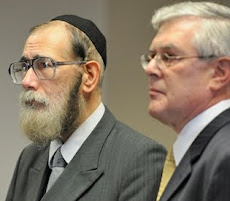
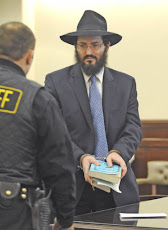
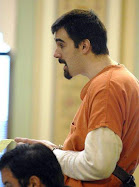
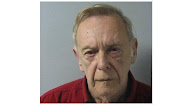
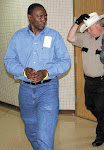
Anthony Sowell, right, stands behind public defender Kathleen DeMetz during his court appearance Wednesday, Nov. 4, 2009, in Cleveland. Sowell, 50, has been charged with five counts of aggravated murder and held without bond after 10 bodies were discovered in his home over the past few days. Sowell was ordered held without bond. (AP Photo/Mark Duncan) (Mark Duncan - AP)

http://www.washingtonpost.com/wp-dyn/content/discussion/2009/11/05/DI2009110502194.html

Ernie Allen, president and CEO of the National Center for Missing and Exploited Children, was online Thursday, Nov. 5, at 11 a.m. ET to discuss the discovery in Cleveland of 11 bodies in one home in a run-down neighborhood that has relatives of the presumed victims wondering how such a gruesome scene could have gone unnoticed for perhaps years, and they charge that police ignored their missing person reports.

How does something like this happen in plain sight? What can authorities and communities do to protect citizens from registered sex offenders? Who are the victims?

There are as many as 100,000 registered sex offenders in the United States whose whereabouts are unknown, and with the passing of the Adam Walsh Child Protection and Safety Act of 2006, NCMEC joined in a partnership with the United States Marshals Service (USMS) in their initiative to apprehend fugitive sex offenders. The primary goal of NCMEC's Sex Offender Tracking Team (SOTT) is to support law enforcement by providing assistance in identifying and locating non-compliant/fugitive registered sex offenders.

____________________

Fairfax, Va.: How does something like this happen in a community without law enforcement checking into it? Wasn't there enough suspicion? Is it a matter of law or is it a breakdown in the enforcement system?

Ernie Allen: The systems for following up on these offenders are simply overwhelmed. And once an offender has completed his parole, there are limitations in terms of what authorities can do. In Sowell's case, Sheriff's deputies showed up at least once a quarter, went to his house and confirmed that he was there. But absent additional evidence and probable cause, they couldn't enter or do additional investigation. Clearly, they didn't look closely enough and neither did the community. In so many of these cases, these most serious offenders are simply hiding in plain sight. It is not acceptable and we have to do a lot more, including increasing the resources when these guys are released into the community.

_______________________

Phoenix, Ariz.: It's like an episode of "Criminal Minds." You take people that no one will miss -- homeless, prostitutes, junkies, for instance.

The pig farmer in Canada killed 49 that way. Comments?

Ernie Allen: Typically, the offender is known to the victim, at least casually. While we don't know all the details yet, it is hard to imagine that there aren't families or loved ones somewhere who have been looking for at least some of these victims. From what we know, he seduced or lured most of his victims, getting them into a situation in which they were unable to escape. It is far more typical than the stereotypical fears that many have about snatched off the streets. In most of these cases, they are more "seduction" than "abduction."

_______________________

Washington, D.C.: What does the National Center for Missing and Exploited Children do in cases like this? Do you look for adults that are missing?

Ernie Allen: Our involvement in these kinds of cases is focused on the offender. We do not work missing adult cases, unless the adult is between 18 and 21 and we are asked to assist by law enforcement. The premise under the law is that adults have a right to be missing, juveniles do not. However, we are very active in the effort to track down missing or noncompliant sex offenders. Of America's 686,000 registered sex offenders (as of our last national survey in July), at least 100,000 are missing or noncompliant. We have a Sex Offender Tracking Team at NCMEC which is using public record databases and other similar tools to try to locate these guys. We do this in support of the US Marshals Service and at the request of state and local law enforcement.

Obviously, Mr. Sowell was compliant with his registration obligations, a fact which was confirmed on a quarterly basis by law enforcement. However, somehow nobody saw what his real preoccupation was. There were no public suspicions or tips reported to authorities (to our knowledge) and law enforcement did not pick up any clues as to his behavior.

_______________________

Boston, Mass.: Could/should police have walked a cadaver sniffing dog around the street by the house in question when neighbors complained of a "dead body" smell? They wouldn't have needed a search warrant just to do that right? And then, what if the dog smelled a cadaver in that house's yard? Is that enough probable cause for the police to enter the property and start digging?

Ernie Allen: That's right. Just as in the Garrido/Jaycee Duggard case in California, this information was in plain view (or scent). You don't need a search warrant to look over a back fence. When there were complaints of the dead body smell, clearly additional investigation should have taken place. The backyard is private property, but I am confident that enough information could have been generated (particularly considering Sowell's criminal history) to meet the probable cause standard and obtain a warrant for more extensive searching.

_______________________

Annapolis, Md.: How does this Cleveland case rank in the hierarchy of similar cases nationwide?

Ernie Allen: It is a really bad one. I don't how one rates or ranks these kinds of atrocities, but it is well up the list. America has a long history of serial killers, including people like Ted Bundy and others. The number of victims is outrageous, and particularly troubling is that he apparently conducted all of these crimes in and around his home in the middle of a city. Certainly, the investigation is on-going and it is not inconceivable that authorities will learn more, and that we have not yet identified the full scope of what Sowell has done.

_______________________

Richmond, Va.: I heard that there was a sausage manufacturer near the house, so that could have provided an excuse for the smell.

Ernie Allen: There are always excuses and explanations, particularly in cities. People are busy. People look for "normal" explanations for situations that appear "abnormal." The key in cases like this and many others is for people simply to pay attention and if there is something troublesome or that appears unusual, to report it. We at NCMEC get hundreds of calls every day through our hotline 1 (800) THE LOST or our cybertipline, www.cybertipline.com. Many of them are from well-meaning people who are concerned about something and let us know. Oftentimes, there is an innocent explanation. However, in case after case, average people doing average things but simply paying attention, are providing information that leads to finding missing children and saving lives. The problem in this case, I suspect, is that there were these kinds of excuses for the smell, and not enough people reached out and expressed their concerns. Some did, and weren't taken completely seriously, but in so many cases, that is how we get resolutions, not from CSI-type wizardry but simply from good citizens speaking up.

_______________________

College Park, Md.: Is it true that the victims were people on the "edges" of society, i.e., homeless, prostitutes? Do you think he knew them?

Ernie Allen: It is too early to know with certainty, but overwhelmingly female rape victims know their assailants. These are most often crimes in which offenders win the confidence of their victims, lure them into situations in which they have little opportunity of escape and then victimize them. Our assumption here is that he tricked or seduced his victims, and then raped and killed them.

_______________________

Washington, D.C.: Are sex offenders ever completely "cured"? Is incarceration effective? Do they repeat?

Ernie Allen: The key point that we try to make is that all sex offenders are not alike. One of the areas where we need to direct most of our attention is the area of risk assessment. 2/3 of America's sex offenders are not in jails or prisons, they are in our communities. There is contradictory evidence in the research literature, but clearly treatment is effective and beneficial for certain kinds of offenders. However, the treatment needs to be entered into willingly by an offender who accepts responsibility for what he has done and is committed to changing his life. Other offenders, including offenders against children, we are more skeptical about. For some of these offenders, these offenses are not lapses of judgment, they are a lifestyle. Recidivism research offers some encouragement, but our skepticism is that recidivism measures the numbers of offenders arrested and convicted. Most of these crimes are not even reported, particularly by child victims. And these offenders tend not to be monogamous. They tend to have multiple victims. So, it is a complex challenge for society that requires more serious sentencing for the most serious offenders, more robust and effective follow up and monitoring in the community post-release, treatment as a matter of privilege, not right, and a serious, comprehensive national strategy to do something about this problem.

_______________________

Woodbridge, Va.: Why does this happen over and over? I am so tired of criminals getting the benefit of the doubt until disaster strikes.

This guy had already done a 15-year stretch for rape, so he has a history of violence. When the neighbors began to suspect something through the stench of decay, law enforcement should have been able to investigate it FROM THE BEGINNING.

Do they really need an invitation from the court system, even when they have "reason to suspect?"

Ernie Allen: The problem is that the greatest leverage that we have over these criminals is when there are specific conditions applied as part of their probation or parole. Once they escape those conditions through the end of their parole period, law enforcement is much more limited in terms of what it can do. In Sowell's case, Sheriff's Deputies went to his home at least quarterly, but they could not go beyond the front door without probable cause and a warrant. We believe fervently in the rule of law, but you are right, the concern about Sowell wasn't because of who he is or what he thinks, it was because of what he had already done. The best predictor of future behavior is past behavior.

_______________________

Lima, Ohio: Doesn't this case exhibit the shallowness of the registration laws? Legislators can take a bow because it looks like they're doing "something," but in reality all it represents is busy work for bureaucrats.

Ernie Allen: We think registration laws are absolutely essential. At a minimum authorities need to know where these offenders are and what they are doing. But like all laws, they are only as effective as they are implemented. The big challenge we face as a nation is that there are now 686,000 registered sex offenders. It is like triage in a battlefield situation. You can't do brain surgery on everybody. You have to set priorities. You have to identify those who represent the greatest risk and focus greater resources and attention on them. In our sex offender registries in some states, we have registered offenders convicted of Romeo and Juliet-type offenses; i.e., statutory rape in which a 19 year old had sex with his 15 year old girl friend. That is unlawful, but I am not terribly concerned about him as a threat to the community. Similarly, the guy arrested for public urination at Mardi Gras probably isn't the same level of risk as Sowell, a convicted violent rapist or Garrido, a convicted kidnapper/rapist. We need to do much better in not only identifying those offenders likely to represent the greatest levels of risk, but also educating the public about them. That is why we pushed for a provision in the Adam Walsh Act for every state to implement a system with tiers of risk in the sex offender registries. Tier IIIs are the most serious, highest risk. Tier IIs represent less risk, and Tier Is represent relatively minor risk. It is not perfect, but we need to do a better job of differentiation.

_______________________

Washington, D.C.: In other words, they are among us. Isn't the problem that victims -- if they survive -- don't like the stigma of having had abuse affect them? Is it a personal decision to just "keep it in" and not report it?

Ernie Allen: Absolutely. For example, among children the leading research indicates that we are up to about 1 in 3 reporting sexual abuse, a dramatic increase over 20 years ago. But that still means that 2 out of every 3 victims never tell anybody. Rape victimization data for adult women is comparable. So, when you consider the fact that there are 686,000 registered sex offenders, you must also remember that that only represents those who have been arrested and convicted in a court of law. It doesn't include those whose victims never reported, and it doesn't include those who for some reason were not convicted. There is trauma associated with victimization, and many victims are reluctant to put themselves through the ordeal of the criminal justice process in a quest for justice. We are doing better but it remains a huge challenge.

_______________________

Baltimore, Md.: Once an offender is released, how often is he monitored?

Ernie Allen: It varies state to state. In the recent Adam Walsh Act, the Congress increased the penalty for failure to be compliant to a felony. It had been a misdemeanor in 25 states. That means that when they don't comply, there is an opportunity to have their parole revoked and have then sent back to prison. Under the Adam Walsh Act, states are supposed to do personal visits/confirmations of the most serious offenders at least quarterly, the Tier IIs at least every six months, and the Tier Is annually. However, again, states are overwhelmed and need help. In many states historically, the way in which an offender was determined to be complaint was by mail, hardly a very effective way of ensuring that the offender is where he is supposed to be and is doing what he is supposed to do. The primary and most intensive oversight occurs when these offenders are on parole and have specific limitations and conditions imposed by the court. However, the parole period runs out. We need to dramatically intensify the system at the back-end to ensure follow up monitoring and supervision. It is not only in the best interests of society, it is also in the best interests of the offender. The last thing a child molester needs is to be told to go forth and sin no more. They tend to be model prisoners, but when they get back on the streets, they begin to encounter children, or the rapists begin to encounter women. They start to fantasize. Society needs them to have meaningful oversight, and not to simply drift into anonymity where nobody knows where they are or what they are doing.

_______________________

Bel Air, Md.: What tier would Sowell be classified in?

Ernie Allen: I don't know with certainty how he was classified in Ohio. Based on the severity of his crime (violent rape), he should have been classified as a Tier III, the most serious.

_______________________

Lusby, Md.: I dont' think police and the media take the cases of missing African Americans seriously as they do with white women. You never see the national news reporting on the disappearance of a woman of color like they do white women. You would think we never go missing. When is the disparity going to end?

Ernie Allen: What we are trying to ascertain in this case is whether there were missing persons reports filed on these women. There is no question but that the level of response to missing adult cases is not as intense as with missing children. However, I am convinced that there are reports out there on these victims and that they have loved ones looking for them somewhere. The process of identifying the victims will answer a lot of those questions.

_______________________

Alexandria, Va.: Don't they have some sniff-alyzer, which can tell rotting corpses apart from sewage?

Ernie Allen: There are a variety of new forensic tools that can be used in these kinds of cases. I am not sure what Cleveland authorities used in these cases, but one of the things that NCMEC's Cold Case Unit does on a lot of these cases is use new technology to try to locate and identify remains. The technology advancements in this area are phenomenal.

_______________________

Alexandria, Va.: What causes someone to do this kind of crime? And repeatedly? What is in the psyche? Is it a childhood trauma? To what can this be attributed?

Ernie Allen: I wish we knew more. Certainly, we know that many of these kinds of offenders suffered abuse as a child. However, it is important to point out that the vast majority of abuse victims do not go on to become abusers themselves. There is long-standing debate in this country regarding accountability for these kinds of acts; i.e., is this evidence of mental disease or defect, or is it criminality? Our view is that while it is important to focus on causation and how a particular offender turned out the way he did, we do not believe that it is exculpatory. Ultimately, we believe that adults are responsible for their acts. Help them, try to change them, but don't excuse these kinds of crimes.

_______________________

Washington, D.C.: What is the standard that is used to heighten the search for an adult who may be missing? As I understand it, in this country people do have the right to simply be left alone.

Ernie Allen: Exactly, and that is the problem. Adults have the right to be missing. So, typically, the cases of missing adults that are taken most seriously are those where there are actual witnesses or physical evidence that suggests foul play. One of the challenges is that in many of these cases, there is no evidence, there are no witnesses. It is important that law enforcement take these disappearances seriously and conduct investigations. Because of the growing number of young adults who have become victims, we were asked a couple of years ago to take on the cases of 18 -- 21 year olds when asked by the police to assist. The rationale was that in many of these cases, the fact that a victim became an adult one month before and was abducted at the age of 18 years and 1 month instead of 17 years and 11 months seems pretty arbitrary. It is still a child to his or her parents. So, I think the response in these cases is getting better, but as you point out, there are legal hurdles.

_______________________

Anacostia, D.C.: In the CBS TV show "Without a Trace," they always put up a picture of someone who has gone missing at the end of the show. In reality, is this effective? Have any of the people posted been found?

Ernie Allen: Yes, and you make a really important point. NCMEC disseminates the photos of missing children through a network of 400 private sector partners. There are missing child bulletin boards in every Walmart store (200 kids have been recovered as a direct result of Walmart shoppers). We work with media. We have one partner that has distributed missing child photos in mailers into 85 million homes each week in America for 24 years. It works. Somebody knows. We recover 1 in 6 of those kids as a direct result of that photograph. What 'Without A Trace' has done in using prime time, expensive airtime to create visibility for these cases is huge. When Jaycee Dugard was recovered, it became clear to me that there are many more of these kids out there who are recoverable. We currently have 800 long-term missing stranger abducted kids for whom we are searching. I simply do not believe that through some accident of fate, we have now recovered every one of them who is still alive through the recoveries of Jaycee, Elizabeth Smart and Shawn Hornbeck. The public is the key.

_______________________

Betehsda, Md.: Do you think that part of the reason the system is so overwhelmed is because of the broad definition of "sex offender?" Would smarter laws help us determine the potential dangerous repeat offenders and keep better tabs on them? It seems to me that no one would ever have the political will to do something like this for fear of appearing "soft on crime."

Ernie Allen: That is the whole premise of requiring states to categorize sex offenders by tiers of risk. The problem and the challenge is that it is hard and not scientifically precise to do that. Ultimately, our view is that the best predictor of future behavior is what you have already done. There are those who argue for more in-depth psychological analysis and similar techniques. That is great, but how are you going to do that with 686,000 offenders. Clearly, this challenge can't be fixed with "one size fits all" and our approach has been a "triage-based" system, a comprehensive approach that prioritizes offenders and develops an array of techniques more tailored to the unique needs and challenges of each one.

_______________________

Wasahington, D.C.: Were you surprised about the Jaycee Duggard case, being in the backyard all those years and nobody noticing or realizing she was being held and abused for so long? What is her current condition? How is Elizabeth Smart now? Others?

Ernie Allen: Jaycee is doing great. NCMEC has provided a psychologist from our Outreach Network who is working with Jaycee and her family. This is not a quick or easy process. It really is a life-long process of recovery. You can't erase those 18 years. We are trying to achieve a new normal for her. I was not only surprised but discouraged that Jaycee was not identified and Garrido not apprehended over those 18 years. If you have seen the age progression photo our forensic artists did of Jaycee, it is right on. All we needed was for somebody to look at the picture, generate that one key lead, and Jaycee should have been recovered long ago. Nonetheless, the good news is that she is alive, she is young, she has two young kids to focus on and care about. There is real hope for her future. Regarding Elizabeth, she is an amazing young woman. If you read the articles and transcript of her testimony in the recent hearing on Brian Mitchell, her abductor, you can appreciate what courage this young woman has. Elizabeth, Jaycee, Shawn Hornbeck and others give me real hope for so many of these kids. The human spirit is resilient. These kids figured out how to survive, and we are hopeful about their futures.

_______________________

Phoenix, Ariz.: Ernie said: "...it is hard to imagine that there aren't families or loved ones somewhere who have been looking for at least some of these victims."

While this is true, the 'community' may very well not notice if there are a few less homeless or other street people. That was the original question -- How can a community not know this is happening?

Ernie Allen: A police officer said to me once, "the only not to find this problem in any city is simply not to look for it." I really believe that we have made enormous progress in this country and that America has begun to look. However, a story like this makes it abundantly clear how far we have yet to go. I don't know how a community can not know that this is happening. We live in a time in which in many places we have lost that sense of neighborhood, people looking out for each other. In many communities, people don't even know who their neighbors are. This is a human tragedy and hopefully, will awaken people everywhere to what else needs to be done.

_______________________

Washington, D.C.: I can't help but think this tragic situation is due in part because the victims were black women, SOME of them with other challenges in their lives. Thus, they are/were "perfect" victims; some people in the community don't care about such people and sadly, the police, who we the taxpayers pay, didn't care about such people either. So to me, this smacks of racism, sexism and classism, not only on the part of the police, but SOME community members as well. Lastly, do you know what kind of rape crisis services are in this city? Thanks.

Ernie Allen: We know that African-American, Hispanic and other minorities are victimized disproportionately with these kinds of crimes. We know that there are growing numbers of people in our society who have become anonymous, the homeless, the forgotten. In our work at NCMEC, we are seeing growing numbers of kids on the streets of American cities. In a New York Times series last week (am I allowed to say New York Times on this site?), it pointed out the stories of the new American homeless, runaway kids struggling to survive on the streets and being subjected to sexual victimization. Two weeks ago, NCMEC joined with the FBI in a national sweep focusing on child sexual trafficking and child prostitution. To date, we have rescued 900 kids and prosecuted 500 offenders who prey upon kids. In so many ways, we still have "hidden victims," victims who somehow nobody sees. I remain convinced that that police officer was right. First and foremost, you have to look for it and then do something about it.

_______________________

Washington, D.C.: I heard on cable news that Mr. Sowell stated his aunt with whom he lived was in a nursing home. Did authorities every find her? Could she be among the missing?

Ernie Allen: We don't know that answer right now.

_______________________

Washington, D.C.: You said that there are 686,000 registered sex offenders. Do you know many of them are non-violent or convicted because of consensual acts (e.g., the 18-year-old boyfriend of a 14-year-old girl)? Given the reality of limited monitoring resources, wouldn't it be more effective to have law-enforcement personnel focus on violent offenders like Anthony Sowell?

Ernie Allen: Absolutely. That is why we argued for and Congress included in the 2006 Adam Walsh Act a "Romeo and Juliet" provision that excludes those kinds of cases. However, that doesn't mean that some states don't include them. The goal is to prioritize these offenders based upon their level of risk to the community, and focus our limited resources on the most dangerous.

_______________________

Ernie Allen: Thank you for all of the great questions. I have really enjoyed chatting with you this morning, and feel the same sense of anger and indignation that you do about the Cleveland tragedy. I am convinced that average people can make a difference. First, if you see something, or suspect something, or know something, report it, including reporting it to NCMEC at 1 (800) THE LOST. If you want free information about to keep your children and your family safe, visit our NCMEC website at www.missingkids.com. Finally, be a strong loud voice on behalf of these victims. Let your elected officials know that you would like to see the Adam Walsh Act implemented in every state. Interestingly, only one state has been found compliant so far, Ohio. We have a lot more to do, and your voice, your concern can help make it a reality. Thank you. Ernie

_______________________

Ernie Allen: Hi, I am Ernie Allen, President of the National Center for Missing & Exploited Children. I know that millions of people are outraged about the tragedy in Cleveland and are concerned about our ability as a nation to cope with, monitor and oversee the 686,515 registered sex offenders in the United States. We at NCMEC are trying to do something about it. I welcome your questions about what can be done and what you can do as a parent or citizen to keep our children and families safe.

Thursday, October 29, 2009

Agudath Israel of America, Catholic Church: Huge Carpet Sale. Free Installation! Enter Discount Code "Molester"


If you, your child or a loved one is a survivor of sexual abuse in a Jewish yeshiva, you can get the help you need. No one should ever be allowed to remain unpunished when they have sexually abused a child - the loss of innocence and enjoyment of life could only be the beginning of a lifetime of fear, anger, shame and other emotional and physical aftereffects of sexual abuse. The Zalkin Law Firm is a legal group dedicated to providing support and representation to survivors of sexual abuse in the Jewish and Jewish Orthodox community.
When you place your child in the care and instruction of a rabbi or teacher in a yeshiva, you never expect that your beloved child will suffer sexual abuse. Yeshivot across New York and the United States are supposed to be educational havens for Jewish and Jewish Orthodox children, not places of abuse, terror, manipulation and criminal sexual deviation.

New York Yeshiva Sexual Abuse Attorney

Like other areas in which children are under the absolute control and authority of adults, yeshivot ketanot can carry the risk of sexual abuse by rabbis, administrators, teachers and other employees or volunteers. As in any religious or secular institution or association in which children are left alone under the care of an adult or adults, sexual abuse can occur any time and in any form.

Unfortunately, many cases of sexual abuse in yeshivot go unreported. It is observable and known that sexual abuse survivors are often unable or unwilling to bring accusations against well-respected and established members of the Jewish or Jewish Orthodox community. Pedophiles and sexual abusers often use tactics such as manipulation, intimidation, threats, lies and other strategies to get their victims to remain silent about the abuse. Because of this, many survivors of abuse are unable to speak out until much, much later.

The New York yeshiva sexual abuse lawyers at the Zalkin Law Firm are very aware of the deep emotional and physical effects that sexual abuse can have on men, women, adolescents and children, no matter when that abuse occurred. Child sexual abuse such as touching, fondling, looking, exposing, inappropriate sexual "talks," sexual contact and other abusive activity is highly illegal and punishable by law in the United States. You do have legal recourse and you can do something about the situation.

Contact a New York Yeshiva Sexual Abuse Attorney at the Zalkin Law Firm today to discuss your abuse case.

============================================================

Myths & Truths:
A Critical Analysis of Top 8 Storylines Promoted by Catholic Church Leadership in Their Lobbying Efforts to Defeat the Child Victim's Act of New York (A2596).
Summary
Using a research-based methodology and applying a common sense review of the historical record, this rigorously cited report finds that the Catholic Church hides behind contrived, disingenuous storylines in an attempt to Defeat the Child Victim's Act of New York (A2596).
Together with commentary from Irwin Zalkin, a leading sexual abuse attorney who has negotiated more than $200 million in clergy abuse settlements nationwide, and the managing partner of The Zalkin Law Firm, the report examines Church leaderships‘ eight (8) most frequently used storylines and provides detailed, cited evidence of their illegitimacy:
Storyline #1:
―We did not know then what we know today.‖
Storyline #2:
―It is not fair to hold Bishops of today accountable for the behavior of others.‖
Storyline #3:
―We‘re going to go bankrupt!‖
Storyline #4:
―We will no longer be able to carry on charitable works!‖
Storyline #5:
“We will have to close schools and sell churches.‖
Storyline #6:
“These revival statutes are targeted to the Catholic Church; it‘s unfair not to include public schools that are or were just as bad.‖
Storyline #7:
“This is all about greedy trial lawyers who have made millions.‖
Storyline #8:
―We have addressed the problem.‖

Click Here!

Thursday, October 15, 2009

Backstabbing Midget Rabbis: Don't Go To The Police, Come To Us First!


Despite a New York judge’s recent condemnation of the practice, several national rabbinic leaders said they thought Orthodox rabbinic courts should continue to screen allegations of sexual abuse and decide whether they should be forwarded to law enforcement for prosecution.

“Sometimes, unfortunately, people make allegations which have no substance because they have an agenda,” said Rabbi Moshe Kletenik, president of the Rabbinical Council of America, the organizing body of Modern Orthodox rabbis.

He said the rabbinic courts, or beit dins, are useful because they allow “for an investigation to see if there’s substance, and if there is, it’s immediately referred” to civil authorities.

David Zwiebel, executive vice president of Agudath Israel of America, a leading umbrella group of ultra-traditional Orthodox organizations, agreed that religious courts can play a positive role in sexual-abuse cases.

“I think there are people in the community who are concerned about certain things that the secular authorities might not be concerned about,” Zweibel said. “If a child has to be removed from a family, if you are not sensitive to religious concerns of the family, they might be placed in a home setting that would not facilitate the child’s observance of religion.”

During the September 29 sentencing of a 31-year-old Orthodox bar mitzvah tutor convicted of sexually abusing two boys, New York State Supreme Court Justice Gustin Reichbach lashed out at the Orthodox community for “a communal attitude that seems to impose greater opprobrium on the victims than the perpetrator.” He termed the role played by such rabbinic courts in particular “inappropriate,” saying that these courts were “incapable” of dealing with criminal matters.

The FORWARD reports.

Thursday, October 08, 2009

"Personal Hygine And Poetry" - Avi Shafran Explains


The Perception of an Illusion is Deception, even when you believed it was real! Perception of Deception is not an Illusion at all!

Carl Stoynoff
poet/philosopher

===================================================

A religious man is a person who holds God and man in one thought at one time, at all times, who suffers harm done to others, whose greatest passion is compassion, whose greatest strength is love and defiance of despair.


Abraham Joshua Heschel

=====================================================

A wise architect observed that you could break the laws of architectural art provided you had mastered them first. That would apply to religion as well as to art. Ignorance of the past does not guarantee freedom from its imperfections.

Reinhold Niebuhr
1892-1971, American Theologian, Historian

====================================================

Give us a religion that will help us to live -- we can die without assistance.

Elbert Hubbard
1859-1915, American Author, Publisher

====================================================

Cause and effect do not always offer the same results. It is the eventual effect of causation that is different for each of us.

Carl Stoynoff
poet/philosopher

====================================================

Wise men learn more from fools than fools from the wise.

Cato The Elder
BC 234-149, Roman Statesman, Orator

====================================================

Ignorance is dangerous, but knowledge without responsibility is more dangerous.

====================================================

The price of greatness is responsibility.

Sir Winston Leonard Spenser Churchill

=====================================================

http://www.sporkworld.org/spork/episode2/hygiene.html

Why Bad Hygiene?

If you ask a group of Chronically Normal People (CNP's -- a term invented by Fred Frese, a psychologist who has schizophrenia) to describe mentally ill people, you will inevitably get answers like "they smell,""they wear their clothes weirdly", and "they have wild hair." It would be nice to be able to dismiss these descriptions as purely prejudiced and totally unfounded. But the truth is, many mentally ill people are dishevelled and unwashed. The primary reason for this is, of course, the high rate of homelessness amongst the mentally ill. Homeless people have no easy way of keeping clean and they often have to wear all the clothes they own.

However, many mentally ill people look unkempt, even if they who are housed and have a job. Ordinary things can become monumentally difficult when you are mentally ill, and sometimes, the effort involved in taking a shower is just too much. Unpleasant thoughts and/or auditory hallucinations can be so distracting that the person can't pay attention when they put on their clothes, and so they may end up wearing a shirt inside out or leaving zippers unzipped and buttons unbuttoned.

Another reason why mentally ill people may be unkempt is that dressing carefully seems unimportant or even ludicrous in the mentally ill person's universe. If you are tormented by suicidal thoughts or living in a delusion in which you are being chased by the CIA, you do not worry about taking a shower. There are more important things to deal with, such as planning (or trying not to plan) a suicide attempt or evading your pursuers.

So what's the moral? Silly as it may sound to those who comdemn "political correctness," people who are "differently kempt" should be a tolerated and protected minority. When you run into someone who smells, it is rude to mention it or sniff repeatedly. That's just the way they are. You wouldn't sniff at someone who has a skin color you consider ugly. Likewise, making fun of or being rude to a mentally ill person who is dressed oddly is unacceptable. If you are a very, very close friend, you may want to tell the mentally ill person that their shoes are untied or that they have body odor, but be careful of doing this. The person may simply not have the energy or concentration to deal with such a thing. They may know already that they look funny and feel helpless to change their appearance.

I sometimes think there is a secret set of instructions on how to look normal that mentally ill people don't have. I was once called in to my boss's office to be told I didn't dress well enough when I clothes that were almost identical to my boss's. The problem was that I looked unkempt and sloppy in the very same clothes that made her look attractive and professional.

Monday, September 07, 2009

Healthy Atmosphere Is A Touchy Issue


http://thejewishstar.wordpress.com/2009/09/02/good-touch-bad-touch/

How to talk to your kids about a touchy subject

By Mayer Fertig

Beyond the new clothing, a knapsack and school supplies they buy for their young students, moms and dads need to consider if their children are equipped with the information they’ll need to protect themselves from an adult, or even another child, who seeks to betray their trust. “Parents need to teach their children about good touch and bad touch,” said psychologist Michael Salamon of ADC Psychological Services in Hewlett. “Use themselves and their medical doctors as an example,” he suggested, “how the doctor will never examine them without Mommy or Daddy in the room, and anyone who wants to touch them, unless Mommy or Daddy says it’s okay, they should stay away and tell Mommy and Daddy about it.” Second grade is the latest age to have that conversation, Salamon said, and it should be repeated “at every age”; another therapist suggested children first receive age-appropriate warnings about abuse when they are as young as four years old. Context is important, stressed Dr. Asher Lipner, vice president of the Jewish Board of Advocates for Children, and a therapist in private practice. “Don’t make it out of the blue — ‘Everything’s fine in life, nobody’s going to hurt you but watch out for sexual abuse.’ “You have to teach your kids about their rights,” he urged, “that they have the right to expect that nobody will hurt them physically, or emotionally or even spiritually.” Children should be told, “If a kid or an adult tries to get you to do something you don’t want to do, you have the right to say no if it is something which is invading your privacy, such as touching you in your private place or touching them in their private place,” Lipner explained. A patient who suffered abuse as a child “focused her chinuch so much on this, and in a positive way,” Lipner said, “that your body is special and a gift from Hashem; that your private places are especially yours, and that nobody is even allowed to look.” A child’s vulnerability to predators is dependent to a great extent on the manner in which he or she is treated by their parents, said Lipner. He recalled an incident in which a six-year-old girl scared off a would-be abuser by saying, “That’s stupid and I’m calling the police.” “If parents are overly dictatorial, if parents are neglectful, if parents rationalize that kids don’t have the same needs as adults for autonomy, for being heard, then the kids are going to believe that people have the right to tell them what to do,” Lipner said. They may believe “that adults have more rights than them, and therefore if an adult wants to touch them…” “Parents have to treat their kids with a respect that doesn’t always come naturally,” he added, “because we all have the potential to selfishly put our needs before the needs of people who are more vulnerable — and children especially — because we mistakenly think that their emotional needs are not as strong or as important as those of adults.”

==================================================

http://jewishatheist.blogspot.com/2009/08/question-id-like-to-hear-orthodox.html

A Question I'd Like to Hear Orthodox Bloggers Discuss
Your son, a sweet, well-behaved boy, comes to you at age 16 and tells you he does not believe in Orthodox Judaism. He says that while of course he will not violate the laws of shabbat or kashrut in your home, he no longer wants to attend religious schools or participate in davening. He'd like to attend a secular school and start hanging out with non-religious and non-Jewish teens. He doesn't want to wear a kippah any more, either. You can tell that he is speaking from a place of integrity and genuine soul-searching, and you can also tell that his mind is made up.

Do you force him to stick it out in the Orthodox school? Coerce him into continuing to daven as long as he's living in your house? Make him promise to keep kosher and shabbos even outside the house? Forbid him from taking his kippah off at least while any of your friends, family, or neighbors might see? Or do you accept his wishes and support his choices, much as they pain you?

I've never seen an honest discussion about what to do when your kids go off the derech other than discussions about how to get them to stay or utter denial that it's even possible in your family.

It would be great if this became a meme that went through the Orthodox blogging community. I'll start by tagging Ezzie, Chana, DovBear, Orthoprax, and BrooklynWolf. Please tag some others in your replies.

Jewish Philosopher: Don't bother. We know you'd chain your kid to the radiator and try to beat the devil out of him.

====================================================

http://www.chabad.org/theJewishWoman/article_cdo/aid/969310/jewish/When-the-Bruises-Cant-Be-Seen.htm

When the Bruises Can't Be Seen
Living with Emotional Abuse

By Anonymous


Just like so many other women, I completed my education and then searched until I found the "right" one, married and proceeded to build a family, raising a string of wonderful children. We are a well-thought-of family—we are considered bright and successful, with good mannered children who are a joy to have in class. But we have a terrible secret.

I'm an abused wife—no, I have no black and blue marks to point to this fact; my husband generally doesn't stoop to outright blows. Actually, that's exactly what prevented me from reaching this inescapable conclusion many years ago, when leaving the marriage may have been less complex and foreboding.

My husband generally doesn't stoop to outright blows
My children hesitate to invite their friends over—they're either afraid that their father may shout and curse in front of their friends, or else the house is terribly messy because I'm still upset over the latest outburst and too depressed for the simplest housecleaning. As we live in Israel, Hebrew is my children's first language—but they could all reel off a string of curses in English from quite a young age.

It is sometimes hard for others to understand what an abusive marriage is like when there are few physical blows. But abuse, as I have come to learn, comes in many forms. And often it is the psychological, emotional and verbal abuse which is even more painful and traumatic than a punch in the face. People who live "normal" lives don't know what it is like to live under a dictatorship. But that is what it is like to live with an abusive spouse.

My husband commandeers the grocery list—if he deems a product to be necessary, only then may it be purchased. Whether repairs are made around the house is dictated by the amount of money he feels justified to spend. If he wants to buy something, it becomes a great need; if I would like to buy something, I will be interrogated as to its necessity. Everyday conversations are dominated by him, and he decides if and when to hold them, as well as their agenda; he may decide that he's not at all interested in listening to what he considers "unnecessary and irrelevant details" and will walk away from a conversation. Even daily quips and insights of our children aren't deemed important enough for his time, so I am left to experience them alone, as if I were a single mother.

If I cook beans, he wants turkey; if the food is hot, he wants it cold. I don't complain; I ask him what he prefers. He answers, sounding so innocent, "how would I know?" And I always end up feeling ashamed and discouraged that I didn't get it right, yet again. His feelings of anger, triggered illogically by the smallest of things, burst forth like a volcano time and again. When he shouts and rants at me, I feel my insides shrivel up into a little black nothingness.

As a young mother, I set out to make him a birthday surprise. Alas, the chocolate chip cookies I labored over weren't to his liking and again no praise, gratitude or even acknowledgment was my due. Years later, when his own daughters prepared the exact same thing, he was delighted and ate them voraciously.

Most families look forward to the Jewish holidays when they can spend quality time with each other and enjoy beautiful meals and traditions. But for me and my children, each and every holiday starts with outbursts and insults as well - we're eating too late or too early; how come [one of the kids] isn't at the table, or why are you forcing them to come. He's impossible to please, makes unpredictable demands, and the demands are always accompanied by shouting, insults, and curses. And then there are the terrible threats—I live in constant fear of reprisals.

Each and every holiday starts with outbursts
The festive Purim meal has always been a special source of distress. For years, the fun and laughter began only after I had retreated from the table in tears, in reaction to a string of undeserved insults and derogatory remarks. Somehow the "action" just couldn't get into full swing with me in attendance, and I could never join in the enjoyment, seemingly so well-deserved after all the cooking and cleaning I'd invested in the holiday.

When my children were young I always attended parenting groups, hoping that if I was a better mother things would be smoother. But I would leave the classes wondering why their advice didn't seem to help my "unruly" children, not realizing that it was not that my parenting skills were so lacking; it was the terrible tension, confusion, and uncertainty that my children live with that is to blame.

Praise from him is so hard to come by but at the same time he doesn't like me to socialize with friends, saying I should spend any spare time with him, begrudging even time spent together with the children. He's totally possessive of me, while at the same time disregarding my wants and desires.

My own feelings are discounted by him time and again as irrelevant, as his needs and feelings prevail at all times. Later, he wonders aloud why I don't enjoy talking to him and criticizes me for the fact that he's not up to date on many things going on in the children's lives and mine. And while he decides what and when I am allowed to feel emotionally, he also feels that physically I belong to him. My body has become his possession to invade at will and my feelings have been trampled to the ground, and I lack the inner personal strength to object.

I had been quite broad thinking and strong-willed when we first met, but gradually I find my entire scope of headspace becoming confined to the four walls of our house, slowing becoming my prison. I am entirely caught up in how to please the un-pleasable; I have lost my very conception of self and have given up decision making as being without purpose.

Afraid to speak, afraid to act, afraid to relax and just be myself; my "self" is melting away into thin air. My opinions are invariably disapproved of and my feelings discounted; I have no avenue of expression; my every move is monitored.

I consulted many friends and advisors over the years and, not truly understanding the abuse I was living with, they all gave me the same advice—be extra nice to him, eventually he'll act in kind. I tried so hard and for so long; unfortunately, even they didn't realize that in cases of abuse, it makes things even worse.

My perception of the situation began to change when I attended yet another talk on building a good marriage, a goal which had proved to be so elusive throughout the years. The speaker prefaced her talk by saying: "this doesn't apply to an abusive relationship— where there's abuse, there's no relationship." This left me in contemplation throughout her talk—is my marriage abusive or is it a relationship?

Eventually, our family system cracked and one of the children refused to go to school, exhibiting aggressive behavior so severe that a therapist was called in. Thank G‑d, the therapist was astute enough to address the real issue at hand, realizing that the child's behavior was an SOS call behalf of a family in distress.

Our family system cracked
Only then did I learn that abuse isn't confined to physical blows; it's the theme of power and the need to control that are the main defining factors. And that even in an abusive home there can be "good" times, but that "good" times do not compensate for the situation or make it acceptable.

Of course, discovering the root of the problem is only half the solution, as facing the issue squarely in the face brings a host of new questions and dilemmas:

Do I really love him or is it all a fixation and a result of his powers of charm, as part of the mechanics of abuse?

Is the marriage still viable—is there any chance of it healing or has too much damage already been done, to the relationship and to my psyche as well?

Would the children fare better in the familiar confusion, or is it healthier for them to be in a stable one-parent home?

Is staying together putting us all in further danger, since the possibility theoretically always exists that the abuse escalate to the physical with little warning?

What if I were to feel the need to run to a shelter? If I go by myself and leave the children at home, I will be deemed an irresponsible parent in the eyes of the law. I could opt to take the "little ones" – but I'm responsible for all those under eighteen, some of whom already have minds of their own (as they should). I envision it as a horrendous tug-of-war of what to do and who's on which side- an image much too awful to consider.

Is it better to include their teachers and the community in my journey, so that they may better understand the children's upheaval or is it better to maintain the facade, at least for a while longer, as our "false" identity is reassuring—or is that a continuation of unhealthy denial?

At present, all I have are questions, with a long road of recovery ahead of me, full of unfamiliar signposts along the way as I struggle to find the answers. I must still "be there" for the children, while at the same time struggling to find my own sense of balance. And even the experts can't know how long my own personal journey will take, as every woman's experience is different.

It seems to me that had we been given the same advice that we're getting now when we were first married, things may have been very different. Maybe we could have re-learned our roles and saved each other a lot of anguish. Or we may have recognized much earlier that this marriage was not viable and terminated it with fewer children involved, and as the children would have been younger, they would have been less exposed to the abuse and less affected by it.

On the one hand, I'm pleased that I stuck it out and allowed all these children to be born into this world, yet what a struggle awaits them all! The older ones exhibit towards me repeats of my husband's behavior, his habits of control and domination. They insist they know better than me what's best for the younger children, so the cycle continues. They are of marriageable age and yet don't recognize the problem—not in him and certainly not in themselves.

If you suspect abuse, don't wait for physical danger to address it
I feel a dire need to re-educate my children, but since I started going to therapy for myself my husband has denigrated it and discounted its value. I can only pray that they receive the guidance that they need at the proper time.

I feel like a tightrope walker teetering on the heights, swaying in the strong winds, struggling for balance as I am pushed and pulled in many directions. I must act as father and mother for my children as best I can, yet not stir up any anger towards my husband and accept all his wishes and demands with a smile, as I continue to try not to degrade their father in their eyes.

I do know that we met and married for a reason (my children are the proof of that). Although my faith in G‑d may falter and waver at times and I may be nauseous and dizzy from the extreme stress, I try hard to believe and accept that G‑d gives the power to overcome a challenge together with the challenge itself, as I've been taught, and that somehow, someway, we will all come out of this even stronger.

If you find yourself relating to my story personally, even if there's no violence in the home at all, you may be in danger: emotionally, psychologically, and physically. Open up your heart to your nearest and dearest friends (NOT to your husband or your children) and share with them what you're going through so they can support you emotionally. And if they cannot, find a professional, someone objective, who can listen to you and evaluate what is going on in your home.

If you suspect abuse, either in your own life or that of someone close to you, don't wait for physical danger to address the issue. Don't wait until the situation is totally out of control or until one experiences severe symptoms of PSTD (post-traumatic stress disorder), as I did, to seek help. The earlier one intervenes the better the prospects of recovery for both husband and wife, and the only possibility of living together as a healthy family unit.

It has taken me a long time to ask the right questions and get the proper advice and guidance. I am working through so much pain, anger and confusion, but I know that I am on the path to recovery and health. We all have the power to change, but we can only change ourselves. This is the month of Elul, the time of the year to focus on growth and repentance. My husband has his own work he must do, but for me, this is my time to ensure that I have the tools necessary to change. I just pray for the strength to work on myself and make the right decisions, so that this can truly be a happy and healthy New Year: emotionally, physically and spiritually.


The following are a few of the resources available for women who need help in dealing with an abusive relationship:

The SOVRI Helpline is an anonymous and confidential helpline staffed by trained volunteers who provide help, information, support, and referrals to survivors of sexual abuse. We don't have caller ID. Our volunteers are trained to understand the dynamics of sexual abuse. They also have training in listening and counseling skills, emergency department protocol, legal protocol, post-traumatic stress disorder, domestic abuse, childhood sexual abuse and incest, and recommending appropriate resources. Our volunteers are supervised by licensed social workers with extensive experience in dealing with these issues. SOVRI Helpline is under the auspices of Beth Israel Medical Center in Manhattan.

The helpline is open Monday-Thursday 9:30am-5:30pm and Friday 9:30am-1:30pm. The phone number is (212)844-1495.

Find Jewish resources by state through Jewish Women International.

To seek help in Israel, or any country outside the United States, contact Bat Melech, an organization providing freelegal counsel, a crisis hotline, shelters for women and children, and other assitance to women suffereing from abuse: batmelech.org/index-english.html

Friday, August 21, 2009

Indifference Is The Essence Of Inhumanity.

http://www.onlineopinion.com.au/view.asp?article=9322


The chutzpah of the Catholic Church

By Asher Lipner
Posted Friday, 21 August 2009


In the State of New York the Catholic Church has been fighting against the passage of the Child Victims Act of Assemblywoman Margaret Markey “with all their hearts, with all their souls and with all their might”. The proposed legislation extends the statute of limitations on sex crimes against children and opens a one-year window for adult victims to sue their childhood perpetrators with no statute of limitation at all. Aside from granting the victims the opportunity to receive justice and some level of compensation for their suffering, similar window legislation has proven to be the best way to help identify scores of sexual predators that were unknown to law enforcement in both California and Delaware.

The Church has postulated a conspiracy theory that sees the sole purpose of allowing adult survivors of child sexual abuse to sue their molesters as a way for enemies of the Church to do it harm.

The Church should be ashamed of itself after the publicly humiliating exposure of its tolerance of perverted behaviour by pedophile priests, and its cynical cover up and intimidation of victims it has perpetrated on a system-wide level. It truly gives a new definition to the word “Chutzpah”, for the Catholic Church to speak out in any but a humble and apologetic tone.

A grand jury in Long Island, New York, for example charged the Archdiocese there of stalling victims of abuse from pressing charges until the statute of limitations was up, so that the Church would not have to answer for the molestation perpetrated by their priests. In Los Angeles, Archbishop Mahony is being investigated by the FBI for the crime of placing priests who were known to have molested children in the past in positions of authority over children without notifying the children’s parents.

Aside from the audacity of an organisation claiming to speak for God placing their financial concerns over the welfare of victims, the tactics used in defending their “assets” by the Church have been extremely “un-Christian”. In Brooklyn, Bishop Nicholas Dimarzio has, in a Machiavellian threat, warned legislators that if the Child Victims Act passes, he will shut down churches in the precincts of those who voted against it.

Ironically, given the Church’s record of aiding and abetting pedophile priests, legislators who care for the safety of the children in their precinct would do well to view this outcome as a positive promise and not as an unwanted threat.

Child sexual abuse, however, knows no religion and is certainly not a plague that is limited to the Catholic Church, and therefore the Church is hurting children of all faiths when they use their considerable political power in New York to deny justice to survivors who have been abused. While the bill was in fact never intended originally by anyone to be “anti-Catholic”, once the Catholic Church has shamefully turned anti-children, they have made it so, because they have once again become actively pro-molesters and the bill is most definitely anti-molesters.

As a Jew, I cannot say I am totally shocked at the lack of concern by representatives of the Catholic Church over the past several decades (and indeed centuries) about the brutalising of innocent children by adults in power.

After all, this is a religious institution that only 60 years ago turned a blind eye to the wanton murder of one million innocent Jewish children in countries that were mostly dominated by practitioners of the Catholic religion.

Although the last Pope did “apologise” to Jewish survivors (the children are not with us to have heard it), not so much has really changed in the Church's sense of morality or sensitivity for child victims. This was recently on display by Pope Benedict’s appointing as a bishop a priest who openly denies that the Holocaust even happened and that Jewish children were gassed to death, and by his pursuing “sainthood” for Pope Pius XII, labeled by historians as “Hitler’s Pope”.

For those children who survived the death camps to have the Church once again treat their feelings like so much political nuisance, reminds them of how little they can trust their Catholic “friends” at a time of need.

But adding insult to injury, in New York, home to many Jewish children as well as Catholic, the Church now seeks to deny all children the right to their day in court when they suffer their own private Holocaust-like trauma of rape, sodomy and sexual molestation. It has been shown repeatedly by psychologists that for many victims of childhood sexual trauma, it often takes growing up into adulthood to even remember, yet alone understand the nature of the harm inflicted on them. Sometimes symptoms of Post Traumatic Stress Disorder are only manifested once the victim has children of his or her own. And even for those who have suffered from symptoms for years and have had their lives forever damaged, many need years of professional help to regain the emotional strength it takes to confront their victimisers.

To withhold access to restitution for their medical treatment as well as for emotional pain and suffering, is to tell victims of all faiths and ethnicities that their pain is not our concern and their cries will continue to fall on deaf ears. All this from the "religion of love". Apparently the Church, once again, demands from its victims that they "turn the other cheek", while the Church itself aggressively continues to protect itself from being exposed for the destruction of lives that it has caused.

Unfortunately, as a Jew, I am also ashamed at witnessing history repeating itself with the neglectful behaviour of many of my own people. While almost all mainstream Orthodox Jewish groups such as the Rabbinical Council of America, The Rabbinical Alliance of America, The Jewish Board of Advocates for Children, the Orthodox Union, and Ohel Children’s Home and Family Services, and our two Orthodox Assemblymen Dov Hikind and Speaker Sheldon Silver have joined Protestant groups, Catholic victims advocacy groups such as the Survivor Network of those Abused by Priests and Voices of the Faithful, and other non-denominational child advocate groups in lobbying for the Markey bill, our brothers and sisters of the Reform, Conservative and Reconstructionist branches of Judaism have been deafeningly silent about the spiritual holocaust for children in New York, much as they were during the Holocaust of Jews in Europe. While these branches of Judaism have impressive records in America of social activism, when it comes to standing up for victims of abuse their voices have not been heard.

To be clear, in traditional Torah Judaism, based on halachic law, there is no legal precedent for statutes of limitations on crimes of violence or harming another, neither in civil nor in criminal law. While not speaking directly to the issue of time constraints on claims of damages, one of the most famous dictums in the tort laws of the Talmud states "Adam Muad Le'olam". A person is always responsible (for the damage he/she does). Furthermore, every Jewish person has a biblical obligation to speak out for children’s safety: “Thou shall not stand by idly thy neighbour’s blood.”

Legislators of all religious backgrounds would be wise remember that one out of five or your constituents has been the victim of sexual abuse before the age of 18, although many have not been vocal about it. When facing your own conscience and being tempted to play politics with the lives of innocent children, remember that NO God, not the God believed in by Jews, Christians or Muslims, (and not even the God that atheists reject), could possibly countenance the violation of innocent children. We must all come together in support of our children and pray that the One Merciful God, will in His infinite wisdom, truth and justice, grant our legislature the common sense and the courage needed to enact both the Child Victims Act and other legislation to protect the children He has entrusted to us.


Rabbi Dr Asher Lipner, PhD is an ordained Orthodox Rabbi with a Doctorate in Clinical Psychology. He is the Vice President of the Jewish Board of Advocates for Children. The opinions expressed in the article are those of the author only, and do not necessarily reflect the position of any organisation.

Sunday, August 09, 2009

Haredim Mobsters Desecrate The Name of G-D, Again.


http://www.ynetnews.com/articles/0,7340,L-3759455,00.html

Haredim attack Jerusalem mayor's entourage

As Nir Barkat visits prominent rabbi in capital's Ezrat Torah neighborhood, he is surrounded by ultra-Orthodox crowd who throw stones at his car. Police call for backup, escort mayor out of neighborhood. Barkat: I will not succumb to violence
Efrat Weiss

A radical ultra-Orthodox mob encircled Jerusalem Mayor Nir Barkat's car as he left the neighborhood of Ezrat Torah where he visited a prominent rabbi. Stones were thrown at his car, which was damaged in the incident. Barkat managed to leave the neighborhood after the police stepped in with reinforcements to escort his entourage out.


The incident occurred on Hana Street in Jerusalem where the mayor made a "personal visit" to a prominent rabbi who invited him to talk. The Jerusalem Municipality reported, "A radical group of haredim threw stones at his car, damaging the vehicle, and surrounded it."

According to the municipality, "The police, who escorted Barkat, needed to call for backup. Minutes later, they successfully cleared the way for the mayor."


Barkat himself responded to the incident: "I will not succumb to violence, and whoever thinks he will make strides through violence and bullying is incorrect."


The United Torah Judaism faction harshly condemned the attack. "The UTJ faction harshly condemns the attack against the mayor who made a courtesy call of respect to the holy rabbi from Kalin at his residence in Shikun Chabad. Violence is not the way of the Torah," the haredi faction said in a statement.


Deputy Mayor Yitzhak Pindrus (UTJ) expressed his dismay at the violent incident. "I am simply shocked by those who think they observe the holy Sabbath and yet forgot that it says in the Ten Commandments, 'Thou shall not steal.' The Torah teaches us that it is forbidden to cause damage with one's money, and certainly with one's body," he told Ynet.


The mayor has recently evoked the anger of the ultra-Orthodox community for allowing two of the city's parking lots to remain open on Saturday in order to ease the parking problem in the city. In recent weeks, haredim have protested, sometimes violently, on the weekends.


Dozens of haredim were arrested at the height of the protests for attacking policemen, throwing stones, and causing damage. A few weeks ago, the municipality also received veiled threats in an email sent to Barkat and his deputy.

==============================================================================================


Rabbi Shmuley Boteach Speaks

http://www.jweekly.com/article/full/39469/good-jews-bad-choices-busted-rabbis-leave-us-wondering/

Good Jews, bad choices? Busted rabbis leave us wondering
Thursday, August 6, 2009 | by Rabbi Shmuley Boteach

It’s become pretty rough being a rabbi in New Jersey, where your friends call you to ask whether you have a phone in your cell.

OK, lame joke, but this is one of the hardest columns I’ve ever written. How do you deal with the images of rabbis on the walk of shame, accused of money laundering and organ trafficking? How do you respond to charges of religious hypocrisy, and answer the unaffiliated Jews who use such outrages as justification for rejecting observance?

I guess you do so humbly. Here are the lessons I have culled.

• Rabbis are human, partly good and partly bad, like anyone else. Judaism recognizes no Jesus figure who is above the struggle between his inner angels and his inner demons.

Rather than any of this serving as an argument against religion, however, the opposite is true. Because men and women gravitate to greed as well as grace, and are prone to corruption as well as correction, we require a framework of law and the sprinklings of holiness to live righteously.

• Our community needs a moral and spiritual renaissance. We are good, law-abiding, generous people, but money is becoming too important to us. We all want nice things and to live in upscale communities, but such wishes must forever bend to the need to live humbly so we can serve as moral exemplars to our children, and to practice charity with our neighbors.

We require a renewed articulation of Judaism’s most important values, and an even firmer resolve to live by its tenets.

• Like everyone, there are two kinds of sins of which we rabbis can be guilty: Sins of commission and sins of omission. Commission involves serious wrongdoing.

But for a rabbi, omission can be even graver, as it can involve a failure to inspire the community to choose the Western Wall over Wall Street and spiritual growth over material acquisition. In this sense, no rabbi is completely innocent.

• The accused rabbis should be judged charitably. They were not Bernie Madoff, who used stolen money to buy a penthouse or a yacht. Several are men with long histories of sacrifice and selflessness.

Running a yeshiva, synagogue or school, with their incessant demands for funds, can be soul-destroying. It’s hard not to feel like a beggar — or to be made to feel like a beggar — as you run from one donor to the next. A friend who runs a successful Jewish day school quoted to me the words of Rivka: “I have come to loathe my very life.”

Not that this could ever justify the accused. It does, however, serve as a sober reminder that many of them were merely looking to fund communal institutions but were tragically compromised in the process. Some say they deserve our contempt. I respond that they deserve our compassion. The exception, of course, is the man accused of trafficking in human organs.

• Those who wish to justify the jettisoning of their faith on these and similar scandals should remember that there’s a difference between hypocrisy and inconsistency. The former involves proclaiming a belief for public consumption that one privately repudiates. The latter involves believing something but not always summoning the courage to live by one’s convictions.

• My dear friend Mark Charendoff, an exemplary leader who heads the Jewish Funders Network, wrote of the rabbis in the Jewish Week of New York: “There is a special place in hell reserved for these individuals. Not only did they play the part of pious clergy while pursuing their criminal paths, but they made religious and charitable institutions into (one hopes unwitting) accomplices.”

Before disagreeing with Mark, in the interests of full disclosure I should reveal that I feel a residue of bitterness at his having bested me in Newsweek’s list of America’s most influential rabbis. As it is, my fragile ego is hanging by a thread.

But hell, the state most distant from God, is surely reserved for people like Hitler and Osama bin Laden — people with no active good in them whatsoever. But these men, who chose community work over more lucrative professions, should still be applauded for the good they have done, even as they should be condemned if they are guilty of the transgressions for which they stand accused.

• Before we give up on rabbis or the Jewish community, let’s keep in mind that many questions remain to be answered. For example, how many rabbis were approached who turned down the FBI informant? And as far as the Syrian community is concerned, remember that few are as renowned for their generosity, philanthropy and devotion to the needy.

I have spent my life trying to bring Jewish values to the public. I know how much damage is done to that cause when rabbis are led away in handcuffs. Indeed, when I contemplate my own imperfections, I question whether I always do justice to the title myself.


Rabbi Shmuley Boteach is the author of 20 books and the founder of This World: the Values Network. This piece first appeared in the Jerusalem Post.
============================================================================================

Rally in Honor of Shabbos: Rabbi Aharon Feldman - Part 1 (WITH CHILD SEX-ABUSE RAGING IN BALTIMORE'S JEWISH COMMUNITY, THE FOCUS WAS ON CHILLUL SHABBOS, JUST BRILLIANT!)

Monday, July 27, 2009

Rabbi Corruption Breeds Despair Beyond Repair


"Look at that Jew. And he's a rabbi too." Jew hater pointing the finger at who else but at the Jews, after news broke of another scandal involving God's chosen people.

The Rabbinate still has its fair share of kiddie sex scandals they still haven't managed or desired to fix. Add to that this massive money laundering scheme and it spells T-R-O-U-B-L-E. Why would an 'at-risk' kid or a Jew on the fringes of holding on want to stay religious? If the leaders don't lead by example, how do they expect to produce honest and decent hard working folks that will follow in their footsteps?
===============================================================

http://news.bbc.co.uk/2/hi/americas/8165607.stm

US corruption probe nets dozens

More than 40 people, including politicians, officials and several rabbis have been arrested in a major FBI operation in the US.

Three hundred agents raided dozens of locations in New Jersey and New York as part of a 10-year probe into corruption and money laundering.

Three mayors from the state of New Jersey and two members of the state legislature were among those held.

One man is accused of kidney trafficking involving Israeli donors.

Prosecutors say the arrests were part of a "dual-tracked" investigation.

Acting US Attorney Ralph Marra told reporters there were 29 suspects on what he termed the "public corruption" side of the investigation, including the politicians.

On the other side, he said, there were 15 suspects in connection with alleged international money-laundering, including the rabbis and their "associates".

Prosecutors accuse one man of dealing in human kidneys from Israeli donors for transplant for a decade.

It is alleged that "vulnerable people" would give up a kidney for $10,000 (£6,000) and these would then be sold on for $160,000 (£97,000).

Informant

Officials say investigations originally focused on a network they allege laundered tens of millions of dollars through charities controlled by rabbis in New Jersey and neighbouring New York.

ARRESTED

· Hoboken Mayor Peter Cammarano

· Secaucus Mayor Dennis Elwell

· Jersey City Deputy Mayor Leona Beldini

· Ridgefield Mayor Anthony Suarez

· State legislator Harvey Smith

· State legislator Daniel Van Pelt

· Rabbi Eliahu Ben Haim, Deal, NJ

· Rabbi Saul Kassin, Brooklyn, NY

· Rabbi Edmund Nahum, Deal, NJ

· Rabbi Mordechai Fish, Brooklyn, NY

Investigators used an informant to approach a group of rabbis from the Syrian Jewish community in Brooklyn and the New Jersey borough of Deal for help hiding his assets.

The rabbis cashed cheques he made out to charities they oversaw and paid the money back to him, minus a cut, investigators say.

The probe then widened to include alleged official corruption with links to a New Jersey construction boom.

The informant was introduced to a series of politicians and powerful local officials. Posing as a developer, he offered bribes in return for favourable treatment.

State legislators Harvey Smith and Daniel Van Pelt were arrested, as well as the mayors of some of the state's major cities and boroughs.

A number of city building, planning and fire inspectors were also held.

Mr Marra said: "It seemed that everyone wanted a piece of the action. The corruption was widespread and pervasive. Corruption was a way of life for the accused."

He said politicians had "willingly put themselves up for sale" and clergymen had "cloaked their extensive criminal activity behind a facade of rectitude".

'Misunderstanding'

The BBC's Jane O'Brien says the money laundering ring reportedly spanned the US, Israel and Switzerland.

Jon Corzine, the Governor of New Jersey, said: "The scale of corruption we're seeing as this unfolds is simply outrageous and cannot be tolerated."

Ed Kahrer, an FBI agent who has worked on the investigation from the start, said: "New Jersey's corruption problem is one of the worst, if not the worst, in the nation.

"It has become ingrained in New Jersey's political culture," he said.

Another FBI agent said: "The list of people we arrested sounds like it should be the roster for a meeting of community leaders, but sadly they weren't meeting in a boardroom this morning, they were in the FBI booking room."

Most of those arrested have been released on bail.

Hoboken Mayor Peter Cammarano was accused of taking a bribe. His lawyer said he intended to fight the charge "with all his strength until he proves his innocence".

A lawyer for 87-year-old Rabbi Saul Kassin of Brooklyn said it was a shame his client had been "caught up in this misunderstanding".

Correspondents say the number of people arrested is large even by New Jersey standards, where more than 130 public officials have either admitted to corruption or been found guilty of it since 2001.

============================================================

http://www.findingdulcinea.com/news/health/2009/july/Rabbi-Arrested-for-Selling-Kidneys.html


Rabbi Arrested for Selling Kidneys; Should It Be Legal?

July 27, 2009 02:00 PM

by Denis Cummings

The arrest in the New Jersey corruption case of a rabbi who brokered the sale of kidneys has renewed a debate over whether the buying and selling of organs should be legalized.

Kidney-Selling Rabbi Arrested by FBI

Brooklyn Rabbi Levy Izhak Rosenbaum was arrested by FBI agents on July 23 for allegedly serving as a broker in the sale of kidneys. According to the charges against him, Rosenbaum would bring donors from Israel to the U.S., where they would have a kidney removed and be paid $10,000. He would then sell the kidney for as much as $160,000.

“If true,” The Associated Press reported, “it would be the first documented case of organ trafficking in the U.S.”

The buying and selling of organs in the United States is banned under the 1984 National Organ Transplant Act, punishable by up to five years in prison and a $50,000 fine. Only one country, Iran, allows organs to be sold, but there is an active international black market that accounts for 5-10 percent of all kidney transplants, according to the World Health Organization.

In the U.S., hospitals perform interviews with donors and recipients to ensure that there is no payment involved, explains Time’s Claire Suddath and Alex Altman, so “it's difficult to hoodwink a doctor into believing that a fraudulent organ donor's motives are purely altruistic.” However, AP reports that Rosenbaum appeared “to have a thorough knowledge of the ins and outs” of the system and used bribes when needed.

The kidney black market is made possible by a shortage of kidneys in the U.S. and internationally. Some have called for the selling of organs to be made legal to encourage donations and fulfill demand, but medical organizations are united in their opposition to it.

Congress is also opposed to it, but Sen. Arlen Specter, D-Pa., is circulating a bill, the Organ Trafficking Prohibition Act of 2009, that would allow states to compensate donors through programs that do not involve cash payments. For example, a donor could have their funeral expenses paid.

Background: Kidney shortage in the U.S.

There are more than 80,000 people in the U.S. on the United Network for Organ Sharing/Organ Procurement and Transplantation Network kidney transplant waiting list. Little more than 13,000 kidneys are donated—either by living or deceased donors—each year, not nearly enough to provide kidneys for all those on the list.

Last year, 16,517 people received kidney transplants, while 4,530 people died, though 1,600 of them were too sick to receive a possible transplant.

Opinion & Analysis: Legalizing the sale of organs

Sources in this Story

Dr. Sally Satel, editor of “When Altruism Isn’t Enough: The Case for Compensating Kidney Donors” and herself a kidney recipient, wrote in The Wall Street Journal that the Rosenbaum case illustrates the need for a legal, regulated kidney market.

“When I needed a kidney several years ago and had no donor in sight, I would have considered doing business with someone like Mr. Rosenbaum,” she writes.

Advocates of legal organ selling say that a financial incentive would increase the number of organ donations by healthy individuals or the families of the deceased. Writing in a 2005 edition of Kidney International, Drs. Eli and Amy Friedman say that as many as 100,000 people could be saved annually by introducing a regulated kidney market.

“Introducing appropriate legalization to regulate and manage kidney sales through a national regulatory body would be a ‘natural’ extension of the present end stage renal disease network collaborating with United Network for Organ Sharing and the OPTN,” they write. “Eliminating black market brokers would divert funds to kidney sellers. Money saved by decreasing the number of dialysis patients might fund additional kidney transplants.”

However, many object to an organ market because it would exploit the poor. “Even in a regulated, government-run version of transplant tourism, ‘unethical realities’ lead to exploitation of the poor and the vulnerable,” argued
Harvard Medical School professor Francis L. Delmonico at a 2008 Harvard symposium on the issue.

Virginia Postrel, who donated her kidney to Dr. Satel, wrote in The Atlantic, “A well-designed system could address the concerns about donor welfare by including educational programs, waiting periods, and follow-up care for donors, and possibly by allocating the payments over time rather than offering immediate cash.”

Harvard ethicist Nir Eyal said at the sympsosium that selling an organ has a stigmatizing effect and causes “dignitary harm” to the donor and the impoversihed communities from which the majority of donors would come. He suggests that a form of compensation more subtle than cash payments or “gifts,” such as paired exchanges or benefits like health insurance and funeral costs, would lessen the stigma.
==============================================================

New York Daily News

http://www.nydailynews.com/news/ny_crime/2009/07/26/2009-07-26_rogue_kidney_brokers_resell_organs_fetched_from_poorest_nations_on_black_market.html

Rogue kidney brokers resell organs from poorest nations on black market

Sunday, July 26th 2009, 4:00 AM

The international black market for kidneys — preying on the desperate and run by a shadowy network of greedy organ brokers — is flourishing, a Daily News probe found.

The arrest of a Brooklyn man Thursday on organ trafficking charges sheds a new spotlight on an underground business where wretchedly poor foreigners — particularly in India — are paid $2,000 to $10,000 for kidneys.

Those kidneys are ultimately sold for as much as $180,000 to transplant recipients who otherwise could die.

More than 80,000 Americans were waiting for kidney transplants as of last week, the United Network for Organ Sharing said.

The wait for a suitable legitimate donor is as long as three years, which drives many to the underground market, experts said.

Lungs for transplant are also available on the black market, but the vast majority of the organs in play are kidneys, they said.

The majority of the black market kidneys are transplanted in hospitals and clinics overseas, but some have been done in New York, apparently without the knowledge of hospital officials, medical ethicists and the leading expert in the black market say.

“In India, China, Africa and Latin America the poor are selling their kidneys to wealthy buyers through an underground set of networks,” said Dr. Steven Post, professor of Bioethics at Stony Brook University.

Transplant recipients generally travel to those countries for their operations, he said.

“The donors make enough money to buy a house or put their kids through college and the doctors do the transplants overseas, in India for example, at perfectly legitimate hospitals, where nobody cares about the buying and selling of organs,” he said.

A previous News investigation into organ trafficking disclosed that one link in the underground network was smuggling live donors into the United States from Moldovia, one of the poorest countries in the former Soviet Union.

The donors entered the United States — generally at Kennedy Airport — on false student or tourist visas and were whisked to hospitals, where their organs were removed and given to recipients, government sources said.

The man arrested Thursday — part of a massive FBI probe of money laundering and bribery that brought down 44 people, including prominent New Jersey politicians — is also accused of arranging for organ transplants inside the United States.

“The price with what we are asking here is $150,000,” Levy Izhak Rosenbaum told an undercover federal agent, prosecutors said in a criminal complaint.
Rosenbaum was referring to the base price for a black market kidney for the agent’s fictitious uncle.

Rosenbaum told the undercover agent he has been an organ broker for 10 years and that his latest deal with a successful transplant in the United States had taken place two weeks earlier.

The cost, later upped to $160,000, would cover finding a suitable kidney donor in Israel, including blood samples to insure a match, payment to the donor, and travel expenses to get the donor to the U.S.

A down payment was made, but there were no discussions as to the hospital where the transplant would take place, and Rosenbaum was arrested before things went further.

Rosenbaum was a middleman in a “kidney mafia” that includes doctors in Israel, a worldwide network of organ hunters, and brokers who match patients and donors with doctors who do the transplants, said Nancy Schepper-Hughes, founder of Organ Watch, which investigates trafficking.

She said the network is headed by criminal businessmen — “think of them as the Madoffs of kidney scams” — who use money raised through bogus charities to pay doctors to perform the transplants.

Rosenbaum worked through doctors at a major medical center outside Tel Aviv, whose patients were given a choice of where to have the operation, said Schepper-Hughes, who said she has been investigating his operation for 10 years.

She said illicit transplants are relatively rare in the U.S. but that Rosenbaum “was the man to go to in New York.”

One Israeli who received a kidney transplant through Rosenbaum described the rabbi to Schepper-Hughes as “very Orthodox but jolly and very off-color. He loved to tell dirty jokes.”

She said the patient told her Rosenbaum was unable to arrange a transplant for him at a New York Hospital but set one up at a Philadelphia hospital.

Schepper-Hughes described the underground organ network as a pyramid with at least three countries involved in every transaction.

“The illegal enterprise is centered in Israel,” she said. “Donors are found in poor countries like Moldovia, Romania, China, all over. Operations are conducted in several countries. For a long time the main place was Turkey.”

For example, last year, in Gurgaon, India, local authorities said a ring of four doctors and five nurses working at three local hospitals had performed more than 400 kidney transplants over the previous nine years.

Impoverished donors were recruited for as little as $1,000 for a kidney, said Mohinder Lal, a Gurgaon cop investigating the racket.

Typically, brokers like Rosenbaum would deal with hospital transplant coordinators, usually nurses, who would make all the arrangements.

“Some of these coordinators I suspect are corrupt, others were simply trying to do good for desperate people,” Schepper-Hughes said.

wsherman@nydailynews.com

About Me

My photo
It is unfortunate that it has come to this. It is a big darn shame it has come to this. It is very hurtful that it has come to this. But yet, IT HAS COME TO THIS. It has come at the price of a GREAT CHILUL HASHEM. It has come to Hashem having to allow his holy name to be DESECRATED so that his CHILDREN remain SAFE. Shame on all those responsible for enabling and permitting Hashem's name to be desecrated! When you save children you save the future. You save the future you save generations. You save generations you save lives. You save lives you have saved the world!!!!!!!