Wednesday, January 26, 2011

Leopards Don't Change Their Spots

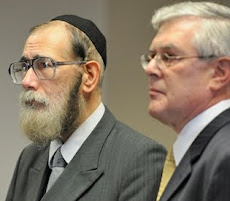
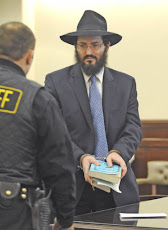
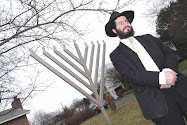
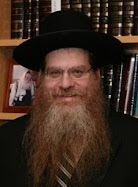
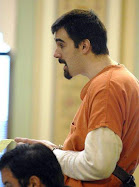
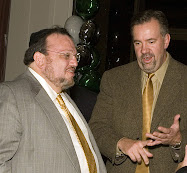
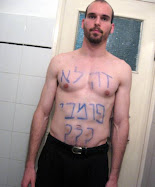
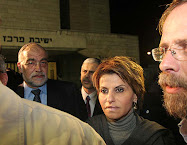
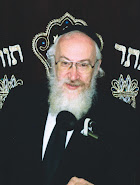
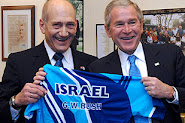
Why is this pig smiling?
Why is Nussbaum employed by Yeshiva of Brooklyn?
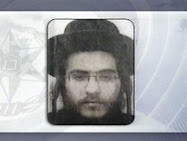
How is Mandel seriously a "rabbi" when he openly provides refuge to a sadistic pedophile, but not only that - surrounds the predator with prey which to prey upon?
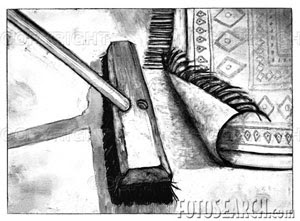
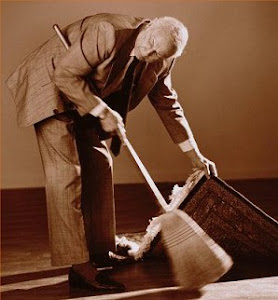
Mandel is a sinner. The big cheese of Agudas Yisorel is merely a reflection of a  monstrous 'Jew' trying in no uncertain terms to undermine our better judgment and wit. He reasons, if he put on an act of piousness, mainly carrying about business as usual, no one would challenge the pile of debris swept under the rug.  The yob tyrant/rasha knows the sad truth, most yidden look the other way, not wishing to be associated with any stigma.

in 2011, many folks are intelligent enough to see past that, but many are still not. Unfortunately, too many remain shortsighted, most having already buried their heads in the sand a long time ago. 


Cathy Spatz Widom

Cathy Spatz Widom is Professor of Criminal Justice and Psychology at the State University of New York in Albany, and a recognized national expert on the causes and consequences of child abuse and neglect. Her highly respected research includes an important and ongoing longitudinal study of a large sample of children with confirmed severe abuse in childhood. Such prospective studies, in which abused children are followed over time, are particularly valuable in the present context because they can be used to study current memories of people who were definitely abused as children. In the two studies below, one on physical abuse on the other sexual abuse, the findings suggest that for both forms of abuse the accuracy of retrospective reports depends on a complex array of factors, including sample selection and assessment methods, whether the person is male or female, and current mental health status (e.g., suffering from depression or not).
Widom, C. S. & Shepard, R. L. (1996). Accuracy of adult recollections of childhood victimization: Part 1. Childhood physical abuse. Psychological Assessment, 8, 412-421.
Abstract: Using data from a study with prospective-cohorts design in which children who were physically abused, sexually abused, or neglected about 20 years ago were followed up along with a matched control group, accuracy of adult recollections of childhood physical abuse was assessed. Two hour in-person interviews were conducted in young adulthood with 1,196 of the original 1,575 participants. Two measures (including the Conflict Tactics Scale) were used to assess histories of childhood physical abuse. Results indicate good discriminant validity and predictive efficiency of the self-report measures, despite substantial underreporting by physically abused respondents. Tests of construct validity reveal shared method variance, with self-report measures predicting self-reported violence and official reports of physical abuse predicting arrests for violence. Findings are discussed in the context of other research on the accuracy of adult recollections of childhood experiences. Excerpts from the Discussion:
     ". . . In many ways, these findings indicate accuracy in retrospective self-reports and good discriminant validity. Individuals who were physically abused, based on official records, retrospectively reported the highest rates of childhood physical abuse in the sample. On the CTS (Severe Violence and Very Severe Violence subscales) and the SRCAP [Self-Report Measure of Childhood Physical Abuse], physically abused individuals reported significantly higher rates of physical abuse than did individuals who had experienced sexual abuse or neglect in childhood and individuals who were part of a matched control group. The extent of remembering (i.e., the percentage of individuals who had been physically abused who reported having been physically abused on one of the measures used here) is in line with previous research. These results also reveal that the extent of reporting a history of childhood physical abuse varied dramatically by the criterion (or measure) used.

     "At the same time, there is a problem in underreporting of physical abuse. A substantial group of individuals who were physically abused do not report having been physically abused in childhood. Of the 110 people in the sample who had documented cases of physical abuse in childhood, 60-62% reported abuse using the CTS-VSV and SRCAP. This means that approximately 40% of individuals with documented histories of physical abuse did not report. Whether these people did not report (as suggested by Della Femina et al., 1990) because of embarrassment, a wish to protect parents, a sense of having deserved the abuse, a conscious wish to forget the past, or lack of confidence in or rapport with the interviewer, we do not know. But these findings suggest that a substantial minority would not be included in retrospective self-report assessments of childhood physical abuse. A more lenient criterion (such as the CTS-Minor Violence subscale) would capture most of the physically abused people (see Table 2); however, this criterion also identifies 92% of the sexual abuse and neglect cases and 86% of the control participants as having been physically abused in childhood. Using the CTS-Minor Violence subscale, the rate of false positives (as presented in Table 5) approaches almost half the sample. These findings illustrate that the rate of false positives is directly related to the measure of childhood physical abuse used. . .
     "Henry et al. (1994) concluded that reliance on retrospective reports about psychosocial variables should be treated with caution. They suggested that "the use of retrospective reports should be limited to testing hypotheses about the relative standing of individuals in a distribution and should not be used to test hypotheses that demand precision in estimating event frequencies and event dates" (p. 92). We support their recommendation to use caution against overly simplistic interpretations that take retrospective reports at face value.
     "These methodological problems pose significant challenges to researchers in the field. Notwithstanding the real difficulties involved, there is a critical need to develop reliable and valid ways to assess histories of childhood victimization. . . ."
Widom, C. S. & Morris, S. (1997). Accuracy of adult recollections of childhood victimization: Part 2. Childhood sexual abuse. Psychological Assessment, 8, 412-421.
Abstract: Questions have been raised about the accuracy of retrospective self-reported information about childhood sexual abuse. Using data from a prospective-cohorts-design study, a large group of children who were sexually and physically abused or neglected approximately 20 years ago were followed up and compared with a matched control group. Accuracy of adult recollections of childhood sexual abuse was assessed using 4 different measures, completed in the context of a 2-hr in-person interview in young adulthood ( N = 1, 196). Results indicate gender differences in reporting and accuracy, substantial underreporting by sexually abused respondents in general, good discriminant validity and predictive efficiency of self-report measures for women, and some support for the construct validity of the measures. Implications for researchers and practitioners are discussed. Excerpts from the Introduction:
     ". . . [A] significant risk of distortion and loss of information is associated with the recollection of events from a prior time period. If asked to recall childhood events, it is possible that respondents forget or redefine their behaviors in accordance with later life circumstances or their current situation. It is also possible that a person might redefine someone else's behavior in light of current knowledge. Unconscious denial (or repression of childhood traumatic events) may also be at work in preventing the recollection of severe cases of childhood abuse. Furthermore, given society's disapproval of various forms of family violence, a person may be embarrassed to report such experiences or unwilling to reveal such private information in the context of an interview setting. Thus, for a variety of reasons, there may be considerable slippage in accuracy in retrospective reporting. . . .

     "Empirical findings suggest that a person's cognitive appraisal of life events strongly influences his or her response (Lazarus & Launier, 1978). The same event may be perceived by different individuals as irrelevant, benign, positive, or threatening and harmful. It is likely that a child's cognitive appraisal of early childhood events will also determine at least in part whether they are experienced as neutral, negative, or harmful. The child's perception might reflect events occurring subsequent to the abuse experience as well as the child's perception of the experience. Theoretically, this is also important because long-term consequences may depend on the person's awareness or memory of the earlier abusive experience or experiences. Considering Lazarus and Folkman's (1984) discussion of the role of cognitive appraisal in mediating one's response to stress, it may be that children who do not define their early childhood experiences as abusive will show better outcomes.
     "There may also be gender differences in reporting or willingness to report childhood sexual abuse for a variety of reasons. Female psychiatric patients have been found more likely than male patients to report histories of sexual abuse. . ., female patients have been found more likely than male patients to reveal childhood sexual assault experiences to therapists (Jacobson & Richardson, 1987), and women have reported greater likelihood than men of being a victim of sexual assault (Burnam et al., 1988). Social pressures against reporting early childhood sexual experiences and embarrassment may lead to greater reluctance among men to report, whereas it may be socially more acceptable for women to report such histories. On the other hand, some of the apparent underreporting may be associated with the small number of male victims of sexual abuse in most studies (Finkelhor, 1990).
     "One approach to assessing the power or efficiency of retrospective self-report measures is to calculate the relative improvement over chance (RIOC). Loeber and Dishion (1983) devised this index to represent the improvement over chance as a function of the range of its possible predictive efficiency. . . .
     "A second approach to establishing the usefulness of retrospective reports of childhood sexual abuse is based on the construct validation process, one of the techniques used to establish the psychometric qualities of assessment instruments. In addition to establishing the validity of retrospective self-report measures using "known groups," construct validity attempts to assess how these self-report measures theoretically relate to other variables or indexes. That is, there are certain theoretical expectations about the way people who have a history of childhood sexual abuse should behave or should manifest certain outcomes. Based on logical relationships, then, tests of construct validity can offer evidence that these measures do or do not measure childhood sexual abuse, without providing definitive proof."
     "To validate our retrospective self-report measures of childhood sexual abuse, three outcomes frequently associated with childhood sexual abuse (depression, alcohol problems, and suicide attempts) will be assessed. Ideally, retrospective reports of childhood sexual abuse should relate to subsequent outcomes similar to the way official reports of childhood sexual abuse relate to these outcomes.
Excerpts from the Discussion:
     "We examined the accuracy of four retrospective self-report measures of childhood sexual abuse. In general, we found that women and men differ in the extent to which they recall or report having experienced childhood sexual abuse. Approximately 16% of men with documented cases of sexual abuse considered their early childhood experiences sexual abuse, compared with 64% of women with documented cases of sexual abuse. These gender differences may reflect inadequate measurement techniques or an unwillingness on the part of men to disclose this information. They may also reflect differences in the meaning of these behaviors for men and women, particularly viewed in a cultural context. Gender differences in reporting and in perceptions of early childhood experiences may reflect early socialization experiences in which men learn to view these behaviors as nonpredatory and nonabusive. Many of the sexual experiences considered to be sexual abuse (e.g., showing/touching sex organs, kissing in a sexual way) may be seen as developmental rites of passage, part of a learning process. Men reported more sexual experiences in which they touched the other person. Social pressures against reporting certain kinds of early childhood experiences may also lead to greater reluctance among men to report. Future research ought to examine whether the underreporting by men is due to embarrassment or to perceptions about sexual experiences.

     "In our examination of the validity of retrospective self-report measures of childhood sexual abuse using known groups, we also found gender differences in the discriminant validity of the four measures. Our results indicate good discriminant validity for the self-report measures used here for women but much less so for men. A higher percentage of women with official histories of childhood sexual abuse recall or report sexual abuse in young adulthood than do women with histories of physical abuse or neglect, who in turn report higher levels than nonabused and nonneglected controls (Table 3). On the other hand, men in our sample with documented cases of sexual abuse do not report higher levels of sexual experiences (any sex before age 12) than do men with documented cases of physical abuse or neglect or control men. Sexually abused men are significantly more likely to consider that they were sexually abused and to report more often having had sex against their will than are controls, but so are physically abused or neglected men. It is noteworthy that more physically abused or neglected men reported having had sex with an older person than did sexually abused men, none of whom reported having had this experience in childhood.
     "Overall, we found substantial underreporting of sexual abuse among known victims of childhood sexual abuse. This is particularly impressive because these are court-substantiated (documented) cases of childhood sexual abuse. Much attention has been paid to the lack of recall or failure to report histories of childhood sexual abuse among known victims of abuse. Although this lack of reporting is significant, it may not be surprising when viewed in a somewhat different context. Nonreporting by crime victims in the context of victimization surveys has been studied for a number of years (Garofalo & Hindelang, 1977), and problems with respondent embarrassment about the incident or "protective mechanisms," or simply memory decay or forgetting have been described. . . .
     "For women, we found strong relationships between retrospective self-report measures of childhood sexual abuse and the three outcomes examined here: DSM-III-R diagnoses of depression and alcohol abuse/dependence and suicide attempts. We also found that women with documented cases of childhood sexual abuse who were followed up prospectively into young adulthood were at increased risk for having alcohol abuse/dependence diagnosis and for making suicide attempts.
     "It was surprising that we did not find that women or men with documented cases of childhood sexual abuse were at increased risk of being diagnosed with depression according to DSM-III-R criteria, despite the widespread belief that childhood sexual abuse leads to depression. We did, however, find a significant relationship between retrospective self-report measures of childhood sexual abuse and depression diagnosis. Thus, this pattern of findings suggests that the relationship between childhood sexual abuse and depression is complicated and may depend on a person's cognitive appraisal of early life events (cf. Lazarus & Folkman, 1984). Individuals who meet the criteria for a DSM-III-R depression diagnosis (current or remitted) are more likely to recall having been sexually abused in childhood than individuals without depression diagnoses, although individuals with documented cases of sexual abuse in childhood who were followed up into young adulthood were not at increased risk of receiving a depression diagnosis. This was true for men as well as women in this sample. . . .
     "The underreporting we found means that there is a substantial group of people with documented histories of childhood sexual abuse who do not report these experiences when asked in young adulthood to do so. Whether this is due to loss of memory, denial, or embarrassment is not known. However, there are important implications from these these findings for other researchers and clinicians. For researchers, the underreporting of childhood sexual abuse poses a serious concern for epidemiological research, especially that which involves a large proportion of men. For clinicians, these findings reinforce the need to develop more sensitive techniques to elicit this information from men.
========================================================================

'Gedolim' CLUELESS !!!  Moetzes Gedolei Hatora's outlook in 2011 is still: don't report sexual abuse to authorities, try to squash the facts internally via intimidation tactics. SHAMEFUL! 


Mayor Bloomberg crowed Monday that city streets have never been safer - day or night - for women, but some skeptical New York ladies suggested he take a walk in their neighborhoods.
At a tour of a Queens school Monday night, the mayor proudly declared: "People don't remember 10 years ago. They've really already forgotten when you couldn't walk the streets."
"Today, a woman could walk in virtually every neighborhood in this city during the day and not look over her shoulder, and most neighborhoods at night," he added.
But Bronx resident Carla Banks, 31, said living on the upper East Side has left the mayor clueless about what women face.
"Bloomberg's trippin'," said Banks, of Kingsbridge Heights. "This isn't the upper East Side. He's definitely out of touch with what women deal with in the Bronx."
Her pal Devon Irving, 29, said he should take a solo stroll down her block. "I know the mayor doesn't have to worry about walking home from the subway, but I sure do," said Irving, of Mount Eden. "If he thinks we don't still have to watch our backs, he's crazy."
Nora Nestor, 32, of Crown Heights, Brooklyn, said she wouldn't change where she lives, but she never lets her guard down.
"I love my neighborhood. I feel safe in it, but I wouldn't walk anywhere in New York without being aware of what's behind my shoulder," she said. "As a woman, you have to be aware of your surroundings."
Bedford-Stuyvesant resident Elizabeth Truemper, 25, said some parts of Brooklyn are more dangerous for women than men.
"There's no way I'd walk from Bed-Stuy to Bushwick, but I have male friends that walk from Bushwick to Bed-Stuy," she said.
The mayor boasted about female safety after Rabbi Yaakov Bender, the dean of Yeshiva Darchei Torah School in Far Rockaway, thanked him and NYPD Commissioner Raymond Kelly for keeping the streets safe.
But at a community meeting the mayor later attended in Far Rockaway, Beverly Champion didn't second the sentiment.
She complained to the mayor about crime in housing developments, saying, "I've lived here all my life, and I've never seen it as worse." Champion said she doesn't feel safe walking around with her purse and laughed when told what the mayor had said earlier about crime.
"He's not telling the truth," she said. "He just takes the reports that they give him, but he doesn't know."
Even women with tony Manhattan zip codes called the mayor out on his comments.
"He's a bit off the mark," said Carson Demmons, 26, of NoHo. "I've lived in neighborhoods where I wouldn't give it a second thought during the day, but it was a whole different story at night. You still need to keep your wits about you."
Bloomberg's boasts did get some support - from women who live in his neighborhood.
"Yes, it has gotten better," said upper East Sider Theresa Ackerly, 43. "This nabe changed a lot. Back in the '80s, there were a lot of gangs. Mayor Bloomberg is doing all right in terms of crime."
Meanwhile, at the community meeting, a crowd of 200 booed the mayor and the Department of Transportation Queens Borough commissioner, Maura McCarthy, when they spoke of planned bike lanes for the Rockaways.
Bloomberg later admitted that the lanes drew strong reactions from supporters and opponents.
"Bicycle lanes are one of the more controversial things, obviously," he said. "Some people love them and some people hate them. ... It's probably true that in many of these cases we could do a better job, and we're going to try to do that."

Wednesday, December 29, 2010

"The {FRUM} Pedophile's Guide to Love and Pleasure: a Child-lover's Code of Conduct"

FIND OUT WHY RABBIS AND ORTHODOX LEADERS ARE RAVING ABOUT THIS GUIDE

Bond set in Fla. for author of pedophile guide
Phillip Ray Greaves II.
BARTOW, Fla. -- A judge set bail at $15,000 Wednesday for a Colorado man who wrote a how-to guide for pedophiles.
Phillip Greaves of Pueblo is charged with violating the state's obscenity law, a third-degree felony that could land him in prison for five years.
The 47-year-old was arrested Monday in Colorado, but Polk County Sheriff Grady Judd claims jurisdiction in the case because Greaves sold and mailed a copy of his book to undercover deputies in Florida who had requested a copy.
Court-appointed public defender Francis Solorzano, assigned because Greaves could not afford an attorney, first asked Judge John Kirkland to drop the case.
"Any finding of probable cause would tend to have a chilling effect on free speech," Solorzano said. "What we're dealing here is mere words. There are no images in the book."
But Kirkland said the judge who signed the arrest warrant had already found probable cause and he could not override that decision.
The self-published book - "The Pedophile's Guide to Love and Pleasure: a Child-lover's Code of Conduct" - caused a flap when it showed up on Amazon in November. It was later removed from the site.
Greaves, who has no criminal record, writes in the book that pedophiles are misunderstood, as the word literally means to love a child. He adds it is only a crime to act on sexual impulses toward children, and offers advice that purportedly allows pedophiles to abide by the law.
Judd said he was incensed when he heard about the book and that no one had arrested Greaves for selling it. The book, Judd said, included first-person descriptions of sexual encounters, purportedly written from a child's point of view.
During the hearing Wednesday, Greaves' attorney asked Kirkland to reduce or eliminate the $15,000 bond.
"It is 15 times the standard bond schedule for a third-degree felony," Solorzano said. "That should be considered excessive."
But prosecutor Brad Copley said the state believes the $15,000 bond "is on the low side."
Kirkland decided to keep the bond at $15,000. If Greaves does post it, he must stay in the state of Florida, not use a computer and not have contact with anyone under 18.
Solorzano said it is unlikely Greaves will be able to raise the bail money. He is being held at the Polk County Jail and told local media on Tuesday that he "only has sex with grown-ups" and that writing and selling his book falls under his constitutional right to free speech.
He is charged under Florida's obscenity law, which prohibits the "distribution of obscene material depicting minors engaged in conduct harmful to minors."
========================================================================

Pope, Gedolim reflect on the 70's


Pope Benedict used his annual speech to Rome's cardinals and bishops on Monday (Dec. 20) to ask them to reflect on the church's responsibility in the child sex abuse scandals.
Benedict qualified his mea culpa by stating that the scandal (in which priests who sexually abused children were often ignored or protected by the Catholic Church) was partly justified by the broader social context. Benedict said that while the church accepted some responsibility, he could not be silent about ''the context of these times.... There is a market in child pornography that seems in some way to be considered more and more normal by society." [History of Pornography No More Prudent Than Present]
Benedict claimed that as recently as the 1970s, "pedophilia was theorized as something fully in conformity with man and even with children." In this climate, the Catholic Church's actions were merely reflecting the moral relativism of the times: "It was maintained — even within the realm of Catholic theology — that there is no such thing as evil in itself or good in itself," Benedict said. That is, church leaders weren't sure if child sexual abuse was wrong, since secular society seemed to accept it.
=========================================================================


Theodore A. Sypnier, a 101-year-old pedophile, went to prison last spring saying he would rather die than spend another day behind bars.
He died early Tuesday, and his daughter says the family is relieved.
"The world is that much safer because he is not here," said Martha Juchnowski, his daughter and one of his victims. "I think I can speak for my family: There is a sense of relief. This has been a horrible thing that has been hanging over our heads all our lives."
Sypnier, the oldest inmate imprisoned by the state, died of natural causes at 12:23 a.m. Tuesday in a prison medical unit, according to Linda M. Foglia, spokeswoman for the Department of Correctional Services.
Before he was sent back to prison in April on a parole violation, Sypnier, weeping, told The Buffalo News, "I don't want to go back. I'd rather die."
As word spread of his death, no tears were being shed for the man who authorities said sexually attacked children for decades in Buffalo and later in the Town of Tonawanda.
"I hope this brings a little bit of comfort to his family and those he hurt so deeply. You can't go back and change things," said the Rev. Terry J. King, whose organization, Saving Grace Ministries, assists ex-convicts.
Sypnier had received temporary shelter in King's East Side halfway house after he was released on parole in the fall of 2009.
"We did not want him to hurt again or victimize anyone. Certainly he had hurt enough people through his lifetime," King said. "It is sad all the way around."
Last Wednesday, Sypnier's health began to fail, and he was transferred from Groveland Correctional Facility in Livingston County to the Coxsackie Correctional Facility's regional medical unit in Greene County, south of Albany.
A prison chaplain spoke with Sypnier in his final days, but Juchnowski said she was not aware that he had expressed any remorse.
 ========================================================================

Male Survivor


10 Daily Affirmations for Male Survivors
Howard Fradkin, Ph.D., LICDC, Co-Chairperson, MaleSurvivor Weekends of Recovery
  1. Recovery is absolutely possible and achievable for me.
  2. I will practice being disloyal to dysfunction and loyal to functionality.
  3. I give myself permission to connect to loving, affirmative, strong, sensitive, accepting men and women in my community.
  4. I release and forgive myself for any responsibility I have accepted in the past for my abuse.
  5. The abuser (s) from the past chose to hurt me; I will stop repeating the lie that it just happened to me.
  6. Offering myself daily compassion is necessary for my healing and growth.
  7. I commit to connecting to the boy inside me today so we can play, laugh and experience joy together, even if just for a minute or two.
  8. I believe deep inside me I possess the ability to face the truth of my abuse and to learn to use new tools for healing.
  9. I have the right and the ability to speak the truth of my abuse and deserve to be heard, understood, believed and supported.
  10. Feeling is healing; as I heal, I develop the ability to experience a wider range of emotions to enhance my health and connections to others.

Wednesday, November 24, 2010

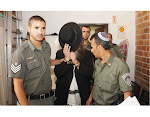
Child Sexual Predator "Rabbi" Yehuda Kolko Arrested Again

Brooklyn rabbi busted for violating order of protection against boy, 12

Monday, November 22nd 2010, 4:00 AM
Rabbi Yehuda Kolko was charged with sexual abuse in 2006.
Egan-Chin/News
Rabbi Yehuda Kolko was charged with sexual abuse in 2006.
A Brooklyn rabbi was arrested for violating an order of protection against a 12-year-old boy he is accused of sexually molesting, police said.
Rabbi Yehuda Kolko was charged with sexual abuse in 2006, accused of molesting students at Yeshiva Torah Temimah in Brooklyn, where he was a teacher. He pleaded guilty to child endangerment.
He was accused of violating an order of protection on Nov. 12 by stopping and glared at one of the victim after they crossed paths on the street.
The boy is set to testify in a civil suit against the school in March, a family advocate said.
"The experience of again being threatened and intimidated by Kolko these past weeks retraumatized him," the boy's father said in a statement to the Daily News. "He can't sleep. He's afraid to go outside."
The father filed a complaint with cops, who arrested Kolko Saturday.
Brooklyn Criminal Court Judge Evelyn Laporte warned Kolko to stay away from his accusers at his arraignment on Sunday night. Kolko was released on his own recognizance.
Defense lawyer Jeffrey Schwartz scoffed at the new charges.
"These days they arrest people if you look at them the wrong way. It's not a crime," said Schwartz, accusing the victims of trying to set up Kolko.


Read more: http://www.nydailynews.com/news/ny_crime/2010/11/22/2010-11-22_bust_perv_rabbi_for_glare_at_victim.html#ixzz16GgNhuCf
=========================================================================

The Grooming Process of a Child Sexual Predator.

by Megan Bayliss | More from this Blogger
Grooming is a process of desensitization that predators use on children to prepare and trick them into accepting sexual abuse. Once the predator has gained the child's trust and confidence, they use everyday behaviours, like telling an inappropriate joke, a touch on the upper arm that lingers a little too long or a kiss on the lips to test whether your child is likely to tell on them. If the perpetrator is satisfied that your child won't tell, the predator moves onto other forms of bad touching. If the child still doesn't tell, then the abuse continues along the continuum of abuse from non contact, to contact and often ending with penetration and sometimes even homicide.
Just as we groom ourselves before going out to make us look presentable, predators often groom themselves as wonderful, caring people. They may involve themselves in your family's life and often do great things in the community. This is a trick. This is their game. This is their way of being open about being sneaky and of gaining more access to your child. They often set themselves up to be high profile in a community and they spend a lot of energy in ensuring their innocence. They can sometimes be the person that we would first approach to baby-sit while we go to dinner. They are so good with the kids, so loving and protective, so eager to assist.
Grooming can take many months, and includes grooming adults around the child. Including you. The child's support networks are groomed to disbelieve any thing their child may say about bad touches. The predator may try to win your confidence and support by having some quick conversations with you about a lie the child told or they may even suggest that there's something unbalanced about your child. They do it so caringly and openly portray their concern and willingness to support you. The quick comments may well be true. The child may have lied or may even be acting out of character. But, just remember that if a child lies once it doesn't doom them to an eternal cycle of lying. If ever your child says they've been abused, always believe them, even if you think it's impossible. Remember, your thoughts of impossibility may be because you've been groomed.
Developed world research suggests that eighty-five percent of child sexual abuse is perpetrated by somebody well known to the child: somebody that has access to your child on an ongoing basis. This may suggest that the grooming has become so entrenched into our daily life that we fail to recognize it as grooming. Predators need access to children and the family home is a great place to find kids.
Sometimes we are married to the perpetrators and do not know it because they have groomed us so well. Yes, even some parents sexually abuse their own children. Females too, sexually abuse. Mostly though, parents and grandparents love their children and want to protect them. If you know a family member, or anyone else, who may be abusing children you need to get them some help. The only way to get help is to tell someone in a position to act upon and stop the abuse: the police or child welfare authority in your state. You cannot assist, or change perpetrators, because you would do so at the risk of your child. Failure to protect children is as bad as abusing the child yourself. Darkness to Light suggests that an average serial perpetrator may abuse 400 children in a lifetime. By not protecting one child, you are also failing to protect other children. Please report.
In this age of terrorism, we are quick to act on any suspicious activity. We are trying to prevent further acts of terror by recognizing the warning signs and intervening before something happens. Child sexual abusers are domestic terrorists and their acts affect our children for many years to come. Prevent the infiltration of domestic terrorism by recognizing the grooming process and stopping it now.
In tomorrow's blog we'll look at why children don't always tell you they've been abused. Believe it or not, the silence can also be a part of the grooming process. In the meantime, here's some related Families.com articles to ponder: Our children in danger from sexual molestors. Coping with sexual assault. Coping with sexual assault 2. Teaching children about child molesters. The epidemic of online child sexual crimes.

Friday, October 29, 2010

90% of all children sexually assaulted by someone they know and trust


By Samuel Newhouse
Brooklyn Daily Eagle JAY STREET — An Orthodox Jewish child molester who was sentenced to a maximum of 30 years earlier this year appeared in Brooklyn Supreme Court Wednesday for a pretrial hearing in yet another case of alleged sexual abuse of a minor.
Baruch Lebovits, 59, of Borough Park, who was convicted of sexually molesting a teenager in his community, appeared before Kings County Supreme Court Justice Patricia Di Mango, the same Brooklyn judge who sentenced him in April to 10 2/3 to 32 years in prison.
Justice Di Mango gave Lebovits the maximum sentence for each of eight counts of abusing a 16-year-old Borough Park resident, whom Lebovits lured on several occasions in 2004 and 2005 to his silver Toyota for “driving lessons” before performing oral sex on the victim, who was a friend of Lebovits’ son.
Now Lebovits has at least one more active sexual abuse case and could face even more indictments, as several alleged victims came forward after Lebovits was sentenced. Sources in law enforcement have called the crimes Lebovits has been charged with “the tip of the iceberg.”
One alleged victim said Lebovits fondled him in a mikvah or ritual bath while the victim was a teen, but made the claim after being arrested himself for allegedly fondling a 12-year-old in a mikvah, according to the Daily News.
Despite these allegations, Lebovits, a cantor (traditional Jewish singer) and a local teacher, still has some supporters in the community. But the father of the victim whose testimony led to Lebovits’ April sentence has called Lebovits a “grand-molester.”

Read more: http://www.brooklyneagle.com/categories/category.php?category_id=4&id=38583

======================================================================

http://www.csasurvivor.net/?page_id=222

JAMAICA:PUBLIC OUTRAGE, EXPOSE MOLESTERS NOW!

Mary Clarke.jpg
MARY CLARKE, Children’s Advocate, on Wednesday appealed to members of the public not to shield child abusers. She made the appeal while addressing the launch of the child abuse prevention campaign at the Bustamante Children’s Hospital. She said her office was concerned that children who are to appear before the courts as victims of rape and carnal abuse often miss court dates.
“When the summons are to be served for them to come to court, they cannot be found. Mother’s don’t know, guardians don’t know, community members don’t know, and after the date of the case, the child reappears,” she said.
“I am calling on you today to be responsible citizens - that is being very irresponsible. You are protecting abusers, you are helping no one.”
SIMILAR APPEAL
Howard Hamilton.jpg
Public Defender, Howard Hamilton, also made a similar appeal. He said men who have sex with one-month-old babies and young children because they believe that they can be cured from a sexually transferred disease should cease this atrocity. “This can no longer continue, men cannot be allowed to go to a four-month-old infant, so let this be a turning point in Jamaica,” he said.
Mrs. Clarke said since the beginning of the year, there were 80 cases of sexual and physical abuse cases reported at the Bustamante Children’s Hospital. Of this number, 14 could not be traced because wrong addresses were given.
“Parents, guardians, caregivers, you have a responsibility for your children. You must give the correct addresses and phone numbers. Why are you concealing the children who need the psycho-social support to help them get over the hurt that they have felt, why? Why are you hiding the abusers?” she asked.
She said of the 14, five were assaulted and nine were physically injured. She said during last year, there were 8,275 victims of major crimes. Of this number, 24 per cent were children under 14 years old.
Rose Robinson-Hall, chairman and coordinator of the Child Abuse Mitigation Project at the Bustamante Children’s Hospital, told The Gleaner that the child abuse campaign would involve in-house training of staff to recognise behaviours that are abusive and to be able to respond appropriately to these cases. 

AWARENESS IS YOUR BEST DEFENSE

  • dog_head.jpg
BECOME A WATCHDOG 
“AWARENESS IF YOUR BEST DEFENSE” 
OVER HALF A MILLION SEXUAL PREDATORS LIVING IN COMMUNITIES ACROSS THE UNITED STATES
SEXUAL ABUSE BEFORE 18TH BIRTHDAY IS A REALITY FOR GIRLS AND BOYS
  • 1 in 5 girls will be sexually assaulted before 18
  • 1 in 6 boys will be sexually assaulted before 18
  • 1 in 5 children propositioned on the Internet
  • 90% of all children sexually assaulted by someone they know and trust

According to a National Institute of Justice study done in 1996, child sexual abuse costs America $23 billion.
  • Victims of child sexual abuse generally spend more on psychiatric care services throughout their lives
  • More is spent on special educational services.
  • The loss in potential and productivity, and these expenses would not be necessary if not for sexual abuse and its financial drain to each and everyone of us
A FRIEND OF THE FAMILY MAY BE NO FRIEND AT ALL
  • 1 in 4 girls and 1 in 6 boys will be sexually abused or sexually assaulted by their 18th birthday
  • The perpertrators aren’t “dirty old men hiding in the bushes” but family members
For More Information http://www.familywatchdog.us

=======================================================================

TWENTY-FOUR QUESTIONS ABOUT PROFESSIONAL PRACTICE IN THE AREA OF CHILD ABUSE
  1. What constitutes child abuse and neglect?
  2. Who has to report child abuse and neglect?
  3. If I report, am I breaking confidentiality?
  4. Under what circumstances do I have a duty to report child abuse?
  5. How do I report? and What information am I required to disclose in a child abuse report?
  6. Will I get in trouble if I do not report child abuse as required under laws of my state?
  7. Will I get in trouble if I do report? and Can I be sued by the person I report?
  8. Do I have to report every instance of child abuse?
  9. Do I have to report if the suspected abuser is in treatment or if I believe the reporting would do more harm than good?
  10. What will be the response to my report?
  11. Are there issues I should consider for disclosure?
  12. How shall I handle a child’s disclosure of abuse by a parent?
  13. How shall I handle a child’s disclosure of abuse by a non-family member?
  14. What are some possible effects for the child, the family, and treatment when a disclosure or report are made?
  15. What are possible beneficial effects of reporting for the child and family?
  16. What are some of the possible personal issues I should be aware of in handling disclosure and reporting?
  17. What are the characteristics and symptoms of a child who has been abused?
  18. How do I recognize and verify what abuse had occurred?
  19. Are there psychological measures to assist in evaluations of victims of child abuse?
  20. What special considerations are there in the assessment of victims of child abuse?
  21. What are the emotional demands of providing intervention services to victims of child abuse?
  22. What roles can I play in supporting and providing intervention services to the victims of child abuse?
  23. How do I provide treatment to a child who has been abused?
  24. What are the therapeutic issues, reasonable goals, and special considerations when providing treatment to a child who has been abused?
From The American Psychological Association’s (APA, 1995) Committee on Professional Practice and Standards
========================================================================

EXPOSE THE PERP: THE AFTERMATH

As you heal from child sexual abuse and talk more about the trauma, you will become more comfortable with what you tell others, especially family members.
The details you share of the abuse is up to you, and you can choose to share what you are confident about. Usually a survivor will share with a family member you are most comfortable with, because you will receive various responses from family.
Usually a survivor will tell a family member what took place and immediately the family member will want to know what exactly happened between you and perpertrator. Then after the family member has time to absorb the information they will want to talk more about the perpertrator.
Family members will express different emotions,and ask all sorts of questions. Believe it or not this communication will help make a better relationship between family members, because communication is taking place and that is one of the key steps to healing.
Now as a survivor you have the option to answer and not answer questions, the ones that make you uncomfortable, you need to say that you cannot answer. As a general rule, your privacy and boundaries are important here.
Each time your family asks questions about the abuse, be prepared for different reactions, be thoughtful of your family’s emotions now, because these emotions will affect you too. As these discussions take place, a survivor can reexperience thoughts about the sexual abuse that they resolved. This is normal part of what happens when telling the family what happened.
Please be prepared that not all family members will believe what you have to say about the perpertrator, you may feel angry with family for this, even sad, but it is important that you know the truth, and again ” the truth shall set you free”, and its not about changing anyone else but changing and healing yourself.. As you heal you will become better at setting boundaries, and developing healthy relationships, promoting safety and trust in your life. Family members who respect and trust you are those you keep close to you. To avoid unstable relationship there must be trust, not chaos, crisis and inconsistency, and as a survivor we want to definelty avoid this in our lives.
Here are few ideas:
Establishing Boundaries:
No one touches you without your permission and consent, and you touch no one without their persmission and consent.
Choose who you want to be sexual with, some one who is safe and you feel comfortable and who you have a reciprocity in terms of respect, love and care.
Trust is conditional; people earn trust, as well they earn yours. There are different levels of trust for different people.
Do not tolerate disrespectful behavior and speak up when it happens.
Honor your feelings and those of others
Stand up for your self and believe in you right to do so.
Give yourself permission to be who you are and to try new experiences
Affirm your life today, and acknowledge the good that exist in your life today
Take time for yourself and not allow others to intrude on your time. Say no and do not feel guilty.
Praise yourself often.
Excerpts from Healing from the Trauma of Sexual abuse by Karen Duncan.
=========================================================================
CONFRONTING ABUSE IN THE ORTHODOX COMMUNITY
(This article first appeared in NEFESH)
By Rabbi Yosef Blau
It is no longer possible to ignore the tragic reality that sexual, physical and emotional
abuse exists within the Orthodox community. Recent revelations about rabbis and
teachers abusing adolescents, often continuing to abuse for decades, dramatically remind
us that our existing mechanisms are failing to deal with the problem. I am not aware of
any statistics which clarify whether the numbers of offenders is substantial, but even a
small number can traumatize hundreds of victims.
The full measure of the horrendous nature of abuse is not always apparent from a
technical halakhic perspective. Two teenagers touching each other inappropriately are
guilty of the same sin as a forty-year old rabbi touching a thirteen- year old female
student. We intuitively recognize that the rabbi has used his position as an authority
figure to manipulate a vulnerable child, though she is an adult according to halakha. A
pedophile who abuses minors even if he gets their approval is halakhicly a rapist but not
if he does the same with an adolescent boy or girl.
It is even more difficult to pinpoint the sin when dealing with emotional abuse and
manipulation. While one can make similar technical arguments in other areas of halakha,
its significance in this context is its use as cover for the many who do not want to deal
with the full implications of confronting rabbinical abuse. Not wanting to see themselves
as lacking sympathy for victims, people can claim to be concerned about preserving
halkhic standards. How rare it is to have two witnesses who saw the abuse.
Even when the pattern of abuse is clear the question remains how to effectively deal with
the abuser in a way that at least limits his ability to move elsewhere and continue to abuse
new people. Schools fire abusive teachers who then move to another community and
start teaching (and abusing) in the new yeshiva. Going public is seen as causing a chilul
Hashem and going to secular authorities as mesira.
Virtually all poskim agree that if there is danger to future victims then there is no
halakhic issue of mesira but practically the taboo of mesira remains. Victims are
discouraged from coming forward on other grounds as well. It will hurt potential
shidduchim, not only for the victim but for members of his family as well. Compassion
is expressed for the reputations of members of the abuser’s family as well. The
probability that the family members may have suffered abuse themselves and suffer from
being in ongoing contact with the abuser, is not understood.
Taking the accusation to a Beis Din unfortunately is rarely effective. Few rabbis have
any training in recognizing abuse and the rabbinical courts have no investigative arm.
Some abusers are charismatic leaders and have followers who will say whatever they ask
them to say. Perjury to a Beis Din is not punished and in many cases the witness, in
support of his mentor, has no difficulty with distorting what occurred. The cultic element
in the guru’s leadership is hard for us to acknowledge. A rabbi promoting Judaism is
seen as incapable of being a cult leader.
Newspapers, particularly Jewish newspapers are assumed to be anti-Orthodox. Speaking
to them is almost the act of a traitor. Yet at the present time the media has played a
primary role in the increased awareness of this problem and an abuser whose name that
has appeared in the media is unlikely to be hired by a new school or youth movement.
Two recent cases point to differing approaches now being used. In one story from Israel
a commission including a rabbi, a psychologist and a judge evaluated allegations and the
accused was fired from his teaching position. He hired a lawyer and is fighting for
reinstatement. The Israeli media have picked up the story. A recent article in Maariv
broadened the discussion to quote varying views about rabbis counseling married women.
The other case involved allegations that had been investigated twenty years ago and a
resulting agreement that an individual would leave Jewish education, which was not
effectively enforced. After two decades it became difficult to reconstruct what had
occurred. Supporters of the accused spoke freely to the media while victims used
pseudonyms. New allegations surfaced and a major expose appeared in the papers and a
new Beit Din was formed to decide how to deal with the accusations. While no formal
announcement has been made, their apparent decision was to send the case to a religious
court in Israel that will deal with the charges.
Despite growing awareness and concern no consensus has yet emerged. Rabbis are not
trained to recognize abuse nor given an approach to aid them in responding when they
realize that it is occurring. Principals are not equipped to respond to accusations against
teachers in their schools. Rabbinical organizations do not have rules of appropriate
conduct. Accused abusers retain memberships in these organizations without any process
to remove their names.
Our community has not been educated to recognize abuse nor to appreciate the ongoing
trauma of victims. Headlines in newspapers are not effective educational tools. Often
the response is to express anger at the paper and then ignore the abuse. Until the
mentality of the community changes little progress will be made.
Even if a method will be developed to get rabbinical approval for victims to go to the
police much of the problem will remain. Not every manifestation of abuse involves
criminal behavior. “Rabbis” who seduce women as part of outreach or marital therapy
are not guilty of a punishable offence. Proper utilization of secular authorities is a
necessary step but clearly not a total solution.
In Chicago, after there were a number of serious incidents, a special Beit Din, whose
members are respected across the Orthodox spectrum, was established to deal with
accusations of abuse. Similar rabbinical courts in other major cities, whose judges would

be trained to recognize abuse and would have appropriate mental health professionals as
consultants, should be introduced. Creating special rabbinical courts is a powerful
statement that a serious problem needs to be addressed.
Nefesh professionals have a critical role to play in educating the Orthodox community,
in treating and supporting victims and in serving as consultants for schools and
organizations. Only people who are trained can lead a systematic campaign explaining
the nature of abuse and the need to confront it openly. Stigma has to be removed from
victims. Invariably when the identity of an abuser is revealed the response of far too
many is “We have known that for years.” Enabling abusers to continue, covering their
crimes to protect the image of the community, contribute to innocents being traumatized.
Judith Herman in her book on trauma points out that both the abuser and the victims turn
to others for support. The victim needs action while the abuser only asks for our silence.
It is time to stop the silence. The true chilul Hashem is that we allow victims to continue
to suffer in order to preserve our community’s image. 

Tuesday, September 21, 2010

Hashem Yirachem Aleinu!


http://www.juf.org/news/local.aspx?id=63724#

Address by Rachel Zimmerman, coordinator of Project Shield at the Jewish Child and Family Services and recipient of the 2010 Samuel A. Goldsmith Award, at the 110th Annual Meeting of the Jewish Federation of Metropolitan Chicago Sept. 15, 2010.
Thank you- It is a great honor to be receiving this award- but really, I can’t accept it on my own for what is truly being honored today is the work of many.
Let me just take a moment to say congratulations to David, Lisa, Jason and Rabbi Kurtz- I am honored to be sharing the morning with you.
I also want to thank G-d first and foremost for giving me the strength to reach this point.
Last October- I did something really brave and somewhat crazy- I ran my first marathon.
Three years ago, when I started running, I couldn’t run a mile.
But I started jogging for a couple of minutes at a time before collapsing breatheless.
Then I celebrated being able to run for 30 minutes straight.
Suddenly I could run 5 miles and onward I went from there.
Crossing the finish line of first marathon was a life altering moment. Not just because of the cool bragging rights (though that’s nice) but because I never in my life thought I could do it. And as I spent five hours running that fateful Sunday morning I consistently received messages from every part of my body saying “stop”, I’m, tired, :you can’t do this”, “you’re not ready yet”, “This hurts”, “you’ll never make it”. And as I heard the barrage of complaints I closed my eyes and told myself over and over again “I can and I will, I can and I will, I can and I will”.
Three years ago I took on the job as the coordinator of Project Shield.
The task seemed daunting, the distance that needed to be covered seemed too great. You want me to do what? Sexual abuse of children is a hard topic to talk about. I expected doors to be slammed in my face, inquiries about training to be denied, and people to not want to believe that this is an issue happening in our very own community.
But in reality, the CDC cites that 1 in 4 women will be sexually abused before the age of 18 and 1 in 6 men. I have yet to do a training or a presentation where someone hasn’t come up to me afterwards or contacted me a couple of days later to tell me that they were abused, or a loved one was abused. The survivors of this silent epidemic are to be found in every country, in every culture, in every religion, and in every community.
With all of this information I took a deep breath- I closed my eyes and said “I can and I will” There was a lot of education to be done and so I took my first step forward.
And so it began. But just like with running- the gains that were being made in a short period of time were incredible. My fears started to fall by the wayside- camps said yes to having their staff trained. Parents showed up to prevention talks, and Rabbis requested meetings with me to hear more about what they could do.
But there is one main and very significant difference between running and Project Shield- Running is a one-man sport. If you fall or get hurt your race is over.
Project Shield is a team effort. Every month, every week, and every day, more and more people are joining our team. It is through the efforts of one of the most amazing teams ever put together that Shield had grown and succeeded in the astounding way that it has.
First- The Jewish Federation. Without your guidance, your funding, your unwavering support, your advice and expertise- we would not be the program that we are today.
Secondly- JCFS. What an incredible organization JCFS is. The breadth and depth of all the work we do takes my breathe away when I stop to think about it. Everyone from our wonderful executive director Howard Sitron, to our amazing Director of Community Programs, Planning, and Development- Suzanne Franklin, every clinician, every program staff, and every support staff- they have all put their hand in to help and to ask “what can we do to help you make Project Shield stronger.”
Third- the Project Shield Advisory Council. A little over two years ago we invited a group of professionals from inside and outside the Jewish community to come together to help advise our program. Together that council formed a strong voice and each member of the council has used their own strengths and programs to open doors for Shield programming. I am awed by each one of them on a constant basis.
Fourth- The leaders of the Jewish community. Every Rabbi, Every School Principal, and Every Camp Director, and Every Lay Leader that I have contacted have each been instrumental in taking the messages of Project Shield and making them a reality within each organization that they serve. I am honored to live and work in a community that has the leaders that it has.
Fifth- My incredible supervisors. The one’s that got me into this embaressing speech in the first place by nominating me. Amy Rubin and Lynn Shyman. I come to work knowing that no problem is too big to be overcome- because I have the incredible daily advice and guidance from these incredible women.  They support me and the program in every way imaginable and I truly believe that I am the luckiest employee of JCFS for having such an amazing supervisory team. I learn from you both on everything from how to be a professional, how to write a proper English sentence, how to build community collaborations, to how to handle a crisis situations. The love and admiration I have for you both is never ending. Thank you!
And lastly, but most importantly on the Project Shield team is my family. Without which I could never do what I do. So thank you to my amazing parents. Thank you to my amazing in-laws. Thank you to my four beautiful children who are so tolerant with my schedules and with all my crazy ways.  A big I love you to my beautiful and sweet daughter Devorah who is here representing all of her siblings- And thank you the most to my husband. My husband is my role model, my Rabbi, and my best friend all in one. Thank you for enabling a moment like this to happen.
So back to last October when I crossed that marathon finish line- oh and by the way- just to answer my most frequently asked question- Yes I do run in a skirt- and nah- it’s not hard at all- but I digress- anyway- so when I crossed the line, besides for being exhausted- I thought to myself- I need to do this again. There are more races to be run and more miles to be logged. This race is just the beginning…….
And today as I stand here I realize- that we the Project Shield team have come a long way, but we have a lot more to do and more distance to cover. So to end- I invite you all- every person in this room- to take the message of project shield, and help us to create safer Jewish homes by starting conversations in your own lives, with your own family members, and with organizations that you’re involved with. Learn about the signs of symptoms of child sexual abuse, urge parents to learn how to talk to their children about prevention- because Education is power and the key to prevention.
And if we – the Project Shield team of today’s annual meeting – all step up to day “we can and we will, we can and we will” imagine where we’ll all be in three more years from now.
Thank you!

Thursday, August 26, 2010

Rabbinic Sewage Suffocating Holy Torah

Guilty or Innocent?

"Hazmana" Belsky leading the pack

Lakewood Orthodox Jewish
leaders want abuse
accusations addressed

As rift widens, community insists problems
should be brought to rabbis

By ZACH PATBERG • STAFF WRITER • August 25,
2010

One man's criminal accusation that a teacher
molested his young son has widened the rift in the

Orthodox Jewish
community over where religious
rights stop and the justice system begins.

Some inside the tight-knit enclave praised the
child's father for bypassing religious protocols last
year and reporting the alleged attack first to Ocean
County prosecutors. Others believe he committed a
sin because he failed to get permission from a
rabbinic court before pressing charges against a
fellow Jew.


"The first step is to go to rabbis,'' said Rabbi Shmuel
Meir Katz, a senior Dayan, or decider of Jewish law.
He teaches at
Beth Medrash Govoha, a yeshiva in
Lakewood that is one of the foremost Jewish
universities in the world. "We have our own system.
We have our own laws, and as long as the Bais Din
(rabbinical tribunal) feels competent on taking care
of something themselves, that's our surest recourse
in our circles.''
 

At the center of the controversy are the criminal
charges against Yosef Kolko, 36, a former camp
counselor and local yeshiva teacher. At his
arraignment Tuesday, Kolko pleaded not guilty to
charges of aggravated sexual assault and child
endangerment. The child was between 11 and 12
years old when the more than yearlong alleged
abuse began in Lakewood, according to the
indictment. The Asbury Park Press is withholding
the father's name to protect the child's identity.

The case is a stark example of what Ocean County
Prosecutor Marlene Lynch Ford described as a "wall
of silence'' in the community that has made
investigating crimes difficult.
 

The decision of the child's father to go immediately
to authorities last year has sparked reprisals,
according to prosecutors and witnesses. 

Attempts were made to pressure the father to drop the
charges. Fliers about him were circulated. In June, a
Lakewood resident was arrested and charged with

witness-tampering
.
 

Eight months ago, religious leaders and county law
enforcement authorities pledged to work together to
better prosecute crimes within the Orthodox
community. Since then, more sex crimes in
Lakewood have been reported, but there is no
information if those cases came from inside or
outside the Orthodox community.

But the Kolko case has exposed a strong
undercurrent of resistance to outside involvement.  

A recent flier criticizing the father included a decree
signed by prominent rabbis that discouraged
cooperation with secular courts.
On June 30, at a charity fundraiser in Lakewood, a
flier was circulated with a letter
titled "How (the child's father) Makes a Mockery of
the Torah.'' It described the father's choice to go to
prosecutors as a "terrible deed,'' according to a t
ranslation from Hebrew. It also threatened to
publicize the names of his supporters if they don't
""repent.''

"We hope that after tonight further letters will not be
necessary,'' it stated. "However, let the perpetrators
of this (shameful thing) know that ... we will not stop
(until this horrible shame is removed from us).''

The letter includes the name of a Bronx rabbi, Abba
Hershkowitz, and his phone number. It is otherwise
unsigned. It could not be verified that Hershkowitz
approved the letter.

Attached to the same flier was a proclamation
signed by nine Lakewood rabbis that instructs
people to bring allegations to a Bais Din rabbinical
tribunal before alerting government authorities.


At this point, there is no evidence that the signers
of the proclamation meant to have their names
distributed with the letter.

The proclamation reads in part: "And if, in fact, he
has transgressed and has gone so far as to bring
the matter to the secular (nonreligious) courts, he
is, perforce, obligated to do everything possible in
order to remove any scintilla of accusation against
the other party from the secular courts,'' it states,
according to a translation by
Rina Ne'eman Hebrew
Language Services
in New Brunswick paid for by the
Press. "And it need not be stated that it is forbidden
(for him) to continue to cooperate with them (secular
courts) and to assist them in their efforts to pursue
a Jew.''

The proclamation, dated in the spring of 2010, is
signed by some of Lakewood's leading authorities
on Jewish law, including heads of yeshivas and
synagogues, Bais Din judges and two rabbis from
the Beth Medrash Govoha yeshiva.

Three rabbis confirmed they signed the
proclamation but declined to say more. They were
Avrohom Spitzer, a Dayan; Yosef Zimbal, a rabbi at
Westgate Congregation; and Simcha Bunim Cohen, a
rabbi at Congregation Ateres Yeshaya. Another,
Rabbi Shmuel Katz, said he did not remember the 
exact contents of the decree but nonetheless
repeated its philosophy.

"From the time we open our eyes in the morning,
our religion tells us how to take care of this,'' he
said.

Katz compared the religious and legal courts to the
two houses of Congress. Batei Din, he said, offers a
platform for cooler heads to prevail when dealing
with emotional issues that may otherwise spark rash
accusations and damage reputations.

While he put both systems on equal footing, Katz
did say accusers should go to rabbis before the
police. He added that if a rabbi were unsure of the
answer or direction to proceed, he would be
obligated to consult professionals.

When asked if that included going to law
enforcement, Katz didn't specify.


"If somebody's engaging in devious activities, he
(the consulted rabbi) should speak to an expert in
those things,'' he said. "And if he doesn't know, he
says he doesn't know.''

Such an internal system has previously raised
concerns among child advocates and some
Orthodox families who fear it can act as a
gatekeeper in sex-abuse cases. Its lack of
investigative skills and real judicial authority, they
say, leave wide cracks through which pedophiles
can, and have, slipped.

Ford, the Ocean County prosecutor, said she does
not condone going to a rabbi first about a crime, as
third-party delays can contaminate evidence and
hinder investigations.

But, she said, sex crimes, more so than most
offenses, often are reported to a confidant before
law enforcement because of their sensitive nature.
Ford said she recognizes this "reality'' as her office
tries to "penetrate a wall of silence that has
admittedly existed in the Orthodox community for
many years.''

However, when people are ordered to first seek
rabbinic permission, she said, "that clearly conflicts
with the law.''

"And someone would not be insulated from liability
or even prosecution if they fail to report to
authorities reasonable suspicions,'' she said.
  
  
In the Kolko case, another man, Shaul Luban of
Lakewood, was charged with
witness-tampering. Prosecutors say he sent text
messages that urged people to pressure the child's
father to drop the charges.

The letter with Hershkowitz's name is in that same
vein and is being investigated, said Assistant
Prosecutor Lara Pierro, who is handling the Kolko
case.

"When we receive word that there's pressure on the
family, we pursue it,'' she said.

Messages seeking comment and left with
Hershkowitz at the number listed on the letter and at
the college in Riverdale, N.Y., where he works, were
not returned.
 

However, a relative, Brooklyn Rabbi Yisroel Belsky,
supported the position stated in the letter, saying
"such behavior (as that of the victim's father)
wouldn't be tolerated'' elsewhere. "When your child
tells you something, you don't go straight to a 
prosecutor, you go to a Bais Din and let them
examine the (evidence).''

Belsky, a rabbi at Yeshiva Torah Vodaas in the
Flatbush section of Brooklyn and a member of the
Orthodox Union, a national Jewish lobby, said he
has not seen the flier but claims "there's no evidence
at all'' against Kolko.

Not all rabbinic leaders agree. Rabbi Dovid Cohen,
an authority on Jewish law in Brooklyn, said he
received a call not long ago. It was from a
representative of the Orthodox community who
asked if the Kolko allegation should be taken to
prosecutors.

"Not only do I permit it, it is an obligation,'' he said
he replied.

"There are others who disagree,'' Cohen said
recently. "Those people aren't for
molesters; they simply feel that there's a chance a
person will be slandered. ... They feel it's not ethical
to go to authorities until it's first verified by a Bais
Din. That's where we differ.''

Cohen said he heard about the fliers in Lakewood
after a social worker called and told him the father
was "getting a lot of pressure.'' The father could not
be reached for comment.

Rabbi Weisberg of the Vaad said he believes those
who signed the proclamation were expressing
themselves "as individuals and not as some
organized body.''


click here for full article
 

About Me

My photo
It is unfortunate that it has come to this. It is a big darn shame it has come to this. It is very hurtful that it has come to this. But yet, IT HAS COME TO THIS. It has come at the price of a GREAT CHILUL HASHEM. It has come to Hashem having to allow his holy name to be DESECRATED so that his CHILDREN remain SAFE. Shame on all those responsible for enabling and permitting Hashem's name to be desecrated! When you save children you save the future. You save the future you save generations. You save generations you save lives. You save lives you have saved the world!!!!!!!